🌐 Prefer to Read This Article in Spanish?
This complete educational guide is also available in Spanish.
👉 Leer el Artículo en Español →
Discover How a Practical Digital Service Could Become Your First Step Toward Building an Online Business
What If Your First Online Business Started With Something People Already Need?
Every day, thousands of people search the internet for ways to earn additional income.
Some want to supplement their salaries. Others hope to develop a business they can manage from home. Many simply want greater financial flexibility without having to purchase inventory, rent office space, or become technology experts.
- Unfortunately, the online business world can feel overwhelming to beginners.
There are complicated advertising systems, expensive courses, unfamiliar business models, and countless promises of overnight success.
- But starting an online business doesn’t necessarily require creating your own product.
Sometimes, it begins with understanding a useful service, learning how to explain its benefits, and connecting that service with people who may need it.
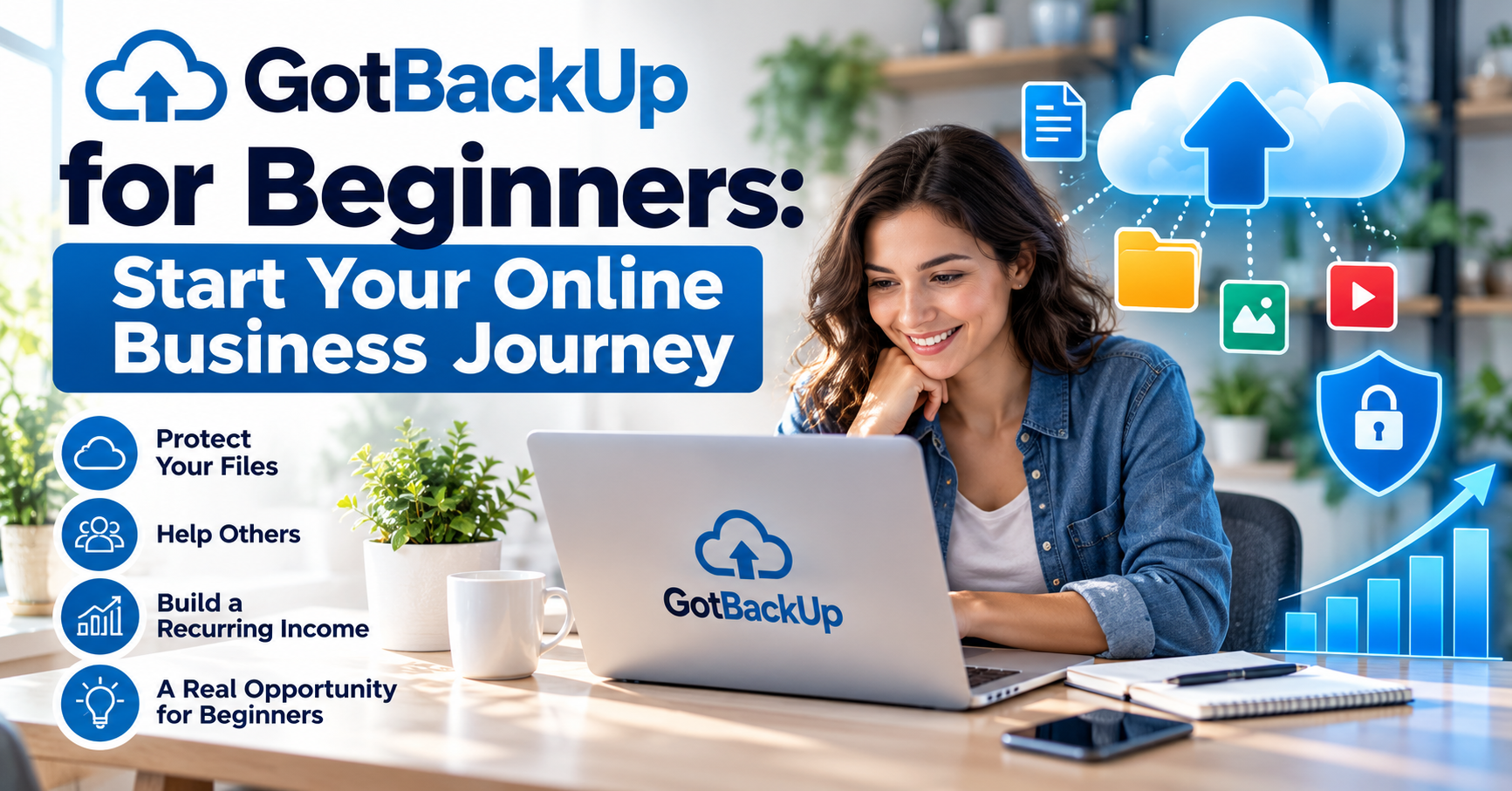
That is the idea behind GotBackUp, a cloud backup service that also offers a reseller opportunity.
Could it be an option worth exploring for someone with no previous online business experience?
Let’s examine what GotBackUp offers, how its business model works, what beginners should expect, and how to take the first step.
What Exactly Is GotBackUp?
GotBackUp is a digital cloud backup service designed to help individuals and families protect important electronic files.
Think about everything stored on your computer or other electronic devices:
- Family photographs and personal videos.
- Important financial and legal documents.
- School assignments and educational materials.
- Business records and professional projects.
- Personal memories that may be impossible to replace.
Now imagine losing access to those files because of a damaged computer, accidental deletion, hardware failure, or another unexpected problem.
Cloud backup services help reduce the risk of permanent data loss by maintaining additional copies of files in remote storage.
GotBackUp offers backup and file-access features for its customers.
Its advertised Family plan includes six separate accounts, a combined 6 TB of backup storage, and support for backing up multiple devices.
The important distinction is that GotBackUp is a digital service first, with a separate business opportunity available to eligible resellers.
Customers can benefit from the service without needing to promote it.
Why Is Cloud Backup a Product Worth Understanding?
We live in a world increasingly dependent on digital information.
Families store photographs instead of printing albums. Small businesses maintain electronic records. Students complete assignments online. Entrepreneurs rely on computers to manage daily operations.
- Yet not everyone has a dependable backup plan.
This creates an opportunity to educate people about digital protection.
Consider three common situations.
A parent protecting family memories: Years of photographs and videos may exist on a single computer. Having additional backups can help protect those memories.
A freelancer managing client projects: Losing documents or project files could interrupt work. A reliable backup routine can help reduce this risk.
A small business owner safeguarding records: Important documents may be stored electronically and should be protected against accidental loss.
- These are practical needs, not hypothetical luxuries.
That is why an online business centered on explaining digital backup may appeal to someone interested in recommending a useful service.
Of course, GotBackUp is not the only cloud backup provider. Customers should compare features, storage limits, security, reliability, and pricing before choosing any service.
How Can Beginners Earn Commissions With GotBackUp?
GotBackUp provides a reseller or affiliate program for people interested in recommending its services.
The basic process is straightforward:
- Learn about the product and its benefits.
- Activate the appropriate reseller eligibility or license.
- Receive a personalized referral link and available promotional tools.
- Introduce the service to interested people.
- Earn qualifying commissions when purchases or other compensated activity occur under the official program rules.
Depending on the current compensation plan, qualifying resellers may be eligible for direct commissions, recurring commissions associated with continuing subscriptions, and certain team-related bonuses.
- However, commissions are not automatic.
Simply becoming a reseller does not mean you will earn money.
The number of customers you attract, their purchases and retention, program requirements, and your operating expenses all affect your results.
This is a commission-based business opportunity—not a salary, a guaranteed investment, or a promise of passive income.
Do You Need Previous Experience?
One reason people investigate digital referral programs is that they may be easier to begin learning than businesses that require manufacturing products or maintaining physical inventory.
With GotBackUp, beginners do not need to develop their own cloud storage technology or personally handle physical merchandise.
- The company provides the underlying digital service.
Its reseller program also advertises marketing resources that may include referral pages, presentations, promotional materials, and follow-up tools.
- This can help reduce some initial technical tasks.
Nevertheless, there are important skills every beginner should develop:
Communication: Learn to explain what cloud backup does in simple language.
Digital marketing: Understand how educational content, social media, and permission-based email marketing can connect you with potential customers.
Customer relationships: Answer questions honestly and follow up professionally.
Consistency: Set realistic weekly activity goals and review your progress.
Financial awareness: Track expenses, commissions, and actual net profit.
- You do not need to know everything on your first day.
But you do need to be willing to learn.
What Does It Cost to Get Started?
Before joining any business opportunity, it is important to understand its costs.
At the time of writing, GotBackUp’s official pages advertise a Family cloud backup plan at approximately $9.97 per month, or $99.97 per year.
- Its business FAQ also describes a reseller or affiliate fee of $20 annually.
Some other promotional pages display different packages, billing structures, or introductory offers. Therefore, you should verify the exact fees, renewal terms, and services included on the final checkout page before purchasing.
Additional optional expenses could include advertising, marketing software, business tools, or educational resources.
- Beginners should not spend money they cannot afford to lose.
A sensible approach is to understand the product and business model before deciding whether the recurring costs fit your budget.
A Beginner-Friendly Plan for Your First Seven Days
Starting with an organized plan can help you avoid the confusion that often accompanies a new online business.
Day 1: Understand the Product
Explore what GotBackUp provides.
Learn about cloud backup, account features, pricing, and customer support.
Your priority should be product knowledge, not recruiting.
Day 2: Understand the Business Opportunity
Review the reseller terms, eligible commissions, fees, and restrictions.
Ask questions about how payments are calculated, when commissions become payable, and what happens if a customer cancels.
Day 3: Identify Your Audience
Think about people who may benefit from better digital file protection.
Possible audiences include families, freelancers, online entrepreneurs, students, and small business owners.
Focus on customer needs rather than assuming everyone is a potential buyer.
Day 4: Prepare Your Educational Message
Write a simple explanation of the service.
For example:
«Have you ever thought about what would happen if your computer stopped working and you lost your important files? I’ve been exploring a cloud backup service designed to help people protect their digital memories and documents. I can share information if you’d like to learn more.»
- This approach begins a conversation without pressuring anyone.
Day 5: Choose One Marketing Channel
You do not need to promote through every platform.
Start with one channel you understand, such as:
- A personal blog.
- A professional Facebook page.
- Educational YouTube videos.
- A permission-based email newsletter.
- Relevant online communities that allow promotional or educational participation.
Create useful content before asking people to purchase.
Day 6: Learn to Follow Up
Some people will have questions. Others may want to compare alternatives or discuss pricing.
- Answer respectfully.
Avoid repeated unsolicited messages, misleading claims, or exaggerated promises.
A professional follow-up should help someone make an informed decision, not create artificial urgency.
Day 7: Evaluate Your Progress
Look at what you accomplished during the week.
Did you understand the service better? Did you publish useful educational content? Did anyone express genuine interest?
Use these observations to plan the following week.
Remember that learning and business development are gradual processes.
- Seven days is an introduction, not a deadline for earning commissions.
Five Common Mistakes Beginners Should Avoid
Many new online entrepreneurs become discouraged because their expectations are unrealistic.
Here are five mistakes worth avoiding.
Mistake 1: Expecting immediate income. Commissions depend on qualifying business activity. There is no predictable deadline for making a first sale.
Mistake 2: Promoting without understanding the product. Potential customers deserve accurate information about what they are purchasing.
Mistake 3: Treating every contact as a prospect. Build relationships and respect people’s preferences.
Mistake 4: Spending excessively on advertising. Test messages carefully, monitor expenses, and avoid risking essential household funds.
Mistake 5: Focusing exclusively on recruitment. Sustainable customer relationships begin with genuine product value. Understand the full compensation structure and never suggest that recruiting alone guarantees earnings.
The objective is not simply to attract attention.
- It is to develop trust.
Can You Build a Business Without Being a Technology Expert?
Yes, it is possible to learn digital marketing gradually.
You do not have to be a programmer, website developer, or professional advertiser to understand a referral-based business.
- Many useful skills can be learned through practice.
For example, you might begin by writing one helpful article per week about protecting family photographs, backing up business documents, or preventing avoidable data loss.
That article could introduce the subject, answer common questions, and invite interested readers to explore a relevant service.
Over time, you might expand into educational videos, email newsletters, and other marketing activities.
The goal is to develop a repeatable process:
Educate → Build Trust → Explain the Solution → Invite a Decision → Provide Support
This process does not guarantee sales, but it provides a more professional foundation than simply posting referral links everywhere.
Is GotBackUp Right for Everyone?
Not necessarily.
GotBackUp may be worth examining if you:
- Are interested in a digital service with a practical purpose.
- Want to learn how referral and commission-based marketing works.
- Are comfortable communicating with potential customers.
- Can afford the necessary fees without financial hardship.
- Are willing to review the terms and develop marketing skills.
It may not be appropriate if you need immediate guaranteed income, cannot afford recurring costs, dislike sales-related activities, or have no interest in the underlying service.
People seeking a stable salary may be better served by employment or contract work.
- The right decision depends on your needs, expectations, and financial circumstances.
Frequently Asked Questions
Can I explore GotBackUp without paying immediately?
The English opportunity tour currently provides a free introductory presentation. Exploring that presentation does not, by itself, require purchasing a membership.
Do I need to own a website?
According to GotBackUp’s business FAQ, a personal website is not required because the reseller program provides referral and promotional resources.
Will I receive commissions just for signing up?
No. Earnings require qualifying activity under the official compensation rules.
Can commissions continue every month?
Some compensation components relate to continuing subscriptions, but eligibility and actual payments depend on current program rules and customer activity.
Is this passive income?
Not automatically. Referrals, content creation, customer communication, and ongoing business management generally require effort.
Can I build this business while keeping my current job?
The promotional activities can potentially be organized around other responsibilities, but results depend on the time, resources, and consistency you bring to the business.
Your Next Step: Learn Before You Decide
Every successful learning journey begins with a decision to understand something new.
You do not have to resign from your job, become an expert overnight, or make unrealistic financial commitments to explore an online business model.
You can begin by learning what the product offers, how customers use it, and how eligible resellers may earn commissions.
Then decide whether the opportunity matches your personal goals.
The most valuable first step is not spending money. It is becoming informed.
Ready to Explore GotBackUp? Your Free Tour Starts Here!
You have already taken an important step by learning how this business model works. Now discover the service and opportunity for yourself.
If you have been searching for an online business you can learn from the beginning, consider exploring GotBackUp before dismissing the possibility.
- You do not need prior marketing experience to watch the presentation.
You need curiosity, a willingness to learn, and the discipline to decide for yourself.
Visit the free GotBackUp opportunity tour today:
YES! SHOW ME HOW GOTBACKUP WORKS — START MY FREE TOUR
Discover the digital backup service, explore the reseller opportunity, and decide whether this is a direction you want to pursue.
Your future business journey could begin with one informed decision. Make that decision yours.
Affiliate Disclosure: This article contains a GotBackUp referral link. If you purchase or join through it, the referring reseller may receive compensation at no additional referral charge to you. This article is educational and promotional; readers should independently review the product, program terms, and costs.
Earnings Disclaimer: GotBackUp is a commission-based business opportunity. Earnings are not guaranteed, and some participants may earn little or nothing or incur a financial loss after expenses. Any potential income depends on qualifying sales, customer retention, applicable compensation rules, individual effort, and other factors. No specific financial outcome is promised.
Published for educational purposes by Marvin Gandis — Team Leader GotBackUp.


Debe estar conectado para enviar un comentario.