By Marvin Gandis
Attention Is the New Currency
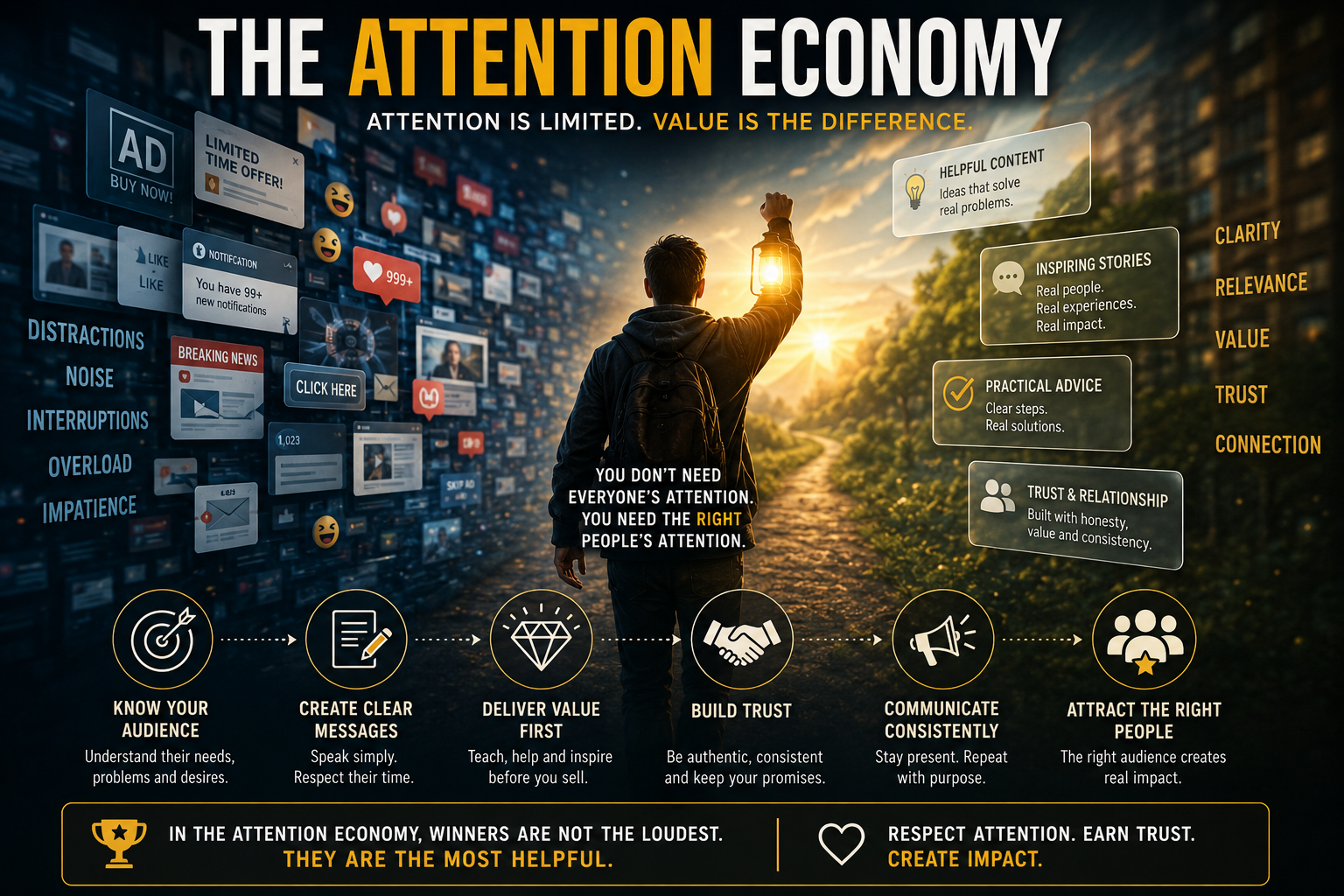
We live in a time when many people have more information than ever before, but very limited attention.
Every day, a person may see posts, videos, ads, emails, messages, news, offers, notifications, and opinions. Everything is competing for a few seconds of their mind.
That is why one of the greatest challenges today is not simply having something to say.
The real challenge is getting someone to stop, listen, understand, and trust.
In the digital world, attention has become a very valuable currency.
But here is the problem: many people want attention without first building enough value to deserve it.
They publish, promote, invite, insist, and push… but they do not always ask themselves:
- Does my message deserve to be heard?
That question can completely change the way you communicate.
People Are Not Obligated to Listen to Us
Even when we have good intentions, nobody is obligated to give us their attention.
- Nobody is obligated to read our article.
- Nobody is obligated to open our email.
- Nobody is obligated to watch our video.
- Nobody is obligated to buy our product.
- Nobody is obligated to answer our message.
Attention is not demanded. It is earned.
And it is earned when our message offers something the person considers useful, clear, human, interesting, or necessary.
This may sound strong, but it is also liberating.
Because if attention is earned, then we can improve.
- We can write better titles.
- We can explain with more clarity.
- We can tell better stories.
- We can serve before selling.
- We can connect with real problems.
- We can respect the audience’s time more.
Attention is not an automatic right. It is a communication responsibility.
Digital Noise Has Trained People to Ignore
Many people no longer ignore because they lack interest. They ignore it as a form of protection.
- They ignore because they are tired.
- They ignore because they have received too many promises.
- They ignore it because they have seen too much exaggeration.
- They ignore it because they do not want to waste time.
- They ignore because they do not know whom to trust.
- They ignore because everything seems urgent, but very little seems important.
In a world saturated with messages, the mind learns to filter.
That is why, if your message feels generic, confusing, exaggerated, or too sales-driven, it will probably be ignored.
- Not because people are bad.
- Not because your offer has no value.
- Not because your effort does not matter.
But because the busy mind protects its attention.
A Good Message Respects the Person’s Time
One of the most common mistakes in marketing and communication is thinking only about what we want to say, without thinking about what the other person needs to receive.
An effective message respects the reader’s time.
- It does not begin with confusion.
- It does not wander unnecessarily.
- It does not promise more than it can deliver.
- It does not pressure without offering value.
- It does not speak only about the product.
- It does not ignore the person’s real problem.
A good message says clearly:
- “I understand your situation.”
- “This is what may help you.”
- “This is why it matters.”
- “This is the next step.”
Clarity is a form of respect.
When you are clear, you save your audience mental energy.
Attention Is Earned Through Relevance
People pay attention when they feel something connects with their life.
That is why a relevant message touches a real need.
- It can touch a pain.
- It can touch a concern.
- It can touch a desire.
- It can touch a question.
- It can touch a frustration.
- It can touch a hope.
For example, it is not the same to say:
- “We offer a cloud backup system.”
As it is to say:
“If your phone was lost tomorrow or your computer suddenly failed, would your photos, documents, and important files be protected?”
The second message touches a real concern.
Relevance turns a general idea into something personal.
Attention Without Trust Does Not Last
You can get attention with a strong title, an attractive image, or a powerful phrase.
But if there is no substance afterward, attention disappears.
Attention may open the door, but trust keeps the person inside.
That is why it is not enough to create curiosity. You must also deliver value.
- If you promise to teach, teach.
- If you promise to help, help.
- If you promise to explain, explain.
- If you promise to guide, guide.
- If you promise clarity, do not deliver confusion.
Manipulated attention becomes distrust.
Attention earned with value becomes a relationship.
Not Every Piece of Content Should Sell Immediately
Many people lose attention because they turn every message into a direct sale.
- Every post sells.
- Every email sells.
- Every story sells.
- Every phrase pushes an offer.
That becomes exhausting.
Not because selling is bad. Selling is necessary when there is a legitimate solution. But selling without educating, serving, and building trust can damage the relationship.
Your content should have different purposes.
- Some messages educate.
- Some inspire.
- Some explain.
- Some answer questions.
- Some share stories.
- Some invite action.
When everything is on sale, the audience protects itself.
When there is a consistent value, the sale feels more natural.
Story Captures What Information Cannot
Information can be useful, but a story makes the message memorable.
People do not always remember data, but they remember experiences.
- They remember the entrepreneur who kept going when nobody applauded.
- They remember the person who lost important files because they were not prepared.
- They remember the worker who had to learn again in order not to fall behind.
- They remember the leader who built trust with patience.
- They remember the creator who stopped disappearing because they found clarity.
Stories help people see the message in their own lives.
A good story not only informs. It illuminates.
Attention Also Requires Intelligent Repetition
Many people say something once and become frustrated because nobody responds.
But audiences need repetition.
- People need to see you several times.
- They need to hear your message several times.
- They need to understand your message from different angles.
- They need to become familiar with you.
- They need to confirm that you are consistent.
But repetition does not mean saying the same thing in a boring way.
You can repeat an idea as an article, image, email, story, question, list, reflection, short video, or testimonial.
Intelligent repetition does not annoy. It builds presence.
How to Create Messages That Deserve Attention
First, begin with the real problem.
Before talking about your solution, show that you understand what the person is facing.
Second, use clear and human titles.
A title should awaken curiosity, but it should also promise something honest.
Third, deliver value early.
Do not make the person wait too long to find the main idea.
Fourth, speak simply.
Clarity beats confusion.
Fifth, combine teaching with emotion.
People think, but they also feel. A good message touches both areas.
Sixth, include a clear next step.
After reading, the person should know what they can do: reflect, learn more, register, reply, share, or apply an idea.
Seventh, respect trust.
Do not use exaggerated fear or false promises to gain quick attention.
The Most Valuable Attention Comes From the Right Person
You do not need everyone to listen to you.
You need the right person to listen.
- The person who needs your message.
- The person who values your approach.
- The person who connects with your story.
- The person who respects the way you communicate.
- The person who can benefit from what you offer.
Sometimes we chase big numbers and forget the quality of attention.
- One thousand distracted people may ignore you.
- One right person may read, trust, respond, and act.
Do not only chase attention. Build a connection.
Your Message Must Earn the Right to Be Heard
My dear reader and friend, in a world full of noise, attention is not gained simply by speaking louder.
It is gained by communicating better.
- It is not enough to publish. You must provide value.
- It is not enough to sell. You must build trust.
- It is not enough to insist. You must be relevant.
- It is not enough to appear. You must serve with clarity.
Attention is valuable because people’s lives are full of distractions, responsibilities, doubts, and exhaustion.
That is why, when someone gives you their attention, respect it.
- Respect it with honesty.
- Respect it with clarity.
- Respect it with useful content.
- Respect it with humanity.
- Respect it with purpose.
Because in the attention economy, the winner is not the one who shouts the most.
The winner is the one who knows how to communicate value in a way the mind understands, and the heart recognizes.
- Your message does not need to be perfect.
- But it must be clear, honest, useful, and worthy of being heard.
Disclaimer:
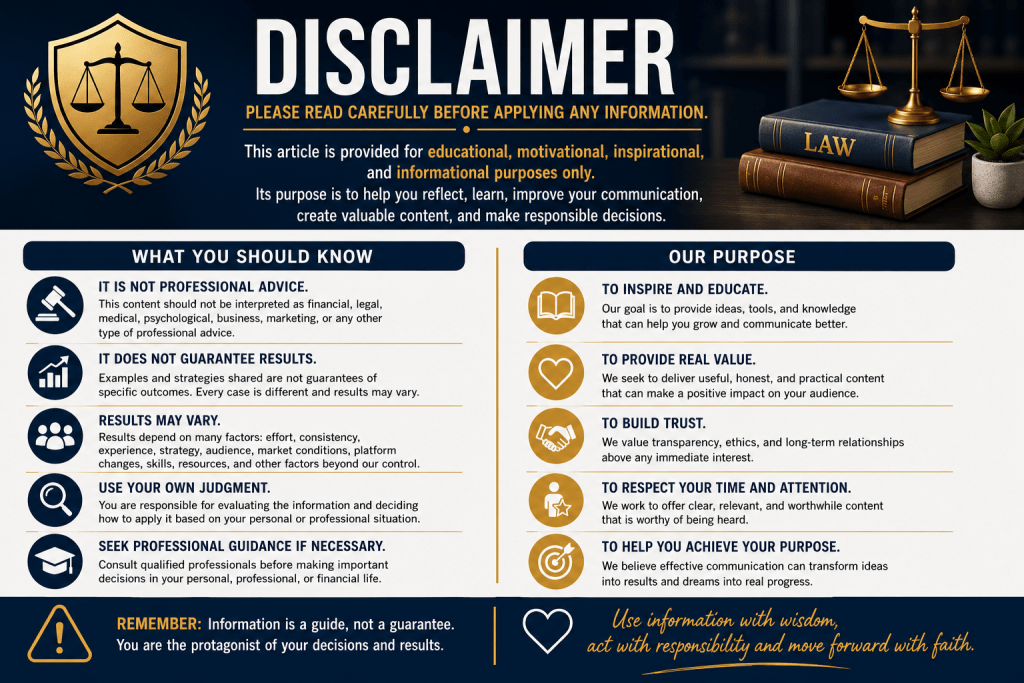
This article is provided for educational, motivational, inspirational, and informational purposes only. It is intended to encourage reflection, better communication, digital awareness, ethical marketing, content improvement, and responsible decision-making.
The content should not be interpreted as financial, legal, medical, psychological, business, marketing, or professional advice. Any examples related to digital marketing, content creation, online visibility, audience engagement, trust-building, personal branding, or business growth are not guarantees of specific results.
Individual outcomes may vary depending on effort, consistency, experience, strategy, audience, market conditions, platform changes, technology, communication skills, and other factors beyond our control.
Readers are encouraged to use their own judgment, conduct their own research, and seek qualified professional guidance when necessary. The purpose of this content is to inspire and educate, not to promise instant results or replace professional advice.


Debe estar conectado para enviar un comentario.