Publicado en Affiliate Marketing, Artificial Intelligence, Digital Marketing, Email Marketing, Lead Generation, List Building, Marketing Automation, Network Marketing, Online Business

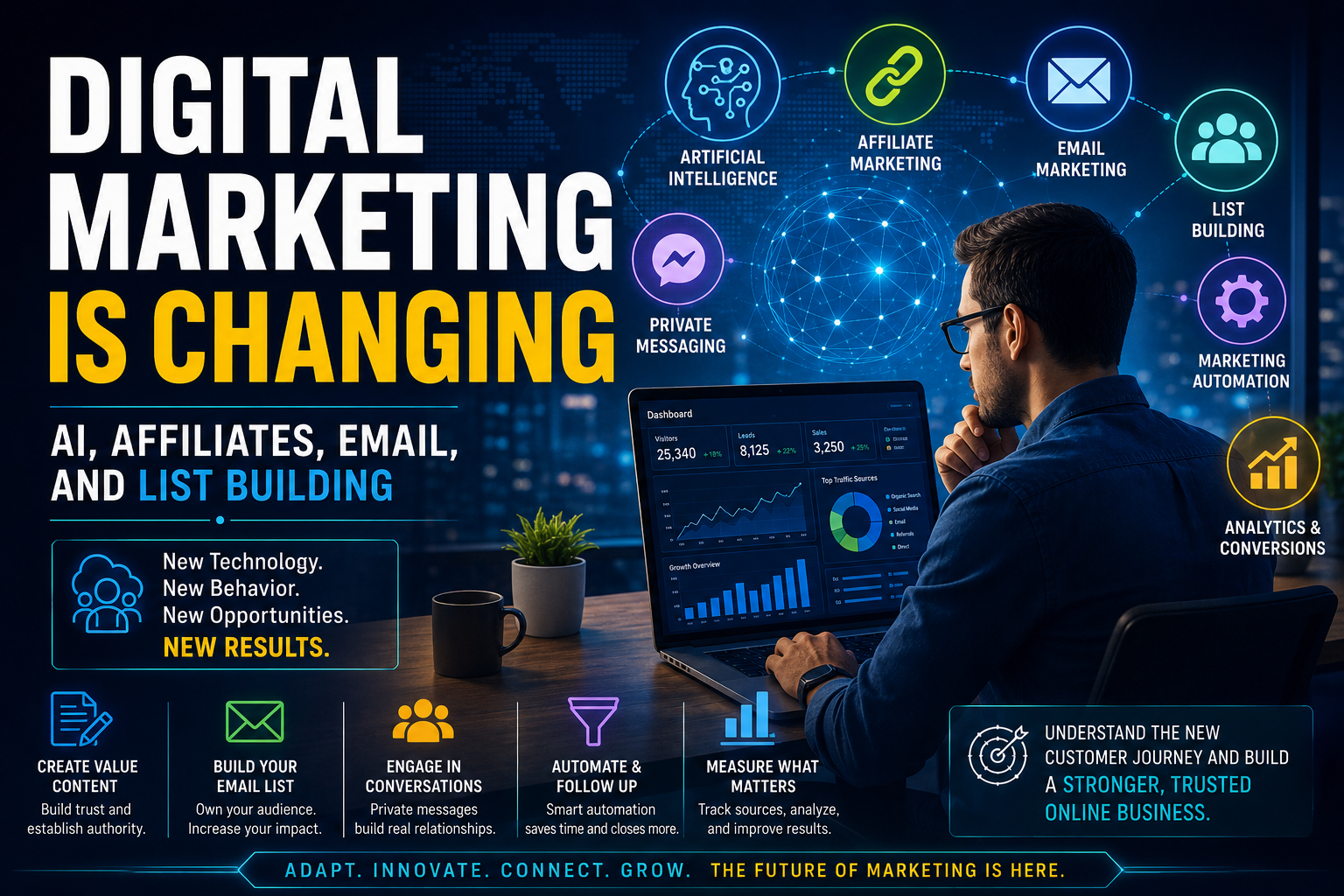
Digital Marketing Is Changing: Artificial Intelligence, Affiliate Tracking, Email, and List Building

By Marvin Gandis

Internet marketing is undergoing a major transformation. For years, many strategies depended on a relatively simple process: publish an advertisement, generate a click, send the visitor to a page, and attribute the sale to the last link used.

That model still exists, but it no longer fully represents how people discover products, research opportunities, and make decisions.

A prospect may now read an article, hear a recommendation, watch a video, consult an artificial intelligence tool, receive a private message, and return directly to a website several days later. When the person finally registers or makes a purchase, the tracking system may not correctly recognize the source of influence.

This change has significant consequences for people involved in digital marketing, affiliate marketing, list building, and network marketing.

Generating more clicks is no longer enough. Marketers must build authority, protect email deliverability, measure the customer journey more accurately, follow disclosure rules, and create content valuable enough to be discovered by both people and artificial intelligence systems.

This article examines the most important changes and presents practical actions for adapting to them.


1. Product Discovery No Longer Depends Only on the Click

In traditional affiliate marketing, the click was at the center of attribution.

A prospect found a post, clicked an affiliate link, visited the product page, and made a purchase. The system placed a cookie and assigned the commission to the appropriate affiliate.

Today, the journey is far more complicated.

A person may:

  • Discover a brand through an AI-generated answer.
  • See a post on Facebook.
  • Hear a recommendation from a friend.
  • Read a review several days later.
  • Search directly for the company’s name.
  • Register from another device.
  • Complete the purchase without using the original affiliate link again.

In this situation, the affiliate may have played a decisive role, but a last-click system may not recognize it.

Why it matters

Affiliate reports may show less influence than actually exists.

An educational campaign may be generating awareness, trust, and indirect sales even when the affiliate dashboard does not reflect all those results.

Affiliate links are still useful, but they should be supplemented with other measurement methods.

Practical action

Add a simple question to registration, contact, or free-trial forms:

How did you first hear about our service?

Possible options include:

  • Google
  • Facebook
  • YouTube
  • Email
  • An artificial intelligence tool
  • A friend or family member
  • Another source

Store this information in GetResponse, a tracking worksheet, or a contact-management system.

Over time, compare prospect responses with click and conversion statistics.


2. Tracking Failures Can Reduce Affiliate Commissions

A commission can be lost even when the sale is legitimate.

This may happen because:

  • The prospect uses an ad blocker.
  • The affiliate cookie expires.
  • The tracking link does not function properly.
  • The person moves from a phone to a computer.
  • Registration occurs several days after the initial click.
  • The prospect returns directly to the website.
  • Referral information is not preserved during a free trial.
  • A contact is entered manually without retaining the source.

This issue is especially important for programs that offer free trials.

The first click may happen on Monday, registration on Wednesday, and paid conversion the following week. When the system fails to preserve referral information throughout the journey, the affiliate may not receive credit.

Why it matters

Sending more traffic without testing the tracking process may increase visitors without increasing commissions.

A small technical failure can affect hundreds of visits without the promoter realizing it.

Practical action

Test every major funnel from beginning to end.

  1. Open the affiliate link on a mobile phone.
  2. Complete the form with a test email address.
  3. Confirm that the registration appears correctly.
  4. Verify that the referral source is preserved.
  5. Review the follow-up sequence.
  6. Repeat the test on a computer.
  7. Repeat it in a private browser window.
  8. Take screenshots and record the date.

When a discrepancy appears, document it and contact the company before investing additional money or effort in traffic.


3. Artificial Intelligence Is Changing Content Visibility

Articles are no longer written only for Google, Facebook, or email subscribers.

They may also be used as sources by artificial intelligence tools.

When someone asks:

  • How can I protect my personal files?
  • Is cloud storage worth paying for?
  • How do I build an email list?
  • How can I sell without applying pressure?
  • What should I know before joining a network-marketing opportunity?

An AI system may look for reliable, clear, and well-organized information when preparing its response.

This creates a major opportunity for educational content creators.

Content that may lose visibility

Shallow content will have a harder time standing out.

Weak formats include:

  • Articles created only to insert links.
  • Pages that copy promotional descriptions.
  • Posts without an identifiable author.
  • Exaggerated or unsupported content.
  • Text that is too general.
  • Reviews that offer no real analysis.
  • Mass-produced content without human experience.

Content that may gain authority

Useful, specific, and well-structured content has a better chance of being discovered and recommended.

A strong article should include:

  • A direct answer to a specific question.
  • Clear examples.
  • Benefits and limitations.
  • Frequently asked questions.
  • Author information.
  • Publication or update date.
  • Reliable sources when needed.
  • A clear affiliate disclosure.
  • An honest call to action.

Practical action

Publish articles that answer specific questions instead of covering only broad subjects.

For example:

What Happens to Your Family Photos and Documents When a Computer Fails?

This title addresses a real concern and creates space to explain the risk, available solutions, and the importance of backups without beginning with a sales presentation.


4. Private Messaging Is Becoming More Important

Many business conversations begin publicly but end privately.

A person may discover a post on Facebook or Instagram, but ask serious questions through Messenger or WhatsApp.

Private messaging offers:

  • More personal responses.
  • Greater privacy.
  • Immediate communication.
  • Less public pressure.
  • Easy sharing of links and instructions.
  • Continuity across different stages of the process.

For network marketing, this can be highly effective when used respectfully.

The right approach

Messaging should begin with consent and usefulness.

A proper sequence may look like this:

Educational post → request for information → private message → resource delivery → follow-up question → permission to present the opportunity

Deliver what was promised first. Begin the conversation afterward.

The wrong approach

Messaging becomes harmful when it is used to:

  • Send unsolicited mass promotions.
  • Copy the same message to dozens of people.
  • Immediately introduce an income opportunity.
  • Pressure the prospect.
  • Use exaggerated claims.
  • Continue messaging after the person has shown no interest.

Practical action

Create one consent-based path.

For example:

“I am preparing a free guide about protecting important files and family photographs. Reply GUIDE, and I will send it to you privately.”

After delivering the guide, ask:

“Which type of information are you most concerned about losing: photographs, documents, work files, or family records?”

That question begins a real conversation and helps identify the prospect’s need before introducing a solution.


5. Email Deliverability Remains Essential

Email continues to be one of the most valuable assets in digital marketing.

Social-media algorithms can change. Accounts can lose reach. Platforms can restrict content. A properly managed email list, however, provides a more direct relationship with subscribers.

That advantage depends on deliverability.

A message that does not reach the inbox cannot educate, build trust, or produce a sale.

Factors affecting deliverability

Important factors include:

  • SPF authentication.
  • DKIM signing.
  • DMARC policy.
  • Domain reputation.
  • Spam complaints.
  • Old or purchased lists.
  • Inactive contacts.
  • Sudden sending-volume increases.
  • Misleading subject lines.
  • Excessive links.
  • Poor-reputation domains included in messages.
  • Missing or unclear unsubscribe options.

Why it matters

Using GetResponse, AWeber, or another service does not automatically guarantee strong deliverability.

The platform may send the message, but domain reputation and list quality remain the campaign owner’s responsibility.

Practical action

Perform a basic audit:

  1. Confirm that the domain has SPF.
  2. Activate DKIM.
  3. Publish DMARC.
  4. Review sender-domain alignment.
  5. Test the unsubscribe link.
  6. Remove invalid addresses.
  7. Separate active and inactive subscribers.
  8. Reduce mailings to people who never open.
  9. Monitor bounce and complaint rates.
  10. Avoid sudden changes in sending volume.

6. Building a List Is Still More Important Than Accumulating Followers

A social-media follower is not the same as an email subscriber.

The platform controls reach, algorithms, and visibility. An owned list provides greater control, although it also requires greater responsibility.

List building should not depend only on offering a generic gift. The resource should solve a real problem and attract the kind of person who may later benefit from the marketer’s services.

Examples of strong lead magnets

  • A digital-file protection checklist.
  • A guide to starting an email list.
  • A follow-up plan for affiliate marketers.
  • A welcome-message template for new prospects.
  • A report on avoiding aggressive sales tactics.
  • A beginner’s network-marketing guide.
  • A simple deliverability audit.

What happens after registration

A common mistake is focusing only on collecting the email address.

The real value is created through the follow-up sequence.

A strong welcome sequence may include:

  1. Immediate resource delivery.
  2. A brief introduction to the author.
  3. An explanation of the main problem.
  4. One practical tip.
  5. A story or personal experience.
  6. An invitation to reply.
  7. A moderate introduction to the solution.
  8. Ongoing educational follow-up.

Practical action

Review the primary lead magnet and ask:

  • Does it solve a specific problem?
  • Does it attract the right prospect?
  • Is it delivered immediately?
  • Does the first week of follow-up provide value?
  • Is there a natural transition to the product?
  • Does the subscriber understand why future emails will arrive?

7. Affiliate Disclosures Must Be Clear

Transparency should not be viewed as an obstacle to selling.

A clear disclosure may strengthen trust because it demonstrates honesty.

Readers should understand that the promoter may receive compensation when they register or purchase through certain links.

A proper disclosure should be

  • Visible.
  • Easy to understand.
  • Located near the recommendation.
  • Written in the same language as the content.
  • Presented before the reader clicks.
  • Free of unnecessarily complicated legal language.

Example

“This article contains affiliate links. I may receive compensation if you enroll or make a purchase through one of these links, at no additional cost to you.”

Testimonials and results

Testimonials also require care.

They should not:

  • Guarantee results.
  • Present unusual earnings as typical.
  • Hide business relationships.
  • Invent experiences.
  • Edit statements misleadingly.
  • Use screenshots without context.

Practical action

Review articles, emails, landing pages, and social posts. Place the disclosure before or near the first commercial link and confirm that all testimonials are genuine, authorized, and presented in the proper context.


8. Educational Content Should Lead to a Next Step

Educational content should not become an endless collection of information without direction.

Every article, email, or video should help the prospect take an appropriate next step.

That step does not always have to be a purchase.

It may be:

  • Downloading a guide.
  • Answering a question.
  • Subscribing.
  • Watching a demonstration.
  • Trying a service.
  • Requesting more information.
  • Attending a presentation.
  • Comparing alternatives.
  • Reading a related article.

Why it works

People feel less pressure when the next step is small, clear, and logical.

Instead of requesting a major decision immediately, content can guide the prospect gradually.

Practical action

Use one primary call to action per article.

For example:

“Download the free checklist for protecting your photographs, documents, and important files.”

Avoid presenting too many competing choices.


9. Automation Should Support Human Relationships

Automation can deliver messages, classify contacts, and provide follow-up without depending entirely on manual work.

It should not pretend that a personal relationship exists when it does not.

Automation should be used to:

  • Deliver resources.
  • Confirm registrations.
  • Educate.
  • Remind.
  • Segment.
  • Identify interest.
  • Prepare a human conversation.

It should not be used to:

  • Invent urgency.
  • Send falsely personal messages.
  • Apply constant pressure.
  • Repeat the same promotion indefinitely.
  • Hide the fact that communication is automated.
  • Completely replace human attention.

Practical action

Review all automated responses and identify the exact moment when an interested prospect should receive personal attention.

Examples include when a person:

  • Replies to an email.
  • Clicks several times.
  • Completes a free trial.
  • Requests pricing.
  • Asks about the opportunity.
  • Repeatedly visits an important page.

10. The Strongest Strategy Combines Authority, a List, and Follow-Up

Sustainable digital marketing does not depend on a single platform.

A more resilient strategy combines:

  • Educational content.
  • Search visibility.
  • Artificial-intelligence visibility.
  • Social media.
  • Private messaging.
  • Lead-capture forms.
  • Email.
  • Personal follow-up.
  • Source measurement.
  • Transparent disclosures.

Each element has a purpose.

Content attracts.

The list preserves the relationship.

Email educates.

Messaging answers questions.

Follow-up converts.

Measurement reveals what is working.

Transparency protects trust.


Seven-Day Action Plan

Day 1: Review every link

Test each affiliate link, lead-capture page, and form.

Day 2: Audit email deliverability

Check SPF, DKIM, DMARC, bounces, and unsubscribe functions.

Day 3: Add the attribution question

Ask prospects how they first heard about the service.

Day 4: Improve the lead magnet

Make sure it solves a specific need.

Day 5: Review the welcome sequence

Confirm that it educates before selling.

Day 6: Publish an authority article

Answer one real and specific question.

Day 7: Create a path to conversation

Connect the article, form, email, and personal follow-up.


Conclusion

The future of digital marketing will not necessarily belong to the person who publishes the most, sends the most messages, or purchases the most traffic.

It will belong to the marketer who best understands the prospect’s journey.

People now discover opportunities through search engines, articles, videos, private conversations, personal recommendations, and artificial intelligence systems. This makes the process less visible, but it also creates new opportunities for those who consistently build trust.

The priorities are clear:

  • Create useful content.
  • Measure beyond the click.
  • Protect deliverability.
  • Verify tracking.
  • Build an owned list.
  • Obtain consent.
  • Disclose commercial relationships.
  • Automate without losing the human element.

Technology will continue to change.

The principles of trust, clarity, usefulness, and responsible follow-up will remain essential.


Disclaimer

This article is provided for educational and informational purposes only. It does not constitute legal, financial, or business advice. Email-provider rules, advertising-platform policies, and affiliate-program terms may change. Always review the official terms of each service and consult a qualified professional when necessary. Marketing, traffic, lead-generation, and commission results will vary.
Publicado en Affiliate Marketing, Business Growth, Customer Loyalty, Digital Marketing, Lead Generation, Network Marketing, Online Business

Referral Marketing: The Power of Trust, Relationships, and Word-of-Mouth Growth

By Marvin Gandis

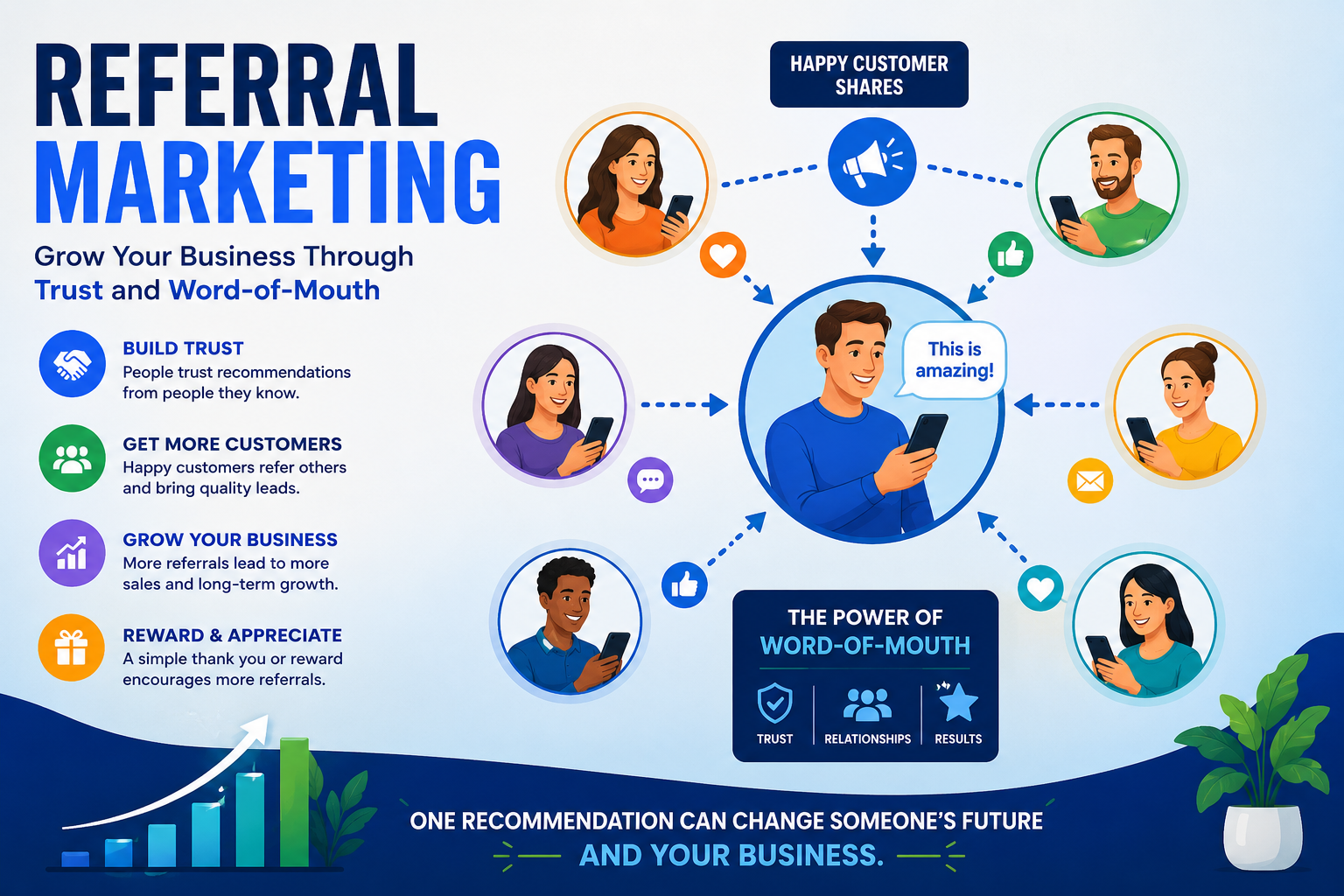
Referral Marketing is one of the most powerful and natural ways to grow a business. Long before social media, paid ads, websites, funnels, and email campaigns existed, people were already using referrals. Someone had a good experience, told someone else, and a new customer was born.

That simple human action — one person recommending something valuable to another person — is the foundation of referral marketing.

In today’s digital world, where people are bombarded with advertisements, sales messages, promotions, and offers, trust has become one of the most valuable currencies in business. People may ignore a random ad, but they pay attention when a friend, family member, customer, coworker, or trusted contact says, “This worked for me,” or “You should check this out.”

Referral marketing works because it is built on something stronger than hype: relationships, credibility, and personal experience.


What Is Referral Marketing?

Referral marketing is a strategy where satisfied customers, users, members, or supporters recommend a product, service, brand, program, or opportunity to others.

Instead of relying solely on cold traffic or paid advertising, referral marketing encourages real people to share their positive experiences with their networks.

A referral may happen through:

  • A personal conversation
  • A social media post
  • A private message
  • An email invitation
  • A testimonial
  • A shared link
  • A customer recommendation
  • A business opportunity invitation
  • A review or success story

The goal is simple: turn happy customers and supporters into trusted ambassadors.

Referral marketing is not just about getting more people to talk about your business. It is about creating a system where people genuinely want to recommend what you offer because they see value in it.


Why Referral Marketing Works

People trust people more than they trust advertisements.

When someone receives a recommendation from a person they already know, the message feels more personal and credible. It does not feel like a company trying to sell something. It feels like a helpful suggestion.

That is why referral marketing can produce better quality leads than many traditional marketing methods. A referred person often arrives with more trust, more curiosity, and less resistance.

Referral marketing works because it combines three powerful elements:

  • Trust: The recommendation comes from someone familiar.
  • Proof: The person making the referral has experience or belief in the offer.
  • Connection: The message feels personal instead of promotional.

When those three elements come together, people are more willing to listen, click, join, buy, subscribe, or ask questions.


The Difference Between Referral Marketing and Regular Advertising

Traditional advertising usually starts with a business speaking to a stranger. Referral marketing often starts with a trusted person speaking to another person.

  • Advertising says: “Look at what we offer.”
  • Referral marketing says: “I found something valuable, and I think it may help you.”

That difference matters.

Advertising can still be powerful, but referral marketing adds the missing human connection. It makes the message warmer, more believable, and more personal.

  • In advertising, people often ask, “Can I trust this company?”
  • In referral marketing, people often think, “I trust the person who shared this with me, so I am willing to take a look.”

The Core Principle of Referral Marketing

The heart of referral marketing is not pressure. It is valuable.

A strong referral system should never feel forced, manipulative, or desperate. People refer others when they believe something is useful, helpful, interesting, profitable, inspiring, or worth sharing.

The best referral marketing strategy begins with this question:

“What value am I providing that people would feel comfortable recommending?”

If the product or service is weak, referral marketing becomes difficult. But when the offer truly solves a problem, saves time, protects something important, helps someone grow, or improves a person’s life, referrals become much easier.

People love sharing things that make them look helpful, smart, resourceful, and generous.


Benefits of Referral Marketing

Referral marketing offers many benefits for entrepreneurs, small businesses, online marketers, bloggers, affiliate marketers, network marketers, coaches, and service providers.

1. It Builds Trust Faster

A cold lead may need time to believe your message. A referred lead already has a level of trust because someone they know introduced them to your offer.

This shortens the trust-building process.

2. It Can Lower Marketing Costs

Paid advertising can become expensive. Referral marketing can reduce the need to depend only on ads because your customers and contacts help spread the message.

3. It Produces Higher-Quality Leads

Referred prospects are often better qualified because they come through a personal connection. They may already understand why the offer matters before they ever speak with you.

4. It Encourages Loyalty

When customers refer others, they often feel more connected to the brand. They are not just buyers; they become part of the growth story.

5. It Creates Momentum

One referral can lead to another. When people have a positive experience, the message can multiply naturally.

A good referral system can turn one satisfied person into many new conversations.


Who Can Use Referral Marketing?

Referral marketing is not only for large companies. It can work for almost anyone who has something valuable to offer.

It can be used by:

  • Online business owners
  • Affiliate marketers
  • Network marketers
  • Coaches and consultants
  • Real estate agents
  • Insurance agents
  • Bloggers and content creators
  • E-commerce stores
  • Local service businesses
  • Software companies
  • Subscription services
  • Churches, nonprofits, and community groups
  • Digital product creators
  • Course creators
  • Freelancers

If people can benefit from what you offer, referrals can help you grow.


Referral Marketing in the Online Business World

In online business, referral marketing is especially powerful because sharing is simple. A person can share a link, post, video, landing page, newsletter, or invitation in seconds.

However, easy sharing does not automatically mean effective marketing.

Many people make the mistake of only posting links without building trust first. They treat referral marketing like link dropping. But real referral marketing is not about throwing links everywhere. It is about creating curiosity, educating people, building relationships, and inviting the right people to take the next step.

A strong online referral strategy may include:

  • Educational content
  • Personal stories
  • Helpful posts
  • Email follow-ups
  • Testimonials
  • Simple landing pages
  • Clear calls to action
  • Value-based conversations
  • Consistent visibility
  • A professional follow-up system

When done correctly, referral marketing becomes more than promotion. It becomes a relationship-building machine.


How to Build a Successful Referral Marketing System

A strong referral system does not happen by accident. It must be designed with intention.

Step 1: Know Your Ideal Audience

Before asking people to refer others, you must know who your offer is for.

Ask yourself:

  • Who has the problem my offer solves?
  • Who would benefit the most from this product or service?
  • What pain, frustration, desire, or goal does my offer address?
  • What type of person would be excited to share this?

When you understand your ideal audience, your referral message becomes clearer.

Step 2: Create a Simple Message

People do not refer to what they cannot explain.

Your message should be simple enough for someone to repeat easily.

For example:

  • “This helps people protect their important files.”
  • “This teaches beginners how to start online.”
  • “This helps business owners get more leads.”
  • “This tool saves time and simplifies follow-up.”

A confused person does not refer. A clear message travels faster.

Step 3: Deliver Real Value First

The best referral program begins with a good experience.

Before asking for referrals, make sure your product, service, or opportunity provides value. People are more likely to recommend something when they have confidence in it.

Value creates belief. Belief creates referrals.

Step 4: Make It Easy to Share

Do not make people work hard to refer others.

Give them simple tools such as:

  • A referral link
  • A short message
  • A landing page
  • A video
  • A social media post
  • An email template
  • A simple explanation
  • A shareable image

The easier you make it, the more likely people are to take action.

Step 5: Ask at the Right Time

Timing matters.

The best time to ask for a referral is when the person has experienced value, achieved a result, received help, or expressed satisfaction.

For example:

  • After a positive testimonial
  • After a successful purchase
  • After a helpful conversation
  • After a customer receives support
  • After a member says they like the product
  • After someone shares a positive result

Do not ask too early. Ask when trust and satisfaction are present.

Step 6: Use Follow-Up

Many referrals do not convert immediately. That does not mean they are not interested.

A good follow-up system helps educate, remind, and guide people over time. This can include email sequences, personal messages, newsletters, blog posts, videos, and helpful reminders.

Referral marketing becomes more powerful when combined with follow-up.

Step 7: Recognize and Appreciate Referrers

People like to feel appreciated.

A simple thank-you message can go a long way. Recognition, bonuses, rewards, commissions, shout-outs, or exclusive access can also motivate people to keep sharing.

Appreciation creates loyalty.


Common Referral Marketing Mistakes

Even though referral marketing is powerful, many people do it incorrectly.

Mistake 1: Only Sharing Links

A link without context is easy to ignore. People need a reason to care.

Instead of only sharing a link, explain the benefit, tell a short story, or ask a curiosity-based question.

Mistake 2: Sounding Too Pushy

Referral marketing should feel helpful, not desperate. Pressure creates resistance. Value creates interest.

Mistake 3: Not Following Up

Many people share once and disappear. Real growth comes from consistent communication.

Mistake 4: Not Knowing the Audience

If you share the right offer with the wrong people, the results will be weak. Targeting matters.

Mistake 5: Having No System

A referral system needs structure. Without a simple process, opportunities get lost.


Powerful Referral Marketing Message Examples

Here are a few simple referral-style messages you can adapt:

Example 1:
“I found something that may help you with this. It is simple, practical, and worth reviewing.”

Example 2:
“I thought about you because this may solve a problem you mentioned before.”

Example 3:
“This helped me understand a better way to approach online business, and I wanted to share it with you.”

Example 4:
“No pressure at all, but I believe this could be valuable for you. Take a look when you have a moment.”

Example 5:
“If you know someone who needs help with this, feel free to share it with them.”

The best referral messages are warm, honest, and simple.


Referral Marketing and Personal Branding

Your personal brand plays a major role in referral marketing.

People do not only refer to products. They also refer people they trust.

If you are known as someone who provides value, educates others, follows up professionally, and communicates with honesty, people are more likely to listen when you recommend something.

Your reputation becomes part of your referral system.

That is why consistency matters. Every post, email, message, article, and conversation helps shape how people see you.

A strong personal brand makes referral marketing easier because people already associate you with helpful information.


How Content Supports Referral Marketing

Content is one of the best tools for referral marketing.

A blog article, video, social media post, short guide, checklist, or email can explain your offer before a person ever speaks with you.

Content helps you:

  • Educate prospects
  • Answer objections
  • Build trust
  • Tell stories
  • Show benefits
  • Create curiosity
  • Provide proof
  • Invite action

When someone asks, “What is this about?” you can send them helpful content instead of trying to explain everything manually.

Content gives referrals a place to go.


How Email Marketing Supports Referral Marketing

Email marketing strengthens referral marketing because it allows you to follow up with people who show interest.

Not everyone will take action the first time they hear about your offer. Some people need more education, reminders, examples, and encouragement.

An email sequence can help you:

  • Welcome new leads
  • Explain the problem
  • Present the solution
  • Share success stories
  • Answer common questions
  • Build credibility
  • Invite people to take action
  • Stay connected over time

Referral marketing brings people in. Email marketing helps nurture them.

Together, they create a stronger system.


How to Encourage More Referrals

To generate more referrals, focus on making the process natural and easy.

Here are practical ways to encourage referrals:

  • Ask satisfied customers to share their experience.
  • Create a simple referral link.
  • Provide shareable posts or images.
  • Offer helpful educational content.
  • Thank people publicly or privately.
  • Create a reward or commission structure.
  • Make your offer easy to explain.
  • Build relationships before asking.
  • Share testimonials and real stories.
  • Follow up consistently.

People are more willing to refer when they know exactly what to say, who to share it with, and why it matters.


The Human Side of Referral Marketing

At its deepest level, referral marketing is not about numbers. It is about people.

Behind every referral is a relationship. Behind every click is a person with questions, doubts, hopes, goals, and problems to solve.

When you remember this, your marketing becomes more respectful and effective.

Do not treat people like leads only. Treat them like human beings.

Listen. Educate. Serve. Guide. Follow up. Be patient.

The best referral marketers are not the ones who pressure the most. They are the ones who create the most trust.


Final Thoughts

Referral marketing is one of the most effective ways to grow a business because it is built on trust, value, and relationships.

It allows satisfied customers, supporters, members, and contacts to become ambassadors for your message. It can reduce marketing costs, increase lead quality, strengthen loyalty, and create long-term momentum.

But referral marketing only works well when it is done with honesty, clarity, and consistency.

Do not focus only on getting people to share your link. Focus on becoming someone worth recommending. Focus on delivering value worth talking about. Focus on creating a message that people can believe in and share with confidence.

When people trust you, understand your message, and see the value in what you offer, referrals become more than a marketing strategy.

They become a natural extension of the relationships you build.

Do you know someone who could benefit from this information?

Share this article with them today. Your recommendation may be exactly what they need to take the next step.


Disclaimer

This article is for educational and informational purposes only. It does not guarantee income, sales, leads, business growth, or specific marketing results. Referral marketing results may vary depending on your offer, audience, consistency, communication, follow-up, market conditions, and individual effort. Always use ethical marketing practices and comply with applicable laws, platform rules, and privacy regulations.

Publicado en Crecimiento de Negocios, Fidelización de Clientes, Generación de Prospectos, Marketing de Afiliados,, Marketing Digital, Negocios Online, Network Marketing

Marketing de Referidos: El Poder de la Confianza, las Relaciones y el Crecimiento Boca a Boca

Por Marvin Gandis

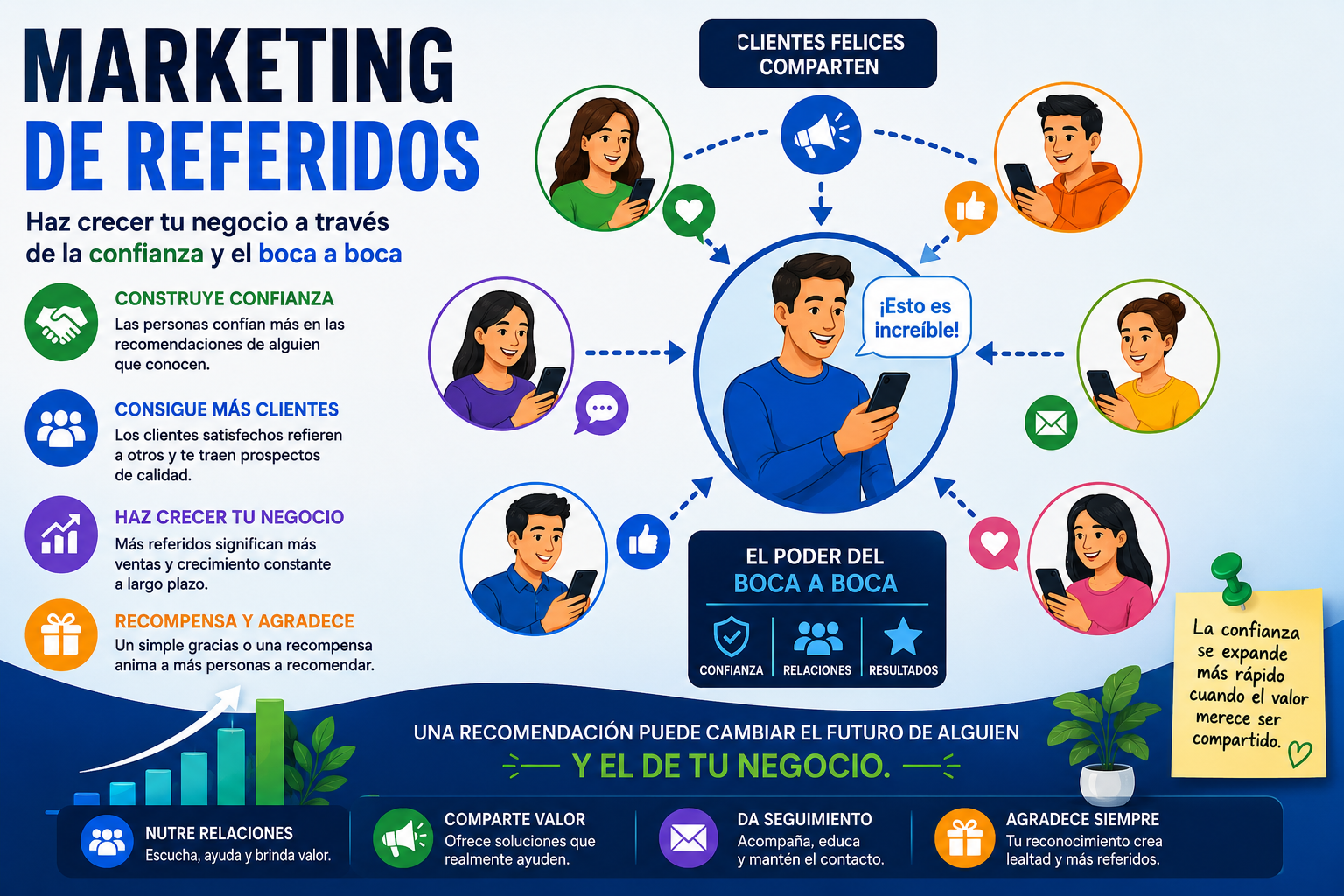
El marketing de referidos es una de las formas más poderosas y naturales de hacer crecer un negocio. Mucho antes de que existieran las redes sociales, los anuncios pagados, las páginas web, los embudos de venta y las campañas de correo electrónico, las personas ya utilizaban los referidos. Alguien tenía una buena experiencia, se la contaba a otra persona, y así nacía un nuevo cliente.

Esa acción tan sencilla y humana — una persona recomendando algo valioso a otra persona — es la base del marketing de referidos.

En el mundo digital actual, donde las personas reciben anuncios, mensajes de venta, promociones y ofertas constantemente, la confianza se ha convertido en una de las monedas más valiosas en los negocios. Muchas personas pueden ignorar un anuncio cualquiera, pero prestan atención cuando un amigo, familiar, cliente, compañero de trabajo o contacto de confianza dice: “Esto me funcionó”, o “Deberías mirar esto.”

El marketing de referidos funciona porque está construido sobre algo más fuerte que la exageración: relación, credibilidad y experiencia personal.


¿Qué Es el Marketing de Referidos?

El marketing de referidos es una estrategia donde clientes satisfechos, usuarios, miembros o personas que apoyan una marca recomiendan un producto, servicio, programa, oportunidad o negocio a otras personas.

En lugar de depender únicamente del tráfico frío o de la publicidad pagada, el marketing de referidos anima a personas reales a compartir su experiencia positiva con su red de contactos.

Un referido puede ocurrir a través de:

  • Una conversación personal
  • Una publicación en redes sociales
  • Un mensaje privado
  • Una invitación por correo electrónico
  • Un testimonio
  • Un enlace compartido
  • Una recomendación de cliente
  • Una invitación a una oportunidad de negocio
  • Una reseña o historia de éxito

El objetivo es simple: convertir clientes y seguidores satisfechos en embajadores de confianza.

El marketing de referidos no trata solamente de lograr que más personas hablen de tu negocio. Se trata de crear un sistema donde las personas realmente quieran recomendar lo que ofreces porque ven valor en ello.


Por Qué Funciona el Marketing de Referidos

Las personas confían más en otras personas que en los anuncios.

Cuando alguien recibe una recomendación de una persona que ya conoce, el mensaje se siente más personal y creíble. No parece una empresa tratando de vender algo. Se siente como una sugerencia útil.

Por eso el marketing de referidos puede producir prospectos de mejor calidad que muchos métodos tradicionales de marketing. Una persona referida generalmente llega con más confianza, más curiosidad y menos resistencia.

El marketing de referidos funciona porque combina tres elementos poderosos:

  • Confianza: La recomendación viene de alguien conocido.
  • Prueba: La persona que refiere tiene experiencia o cree en la oferta.
  • Conexión: El mensaje se siente personal, no simplemente promocional.

Cuando estos tres elementos se unen, las personas están más dispuestas a escuchar, hacer clic, unirse, comprar, suscribirse o hacer preguntas.


La Diferencia Entre Marketing de Referidos y Publicidad Tradicional

La publicidad tradicional normalmente comienza con una empresa hablándole a un desconocido. El marketing de referidos muchas veces comienza con una persona de confianza hablándole a otra persona.

  • La publicidad dice: “Mira lo que ofrecemos.”
  • El marketing de referidos dice: “Encontré algo valioso y creo que puede ayudarte.”

Esa diferencia importa.

La publicidad puede ser poderosa, pero el marketing de referidos añade el elemento humano que muchas veces falta. Hace que el mensaje sea más cálido, más creíble y más personal.

  • En la publicidad, la persona suele preguntarse: “¿Puedo confiar en esta empresa?”
  • En el marketing de referidos, la persona suele pensar: “Confío en quien me compartió esto, así que vale la pena mirarlo.”

El Principio Central del Marketing de Referidos

El corazón del marketing de referidos no es la presión. Es el valor.

Un buen sistema de referidos nunca debe sentirse forzado, manipulador o desesperado. Las personas se refieren a otros cuando creen que algo es útil, interesante, rentable, inspirador o digno de compartir.

La mejor estrategia de marketing de referidos comienza con esta pregunta:

“¿Qué valor estoy ofreciendo que las personas se sentirían cómodas recomendando?”

Si el producto o servicio es débil, el marketing de referidos se vuelve difícil. Pero cuando la oferta realmente resuelve un problema, ahorra tiempo, protege algo importante, ayuda a alguien a crecer o mejora la vida de una persona, los referidos se vuelven mucho más naturales.

A las personas les gusta compartir cosas que las hacen ver útiles, inteligentes, generosas y bien informadas.


Beneficios del Marketing de Referidos

El marketing de referidos ofrece muchos beneficios para emprendedores, pequeños negocios, marketers digitales, bloggers, afiliados, network marketers, coaches y proveedores de servicios.

1. Construye Confianza Más Rápido

Un prospecto frío puede necesitar tiempo para creer en tu mensaje. Un prospecto referido ya llega con cierto nivel de confianza porque alguien que conoce le presentó tu oferta.

Esto acorta el proceso de construcción de confianza.

2. Puede Reducir Costos de Marketing

La publicidad pagada puede ser costosa. El marketing de referidos puede reducir la dependencia exclusiva de los anuncios, porque tus clientes y contactos ayudan a compartir el mensaje.

3. Produce Prospectos de Mejor Calidad

Los prospectos referidos suelen estar mejor calificados porque llegan a través de una conexión personal. Muchas veces ya entienden por qué la oferta puede ser importante antes de hablar contigo.

4. Fortalece la Lealtad

Cuando los clientes refieren a otros, suelen sentirse más conectados con la marca. Ya no son solamente compradores; se convierten en parte de la historia de crecimiento.

5. Crea Momentum

Un referido puede traer otro referido. Cuando las personas tienen una experiencia positiva, el mensaje puede multiplicarse naturalmente.

Un buen sistema de referidos puede convertir a una persona satisfecha en muchas nuevas conversaciones.


¿Quién Puede Usar el Marketing de Referidos?

El marketing de referidos no es solo para grandes empresas. Puede funcionar para casi cualquier persona que tenga algo valioso que ofrecer.

Puede ser utilizado por:

  • Dueños de negocios online
  • Afiliados
  • Network marketers
  • Coaches y consultores
  • Agentes de bienes raíces
  • Agentes de seguros
  • Bloggers y creadores de contenido
  • Tiendas de comercio electrónico
  • Negocios locales de servicios
  • Empresas de software
  • Servicios por suscripción
  • Iglesias, organizaciones sin fines de lucro y grupos comunitarios
  • Creadores de productos digitales
  • Creadores de cursos
  • Freelancers

Si las personas pueden beneficiarse de lo que ofreces, los referidos pueden ayudarte a crecer.


El Marketing de Referidos en los Negocios Online

En los negocios online, el marketing de referidos es especialmente poderoso porque compartir es sencillo. Una persona puede compartir un enlace, publicación, video, página de captura, boletín o invitación en segundos.

Sin embargo, que sea fácil compartir no significa que automáticamente sea efectivo.

Muchas personas cometen el error de solo publicar enlaces sin construir confianza primero. Tratan el marketing de referidos como si fuera simplemente lanzar enlaces por todas partes. Pero el verdadero marketing de referidos no se trata de tirar enlaces. Se trata de crear curiosidad, educar a las personas, construir relaciones e invitar a las personas correctas a dar el siguiente paso.

Una estrategia fuerte de referidos online puede incluir:

  • Contenido educativo
  • Historias personales
  • Publicaciones útiles
  • Seguimiento por email
  • Testimonios
  • Páginas de captura simples
  • Llamados a la acción claros
  • Conversaciones basadas en valor
  • Visibilidad constante
  • Un sistema profesional de seguimiento

Cuando se hace correctamente, el marketing de referidos se convierte en mucho más que promoción. Se convierte en una máquina de construir relaciones.


Cómo Crear un Sistema Exitoso de Marketing de Referidos

Un sistema fuerte de referidos no ocurre por accidente. Debe diseñarse con intención.

Paso 1: Conoce a Tu Audiencia Ideal

Antes de pedirle a las personas que refieran a otros, debes saber para quién es tu oferta.

Pregúntate:

  • ¿Quién tiene el problema que mi oferta resuelve?
  • ¿Quién se beneficiaría más de este producto o servicio?
  • ¿Qué dolor, frustración, deseo o meta atiende mi oferta?
  • ¿Qué tipo de persona estaría emocionada de compartir esto?

Cuando entiendes a tu audiencia ideal, tu mensaje de referido se vuelve más claro.

Paso 2: Crea un Mensaje Simple

Las personas no refieren lo que no pueden explicar.

Tu mensaje debe ser lo suficientemente simple para que alguien pueda repetirlo fácilmente.

Por ejemplo:

  • “Esto ayuda a las personas a proteger sus archivos importantes.”
  • “Esto enseña a principiantes cómo empezar online.”
  • “Esto ayuda a dueños de negocio a conseguir más prospectos.”
  • “Esta herramienta ahorra tiempo y simplifica el seguimiento.”

Una persona confundida no refiere. Un mensaje claro viaja más rápido.

Paso 3: Entrega Valor Real Primero

El mejor programa de referidos comienza con una buena experiencia.

Antes de pedir referidos, asegúrate de que tu producto, servicio u oportunidad entregue valor. Las personas están más dispuestas a recomendar algo cuando tienen confianza en ello.

El valor crea creencia. La creencia crea referidos.

Paso 4: Haz que Sea Fácil Compartir

No hagas que las personas trabajen demasiado para referir a otros.

Dales herramientas simples como:

  • Un enlace de referido
  • Un mensaje corto
  • Una página de captura
  • Un video
  • Una publicación para redes sociales
  • Una plantilla de correo electrónico
  • Una explicación sencilla
  • Una imagen para compartir

Mientras más fácil lo hagas, más probabilidades hay de que las personas tomen acción.

Paso 5: Pide el Referido en el Momento Correcto

El momento importa.

El mejor momento para pedir un referido es cuando la persona ya ha experimentado valor, recibió ayuda, logró un resultado o expresó satisfacción.

Por ejemplo:

  • Después de un testimonio positivo
  • Después de una compra exitosa
  • Después de una conversación útil
  • Después de que un cliente recibe soporte
  • Después de que un miembro dice que le gusta el producto
  • Después de que alguien comparte un resultado positivo

No pidas demasiado temprano. Pide cuando ya exista confianza y satisfacción.

Paso 6: Usa Seguimiento

Muchos referidos no se convierten de inmediato. Eso no significa que no estén interesados.

Un buen sistema de seguimiento ayuda a educar, recordar y guiar a las personas con el tiempo. Esto puede incluir secuencias de email, mensajes personales, boletines, artículos de blog, videos y recordatorios útiles.

El marketing de referidos se vuelve más poderoso cuando se combina con seguimiento.

Paso 7: Reconoce y Agradece a Quienes Refieren

A las personas les gusta sentirse apreciadas.

Un simple mensaje de agradecimiento puede tener mucho valor. El reconocimiento, bonos, recompensas, comisiones, menciones públicas o acceso exclusivo también pueden motivar a las personas a seguir compartiendo.

La apreciación crea lealtad.


Errores Comunes en el Marketing de Referidos

Aunque el marketing de referidos es poderoso, muchas personas lo hacen de forma incorrecta.

Error 1: Solo Compartir Enlaces

Un enlace sin contexto es fácil de ignorar. Las personas necesitan una razón para prestar atención.

En lugar de solo compartir un enlace, explica el beneficio, cuenta una historia corta o haz una pregunta que despierte curiosidad.

Error 2: Sonar Demasiado Insistente

El marketing de referidos debe sentirse útil, no desesperado. La presión crea resistencia. El valor crea interés.

Error 3: No Dar Seguimiento

Muchas personas comparten una vez y desaparecen. El crecimiento real viene de la comunicación constante.

Error 4: No Conocer la Audiencia

Si compartes la oferta correcta con las personas equivocadas, los resultados serán débiles. La segmentación importa.

Error 5: No Tener un Sistema

Un sistema de referidos necesita estructura. Sin un proceso simple, las oportunidades se pierden.


Ejemplos de Mensajes Poderosos para Referidos

Aquí tienes algunos mensajes simples que puedes adaptar:

Ejemplo 1:
“Encontré algo que puede ayudarte con esto. Es simple, práctico y vale la pena revisarlo.”

Ejemplo 2:
“Pensé en ti porque esto puede resolver un problema que mencionaste antes.”

Ejemplo 3:
“Esto me ayudó a entender una mejor manera de trabajar mi negocio online, y quería compartirlo contigo.”

Ejemplo 4:
“Sin presión alguna, pero creo que esto puede ser valioso para ti. Míralo cuando tengas un momento.”

Ejemplo 5:
“Si conoces a alguien que necesite ayuda con esto, siéntete libre de compartirlo.”

Los mejores mensajes de referidos son cálidos, honestos y sencillos.


Marketing de Referidos y Marca Personal

Tu marca personal juega un papel muy importante en el marketing de referidos.

Las personas no solo recomiendan productos. También recomiendan personas en quienes confían.

Si eres conocido como alguien que ofrece valor, educa a otros, da seguimiento profesional y se comunica con honestidad, las personas estarán más dispuestas a escuchar cuando recomiendas algo.

Tu reputación se convierte en parte de tu sistema de referidos.

Por eso la consistencia importa. Cada publicación, correo, mensaje, artículo y conversación ayuda a formar la manera en que las personas te ven.

Una marca personal fuerte facilita el marketing de referidos porque las personas ya te asocian con información útil.


Cómo el Contenido Apoya el Marketing de Referidos

El contenido es una de las mejores herramientas para el marketing de referidos.

Un artículo de blog, video, publicación en redes sociales, guía corta, checklist o correo puede explicar tu oferta antes de que una persona hable contigo.

El contenido te ayuda a:

  • Educar prospectos
  • Responder objeciones
  • Construir confianza
  • Contar historias
  • Mostrar beneficios
  • Crear curiosidad
  • Proporcionar prueba
  • Invitar a tomar acción

Cuando alguien pregunta: “¿De qué se trata esto?”, puedes enviarle contenido útil en lugar de tratar de explicarlo todo manualmente.

El contenido les da a los referidos un lugar donde informarse.


Cómo el Email Marketing Apoya el Marketing de Referidos

El email marketing fortalece el marketing de referidos porque te permite dar seguimiento a las personas que muestran interés.

No todo el mundo tomará acción la primera vez que escucha sobre tu oferta. Algunas personas necesitan más educación, recordatorios, ejemplos y motivación.

Una secuencia de correos puede ayudarte a:

  • Dar la bienvenida a nuevos prospectos
  • Explicar el problema
  • Presentar la solución
  • Compartir historias de éxito
  • Responder preguntas frecuentes
  • Construir credibilidad
  • Invitar a tomar acción
  • Mantener conexión con el tiempo

El marketing de referidos trae personas. El email marketing las nutre.

Juntos, crean un sistema más fuerte.


Cómo Generar Más Referidos

Para generar más referidos, enfócate en hacer que el proceso sea natural y fácil.

Aquí tienes maneras prácticas de motivar más referidos:

  • Pide a clientes satisfechos que compartan su experiencia.
  • Crea un enlace de referido sencillo.
  • Proporciona publicaciones o imágenes fáciles de compartir.
  • Ofrece contenido educativo útil.
  • Agradece a las personas en privado o públicamente.
  • Crea una estructura de recompensa o comisión.
  • Haz que tu oferta sea fácil de explicar.
  • Construye relaciones antes de pedir.
  • Comparte testimonios e historias reales.
  • Da seguimiento de manera constante.

Las personas están más dispuestas a referir cuando saben exactamente qué decir, con quién compartirlo y por qué importa.


El Lado Humano del Marketing de Referidos

En su nivel más profundo, el marketing de referidos no se trata de números. Se trata de personas.

Detrás de cada referido hay una relación. Detrás de cada clic hay una persona con preguntas, dudas, esperanzas, metas y problemas por resolver.

Cuando recuerdas esto, tu marketing se vuelve más respetuoso y efectivo.

No trates a las personas solamente como prospectos. Trátalas como seres humanos.

Escucha. Educa. Sirve. Guía. Da seguimiento. Ten paciencia.

Los mejores marketers de referidos no son quienes más presionan. Son quienes más confianza crean.


Conclusión

El marketing de referidos es una de las formas más efectivas de hacer crecer un negocio porque está construido sobre confianza, valor y relaciones.

Permite que clientes satisfechos, seguidores, miembros y contactos se conviertan en embajadores de tu mensaje. Puede reducir costos de marketing, aumentar la calidad de los prospectos, fortalecer la lealtad y crear momentum a largo plazo.

Pero el marketing de referidos solo funciona bien cuando se hace con honestidad, claridad y consistencia.

No te enfoques únicamente en lograr que las personas compartan tu enlace. Enfócate en convertirte en alguien digno de ser recomendado. Enfócate en entregar valor que valga la pena compartir. Enfócate en crear un mensaje en el que las personas puedan creer y compartir con confianza.

Cuando las personas confían en ti, entienden tu mensaje y ven el valor de lo que ofreces, los referidos se convierten en más que una estrategia de marketing.

Se convierten en una extensión natural de las relaciones que construyes.

¿Conoces a alguien que pueda beneficiarse de esta información?

Comparte este artículo hoy. Tu recomendación puede ser exactamente lo que esa persona necesita para dar el próximo paso.


Descargo de Responsabilidad

Este artículo es únicamente para fines educativos e informativos. No garantiza ingresos, ventas, prospectos, crecimiento de negocio ni resultados específicos de marketing. Los resultados con el marketing de referidos pueden variar según la oferta, la audiencia, la consistencia, la comunicación, el seguimiento, las condiciones del mercado y el esfuerzo individual. Utiliza siempre prácticas de marketing éticas y cumple con las leyes aplicables, las reglas de cada plataforma y las regulaciones de privacidad.