By Marvin Gandis
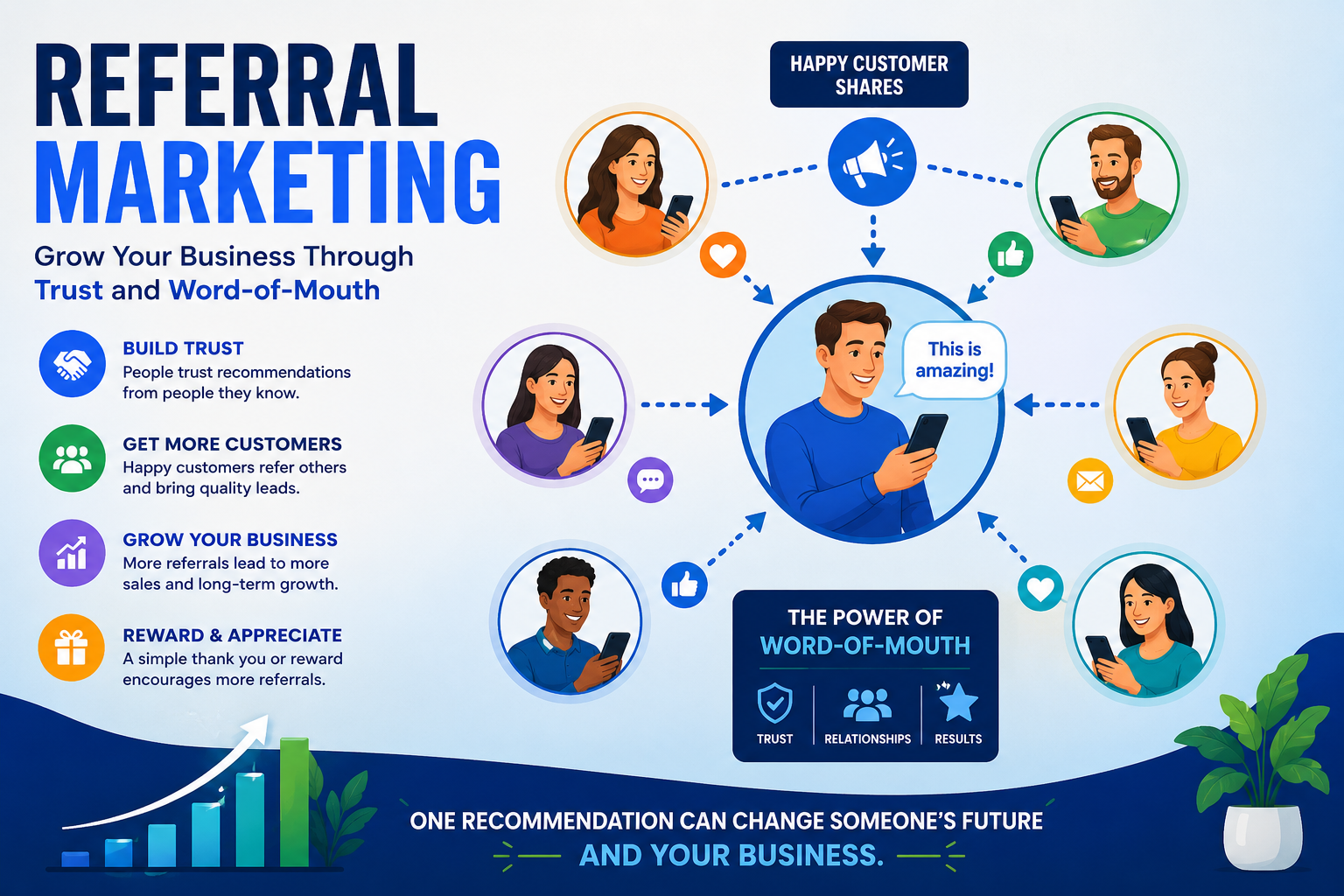
Referral Marketing is one of the most powerful and natural ways to grow a business. Long before social media, paid ads, websites, funnels, and email campaigns existed, people were already using referrals. Someone had a good experience, told someone else, and a new customer was born.
That simple human action — one person recommending something valuable to another person — is the foundation of referral marketing.
In today’s digital world, where people are bombarded with advertisements, sales messages, promotions, and offers, trust has become one of the most valuable currencies in business. People may ignore a random ad, but they pay attention when a friend, family member, customer, coworker, or trusted contact says, “This worked for me,” or “You should check this out.”
Referral marketing works because it is built on something stronger than hype: relationships, credibility, and personal experience.
What Is Referral Marketing?
Referral marketing is a strategy where satisfied customers, users, members, or supporters recommend a product, service, brand, program, or opportunity to others.
Instead of relying solely on cold traffic or paid advertising, referral marketing encourages real people to share their positive experiences with their networks.
A referral may happen through:
- A personal conversation
- A social media post
- A private message
- An email invitation
- A testimonial
- A shared link
- A customer recommendation
- A business opportunity invitation
- A review or success story
The goal is simple: turn happy customers and supporters into trusted ambassadors.
Referral marketing is not just about getting more people to talk about your business. It is about creating a system where people genuinely want to recommend what you offer because they see value in it.
Why Referral Marketing Works
People trust people more than they trust advertisements.
When someone receives a recommendation from a person they already know, the message feels more personal and credible. It does not feel like a company trying to sell something. It feels like a helpful suggestion.
That is why referral marketing can produce better quality leads than many traditional marketing methods. A referred person often arrives with more trust, more curiosity, and less resistance.
Referral marketing works because it combines three powerful elements:
- Trust: The recommendation comes from someone familiar.
- Proof: The person making the referral has experience or belief in the offer.
- Connection: The message feels personal instead of promotional.
When those three elements come together, people are more willing to listen, click, join, buy, subscribe, or ask questions.
The Difference Between Referral Marketing and Regular Advertising
Traditional advertising usually starts with a business speaking to a stranger. Referral marketing often starts with a trusted person speaking to another person.
- Advertising says: “Look at what we offer.”
- Referral marketing says: “I found something valuable, and I think it may help you.”
That difference matters.
Advertising can still be powerful, but referral marketing adds the missing human connection. It makes the message warmer, more believable, and more personal.
- In advertising, people often ask, “Can I trust this company?”
- In referral marketing, people often think, “I trust the person who shared this with me, so I am willing to take a look.”
The Core Principle of Referral Marketing
The heart of referral marketing is not pressure. It is valuable.
A strong referral system should never feel forced, manipulative, or desperate. People refer others when they believe something is useful, helpful, interesting, profitable, inspiring, or worth sharing.
The best referral marketing strategy begins with this question:
“What value am I providing that people would feel comfortable recommending?”
If the product or service is weak, referral marketing becomes difficult. But when the offer truly solves a problem, saves time, protects something important, helps someone grow, or improves a person’s life, referrals become much easier.
People love sharing things that make them look helpful, smart, resourceful, and generous.
Benefits of Referral Marketing
Referral marketing offers many benefits for entrepreneurs, small businesses, online marketers, bloggers, affiliate marketers, network marketers, coaches, and service providers.
1. It Builds Trust Faster
A cold lead may need time to believe your message. A referred lead already has a level of trust because someone they know introduced them to your offer.
This shortens the trust-building process.
2. It Can Lower Marketing Costs
Paid advertising can become expensive. Referral marketing can reduce the need to depend only on ads because your customers and contacts help spread the message.
3. It Produces Higher-Quality Leads
Referred prospects are often better qualified because they come through a personal connection. They may already understand why the offer matters before they ever speak with you.
4. It Encourages Loyalty
When customers refer others, they often feel more connected to the brand. They are not just buyers; they become part of the growth story.
5. It Creates Momentum
One referral can lead to another. When people have a positive experience, the message can multiply naturally.
A good referral system can turn one satisfied person into many new conversations.
Who Can Use Referral Marketing?
Referral marketing is not only for large companies. It can work for almost anyone who has something valuable to offer.
It can be used by:
- Online business owners
- Affiliate marketers
- Network marketers
- Coaches and consultants
- Real estate agents
- Insurance agents
- Bloggers and content creators
- E-commerce stores
- Local service businesses
- Software companies
- Subscription services
- Churches, nonprofits, and community groups
- Digital product creators
- Course creators
- Freelancers
If people can benefit from what you offer, referrals can help you grow.
Referral Marketing in the Online Business World
In online business, referral marketing is especially powerful because sharing is simple. A person can share a link, post, video, landing page, newsletter, or invitation in seconds.
However, easy sharing does not automatically mean effective marketing.
Many people make the mistake of only posting links without building trust first. They treat referral marketing like link dropping. But real referral marketing is not about throwing links everywhere. It is about creating curiosity, educating people, building relationships, and inviting the right people to take the next step.
A strong online referral strategy may include:
- Educational content
- Personal stories
- Helpful posts
- Email follow-ups
- Testimonials
- Simple landing pages
- Clear calls to action
- Value-based conversations
- Consistent visibility
- A professional follow-up system
When done correctly, referral marketing becomes more than promotion. It becomes a relationship-building machine.
How to Build a Successful Referral Marketing System
A strong referral system does not happen by accident. It must be designed with intention.
Step 1: Know Your Ideal Audience
Before asking people to refer others, you must know who your offer is for.
Ask yourself:
- Who has the problem my offer solves?
- Who would benefit the most from this product or service?
- What pain, frustration, desire, or goal does my offer address?
- What type of person would be excited to share this?
When you understand your ideal audience, your referral message becomes clearer.
Step 2: Create a Simple Message
People do not refer to what they cannot explain.
Your message should be simple enough for someone to repeat easily.
For example:
- “This helps people protect their important files.”
- “This teaches beginners how to start online.”
- “This helps business owners get more leads.”
- “This tool saves time and simplifies follow-up.”
A confused person does not refer. A clear message travels faster.
Step 3: Deliver Real Value First
The best referral program begins with a good experience.
Before asking for referrals, make sure your product, service, or opportunity provides value. People are more likely to recommend something when they have confidence in it.
Value creates belief. Belief creates referrals.
Step 4: Make It Easy to Share
Do not make people work hard to refer others.
Give them simple tools such as:
- A referral link
- A short message
- A landing page
- A video
- A social media post
- An email template
- A simple explanation
- A shareable image
The easier you make it, the more likely people are to take action.
Step 5: Ask at the Right Time
Timing matters.
The best time to ask for a referral is when the person has experienced value, achieved a result, received help, or expressed satisfaction.
For example:
- After a positive testimonial
- After a successful purchase
- After a helpful conversation
- After a customer receives support
- After a member says they like the product
- After someone shares a positive result
Do not ask too early. Ask when trust and satisfaction are present.
Step 6: Use Follow-Up
Many referrals do not convert immediately. That does not mean they are not interested.
A good follow-up system helps educate, remind, and guide people over time. This can include email sequences, personal messages, newsletters, blog posts, videos, and helpful reminders.
Referral marketing becomes more powerful when combined with follow-up.
Step 7: Recognize and Appreciate Referrers
People like to feel appreciated.
A simple thank-you message can go a long way. Recognition, bonuses, rewards, commissions, shout-outs, or exclusive access can also motivate people to keep sharing.
Appreciation creates loyalty.
Common Referral Marketing Mistakes
Even though referral marketing is powerful, many people do it incorrectly.
Mistake 1: Only Sharing Links
A link without context is easy to ignore. People need a reason to care.
Instead of only sharing a link, explain the benefit, tell a short story, or ask a curiosity-based question.
Mistake 2: Sounding Too Pushy
Referral marketing should feel helpful, not desperate. Pressure creates resistance. Value creates interest.
Mistake 3: Not Following Up
Many people share once and disappear. Real growth comes from consistent communication.
Mistake 4: Not Knowing the Audience
If you share the right offer with the wrong people, the results will be weak. Targeting matters.
Mistake 5: Having No System
A referral system needs structure. Without a simple process, opportunities get lost.
Powerful Referral Marketing Message Examples
Here are a few simple referral-style messages you can adapt:
Example 1:
“I found something that may help you with this. It is simple, practical, and worth reviewing.”
Example 2:
“I thought about you because this may solve a problem you mentioned before.”
Example 3:
“This helped me understand a better way to approach online business, and I wanted to share it with you.”
Example 4:
“No pressure at all, but I believe this could be valuable for you. Take a look when you have a moment.”
Example 5:
“If you know someone who needs help with this, feel free to share it with them.”
The best referral messages are warm, honest, and simple.
Referral Marketing and Personal Branding
Your personal brand plays a major role in referral marketing.
People do not only refer to products. They also refer people they trust.
If you are known as someone who provides value, educates others, follows up professionally, and communicates with honesty, people are more likely to listen when you recommend something.
Your reputation becomes part of your referral system.
That is why consistency matters. Every post, email, message, article, and conversation helps shape how people see you.
A strong personal brand makes referral marketing easier because people already associate you with helpful information.
How Content Supports Referral Marketing
Content is one of the best tools for referral marketing.
A blog article, video, social media post, short guide, checklist, or email can explain your offer before a person ever speaks with you.
Content helps you:
- Educate prospects
- Answer objections
- Build trust
- Tell stories
- Show benefits
- Create curiosity
- Provide proof
- Invite action
When someone asks, “What is this about?” you can send them helpful content instead of trying to explain everything manually.
Content gives referrals a place to go.
How Email Marketing Supports Referral Marketing
Email marketing strengthens referral marketing because it allows you to follow up with people who show interest.
Not everyone will take action the first time they hear about your offer. Some people need more education, reminders, examples, and encouragement.
An email sequence can help you:
- Welcome new leads
- Explain the problem
- Present the solution
- Share success stories
- Answer common questions
- Build credibility
- Invite people to take action
- Stay connected over time
Referral marketing brings people in. Email marketing helps nurture them.
Together, they create a stronger system.
How to Encourage More Referrals
To generate more referrals, focus on making the process natural and easy.
Here are practical ways to encourage referrals:
- Ask satisfied customers to share their experience.
- Create a simple referral link.
- Provide shareable posts or images.
- Offer helpful educational content.
- Thank people publicly or privately.
- Create a reward or commission structure.
- Make your offer easy to explain.
- Build relationships before asking.
- Share testimonials and real stories.
- Follow up consistently.
People are more willing to refer when they know exactly what to say, who to share it with, and why it matters.
The Human Side of Referral Marketing
At its deepest level, referral marketing is not about numbers. It is about people.
Behind every referral is a relationship. Behind every click is a person with questions, doubts, hopes, goals, and problems to solve.
When you remember this, your marketing becomes more respectful and effective.
Do not treat people like leads only. Treat them like human beings.
Listen. Educate. Serve. Guide. Follow up. Be patient.
The best referral marketers are not the ones who pressure the most. They are the ones who create the most trust.
Final Thoughts
Referral marketing is one of the most effective ways to grow a business because it is built on trust, value, and relationships.
It allows satisfied customers, supporters, members, and contacts to become ambassadors for your message. It can reduce marketing costs, increase lead quality, strengthen loyalty, and create long-term momentum.
But referral marketing only works well when it is done with honesty, clarity, and consistency.
Do not focus only on getting people to share your link. Focus on becoming someone worth recommending. Focus on delivering value worth talking about. Focus on creating a message that people can believe in and share with confidence.
When people trust you, understand your message, and see the value in what you offer, referrals become more than a marketing strategy.
They become a natural extension of the relationships you build.
Do you know someone who could benefit from this information?
Share this article with them today. Your recommendation may be exactly what they need to take the next step.
Disclaimer
This article is for educational and informational purposes only. It does not guarantee income, sales, leads, business growth, or specific marketing results. Referral marketing results may vary depending on your offer, audience, consistency, communication, follow-up, market conditions, and individual effort. Always use ethical marketing practices and comply with applicable laws, platform rules, and privacy regulations.
