Publicado en Affiliate Marketing, Business Growth, Customer Loyalty, Digital Marketing, Lead Generation, Network Marketing, Online Business

Referral Marketing: The Power of Trust, Relationships, and Word-of-Mouth Growth

By Marvin Gandis

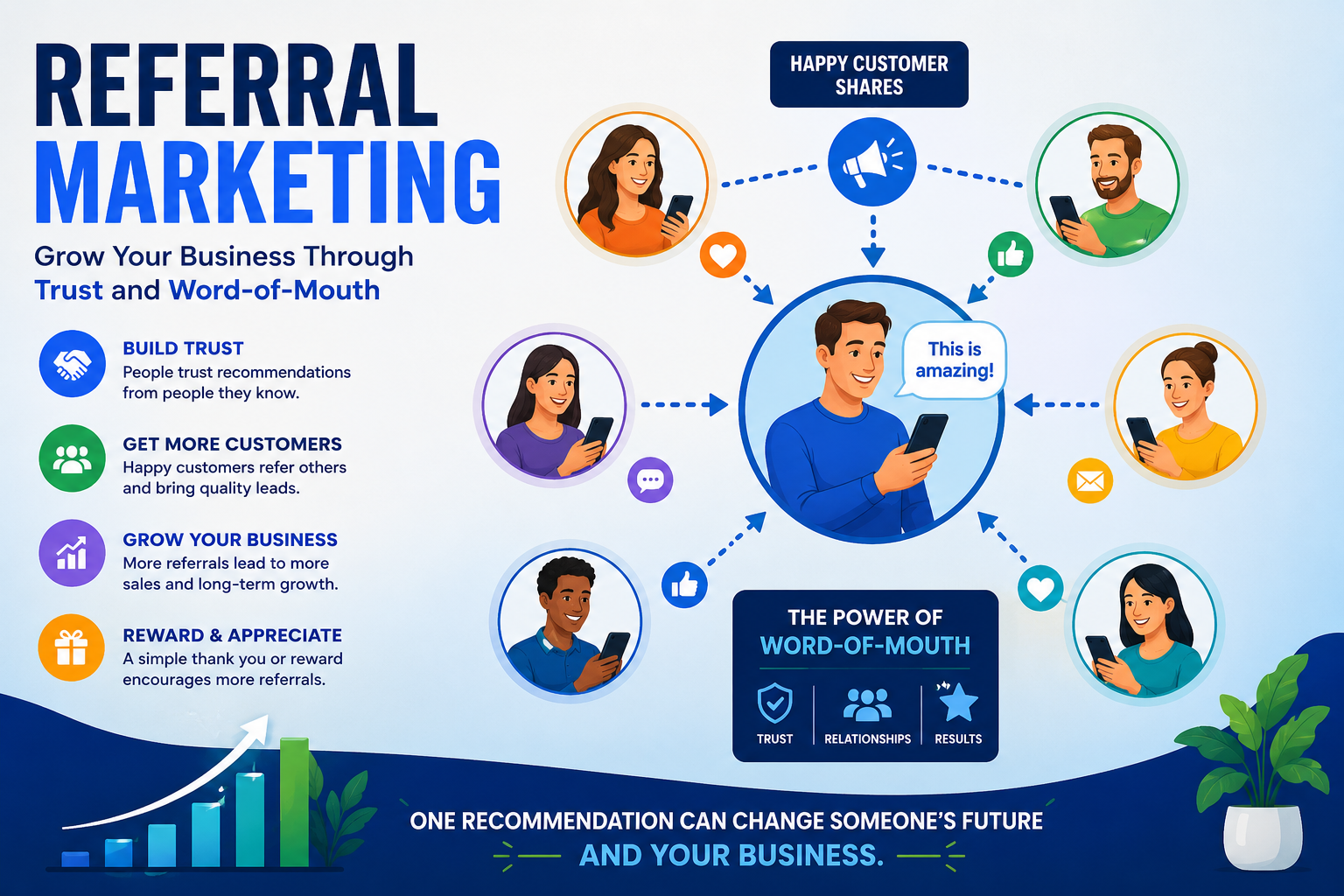
Referral Marketing is one of the most powerful and natural ways to grow a business. Long before social media, paid ads, websites, funnels, and email campaigns existed, people were already using referrals. Someone had a good experience, told someone else, and a new customer was born.

That simple human action — one person recommending something valuable to another person — is the foundation of referral marketing.

In today’s digital world, where people are bombarded with advertisements, sales messages, promotions, and offers, trust has become one of the most valuable currencies in business. People may ignore a random ad, but they pay attention when a friend, family member, customer, coworker, or trusted contact says, “This worked for me,” or “You should check this out.”

Referral marketing works because it is built on something stronger than hype: relationships, credibility, and personal experience.


What Is Referral Marketing?

Referral marketing is a strategy where satisfied customers, users, members, or supporters recommend a product, service, brand, program, or opportunity to others.

Instead of relying solely on cold traffic or paid advertising, referral marketing encourages real people to share their positive experiences with their networks.

A referral may happen through:

  • A personal conversation
  • A social media post
  • A private message
  • An email invitation
  • A testimonial
  • A shared link
  • A customer recommendation
  • A business opportunity invitation
  • A review or success story

The goal is simple: turn happy customers and supporters into trusted ambassadors.

Referral marketing is not just about getting more people to talk about your business. It is about creating a system where people genuinely want to recommend what you offer because they see value in it.


Why Referral Marketing Works

People trust people more than they trust advertisements.

When someone receives a recommendation from a person they already know, the message feels more personal and credible. It does not feel like a company trying to sell something. It feels like a helpful suggestion.

That is why referral marketing can produce better quality leads than many traditional marketing methods. A referred person often arrives with more trust, more curiosity, and less resistance.

Referral marketing works because it combines three powerful elements:

  • Trust: The recommendation comes from someone familiar.
  • Proof: The person making the referral has experience or belief in the offer.
  • Connection: The message feels personal instead of promotional.

When those three elements come together, people are more willing to listen, click, join, buy, subscribe, or ask questions.


The Difference Between Referral Marketing and Regular Advertising

Traditional advertising usually starts with a business speaking to a stranger. Referral marketing often starts with a trusted person speaking to another person.

  • Advertising says: “Look at what we offer.”
  • Referral marketing says: “I found something valuable, and I think it may help you.”

That difference matters.

Advertising can still be powerful, but referral marketing adds the missing human connection. It makes the message warmer, more believable, and more personal.

  • In advertising, people often ask, “Can I trust this company?”
  • In referral marketing, people often think, “I trust the person who shared this with me, so I am willing to take a look.”

The Core Principle of Referral Marketing

The heart of referral marketing is not pressure. It is valuable.

A strong referral system should never feel forced, manipulative, or desperate. People refer others when they believe something is useful, helpful, interesting, profitable, inspiring, or worth sharing.

The best referral marketing strategy begins with this question:

“What value am I providing that people would feel comfortable recommending?”

If the product or service is weak, referral marketing becomes difficult. But when the offer truly solves a problem, saves time, protects something important, helps someone grow, or improves a person’s life, referrals become much easier.

People love sharing things that make them look helpful, smart, resourceful, and generous.


Benefits of Referral Marketing

Referral marketing offers many benefits for entrepreneurs, small businesses, online marketers, bloggers, affiliate marketers, network marketers, coaches, and service providers.

1. It Builds Trust Faster

A cold lead may need time to believe your message. A referred lead already has a level of trust because someone they know introduced them to your offer.

This shortens the trust-building process.

2. It Can Lower Marketing Costs

Paid advertising can become expensive. Referral marketing can reduce the need to depend only on ads because your customers and contacts help spread the message.

3. It Produces Higher-Quality Leads

Referred prospects are often better qualified because they come through a personal connection. They may already understand why the offer matters before they ever speak with you.

4. It Encourages Loyalty

When customers refer others, they often feel more connected to the brand. They are not just buyers; they become part of the growth story.

5. It Creates Momentum

One referral can lead to another. When people have a positive experience, the message can multiply naturally.

A good referral system can turn one satisfied person into many new conversations.


Who Can Use Referral Marketing?

Referral marketing is not only for large companies. It can work for almost anyone who has something valuable to offer.

It can be used by:

  • Online business owners
  • Affiliate marketers
  • Network marketers
  • Coaches and consultants
  • Real estate agents
  • Insurance agents
  • Bloggers and content creators
  • E-commerce stores
  • Local service businesses
  • Software companies
  • Subscription services
  • Churches, nonprofits, and community groups
  • Digital product creators
  • Course creators
  • Freelancers

If people can benefit from what you offer, referrals can help you grow.


Referral Marketing in the Online Business World

In online business, referral marketing is especially powerful because sharing is simple. A person can share a link, post, video, landing page, newsletter, or invitation in seconds.

However, easy sharing does not automatically mean effective marketing.

Many people make the mistake of only posting links without building trust first. They treat referral marketing like link dropping. But real referral marketing is not about throwing links everywhere. It is about creating curiosity, educating people, building relationships, and inviting the right people to take the next step.

A strong online referral strategy may include:

  • Educational content
  • Personal stories
  • Helpful posts
  • Email follow-ups
  • Testimonials
  • Simple landing pages
  • Clear calls to action
  • Value-based conversations
  • Consistent visibility
  • A professional follow-up system

When done correctly, referral marketing becomes more than promotion. It becomes a relationship-building machine.


How to Build a Successful Referral Marketing System

A strong referral system does not happen by accident. It must be designed with intention.

Step 1: Know Your Ideal Audience

Before asking people to refer others, you must know who your offer is for.

Ask yourself:

  • Who has the problem my offer solves?
  • Who would benefit the most from this product or service?
  • What pain, frustration, desire, or goal does my offer address?
  • What type of person would be excited to share this?

When you understand your ideal audience, your referral message becomes clearer.

Step 2: Create a Simple Message

People do not refer to what they cannot explain.

Your message should be simple enough for someone to repeat easily.

For example:

  • “This helps people protect their important files.”
  • “This teaches beginners how to start online.”
  • “This helps business owners get more leads.”
  • “This tool saves time and simplifies follow-up.”

A confused person does not refer. A clear message travels faster.

Step 3: Deliver Real Value First

The best referral program begins with a good experience.

Before asking for referrals, make sure your product, service, or opportunity provides value. People are more likely to recommend something when they have confidence in it.

Value creates belief. Belief creates referrals.

Step 4: Make It Easy to Share

Do not make people work hard to refer others.

Give them simple tools such as:

  • A referral link
  • A short message
  • A landing page
  • A video
  • A social media post
  • An email template
  • A simple explanation
  • A shareable image

The easier you make it, the more likely people are to take action.

Step 5: Ask at the Right Time

Timing matters.

The best time to ask for a referral is when the person has experienced value, achieved a result, received help, or expressed satisfaction.

For example:

  • After a positive testimonial
  • After a successful purchase
  • After a helpful conversation
  • After a customer receives support
  • After a member says they like the product
  • After someone shares a positive result

Do not ask too early. Ask when trust and satisfaction are present.

Step 6: Use Follow-Up

Many referrals do not convert immediately. That does not mean they are not interested.

A good follow-up system helps educate, remind, and guide people over time. This can include email sequences, personal messages, newsletters, blog posts, videos, and helpful reminders.

Referral marketing becomes more powerful when combined with follow-up.

Step 7: Recognize and Appreciate Referrers

People like to feel appreciated.

A simple thank-you message can go a long way. Recognition, bonuses, rewards, commissions, shout-outs, or exclusive access can also motivate people to keep sharing.

Appreciation creates loyalty.


Common Referral Marketing Mistakes

Even though referral marketing is powerful, many people do it incorrectly.

Mistake 1: Only Sharing Links

A link without context is easy to ignore. People need a reason to care.

Instead of only sharing a link, explain the benefit, tell a short story, or ask a curiosity-based question.

Mistake 2: Sounding Too Pushy

Referral marketing should feel helpful, not desperate. Pressure creates resistance. Value creates interest.

Mistake 3: Not Following Up

Many people share once and disappear. Real growth comes from consistent communication.

Mistake 4: Not Knowing the Audience

If you share the right offer with the wrong people, the results will be weak. Targeting matters.

Mistake 5: Having No System

A referral system needs structure. Without a simple process, opportunities get lost.


Powerful Referral Marketing Message Examples

Here are a few simple referral-style messages you can adapt:

Example 1:
“I found something that may help you with this. It is simple, practical, and worth reviewing.”

Example 2:
“I thought about you because this may solve a problem you mentioned before.”

Example 3:
“This helped me understand a better way to approach online business, and I wanted to share it with you.”

Example 4:
“No pressure at all, but I believe this could be valuable for you. Take a look when you have a moment.”

Example 5:
“If you know someone who needs help with this, feel free to share it with them.”

The best referral messages are warm, honest, and simple.


Referral Marketing and Personal Branding

Your personal brand plays a major role in referral marketing.

People do not only refer to products. They also refer people they trust.

If you are known as someone who provides value, educates others, follows up professionally, and communicates with honesty, people are more likely to listen when you recommend something.

Your reputation becomes part of your referral system.

That is why consistency matters. Every post, email, message, article, and conversation helps shape how people see you.

A strong personal brand makes referral marketing easier because people already associate you with helpful information.


How Content Supports Referral Marketing

Content is one of the best tools for referral marketing.

A blog article, video, social media post, short guide, checklist, or email can explain your offer before a person ever speaks with you.

Content helps you:

  • Educate prospects
  • Answer objections
  • Build trust
  • Tell stories
  • Show benefits
  • Create curiosity
  • Provide proof
  • Invite action

When someone asks, “What is this about?” you can send them helpful content instead of trying to explain everything manually.

Content gives referrals a place to go.


How Email Marketing Supports Referral Marketing

Email marketing strengthens referral marketing because it allows you to follow up with people who show interest.

Not everyone will take action the first time they hear about your offer. Some people need more education, reminders, examples, and encouragement.

An email sequence can help you:

  • Welcome new leads
  • Explain the problem
  • Present the solution
  • Share success stories
  • Answer common questions
  • Build credibility
  • Invite people to take action
  • Stay connected over time

Referral marketing brings people in. Email marketing helps nurture them.

Together, they create a stronger system.


How to Encourage More Referrals

To generate more referrals, focus on making the process natural and easy.

Here are practical ways to encourage referrals:

  • Ask satisfied customers to share their experience.
  • Create a simple referral link.
  • Provide shareable posts or images.
  • Offer helpful educational content.
  • Thank people publicly or privately.
  • Create a reward or commission structure.
  • Make your offer easy to explain.
  • Build relationships before asking.
  • Share testimonials and real stories.
  • Follow up consistently.

People are more willing to refer when they know exactly what to say, who to share it with, and why it matters.


The Human Side of Referral Marketing

At its deepest level, referral marketing is not about numbers. It is about people.

Behind every referral is a relationship. Behind every click is a person with questions, doubts, hopes, goals, and problems to solve.

When you remember this, your marketing becomes more respectful and effective.

Do not treat people like leads only. Treat them like human beings.

Listen. Educate. Serve. Guide. Follow up. Be patient.

The best referral marketers are not the ones who pressure the most. They are the ones who create the most trust.


Final Thoughts

Referral marketing is one of the most effective ways to grow a business because it is built on trust, value, and relationships.

It allows satisfied customers, supporters, members, and contacts to become ambassadors for your message. It can reduce marketing costs, increase lead quality, strengthen loyalty, and create long-term momentum.

But referral marketing only works well when it is done with honesty, clarity, and consistency.

Do not focus only on getting people to share your link. Focus on becoming someone worth recommending. Focus on delivering value worth talking about. Focus on creating a message that people can believe in and share with confidence.

When people trust you, understand your message, and see the value in what you offer, referrals become more than a marketing strategy.

They become a natural extension of the relationships you build.

Do you know someone who could benefit from this information?

Share this article with them today. Your recommendation may be exactly what they need to take the next step.


Disclaimer

This article is for educational and informational purposes only. It does not guarantee income, sales, leads, business growth, or specific marketing results. Referral marketing results may vary depending on your offer, audience, consistency, communication, follow-up, market conditions, and individual effort. Always use ethical marketing practices and comply with applicable laws, platform rules, and privacy regulations.
Publicado en Affiliate Marketing, Attraction Marketing, Digital Marketing, Lead Generation, Online Business, Personal Branding

🚀 READY TO STOP CHASING AND START ATTRACTING?

How to Build Trust, Create Curiosity, and Let the Right People Come to You

By Marvin Gandis

The Problem With Chasing People

Have you ever felt like you are doing everything possible to grow your business, but people still ignore your messages?

  • You send invitations.
  • You follow up.
  • You explain the opportunity.
  • You try to convince people.
  • You post your links.
  • You wait for someone to respond.

And still… silence.

This is where many beginners get frustrated. They think the problem is the product, the company, the offer, or even themselves. But often, the real problem is not the offer.

The real problem is the approach.

Most people online are tired of being sold to. They do not want to feel pressured. They do not want to be chased. They do not want another message that sounds like, “Join my business,” “Buy my product,” or “Don’t miss this opportunity.”

What people want is value. They want education. They want solutions. They want to feel understood before they feel invited.

That is where attraction marketing changes everything.

Instead of chasing people, you learn how to position yourself so the right people become curious, interested, and open to learning more.


What Does It Mean to Stop Chasing?

Stopping the chase does not mean you stop working. It does not mean you sit back and do nothing. It means you stop begging for attention and start earning attention.

There is a big difference.

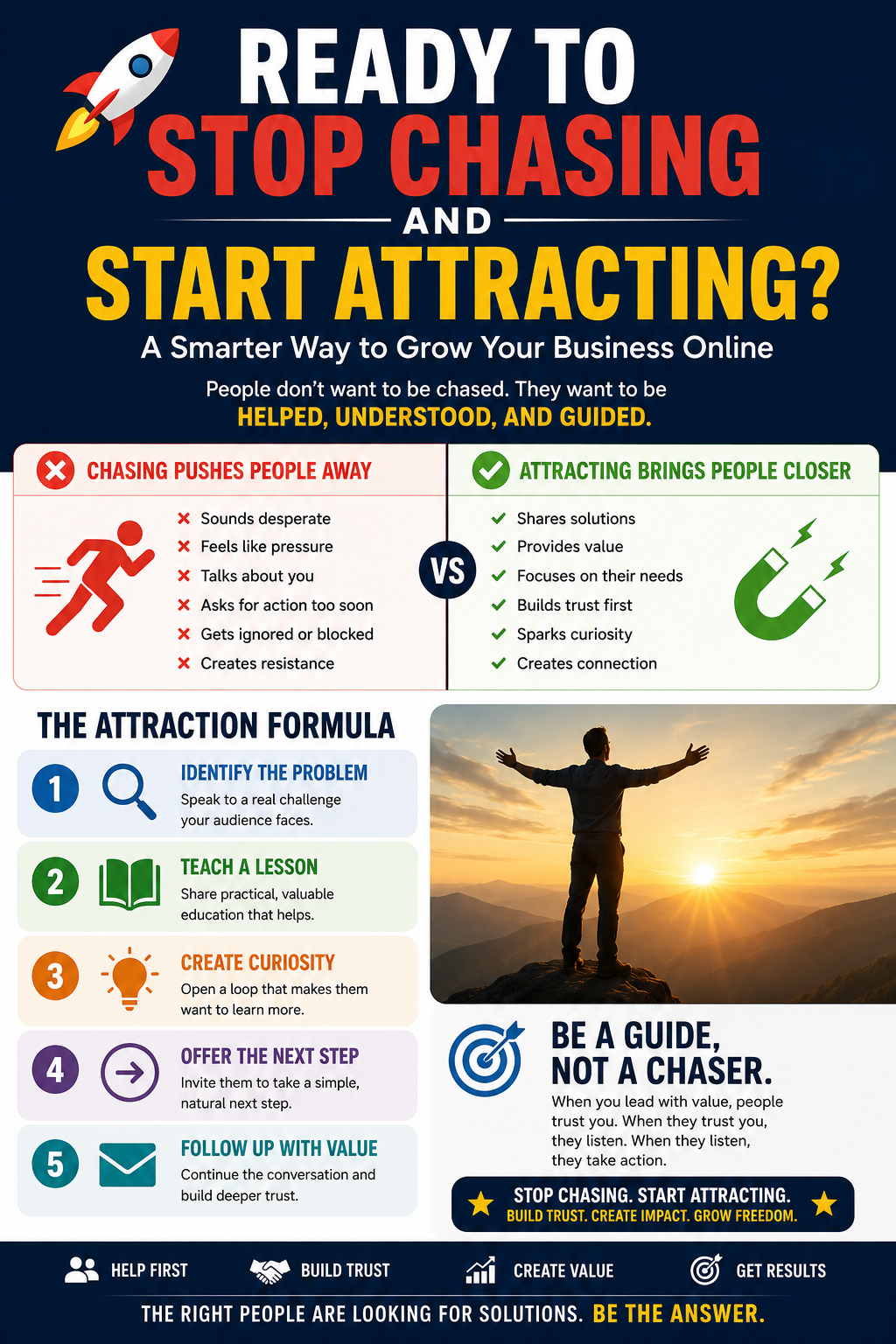
Chasing sounds like this:

  • “Please take a look.”
  • “Please join me.”
  • “Please support my business.”
  • “Please buy this.”
  • “Please watch my video.”

Attracting sounds like this:

  • “Here is a problem many people face.”
  • “Here is something useful that can help.”
  • “Here is a lesson I learned.”
  • “Here is a smarter way to think about this.”
  • “Here is a simple step you can take today.”

When you chase, people feel pressure.

When you attract, people feel curiosity.

And curiosity is much more powerful than pressure.


Why Chasing Pushes People Away

People protect their time, money, and attention. They are careful about what they click, who they trust, and what they believe.

If your first message feels too aggressive, too salesy, or too focused on your own benefit, people may close the door before they even understand what you offer.

Chasing creates resistance because it often feels like the conversation is about what you want.

Attraction works because it starts with what they need.

That is a major shift.

Instead of asking, “How can I get this person to join?” ask, “What problem does this person have, and how can I educate them?”

Instead of asking, “How can I make a sale today?” ask, “How can I become the person they trust when they are ready?”

This mindset creates a more professional, respectful, and effective way to grow.


Attraction Marketing Begins With Understanding the Audience

To attract the right people, you must understand what they are already thinking.

Your audience may be asking questions like:

  • “How can I earn extra income from home?”
  • “How can I protect my family financially?”
  • “How can I start online without being overwhelmed?”
  • “How can I get leads?”
  • “How can I build a business without bothering friends and family?”
  • “How can I avoid losing important files, photos, or documents?”
  • “How can I use better tools to grow online?”

When your content answers the questions already living in their minds, you become relevant.

  • Relevance creates attention.
  • Attention creates interest.
  • Interest creates action.

This is why educational content is so powerful. It allows you to enter the conversation your audience is already having inside their own head.


The New Rule: Educate First, Invite Second

One of the biggest mistakes online marketers make is inviting too soon.

They introduce the offer before they have built trust.

They send the link before they have created curiosity.

They ask for action before they have delivered value.

A better approach is simple:

  • Educate first.
  • Create curiosity second.
  • Invite the third.
  • Follow up with value.

This allows the prospect to feel respected instead of pressured.

For example, instead of saying:

  • “Join my business today.”

You can say:

“Many people are trying to build an online income, but they skip the most important step: building trust before presenting an offer. Here is a simple system that helps people learn first, decide second, and take action when they are ready.”

That feels different.

It does not pressure. It positions. It teaches. It opens the door.


People Are Attracted to Solutions, Not Desperation

Desperation is easy to recognize online.

  • It sounds rushed.
  • It sounds emotional.
  • It sounds like pressure.
  • It sounds like someone needs a sale more than they want to help.

But leadership sounds different.

  • Leadership is calm.
  • Leadership is confident.
  • Leadership is educational.
  • Leadership is consistent.
  • Leadership focuses on serving before selling.

When you become a person who shares solutions, people naturally begin to pay attention.

  • You do not need to shout.

You need to communicate clearly.

  • You do not need to beg.

You need to show value.

  • You do not need to chase everyone.

You need to attract the right ones.


Content Is the Bridge Between You and the Right People

Your content is not just a post. It is a bridge.

Every article, email, video, social media post, or message should help your audience cross from confusion to clarity.

Good content can do several things:

  • It teaches.
  • It inspires.
  • It identifies a problem.
  • It explains a solution.
  • It builds trust.
  • It creates curiosity.
  • It prepares the reader for the next step.

When someone sees your content repeatedly and feels that you understand their problems, they become more open to your recommendations.

That is why consistency matters.

  • One post may create awareness.
  • One email may create curiosity.
  • One article may build trust.
  • One follow-up may create action.

But together, they create a system.


The Power of Positioning

Positioning is how people see you before they ever buy from you.

  • Are you seen as someone who is always selling?
  • Or are you seen as someone who educates, guides, and brings helpful solutions?

Your positioning determines how people respond to your message.

  • If people see you as a desperate seller, they may avoid you.
  • If they see you as a helpful guide, they may listen.

A helpful guide does not need to know everything. A helpful guide simply needs to be honest, consistent, and focused on helping others take the next step.

That is enough to create trust.


How to Start Attracting Instead of Chasing

Here is a simple attraction strategy you can begin using immediately.

1. Identify the Problem

Every strong message begins with a real problem.

Examples:

  • “Most people do not back up their important files until it is too late.”
  • “Many beginners fail online because they send traffic directly to sales pages without capturing leads.”
  • “People want extra income, but they do not know where to start.”
  • “Most marketers struggle because they follow up once and quit.”

When you name the problem clearly, the right people pay attention.


2. Teach a Simple Lesson

Do not just talk about the problem. Teach something useful.

Example:

“If you want better results online, do not send people directly to an offer. Send them to a simple capture page first, collect the lead, then follow up with helpful emails that educate and build trust.”

This kind of lesson gives people value before asking for anything.


3. Create Curiosity

Curiosity is what makes people want to learn more.

You do not need to reveal everything at once. You simply need to open a mental loop.

Example:

“There is a simple system that helps beginners turn clicks into leads and leads into follow-up opportunities without chasing people all day.”

Now the reader may wonder, “What system?”

That curiosity creates movement.


4. Offer the Next Step

After educating and creating curiosity, invite the reader to take a simple next step.

Examples:

  • “Learn how the system works.”
  • “See the simple process here.”
  • “Start with the free trial.”
  • “Watch the short presentation.”
  • “Get access to the guide.”

The call to action should feel natural, not forced.


5. Follow Up With Value

Most people do not act the first time they see an offer.

That is normal.

Follow-up is not about annoying people. It is about continuing the conversation.

Your follow-up can include:

  • Helpful tips
  • Stories
  • Common mistakes
  • Benefits
  • FAQs
  • Testimonials
  • Comparisons
  • Reminders
  • Encouragement

The goal is to help people make an informed decision.


Why Trust Is the Real Currency Online

Online, people can find thousands of offers. What they cannot always find is someone they trust.

Trust is built through consistency, honesty, and value.

When people trust you, they are more willing to click your links, read your emails, watch your videos, and consider your recommendations.

Trust does not happen overnight.

It grows every time you show up with useful content.

It grows when you do not exaggerate.

It grows when you explain things clearly.

It grows when you help people understand the problem before presenting the solution.

If you want to attract better prospects, build more trust.


Attraction Marketing Works Because It Respects People

Nobody likes to feel pushed.

But many people appreciate being guided.

Attraction marketing works because it respects the reader’s freedom to think, learn, compare, and decide.

Instead of forcing a decision, you create an environment where a decision feels natural.

That is powerful.

People are more likely to take action when they feel informed, respected, and understood.


What to Share Online to Attract the Right People

Here are content ideas you can use:

  • Educational tips
  • Beginner mistakes
  • Personal lessons
  • Simple how-to posts
  • Problem-solution articles
  • Short motivational messages
  • Behind-the-scenes insights
  • Comparison posts
  • Case studies
  • FAQ-style posts
  • Myth-busting posts
  • Step-by-step guides

For example:

  • “Why most beginners fail online before they even get started.”
  • “The simple difference between traffic and leads.”
  • “Why follow-up matters more than the first click.”
  • “How to protect your digital files before disaster happens.”
  • “How to build trust before presenting an offer.”
  • “Why chasing friends and family is not a real business strategy.”

Each of these topics can attract people because they educate first.


The Attraction Formula

Here is a simple formula:

Problem + Education + Curiosity + Invitation + Follow-Up = Attraction

Let’s break it down.

  • Problem: Show that you understand what the audience is facing.
  • Education: Give them a useful insight.
  • Curiosity: Make them want to know more.
  • Invitation: Offer the next step.
  • Follow-Up: Keep building trust after the first contact.

This formula works because it is not based on pressure. It is based on communication.


Example Social Post

“Most people think online business is about chasing strangers, sending links, and hoping someone says yes.

But the smarter way is different.

  • Identify a real problem.
  • Share useful education.
  • Create curiosity.
  • Invite people to learn more.
  • Follow up with value.

When people feel helped instead of hunted, they listen differently.

Stop chasing. Start attracting.”


Example Email Opening

Subject: Ready to stop chasing people?

Hi [First Name],

One of the biggest mistakes people make online is trying to convince everyone.

They send links too early.
They explain too much.
They follow up with pressure.
Then they wonder why people stop responding.

The better way is to attract people through value, education, and curiosity.

When people understand the problem and see you as a helpful guide, they become more open to learning about the solution.

That is how trust begins.


Common Mistakes to Avoid

  • Do not post only links.
  • Do not pressure people.
  • Do not make unrealistic promises.
  • Do not talk only about yourself.
  • Do not ignore follow-up.
  • Do not expect instant results.
  • Do not confuse activity with strategy.

Attraction requires patience and consistency.

But once you understand it, your marketing becomes more professional and more duplicable.


Stop Running After People Who Are Not Ready

Not everyone is your prospect.

  • Some people are not ready.
  • Some people are not interested.
  • Some people do not see the need yet.
  • Some people need more education.
  • Some people need more time.

That is okay.

  • Your job is not to force everyone to act.

Your job is to keep showing up with value so the right people can recognize the opportunity when they are ready.

  • When you stop chasing, you protect your energy.
  • When you start attracting, you build authority.
  • When you lead with education, you create trust.
  • And when you create trust, people begin to listen.

So, are you ready to stop chasing and start attracting?

The smarter path begins with value.


Ready to build smarter online conversations and attract people through trust, curiosity, and value?

Start by sharing helpful content, guiding people with education, and using a simple system that turns attention into leads and leads into meaningful follow-up.

Do not chase people.
Build trust.
Create curiosity.
Invite wisely.
Follow up with value.

That is how attraction begins.


Disclaimer

This article is for educational and informational purposes only. It does not guarantee specific business, financial, or marketing results. Any income, traffic, lead generation, or conversion outcomes depend on individual effort, strategy, market conditions, tools used, consistency, and other factors. Always do your own research before joining any business opportunity, purchasing any service, or making financial decisions.

Publicado en Affiliate Marketing, Business Training, ClickBank Training, Digital Marketing, Marketing Education, Online Business, Paid Traffic, Work from Home

Commission Hero Review: A Beginner-Friendly Way to Understand Affiliate Marketing With ClickBank

By Marvin Gandis

Why So Many People Are Looking for Affiliate Marketing Training

The internet has created opportunities that previous generations never had. Today, a person can work from home, build a digital business, promote products online, and earn commissions without owning inventory, shipping products, or creating a product from scratch.

But here is the truth: many beginners discover very quickly:

  • Affiliate marketing sounds simple, but it is not always easy.

Many people start with excitement. They grab an affiliate link, post it on social media, send it to friends, or place it in random groups. Then nothing happens. No clicks. No sales. No results.

Why?

Because affiliate marketing is not just about having a link. It is about understanding traffic, offers, targeting, follow-up, messaging, testing, and consistency.

That is where structured training programs like Commission Hero can attract attention.

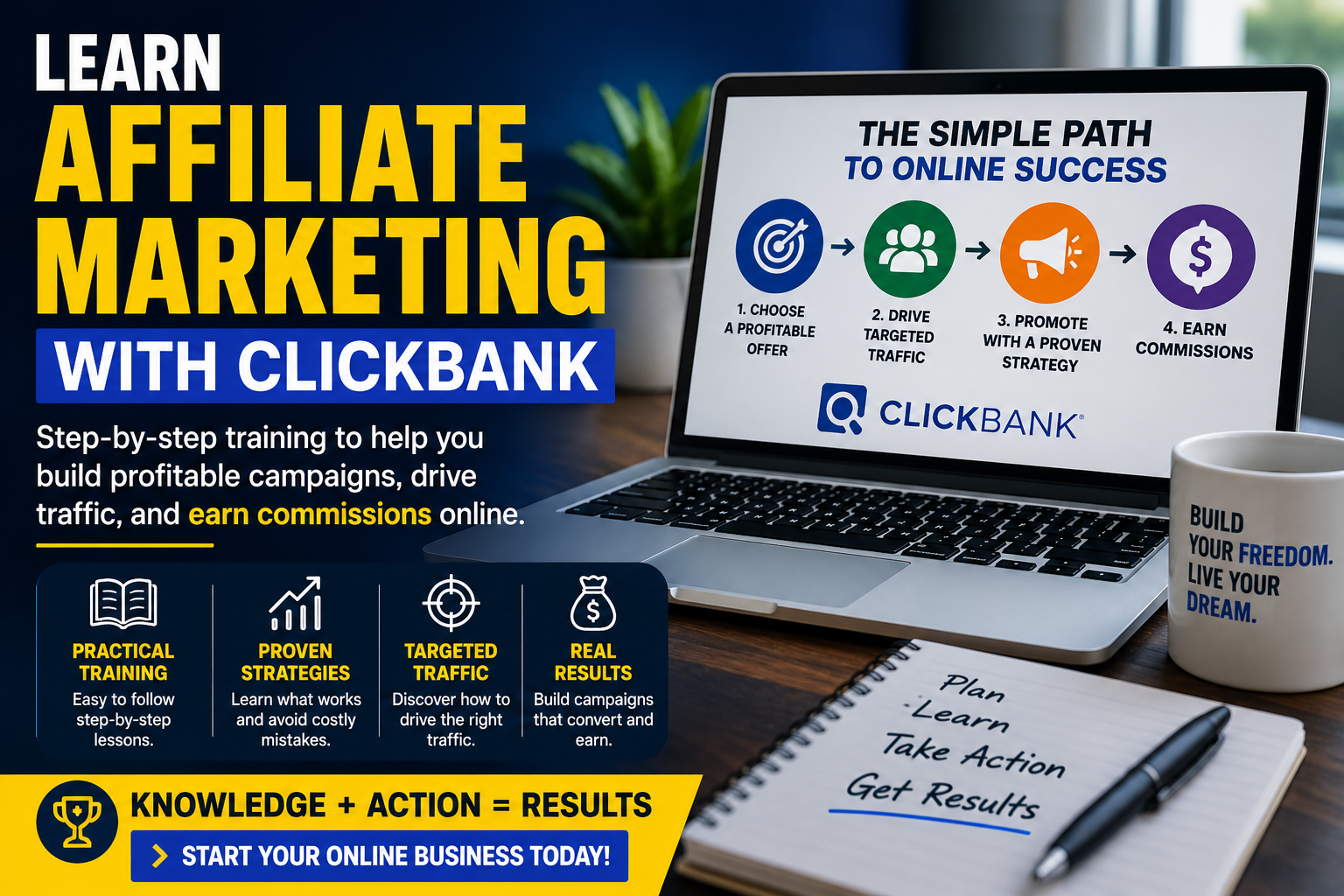
Commission Hero is designed to teach people how affiliate marketing works, especially through the ClickBank marketplace and paid traffic strategies. For someone who wants to learn how to promote existing products instead of creating their own, this type of training can be a starting point.


What Is Commission Hero?

Commission Hero is an affiliate marketing training program created by Robby Blanchard. It focuses on teaching people how to promote products from ClickBank and other affiliate platforms using a structured system.

The main idea behind the program is simple:

Instead of creating your own product, you learn how to promote products that already exist and earn a commission when someone buys through your affiliate link.

This is the foundation of affiliate marketing.

Commission Hero is often positioned around a few key concepts:

  • Learning how to choose affiliate offers
  • Understanding how paid traffic works
  • Creating simple promotional campaigns
  • Using landing pages and sales funnels
  • Testing ads and improving campaigns
  • Building a system instead of randomly posting links

For beginners, this can be valuable because many people fail online simply because they do not have a clear process.


Why Affiliate Marketing Appeals to Beginners

Affiliate marketing is attractive because it removes several traditional business barriers.

  • You do not need to manufacture a product.
  • You do not need to store inventory.
  • You do not need to handle shipping.
  • You do not need to provide customer service for the product owner.
  • You do not need a physical location.

Instead, your job is to connect the right audience with the right offer.

When someone purchases through your affiliate link, you can earn a commission. That is the basic model.

However, the challenge is that most beginners underestimate the skills required. They think the link alone will do the work. It will not.

  • A link is not a business.
  • A system is.

The Big Problem: Most Beginners Promote Without a Strategy

Many new affiliate marketers make the same mistake. They join a program, get their link, and immediately start posting everywhere.

They say things like:

  • “Check this out.”
  • “Make money online.”
  • “Join now.”
  • “This works.”
  • “Click my link.”

But the audience does not know them. There is no trust. There is no education. There is no reason to click.

  • This is why most beginners get discouraged.

They are not necessarily failing because affiliate marketing does not work. They often fail because they are promoting without a strategy.

A strong affiliate marketing system usually includes:

  • A clear niche
  • A specific target audience
  • A strong offer
  • A lead capture page
  • A follow-up sequence
  • Traffic generation
  • Testing and tracking
  • Consistent communication

Commission Hero is built around the idea that you need a repeatable process instead of guessing your way through online marketing.


What Makes Commission Hero Interesting?

Commission Hero may be interesting to people who want to learn affiliate marketing through a more organized approach.

The program is not simply about posting links. It teaches the concept of building campaigns, choosing offers, and using traffic to send people toward affiliate promotions.

For someone who has been trying to make money online but feels overwhelmed, the value may come from having a step-by-step path.

Some people do not struggle because they lack motivation. They struggle because they lack direction.

Commission Hero attempts to provide that direction.


What Type of Person Is This Training Best For?

Commission Hero may be a good fit for someone who:

  • Wants to learn affiliate marketing
  • Is interested in ClickBank products
  • Wants to promote existing offers
  • Is willing to study and take action
  • Understands that results require testing
  • Is open to learning paid advertising
  • Wants a structured system instead of random guessing

This training may also appeal to people who are tired of jumping from one opportunity to another without understanding the fundamentals of online promotion.

  • However, it is important to be realistic.

This may not be the right fit for someone who expects instant results, has no interest in learning ads, refuses to test, or believes that simply buying a course guarantees income.

  • No course can guarantee success.

Education gives direction. Action creates experience. Testing produces improvement.


The Importance of Paid Traffic

One of the major focuses of Commission Hero is paid traffic.

Paid traffic can be powerful because it allows you to reach people faster than organic methods. Instead of waiting months to build an audience, paid advertising can place your message in front of targeted people.

But paid traffic also requires responsibility.

  • You must understand your numbers.
  • You must test your ads.
  • You must track your results.
  • You must avoid emotional spending.
  • You must follow the advertising platform rules.
  • You must be willing to improve your campaigns.

Paid traffic is not magic. It is a skill.

That is why beginners should never approach paid advertising with a gambling mindset. They should approach it with an educational mindset.

Start small. Learn the process. Track the results. Improve gradually.


Why ClickBank Is Often Used by Affiliate Marketers

ClickBank is one of the most recognized affiliate marketplaces online. It offers many digital products across different niches, including health, wealth, personal development, business, education, and lifestyle.

For affiliate marketers, ClickBank is attractive because it gives access to products that already have sales pages, commission structures, and affiliate tracking.

This means you do not need to create the product yourself. You can focus on marketing.

However, not every product is equal. A smart affiliate marketer must learn how to evaluate offers carefully.

Important questions include:

  • Does the product solve a real problem?
  • Is the sales page professional?
  • Does the offer have demand?
  • Is the commission structure clear?
  • Does the product match the audience?
  • Are the claims responsible and compliant?

Good affiliate marketing begins with good judgment.


Why Education Matters Before Promotion

Many people want results before they want education.

That is one of the biggest mistakes in online business.

Before promoting any offer, a beginner should understand the fundamentals:

  • Who is the audience?
  • What problem does the offer solve?
  • Why would someone trust this recommendation?
  • What message will attract the right person?
  • What follow-up is needed after the first click?
  • How will results be measured?

Commission Hero can be positioned as a training solution for people who want to understand the process instead of blindly promoting links.

That is a stronger, more responsible angle.

Instead of saying, “This will make you money,” the better message is:

“Learn how affiliate marketing campaigns are built and how ClickBank offers can be promoted using a structured system.”

That is more professional, more honest, and more credible.


The Right Way to Promote Commission Hero

If you are promoting Commission Hero as an affiliate, the best approach is to educate first.

  • Do not lead with hype.
  • Do not promise income.
  • Do not pressure people.
  • Do not make unrealistic claims.

Instead, focus on the problem your audience already has.

For example:

  • Many beginners do not know how to choose offers.
  • Many people post links without a strategy.
  • Many marketers do not understand paid traffic.
  • Many people want to earn online but lack a clear system.
  • Many affiliates need training before they spend money on ads.

This type of messaging speaks to real pain points.

Your audience does not only need motivation. They need clarity.


Suggested Affiliate Block

Recommended Training: Commission Hero

If you want to understand how affiliate marketing works using ClickBank and paid traffic strategies, Commission Hero may be worth exploring. It is designed to teach a structured approach to choosing offers, creating campaigns, and promoting affiliate products online.

This training is best for people who are serious about learning, testing, and improving their marketing skills.


A Responsible Reminder About Results

Affiliate marketing can be a real business model, but it is not automatic income.

Results vary from person to person. Some people take action and improve. Others quit too early. Some have advertising budgets. Others need to start slower. Some learn quickly. Others need more time.

Your results can depend on many factors, including:

  • Your effort
  • Your budget
  • Your niche
  • Your traffic source
  • Your message
  • Your consistency
  • Your ability to test
  • Your willingness to learn
  • Market conditions

That is why any serious person should approach affiliate marketing as a skill-building journey.

The goal is not to chase hype.

The goal is to build understanding.


Final Thoughts: Is Commission Hero Worth Looking At?

Commission Hero may be worth looking at if you are interested in affiliate marketing, ClickBank, and paid traffic strategies.

It is not a magic button. It is not a guaranteed income system. It is not a shortcut that removes the need for work.

But for someone who wants training, structure, and a better understanding of how affiliate campaigns are built, it may offer valuable direction.

The real question is not only, “Can this work?”

The better question is:

“Am I willing to learn the process, take action, test responsibly, and stay consistent long enough to improve?”

Affiliate marketing rewards people who treat it like a business, not a lottery ticket.

If you are ready to study the process and explore how affiliate marketing campaigns are built, Commission Hero may be a training worth reviewing.


Ready to learn how affiliate marketing works with ClickBank and paid traffic?

Take a closer look at Commission Hero and decide if this training fits your online business goals.


Disclosure:

This article may contain affiliate links. If you purchase through my link, I may earn a commission at no additional cost to you. This helps support my work and allows me to continue sharing educational content. This article is for educational purposes only. No income is guaranteed. Results vary based on effort, experience, advertising budget, skill level, market conditions, and consistency. Affiliate marketing involves risk, especially when using paid traffic. Always do your own research before purchasing any training or investing in advertising.