Publicado en Career Development, Digital Marketing, Financial Education, Personal Finance, Self-Improvement

I Need Money. Now What?

Practical Steps and Real Solutions When You’re Facing Financial Pressure

By Marvin Gandis

There are few sentences more honest than these four words:

«I need money.»

Every day, millions of people wake up carrying that burden. Some have lost their jobs. Others have moved to a new city, are supporting a family, paying medical bills, or simply watching their savings disappear.

When money becomes urgent, desperation can lead to bad decisions. Scammers know this. So do companies that promise «easy money,» «guaranteed income,» or «overnight success.»

The truth is that there is no magic solution.

There are, however, practical steps that can help you regain control.


Step 1: Stay Calm and Think Clearly

Financial stress affects judgment.

Before signing up for anything, borrowing money, or paying for an opportunity, stop and ask yourself:

  • Is this legitimate?
  • Does it require money I can’t afford to lose?
  • Can I verify the company?
  • Is someone promising unrealistic returns?

Avoid making important financial decisions while feeling desperate.


Step 2: Separate Immediate Needs From Long-Term Goals

Ask yourself two questions:

What do I need this week?

Examples:

  • Food
  • Rent
  • Transportation
  • Medicine

What do I need over the next six months?

Examples:

  • Stable employment
  • Better income
  • New skills
  • Savings
  • A second source of income

These require different solutions.


Step 3: Look for Immediate Income

If you need money quickly, focus on work that pays relatively soon.

Examples include:

  • Temporary employment agencies
  • Restaurant and hospitality jobs
  • Retail positions
  • Warehouse work
  • Delivery services
  • Ride-share driving
  • Freelance graphic design
  • Data entry
  • Virtual assistant work
  • Website maintenance
  • Tutoring
  • Local handyman services

None of these are glamorous.

But income solves problems.


Step 4: Use the Skills You Already Have

Many people underestimate what they know.

Ask yourself:

  • Can I design?
  • Can I write?
  • Can I edit videos?
  • Can I build websites?
  • Can I translate?
  • Can I repair computers?
  • Can I teach?
  • Can I manage social media?

Someone may already be willing to pay for those skills.


Step 5: Learn Skills That Are in Demand

The fastest-growing careers often don’t require a four-year degree.

Examples include:

  • Digital marketing
  • AI tools and automation
  • Video editing
  • Search engine optimization (SEO)
  • Email marketing
  • Copywriting
  • Web development
  • Data analysis
  • Cybersecurity
  • Cloud computing

Learning one valuable skill can change your income for years.


Step 6: Build Multiple Income Streams

Many financially secure people do not rely on only one paycheck.

Examples include:

  • Full-time job
  • Freelance services
  • Affiliate marketing
  • Selling digital products
  • Online teaching
  • Consulting
  • Content creation
  • Rental income
  • Investing (after building financial stability)

Diversification reduces financial risk.


Step 7: Avoid Debt Traps

When money is tight, expensive borrowing often makes the situation worse.

Be cautious about:

  • Payday loans
  • Advance-fee scams
  • Fake investment programs
  • Pyramid schemes
  • «Guaranteed income» offers
  • Unlicensed lenders

If something sounds too good to be true, it usually is.


Step 8: Build Relationships

Many opportunities never appear on job boards.

Tell friends and family you’re looking.

Update your LinkedIn profile.

Join local networking events.

Volunteer.

Attend business meetups.

Sometimes your next opportunity comes through a conversation.


Step 9: Create a Simple Financial Plan

Even if your income is small, know exactly where every dollar goes.

Track:

  • Income
  • Bills
  • Food
  • Transportation
  • Debt
  • Savings

A budget doesn’t create money.

It helps protect the money you already have.


Step 10: Think Beyond Today

The goal isn’t simply to survive this month.

The goal is to avoid returning to the same situation next year.

Invest in yourself.

Read books.

Take courses.

Develop skills.

Meet people.

Stay curious.

Small improvements, repeated consistently, often produce remarkable results over time.


A Word of Encouragement

Needing money does not define your worth.

Many successful entrepreneurs, business owners, and professionals have experienced seasons of unemployment, debt, rejection, or financial hardship.

The difference was not luck alone.

It was persistence, learning, adaptation, and refusing to give up.

If you’re reading this while wondering how you’ll pay your next bill, remember this:

One opportunity can change your direction.

One new skill can change your career.

One good decision can begin changing your future.

Keep moving forward.

You are not finished yet.

Final Thoughts

Financial success rarely happens overnight.

But every stable financial future begins with one practical decision followed by another.

Take the next step.

Then take another.

Progress may be slower than you hope—but it is far better than standing still.

Your current situation is temporary.

Your willingness to learn, work, and persevere can create opportunities that seem impossible today.

Start where you are.

Use what you have.

Keep building.


Disclaimer: This article is intended for educational and informational purposes only. It does not constitute financial, legal, investment, or employment advice. Every individual’s financial situation is unique, and readers should evaluate opportunities carefully, conduct independent research, and seek qualified professional advice when appropriate. Mentions of affiliate marketing or online business models are examples of legitimate business approaches that require time, consistent effort, and do not guarantee income.

Publicado en Affiliate Marketing, Artificial Intelligence, Digital Marketing, Email Marketing, Lead Generation, List Building, Marketing Automation, Network Marketing, Online Business

Digital Marketing Is Changing: Artificial Intelligence, Affiliate Tracking, Email, and List Building

By Marvin Gandis

Internet marketing is undergoing a major transformation. For years, many strategies depended on a relatively simple process: publish an advertisement, generate a click, send the visitor to a page, and attribute the sale to the last link used.

That model still exists, but it no longer fully represents how people discover products, research opportunities, and make decisions.

A prospect may now read an article, hear a recommendation, watch a video, consult an artificial intelligence tool, receive a private message, and return directly to a website several days later. When the person finally registers or makes a purchase, the tracking system may not correctly recognize the source of influence.

This change has significant consequences for people involved in digital marketing, affiliate marketing, list building, and network marketing.

Generating more clicks is no longer enough. Marketers must build authority, protect email deliverability, measure the customer journey more accurately, follow disclosure rules, and create content valuable enough to be discovered by both people and artificial intelligence systems.

This article examines the most important changes and presents practical actions for adapting to them.


1. Product Discovery No Longer Depends Only on the Click

In traditional affiliate marketing, the click was at the center of attribution.

A prospect found a post, clicked an affiliate link, visited the product page, and made a purchase. The system placed a cookie and assigned the commission to the appropriate affiliate.

Today, the journey is far more complicated.

A person may:

  • Discover a brand through an AI-generated answer.
  • See a post on Facebook.
  • Hear a recommendation from a friend.
  • Read a review several days later.
  • Search directly for the company’s name.
  • Register from another device.
  • Complete the purchase without using the original affiliate link again.

In this situation, the affiliate may have played a decisive role, but a last-click system may not recognize it.

Why it matters

Affiliate reports may show less influence than actually exists.

An educational campaign may be generating awareness, trust, and indirect sales even when the affiliate dashboard does not reflect all those results.

Affiliate links are still useful, but they should be supplemented with other measurement methods.

Practical action

Add a simple question to registration, contact, or free-trial forms:

How did you first hear about our service?

Possible options include:

  • Google
  • Facebook
  • YouTube
  • Email
  • An artificial intelligence tool
  • A friend or family member
  • Another source

Store this information in GetResponse, a tracking worksheet, or a contact-management system.

Over time, compare prospect responses with click and conversion statistics.


2. Tracking Failures Can Reduce Affiliate Commissions

A commission can be lost even when the sale is legitimate.

This may happen because:

  • The prospect uses an ad blocker.
  • The affiliate cookie expires.
  • The tracking link does not function properly.
  • The person moves from a phone to a computer.
  • Registration occurs several days after the initial click.
  • The prospect returns directly to the website.
  • Referral information is not preserved during a free trial.
  • A contact is entered manually without retaining the source.

This issue is especially important for programs that offer free trials.

The first click may happen on Monday, registration on Wednesday, and paid conversion the following week. When the system fails to preserve referral information throughout the journey, the affiliate may not receive credit.

Why it matters

Sending more traffic without testing the tracking process may increase visitors without increasing commissions.

A small technical failure can affect hundreds of visits without the promoter realizing it.

Practical action

Test every major funnel from beginning to end.

  1. Open the affiliate link on a mobile phone.
  2. Complete the form with a test email address.
  3. Confirm that the registration appears correctly.
  4. Verify that the referral source is preserved.
  5. Review the follow-up sequence.
  6. Repeat the test on a computer.
  7. Repeat it in a private browser window.
  8. Take screenshots and record the date.

When a discrepancy appears, document it and contact the company before investing additional money or effort in traffic.


3. Artificial Intelligence Is Changing Content Visibility

Articles are no longer written only for Google, Facebook, or email subscribers.

They may also be used as sources by artificial intelligence tools.

When someone asks:

  • How can I protect my personal files?
  • Is cloud storage worth paying for?
  • How do I build an email list?
  • How can I sell without applying pressure?
  • What should I know before joining a network-marketing opportunity?

An AI system may look for reliable, clear, and well-organized information when preparing its response.

This creates a major opportunity for educational content creators.

Content that may lose visibility

Shallow content will have a harder time standing out.

Weak formats include:

  • Articles created only to insert links.
  • Pages that copy promotional descriptions.
  • Posts without an identifiable author.
  • Exaggerated or unsupported content.
  • Text that is too general.
  • Reviews that offer no real analysis.
  • Mass-produced content without human experience.

Content that may gain authority

Useful, specific, and well-structured content has a better chance of being discovered and recommended.

A strong article should include:

  • A direct answer to a specific question.
  • Clear examples.
  • Benefits and limitations.
  • Frequently asked questions.
  • Author information.
  • Publication or update date.
  • Reliable sources when needed.
  • A clear affiliate disclosure.
  • An honest call to action.

Practical action

Publish articles that answer specific questions instead of covering only broad subjects.

For example:

What Happens to Your Family Photos and Documents When a Computer Fails?

This title addresses a real concern and creates space to explain the risk, available solutions, and the importance of backups without beginning with a sales presentation.


4. Private Messaging Is Becoming More Important

Many business conversations begin publicly but end privately.

A person may discover a post on Facebook or Instagram, but ask serious questions through Messenger or WhatsApp.

Private messaging offers:

  • More personal responses.
  • Greater privacy.
  • Immediate communication.
  • Less public pressure.
  • Easy sharing of links and instructions.
  • Continuity across different stages of the process.

For network marketing, this can be highly effective when used respectfully.

The right approach

Messaging should begin with consent and usefulness.

A proper sequence may look like this:

Educational post → request for information → private message → resource delivery → follow-up question → permission to present the opportunity

Deliver what was promised first. Begin the conversation afterward.

The wrong approach

Messaging becomes harmful when it is used to:

  • Send unsolicited mass promotions.
  • Copy the same message to dozens of people.
  • Immediately introduce an income opportunity.
  • Pressure the prospect.
  • Use exaggerated claims.
  • Continue messaging after the person has shown no interest.

Practical action

Create one consent-based path.

For example:

“I am preparing a free guide about protecting important files and family photographs. Reply GUIDE, and I will send it to you privately.”

After delivering the guide, ask:

“Which type of information are you most concerned about losing: photographs, documents, work files, or family records?”

That question begins a real conversation and helps identify the prospect’s need before introducing a solution.


5. Email Deliverability Remains Essential

Email continues to be one of the most valuable assets in digital marketing.

Social-media algorithms can change. Accounts can lose reach. Platforms can restrict content. A properly managed email list, however, provides a more direct relationship with subscribers.

That advantage depends on deliverability.

A message that does not reach the inbox cannot educate, build trust, or produce a sale.

Factors affecting deliverability

Important factors include:

  • SPF authentication.
  • DKIM signing.
  • DMARC policy.
  • Domain reputation.
  • Spam complaints.
  • Old or purchased lists.
  • Inactive contacts.
  • Sudden sending-volume increases.
  • Misleading subject lines.
  • Excessive links.
  • Poor-reputation domains included in messages.
  • Missing or unclear unsubscribe options.

Why it matters

Using GetResponse, AWeber, or another service does not automatically guarantee strong deliverability.

The platform may send the message, but domain reputation and list quality remain the campaign owner’s responsibility.

Practical action

Perform a basic audit:

  1. Confirm that the domain has SPF.
  2. Activate DKIM.
  3. Publish DMARC.
  4. Review sender-domain alignment.
  5. Test the unsubscribe link.
  6. Remove invalid addresses.
  7. Separate active and inactive subscribers.
  8. Reduce mailings to people who never open.
  9. Monitor bounce and complaint rates.
  10. Avoid sudden changes in sending volume.

6. Building a List Is Still More Important Than Accumulating Followers

A social-media follower is not the same as an email subscriber.

The platform controls reach, algorithms, and visibility. An owned list provides greater control, although it also requires greater responsibility.

List building should not depend only on offering a generic gift. The resource should solve a real problem and attract the kind of person who may later benefit from the marketer’s services.

Examples of strong lead magnets

  • A digital-file protection checklist.
  • A guide to starting an email list.
  • A follow-up plan for affiliate marketers.
  • A welcome-message template for new prospects.
  • A report on avoiding aggressive sales tactics.
  • A beginner’s network-marketing guide.
  • A simple deliverability audit.

What happens after registration

A common mistake is focusing only on collecting the email address.

The real value is created through the follow-up sequence.

A strong welcome sequence may include:

  1. Immediate resource delivery.
  2. A brief introduction to the author.
  3. An explanation of the main problem.
  4. One practical tip.
  5. A story or personal experience.
  6. An invitation to reply.
  7. A moderate introduction to the solution.
  8. Ongoing educational follow-up.

Practical action

Review the primary lead magnet and ask:

  • Does it solve a specific problem?
  • Does it attract the right prospect?
  • Is it delivered immediately?
  • Does the first week of follow-up provide value?
  • Is there a natural transition to the product?
  • Does the subscriber understand why future emails will arrive?

7. Affiliate Disclosures Must Be Clear

Transparency should not be viewed as an obstacle to selling.

A clear disclosure may strengthen trust because it demonstrates honesty.

Readers should understand that the promoter may receive compensation when they register or purchase through certain links.

A proper disclosure should be

  • Visible.
  • Easy to understand.
  • Located near the recommendation.
  • Written in the same language as the content.
  • Presented before the reader clicks.
  • Free of unnecessarily complicated legal language.

Example

“This article contains affiliate links. I may receive compensation if you enroll or make a purchase through one of these links, at no additional cost to you.”

Testimonials and results

Testimonials also require care.

They should not:

  • Guarantee results.
  • Present unusual earnings as typical.
  • Hide business relationships.
  • Invent experiences.
  • Edit statements misleadingly.
  • Use screenshots without context.

Practical action

Review articles, emails, landing pages, and social posts. Place the disclosure before or near the first commercial link and confirm that all testimonials are genuine, authorized, and presented in the proper context.


8. Educational Content Should Lead to a Next Step

Educational content should not become an endless collection of information without direction.

Every article, email, or video should help the prospect take an appropriate next step.

That step does not always have to be a purchase.

It may be:

  • Downloading a guide.
  • Answering a question.
  • Subscribing.
  • Watching a demonstration.
  • Trying a service.
  • Requesting more information.
  • Attending a presentation.
  • Comparing alternatives.
  • Reading a related article.

Why it works

People feel less pressure when the next step is small, clear, and logical.

Instead of requesting a major decision immediately, content can guide the prospect gradually.

Practical action

Use one primary call to action per article.

For example:

“Download the free checklist for protecting your photographs, documents, and important files.”

Avoid presenting too many competing choices.


9. Automation Should Support Human Relationships

Automation can deliver messages, classify contacts, and provide follow-up without depending entirely on manual work.

It should not pretend that a personal relationship exists when it does not.

Automation should be used to:

  • Deliver resources.
  • Confirm registrations.
  • Educate.
  • Remind.
  • Segment.
  • Identify interest.
  • Prepare a human conversation.

It should not be used to:

  • Invent urgency.
  • Send falsely personal messages.
  • Apply constant pressure.
  • Repeat the same promotion indefinitely.
  • Hide the fact that communication is automated.
  • Completely replace human attention.

Practical action

Review all automated responses and identify the exact moment when an interested prospect should receive personal attention.

Examples include when a person:

  • Replies to an email.
  • Clicks several times.
  • Completes a free trial.
  • Requests pricing.
  • Asks about the opportunity.
  • Repeatedly visits an important page.

10. The Strongest Strategy Combines Authority, a List, and Follow-Up

Sustainable digital marketing does not depend on a single platform.

A more resilient strategy combines:

  • Educational content.
  • Search visibility.
  • Artificial-intelligence visibility.
  • Social media.
  • Private messaging.
  • Lead-capture forms.
  • Email.
  • Personal follow-up.
  • Source measurement.
  • Transparent disclosures.

Each element has a purpose.

Content attracts.

The list preserves the relationship.

Email educates.

Messaging answers questions.

Follow-up converts.

Measurement reveals what is working.

Transparency protects trust.


Seven-Day Action Plan

Day 1: Review every link

Test each affiliate link, lead-capture page, and form.

Day 2: Audit email deliverability

Check SPF, DKIM, DMARC, bounces, and unsubscribe functions.

Day 3: Add the attribution question

Ask prospects how they first heard about the service.

Day 4: Improve the lead magnet

Make sure it solves a specific need.

Day 5: Review the welcome sequence

Confirm that it educates before selling.

Day 6: Publish an authority article

Answer one real and specific question.

Day 7: Create a path to conversation

Connect the article, form, email, and personal follow-up.


Conclusion

The future of digital marketing will not necessarily belong to the person who publishes the most, sends the most messages, or purchases the most traffic.

It will belong to the marketer who best understands the prospect’s journey.

People now discover opportunities through search engines, articles, videos, private conversations, personal recommendations, and artificial intelligence systems. This makes the process less visible, but it also creates new opportunities for those who consistently build trust.

The priorities are clear:

  • Create useful content.
  • Measure beyond the click.
  • Protect deliverability.
  • Verify tracking.
  • Build an owned list.
  • Obtain consent.
  • Disclose commercial relationships.
  • Automate without losing the human element.

Technology will continue to change.

The principles of trust, clarity, usefulness, and responsible follow-up will remain essential.


Disclaimer

This article is provided for educational and informational purposes only. It does not constitute legal, financial, or business advice. Email-provider rules, advertising-platform policies, and affiliate-program terms may change. Always review the official terms of each service and consult a qualified professional when necessary. Marketing, traffic, lead-generation, and commission results will vary.


Publicado en Affiliate Marketing, Cloud Storage, Digital Marketing, Digital Security, Entrepreneurship, Financial Education, Online Business, Technology, Work from Home

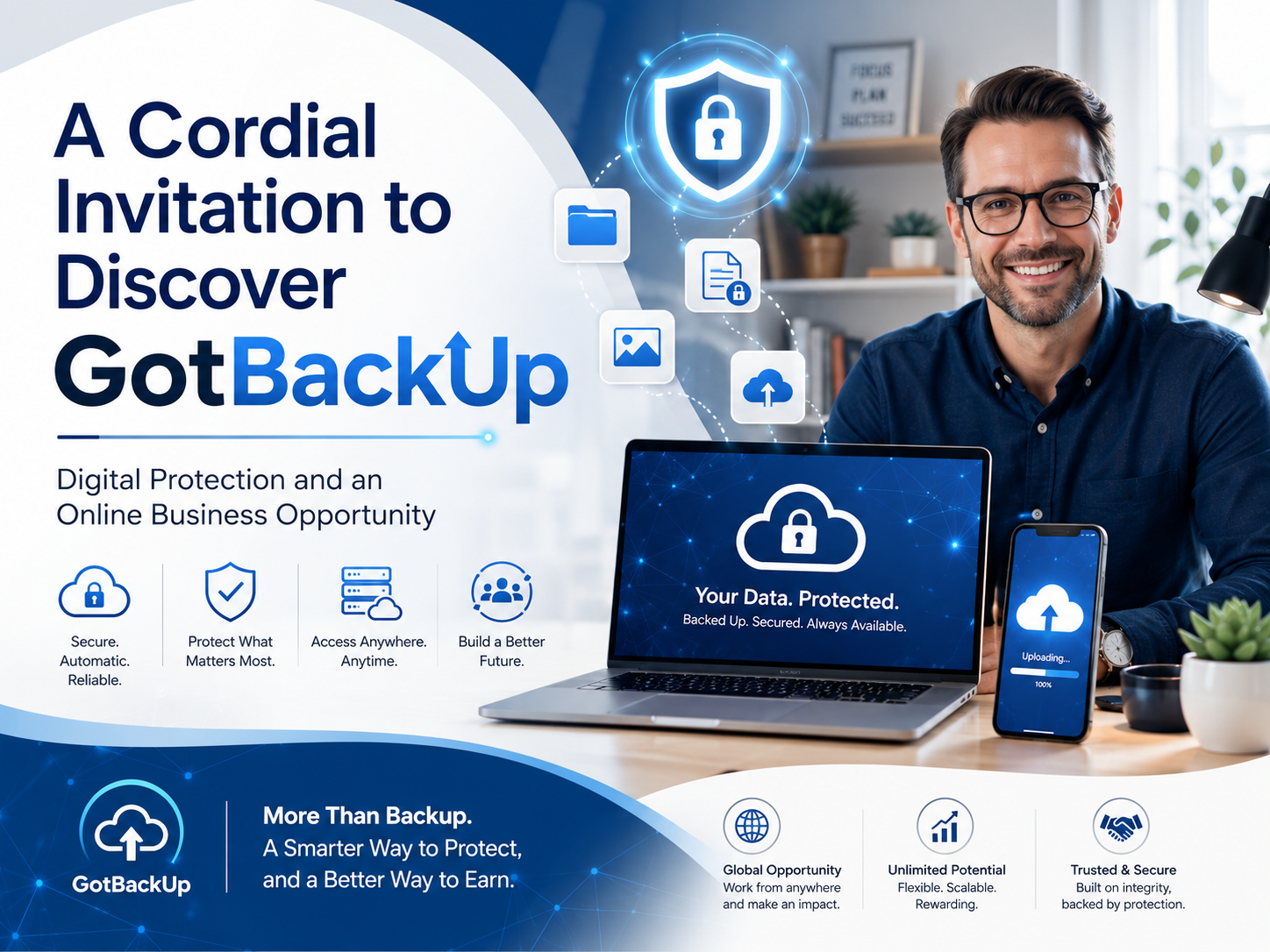
A Cordial Invitation to Discover GotBackUp: Digital Protection and an Online Business Opportunity

Dear Friend and Follower of Marvin Gandis and Ir de Compras Online:

We live in a time when a significant part of our lives is stored on electronic devices. Family photographs, personal documents, work files, videos, projects, and valuable memories can disappear within seconds because of a technical failure, an accident, a lost device, or an unintended deletion.

For this reason, I would like to extend a cordial invitation for you to learn about GotBackUp, a cloud storage and backup service that also offers an independent promotion and reseller opportunity for people interested in developing an online business activity.

This invitation is not intended to promise quick riches or automatic results. Its purpose is to introduce an option that you can research, test, and evaluate responsibly before making a decision.


What Is GotBackUp?

GotBackUp is a digital backup service designed to help users protect photographs, videos, documents, and other important files.

According to information published by the company, the service allows users to store files in the cloud, access them from different devices, recover deleted files, and retrieve earlier file versions. The company also states that it uses encryption to protect information during transfer and storage.

In simple terms, the service is intended to reduce the risk of losing valuable information when a computer, telephone, or other device stops working, is lost, is stolen, or is damaged.


Why Are Backups Important?

Many people assume their files are safe simply because they are stored on a computer or mobile phone. However, no device is completely protected from failure.

Information may be lost because of:

  • Physical device damage.
  • Hard-drive failure.
  • Accidental deletion.
  • A lost or stolen phone or computer.
  • Viruses, malicious software, or cyberattacks.
  • Liquid spills.
  • Update errors.
  • Natural disasters or electrical failures.

A cloud backup does not eliminate every possible risk, but it can add an important layer of protection. A prudent practice is to maintain multiple copies of essential files in different locations.


The Storage Service

GotBackUp’s official product page currently presents personal, family, and enterprise plans. The advertised family plan includes separate accounts, shared storage, and support for multiple devices. Prices, storage limits, and promotions may change and should be confirmed directly on the official website before purchasing.

Features advertised by GotBackUp include:

  • Backup for compatible computers and devices.
  • Online access through a web browser.
  • Mobile applications or mobile access.
  • Deleted-file recovery.
  • File-version history.
  • Encrypted transfers.
  • File-sharing capabilities.
  • Streaming for certain media files.
  • Customer support through chat and helpdesk requests.

Compatibility, technical limitations, and service conditions should be reviewed before registration, especially when using older devices or operating systems.


An Independent Opportunity to Recommend the Service

In addition to its storage service, GotBackUp operates an affiliate or reseller program. A participant registered under this option may promote the service and receive commissions when qualifying sales or activities occur under the compensation plan.

This means that there are two separate decisions:

  1. Purchasing GotBackUp solely to protect personal files.
  2. Participating as an independent reseller and promoting the service.

These two choices should not be confused. One person may only want the product, while another may also decide to investigate the business opportunity.

Affiliates operate as independent contractors and are responsible for their own promotional activities, expenses, taxes, and other applicable obligations.


Who May Consider This Opportunity?

The opportunity may be explored by adults interested in learning digital marketing and developing an independent activity from home.

It may appeal to:

  • Adult students.
  • Stay-at-home parents.
  • Retired individuals.
  • Workers looking for an additional activity.
  • Unemployed people interested in learning new skills.
  • Content creators.
  • Digital promoters.
  • Entrepreneurs.
  • Social-media users.
  • Beginners willing to receive training.

However, belonging to one of these groups does not automatically make the opportunity suitable. Each person should consider their financial circumstances, experience, available time, risk tolerance, and willingness to learn.


Basic Requirements for Getting Started

Professional experience may not be required, but several basic skills and resources are important:

  • Being at least 18 years old.
  • Being able to read, write, and follow instructions.
  • Having reliable Internet access.
  • Owning a compatible phone, tablet, or computer.
  • Communicating respectfully with others.
  • Being willing to complete training.
  • Learning to use social media responsibly.
  • Understanding that participation involves costs.
  • Following advertising laws and platform policies.
  • Maintaining realistic expectations.

A smartphone and social-media account can support promotional activity, but they do not replace the need to learn communication, follow-up, customer service, and ethical marketing.


Is It Really a Simple System?

A system may be simple to understand, but that does not mean building a business is instant or effortless.

A participant will usually need to learn how to:

  • Explain the product clearly.
  • Identify potential customers.
  • Create educational content.
  • Answer questions.
  • Follow up without applying pressure.
  • Use information or lead-capture pages.
  • Manage contacts.
  • Understand the service.
  • Follow anti-spam regulations.
  • Maintain consistent activity.
  • Measure and improve results.

Training and tools may shorten the learning curve, but they do not replace personal effort, practice, or discipline.


You Do Not Need to Chase or Pressure People

A professional strategy is not based on sending unsolicited messages to large numbers of strangers, repeatedly pressuring contacts, or claiming that anyone can become wealthy.

A more responsible approach is based on education.

For example, a promoter can teach people about:

  • Protecting family photographs.
  • Preventing the loss of important documents.
  • The risks of relying on only one device.
  • The importance of creating backups.
  • The advantages and limitations of cloud storage.
  • The responsible evaluation of an affiliate opportunity.

When people understand the problem and recognize the potential value of a service, they can make a freer and better-informed decision.


Can Participants Earn Money?

The program describes different forms of compensation for eligible participants, subject to the current terms and compensation plan. However, GotBackUp’s own promotional information states that the company makes no income guarantees and that individual results vary according to effort.

Results can vary significantly because of factors such as:

  • Previous experience.
  • The size and quality of a participant’s audience.
  • Communication skills.
  • Time invested.
  • Advertising expenses.
  • Follow-up.
  • Market conditions.
  • Persistence.
  • The ability to develop customers or a team.
  • Compliance with program policies.

For this reason, it would not be appropriate to claim that many people have achieved success without verified statistics explaining what “success” means, how much those people invested, how long they worked, and what percentage of participants achieved similar outcomes.

This should be treated as a business activity involving risk—not as employment or guaranteed income.


Know the Product Before Promoting It

Before recommending any service, it is wise to use it, understand it, and determine whether it addresses a legitimate need.

A responsible promoter should be able to explain:

  • What the plan includes.
  • How much it costs.
  • How it is installed.
  • Which devices are supported.
  • How files are backed up.
  • How files are restored.
  • What limitations apply.
  • How support is requested.
  • How the service is canceled.
  • Which charges are recurring.
  • Which optional products may be offered during registration.

Recommending something you do not understand can damage trust. Speaking from genuine experience helps you provide a more honest and useful explanation.


Trial, Guarantee, and Conditions

Some GotBackUp registration pages advertise a 30-day money-back guarantee. The availability of an initial trial, billing terms, and specific promotions may depend on the page, plan, or campaign being used.

Before entering payment details, review:

  • The initial price.
  • The date of the first charge.
  • The renewal frequency.
  • The price of the selected plan.
  • Any reseller fees.
  • Optional products.
  • Preselected boxes.
  • The cancellation procedure.
  • The guarantee conditions.
  • Privacy and communication terms.

Do not assume that “free trial” means there will never be a charge. Always verify when billing begins and what action is required to cancel.


Questions to Ask Before Participating

Consider the following questions before making a decision:

Do I genuinely need the service?
Evaluate the value of your files and the backup system you already use.

Do I understand every cost?
Review monthly payments, annual payments, affiliate fees, and optional purchases.

Can I afford the expense without affecting essential needs?
Never use money needed for housing, food, medicine, debt payments, or emergencies.

Am I willing to learn?
Registering is not enough. Training and practice will be required.

Do I understand that income is not guaranteed?
Participation does not guarantee earnings or recovery of expenses.

Do I know how to cancel?
Keep copies of receipts, terms, and support information.

Am I willing to promote ethically?
Avoid deceptive claims, pressure, spam, and promises of wealth.


A Message for People Who Want to Work from Home

Working from home can provide flexibility, but it should not be confused with earning money without effort.

A serious activity requires:

  • Organization.
  • A working schedule.
  • Training.
  • Communication.
  • Consistency.
  • Follow-up.
  • A budget.
  • Patience.
  • Responsibility.
  • Service to others.

The initial objective should not be to appear successful. It should be to learn how to solve a real problem for a real customer.

In this case, the problem is the vulnerability of digital files. The business opportunity begins when we help other people understand that risk and evaluate a possible solution.


My Cordial Invitation

As a friend and follower of Marvin Gandis and Ir de Compras Online, I invite you to learn about GotBackUp with an open mind and a responsible attitude.

I am not inviting you to believe blindly in a promise. I am inviting you to:

  • Research.
  • Ask questions.
  • Learn about the product.
  • Compare alternatives.
  • Review every cost.
  • Understand the program.
  • Test the service when the conditions are appropriate.
  • Make your decision without pressure.

After reviewing the information, you may decide that GotBackUp can help protect your files or that its reseller opportunity is compatible with your goals. In that case, it will be an honor to welcome you, guide you, and share the first steps with you.

Your talent, personal story, and ability to communicate may have value. However, real progress begins when those qualities are combined with education, effort, ethics, and realistic expectations.

Conclusion

GotBackUp combines two elements: a digital backup service and an independent referral or reseller program.

The service may help protect important files. The opportunity may allow eligible participants to receive commissions, but it does not guarantee earnings.

The best decision is one made after understanding:

  • The product.
  • The costs.
  • The billing process.
  • The terms.
  • The effort required.
  • The risks.
  • The compensation plan.
  • The cancellation and refund policies.

Begin by learning. Purchase only what you can afford. Promote honestly. Build patiently.

I look forward to welcoming you, helping you understand the program, and showing you what you may be able to develop through education, commitment, and responsible work.

Discover GotBackUp and explore its possibilities

Research the service, review its conditions, and determine whether its digital backup system or independent business opportunity is compatible with your needs and goals.

Sincerely,

Marvin Gandis
Team Leader — GotBackUp
Ir de Compras Online


Important Disclaimer

This content is provided for educational and informational purposes only. It is not financial, legal, tax, or professional advice. GotBackUp is a commercial service, and its reseller program is an independent business activity involving costs and risks. No income, profit, recovery of expenses, or particular result is guaranteed. Prices, promotions, features, participating countries, guarantees, and terms may change. Always review the official website, service terms, compensation plan, and earnings disclaimer before purchasing or participating. Never invest money required for essential living expenses.