Publicado en Digital Marketing, Entrepreneurship, Personal Development, Productivity, Wealth Mindset

Looking for Shortcuts Instead of Systems: Why Many People Fail Online and in Life

By Marvin Gandis

Many people want fast results, but they do not want processes.

They want quick money, quick success, quick followers, quick sales, quick freedom, and immediate change. But when they discover that everything valuable requires time, structure, discipline, and consistency, they become discouraged or look for an easier path.

That is one of the great mistakes that keeps many people stuck: looking for shortcuts instead of building systems.

In this seventh part of the series “The Reverse Question,” we will reflect on why shortcuts often create excitement but rarely create transformation, and why systems, although they may seem slower, can build stronger and more lasting results.

  • This is not about rejecting modern tools.
  • This is not about working harder without intelligence.
  • This is not about making simple things complicated.

It is about understanding that a better life is not built only with wishes, impulses, or quick promises. It is built with habits, structure, measurement, learning, and repeated action.


The promise of the shortcut

The shortcut always sounds attractive.

  • “Make money without effort.”
  • “Get rich in a few days.”
  • “Change your life without discipline.”
  • “Get results without learning.”
  • “Automate everything and forget the work.”
  • “Copy this, and you will succeed immediately.”

These promises attract attention because they touch a real need: many people are tired, frustrated, in debt, or desperate for change.

But desperation can lead to poor decisions.

When a person looks for results without a process, they can easily fall into false expectations, impulsive purchases, abandoned projects, misunderstood programs, or strategies that never become sustainable.

  • Shortcuts sell emotion.
  • Systems build direction.

The problem is not wanting to move faster

Wanting to move faster is not wrong. We all want to save time, avoid mistakes, and improve results.

The problem is not seeking efficiency. The problem is trying to skip the foundations.

There is a difference between using a tool to improve a system and using a promise to avoid discipline.

  • A tool can help you create content faster.
  • But you still need a message, strategy, and consistency.
  • A platform can help you attract prospects.
  • But you still need follow-up and trust.
  • Automation can help you save time.
  • But you still need clarity, review, and improvement.
  • A mentor can guide you.
  • But you still have to apply.

Speed without foundations can become chaos.


What is a system?

A system is an organized way of doing something repeatable, measurable, and improvable.

  • A system does not depend only on motivation.
  • It does not depend on emotions.
  • It does not depend on luck.
  • It does not depend on doing random things.

A system has clear steps.

For example:

  • A system for managing money.
  • A system for saving.
  • A system for learning.
  • A system for selling.
  • A system for creating content.
  • A system for following up.
  • A system for measuring results.
  • A system for correcting mistakes.
  • A system for improving habits.

When a person has a system, they no longer live by improvising every day. They have direction.


Why do many people fail online

Many people enter the digital world looking for immediate results.

  • They open a page.
  • They share links.
  • They publish offers.
  • They join programs.
  • They buy tools.
  • They send messages.
  • They change strategies every week.

But they do not have a system.

  • They do not know who their audience is.
  • They do not have a clear message.
  • They do not have an effective capture page.
  • They do not follow up.
  • They do not measure results.
  • They do not educate the prospect.
  • They do not build trust.
  • They do not correct what is not working.

Then, when they do not see quick results, they say:

  • “This does not work.”
  • “Nobody buys.”
  • “Nobody supports me.”
  • “The market is difficult.”
  • “I already tried.”

But many times, the opportunity did not fail. The system failed.


The difference between activity and a system

A person can do many activities without having a system.

  • Posting is not always a system.
  • Sending messages is not always a system.
  • Sharing links is not always a system.
  • Buying traffic is not always a system.
  • Creating content is not always a system.
  • Being busy is not always a system.

A system connects the parts.

For example, in digital marketing, a system may include:

  • A clear message.
  • A defined audience.
  • A specific offer.
  • A capture page.
  • A follow-up sequence.
  • Educational content.
  • Measurement of clicks, sign-ups, and conversions.
  • Adjustments based on results.

Without a connection between the parts, the person is only doing scattered movements.

And scattered movements rarely produce consistent results.


Shortcuts feed impatience

When a person becomes used to looking for shortcuts, they lose patience for building.

  • They start something and abandon it.
  • They buy a tool and never learn how to use it.
  • They join a program and do not follow the training.
  • They post for a few days and become discouraged.
  • They send messages without a strategy and become frustrated.
  • They change opportunities before mastering the previous one.

Impatience destroys processes that have not had time to mature.

Many seeds do not fail because they are bad. They fail because the person abandons them before caring for them.


Systems create confidence

A well-worked system creates confidence because it allows you to repeat, measure, and improve.

When you have a system, you can say:

  • “This worked.”
  • “This did not work.”
  • “This needs adjustment.”
  • “This message attracted more interest.”
  • “This page converted better.”
  • “This follow-up produced a response.”
  • “This habit helped me save.”
  • “This routine improved my productivity.”
  • Without a system, everything feels confusing.
  • With a system, you can learn from results.

Clarity reduces frustration.


Systems for life, not only for business

Systems are not only for companies or marketing. They are also necessary for daily life.

A person can have:

  • A system for waking up early.
  • A system for reading and learning.
  • A system for taking care of health.
  • A system for organizing the week.
  • A system for paying debt.
  • A system for saving.
  • A system for praying or reflecting.
  • A system for producing content.
  • A system for improving a skill.
  • A system for reviewing goals.

A life without systems depends too much on the mood of the day.

And moods change. But a good system helps you continue even when you do not feel like it.


How to begin building simple systems

You do not need to create something complicated. A system can begin simply.

1. Define a clear goal

Do not only say: “I want to improve.”

Better say:

  • “I want to save $500.”
  • “I want to publish three articles per month.”
  • “I want to study sales for 30 days.”
  • “I want to reduce one debt.”
  • “I want to attract more qualified prospects.”
  • “I want to improve my follow-up.”

A clear goal helps create a clear system.


2. Break the goal into small steps

Every large goal needs daily or weekly steps.

  • If you want to learn a skill, define what you will study each day.
  • If you want to save, define how much you will set aside and when.
  • If you want to sell, define how many conversations you will start.
  • If you want to create content, define topics, days, and formats.
  • If you want to improve your health, define a simple routine.

Small steps reduce confusion.


3. Measure what you do

What is not measured is often not improved.

  • Measure your expenses.
  • Measure your income.
  • Measure your posts.
  • Measure your clicks.
  • Measure your sign-ups.
  • Measure your replies.
  • Measure your habits.
  • Measure your progress.

Measuring is not an obsession. It is learning from reality.


4. Correct without quitting

A system is not born perfect. It improves through use.

If something does not work, do not abandon everything immediately. Ask:

  • What part failed?
  • What can I adjust?
  • What must I learn?
  • What message can I improve?
  • What habit must I change?
  • What is the data telling me?

Correction is part of the system.


5. Repeat with consistency

Responsible repetition creates results.

  • Doing it once is not enough.
  • Trying for one week is not enough.
  • Getting excited at the beginning is not enough.

Systems need time.

Consistency turns small actions into visible progress.


Systems defeat temporary motivation

Motivation helps, but it is not always present.

  • There are days of tiredness.
  • Days of doubt.
  • Days with no replies.
  • Days of frustration.
  • Days with little energy.
  • Days when it feels like nothing is moving.

If you depend only on motivation, you stop. But if you have a system, you can continue with a minimum of steps.

A system tells you what to do even when you do not feel like doing it.

That is why discipline is not the enemy of freedom. Discipline is the bridge toward more ordered freedom.


Real success is not magic

Many people see the final result of others and think it was luck.

But behind many results, there are years of practice, mistakes, adjustments, learning, investment, patience, consistency, and systems.

What looks fast from the outside was often slow on the inside.

Visible success usually has invisible roots.

That is why we should not chase only the appearance of success. We should build the foundations that support it.


Conclusion

Looking for shortcuts instead of systems can keep a person trapped in temporary excitement, frustration, and constant quitting.

Shortcuts promise speed, but they often do not build character, skill, or stability. Systems, on the other hand, teach order, patience, measurement, correction, and consistency.

My dear reader or friend, you do not need a magical formula. You need a clear path. You do not need to change everything at once. You need to build a simple system and follow it with discipline.

  • A system to learn.
  • A system to manage.
  • A system to create value.
  • A system to sell.
  • A system to grow.
  • A system to correct.
  • A system to continue.

Because shortcuts may excite you for a moment, but systems can transform your future.


Disclaimer

This article is for educational, reflective, and informational purposes only. It should not be interpreted as financial, legal, professional, business, psychological, or investment advice. The purpose of this content is to encourage awareness about building systems, developing discipline, measuring results, learning from mistakes, and acting responsibly.

Every person’s circumstances are different. Results in business, digital marketing, personal finance, professional development, or personal growth can vary based on each person’s experience, resources, skills, available time, market, decisions, and consistency.

This content is not intended to guarantee income, quick success, specific results, or immediate growth. Before making important decisions related to business, investments, debt, digital tools, training programs, marketing strategies, or professional changes, it is recommended to consult qualified professionals.

The information shared is intended to inspire reflection, preparation, and responsible action.

Publicado en Digital Marketing, Entrepreneurship, Leadership, Mindset, Personal Development, Productivity

The Difference Between Having Information and Having Direction

By Marvin Gandis

When You Know a Lot, But Still Feel Confused

We live in a time when information is more available than ever before.

There are videos, courses, books, articles, podcasts, posts, trainings, tutorials, motivational messages, business strategies, and advice for almost everything.

  • You can learn about digital marketing.
  • You can learn about finances.
  • You can learn about leadership.
  • You can learn about technology.
  • You can learn about faith, discipline, habits, sales, entrepreneurship, and personal growth.

But here is a modern paradox:

Many people have more information than ever, but less direction than before.

  • They know a lot, but they do not know what to do first.
  • They consume content, but they do not take action.
  • They save ideas, but they do not build systems.
  • They listen to advice, but remain confused.
  • They start many things, but finish almost nothing.

The problem is not always a lack of information.

Sometimes the problem is a lack of direction.


Information Shows You Possibilities; Direction Shows You the Path

Information can open your mind.

  • It shows you options.
  • It gives you ideas.
  • It presents tools.
  • It teaches concepts.
  • It helps you understand what exists.

But direction does something different.

  • Direction helps you decide.
  • It helps you prioritize.
  • It helps you choose a path.
  • It helps you say yes to what matters and no to what distracts.
  • It helps you turn knowledge into concrete steps.

Information says, “Here are many things you can do.”

The direction says, “This is what you should do now.”

And that difference can change a life.


Too Much Information Can Paralyze You

Although information is valuable, too much information without order can create anxiety.

  • You hear one piece of advice, and it sounds good.
  • Then you hear another piece of advice, and it also sounds good.
  • Then you see a new strategy, and it feels urgent.
  • Later, someone says you need to change your method.
  • Then a new tool appears.
  • Then another expert says something different.

And in the end, instead of moving forward, you freeze.

Not because you are incapable, but because your mind is overloaded.

Information overload can make you feel busy without being productive.

You can spend hours learning and still avoid the most important action.

That is why you do not need to consume everything. You need to discern what information truly serves your current season.


Not All Information Is for You Right Now

One key to maturity is understanding that something can be good, but not necessary for this moment.

  • A course may be good, but not your priority.
  • A strategy may work, but not fit your stage.
  • A tool may be useful, but not solve your main problem.
  • An opportunity may sound interesting, but pull you away from your purpose.

Not everything good is right for now.

Direction helps you filter.

It asks:

  • What do I need to strengthen first?
  • What problem must I solve now?
  • What action creates the greatest progress?
  • What information can I save for later?
  • What should I stop consuming because it only distracts me?

Wisdom is not knowing everything. Wisdom is knowing what to apply at the right time.


Information Without Action Becomes Weight

Learning is important. But if you never apply what you learn, information can become a burden.

You have notes, ideas, links, files, saved videos, and recommendations.

But there is no implementation.

Then knowledge begins to create guilt:

  • “I should have done this.”
  • “I should have started that.”
  • “I should have finished that course.”
  • “I should have applied that strategy.”
  • “I should have been more consistent.”

Unapplied information can feel like mental debt.

That is why, after learning something valuable, ask:

How can I apply this in one small action this week?

You do not need to apply everything. But you do need to apply something.

Action turns information into transformation.


Direction Is Born From Clarity

To have direction, you need clarity.

  • Clarity about who you are.
  • Clarity about what you are building.
  • Clarity about whom you want to serve.
  • Clarity about what problem you want to solve.
  • Clarity about your values.
  • Clarity about your priorities.
  • Clarity about your next step.

Without clarity, any advice can move you.

  • A post moves you.
  • A criticism moves you.
  • A new trend moves you.
  • A comparison moves you.
  • An offer moves you.
  • An emotion moves you.

But when you have clarity, not everything pulls you away.

You can listen to information without losing your center.


Direction Helps You Say No

Many people believe progress means saying yes to more things.

  • More courses.
  • More platforms.
  • More ideas.
  • More projects.
  • More strategies.
  • More opportunities.

But many times, progress requires saying no.

  • No to distraction.
  • No to excess information.
  • No to starting another project before finishing the previous one.
  • No to copying everyone’s strategy.
  • No to acting under pressure.
  • No to living in comparison.
  • No to changing direction every week.

Saying no is not always a loss.

Sometimes it is protection.

  • Protection of your time.
  • Protection of your focus.
  • Protection of your energy.
  • Protection of your purpose.

Direction gives you the strength to choose.


Having Direction Does Not Mean Having Everything Figured Out

Some people wait to have the full map before they begin.

  • They want to know every step.
  • They want to eliminate every risk.
  • They want to feel completely sure.
  • They want guarantees before they act.

But many times, direction does not appear as a complete map.

Sometimes it appears as the next right step.

You may not always know the whole path, but you can know what to do today.

  • Send the email.
  • Publish the article.
  • Learn the tool.
  • Create the page.
  • Call the person.
  • Organize your ideas.
  • Correct the message.
  • Make the pending decision.

Direction does not always show you ten years. Sometimes it shows you the next hour clearly.

And that also counts.


Faith Also Needs Direction

For a person of faith, it is not enough to say, “God will open doors,” and then live without order, discipline, or responsibility.

Faith does not remove the need for direction.

  • Faith sustains you.
  • Prayer strengthens you.
  • Wisdom guides you.
  • Discipline moves you.
  • Obedience aligns you.
  • Action positions you.
  • You can trust God and still organize your life.
  • You can pray and still create a plan.
  • You can have hope and still correct mistakes.
  • You can believe in a purpose and still prepare yourself.

Mature faith is not passivity. It is trust with direction.


How to Move From Information to Direction

First, define your main objective.

What do you want to accomplish in this season? Not twenty things. One clear priority.

Second, identify your biggest current obstacle.

What is really blocking you? Lack of clarity? Lack of traffic? Lack of follow-up? Lack of discipline? Lack of trust? Lack of skills?

Third, choose only one strategy to move forward.

You do not need to apply ten methods at the same time.

Fourth, turn information into weekly action.

After learning, decide: What will I do with this?

Fifth, review results without desperation.

Direction can also be adjusted. Not everything will work perfectly at first.

Sixth, protect your focus.

Reduce the noise. Do not consume information that only feeds anxiety.

Seventh, seek wisdom, not only motivation.

Motivation encourages you, but wisdom guides you.


Direction Turns Knowledge Into a Path

A person with information can talk about many things.

But a person with direction begins to build.

  • They build habits.
  • They build messages.
  • They build relationships.
  • They build systems.
  • They build trust.
  • They build results.
  • They build character.

Information can inspire you for a moment.

Direction can transform your life over time.


You Do Not Need to Know Everything; You Need to Walk With Clarity

My dear reader and friend, do not allow the abundance of information to become a new form of confusion.

  • You do not need to consume everything.
  • You do not need to master everything.
  • You do not need to follow every trend.
  • You do not need to compare your process with everyone else’s.
  • You do not need to have every answer before moving forward.
  • You need clarity.
  • You need focus.
  • You need wisdom.
  • You need one priority.
  • You need the next step.
  • You need direction.

Because information without direction can exhaust you.

But direction turns what you know into a path, what you learn into action, and what you dream into construction.

  • Do not seek only more information. Seek direction.
  • And when you have it, walk with faith, discipline, and purpose.

Disclaimer:


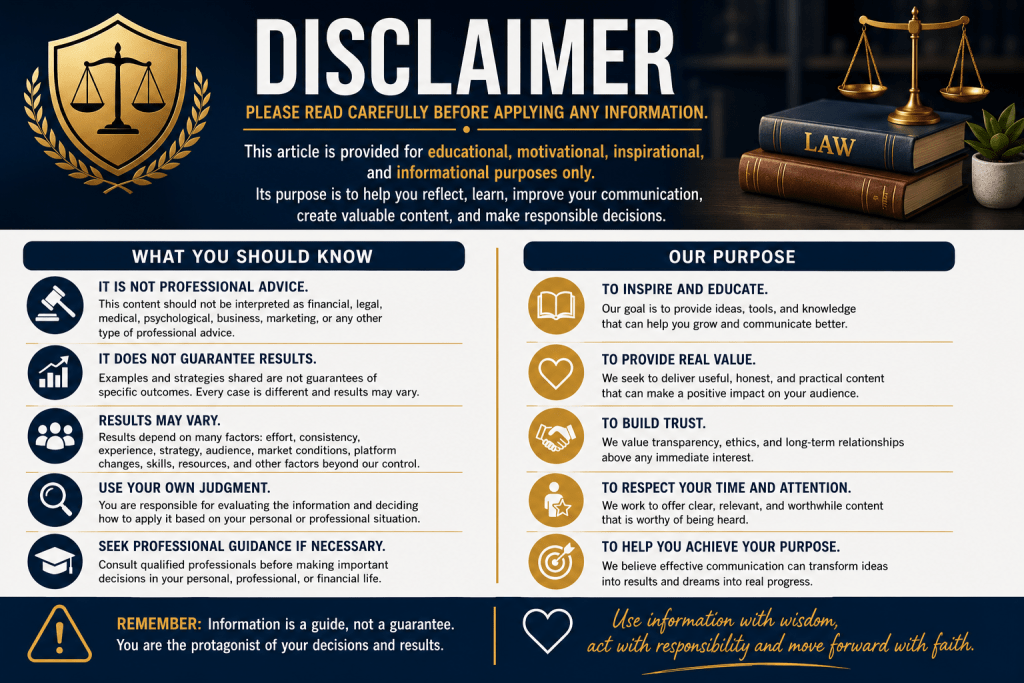
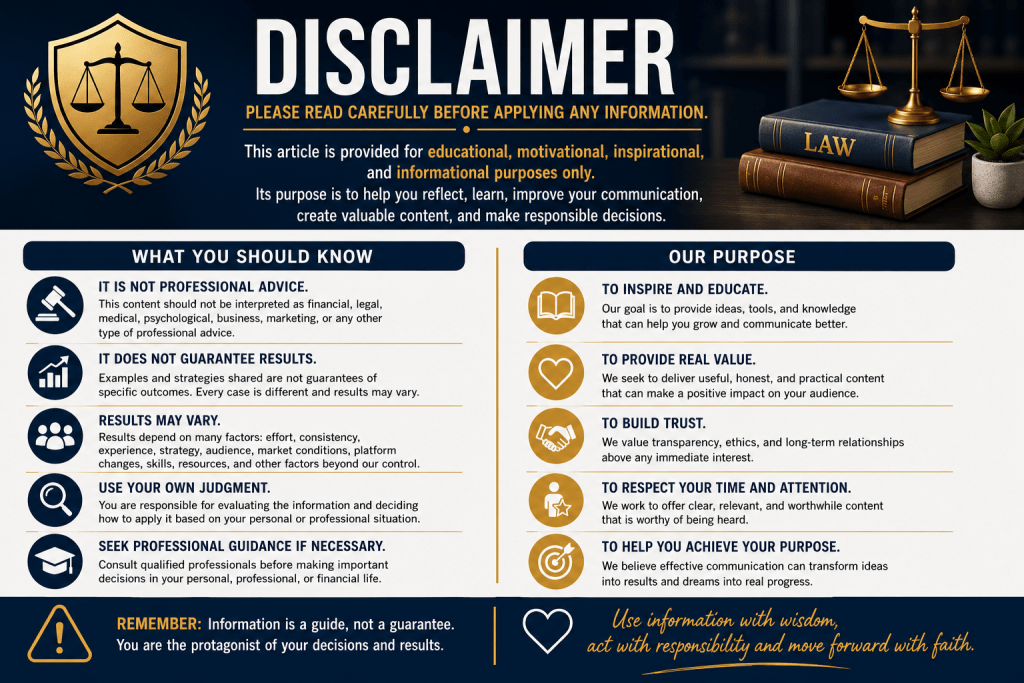
This article is provided for educational, motivational, inspirational, and informational purposes only. It is intended to encourage reflection, personal growth, mental clarity, focus, responsible learning, better decision-making, and purposeful action.

The content should not be interpreted as financial, legal, medical, psychological, spiritual counseling, business, marketing, educational, or professional advice. Any examples related to personal development, digital marketing, entrepreneurship, productivity, leadership, faith, direction, or success are not guarantees of specific results.

Individual outcomes may vary depending on personal effort, consistency, experience, discipline, clarity, available resources, timing, market conditions, audience response, personal circumstances, and other factors beyond our control.

Readers are encouraged to use their own judgment, conduct their own research, and seek qualified professional guidance when necessary. The purpose of this content is to inspire and educate, not to promise instant results or replace professional advice.

Publicado en Faith, Mindset, Motivation, Personal Development, Personal Growth, Self-Improvement

What Nobody Tells You About Starting Over

By Marvin Gandis

Starting Over Does Not Always Feel Inspiring

Many times, people talk about “starting over” as if it were something exciting, elegant, and easy.

They say beautiful phrases like:

  • “Try again.”
  • “Begin again.”
  • “It is never too late.”
  • “Everything happens for a reason.”
  • “Something better is coming.”

And while those phrases may contain truth, there is also a part almost nobody mentions:

Starting over can hurt.

  • It can feel embarrassing.
  • It can bring fear.
  • It can stir up memories.
  • It can make you feel behind.
  • It can force you to face mistakes you would rather forget.
  • It can make you ask: “How did I get here?”

But starting over does not mean your life is finished.

Sometimes it means you still have enough humility, courage, and hope to rebuild with greater wisdom.


Starting Over Requires Accepting the Truth

Nobody begins again with strength without first accepting where they are.

  • Acceptance does not mean surrendering.
  • Acceptance does not mean justifying mistakes.
  • Acceptance does not mean staying on the ground.

Acceptance means you stop disguising reality.

It means saying honestly:

  • “This did not work.”
  • “This decision had consequences.”
  • “This path did not take me where I thought it would.”
  • “I need to change.”
  • “I need to learn.”
  • “I need to put my life in order.”

Honesty can be uncomfortable, but it also brings freedom.

  • You cannot correct what you deny.
  • You cannot heal what you hide.
  • You cannot rebuild on a lie.

A new beginning starts when you stop arguing with reality and decide to work with it.


Not Every Failure Is the End

Failure hurts because many times we interpret it as identity.

We say:

  • “I failed, so I am a failure.”

But that is not true.

  • A failure can be a result.
  • A lesson.
  • A warning.
  • A correction.
  • A consequence.
  • A sign that something needs to change.

But it does not have to become your name.

Failing at something does not mean you have no value. It means there is information you need to review.

  • What failed?
  • What did I ignore?
  • What did I not understand?
  • What did I do without preparation?
  • What should I do differently?
  • What must I stop repeating?

When you turn failure into a teacher, it stops being a prison.


Shame Is One of the Heaviest Weights

One reason many people do not start over is shame.

  • Shame that others may know.
  • Shame over lost time.
  • Shame for trusting the wrong thing.
  • Shame for making poor decisions.
  • Shame for having to explain why they are beginning again.

But shame should not direct your future.

Every human being has had moments of error, loss, confusion, or falling. The difference is what you do afterward.

  • Shame says: “Hide.”
  • Wisdom says: “Learn.”
  • Shame says: “You cannot anymore.”
  • Faith says, “Get up.”
  • Shame says: “Your story is over.”
  • Hope says, “God can still write new chapters.”

You do not have to deny what happened. But you also do not have to live chained to it.


Starting Over Does Not Mean Going Back to Zero

Sometimes we believe starting again means everything before was useless.

  • But that is not true.

Your past does not disappear. It becomes building material.

  • What you learned counts.
  • What you suffered counts.
  • What you corrected counts.
  • What you lost taught you something.
  • What you survived strengthened you.
  • What you now understand can guide you better.

You are not starting from zero.

  • You are starting with experience.
  • With scars.
  • With memory.
  • With humility.
  • With more awareness.
  • With a more mature vision.

That is not the same as starting empty.

That is starting with wisdom.


Not Everyone Will Understand Your New Beginning

When you decide to start again, not everyone will understand it.

  • Some will remember your past more than your process.
  • Some will silently mock you.
  • Some will doubt you.
  • Some will say you already tried before.
  • Some will not believe you can change.

But your new beginning does not need everyone’s approval.

  • It needs commitment.
  • It needs truth.
  • It needs direction.
  • It needs discipline.
  • It needs faith.
  • It needs small actions repeated consistently.

Do not live waiting for everyone to understand your rebuilding.

Sometimes, those who did not see your pain will not understand your decision to rise again.


A New Beginning Needs Order, Not Only Emotion

Emotion can push you for a few days, but order sustains you for longer.

When you want to start over, you need to review important areas:

  • Your mindset.
  • Your habits.
  • Your finances.
  • Your relationships.
  • Your time.
  • Your health.
  • Your communication.
  • Your discipline.
  • Your relationship with God.
  • Your purpose.

A new beginning without order can become the same cycle under a different name.

That is why it is not enough to say: “This time I will change.”

You must ask:

  • What will I do differently this time?
  • What boundaries do I need to establish?
  • What habits must I eliminate?
  • What system do I need to follow?
  • What help should I seek?
  • What must I stop justifying?

Transformation needs structure.


Small Steps Are More Powerful Than Big Promises

When someone wants to change their life, they often make huge promises.

  • “Now I am going to change everything.”
  • “I will work every day without failing.”
  • “I will never make that mistake again.”
  • “This time it will be perfect.”

But big promises without consistent actions break quickly.

A new beginning is built better with small, clear, and sustainable steps.

  • One day of discipline.
  • One honest decision.
  • One necessary conversation.
  • One written page.
  • One organized debt.
  • One corrected habit.
  • One sincere prayer.
  • One action you used to avoid.

Small things, repeated with consistency, can rebuild a life.

You do not need to prove everything in one day.

You need to begin and remain.


Forgiving Yourself Is Also Part of the Process

Some people try to start over, but they keep punishing themselves for what happened.

  • They get up, but they carry guilt.
  • They move forward, but they speak harshly to themselves.
  • They try to improve, but they remember every mistake.
  • They want to build, but they keep living under condemnation.

Responsibility is necessary. Permanent condemnation is not.

You must learn from the past, but you do not have to live kneeling before it.

  • Forgiving yourself does not mean denying consequences.
  • It does not mean blaming others.
  • It does not mean forgetting everything.
  • It does not mean justifying poor decisions.

It means recognizing that you can take responsibility without destroying your value.

God can work with a repentant, humble heart that is willing to change.

But it is hard to move forward if you deny yourself every possibility of restoration.


Starting Over Requires Patience With Your Own Process

You will not rebuild in one week what became disordered over the years.

  • You will not immediately master what you are just beginning to learn.
  • You will not heal in one day everything that has hurt for a long time.
  • You will not rebuild trust without consistency.
  • You will not change deep habits without practice and awareness.

That is why you need patience.

  • Patience does not mean passivity.
  • Patience means working without desperation.

It means saying:

  • “I am going step by step.”
  • “I am learning.”
  • “I am correcting.”
  • “I am rebuilding.”
  • “I am not where I want to be yet, but I am no longer where I was.”

The process also deserves respect.


Something New Can Be Born From What Seemed Lost

Sometimes, the best seasons of a life are born after a breakup, a loss, a failure, a disappointment, or a difficult season.

Not because pain is good in itself, but because God can use even what is broken to form something new.

  • A loss can teach you priorities.
  • A mistake can teach you humility.
  • A fall can teach you dependence on God.
  • A disappointment can teach you discernment.
  • A dark season can teach you endurance.

Not everything you lost will return the same way.

But that does not mean nothing good can come.

Sometimes God does not restore by copying the past. Sometimes, He restores by building something deeper.


Starting Over Is Also Courage

My dear reader and friend, starting over does not always feel beautiful. Sometimes it feels like picking up pieces, accepting difficult truths, and walking with tears in your eyes.

But it can also be one of the bravest decisions of your life.

  • You are not less because you have to begin again.
  • You are not less because you recognize mistakes.
  • You are not less because you change direction.
  • You are not less because you need to learn again.
  • You are not less because you are rebuilding slowly.
  • There is dignity in rising.
  • There is wisdom in correcting.
  • There is strength in admitting the truth.
  • There is faith in planting again after a difficult season.

Do not allow shame to steal your future.

  • Breathe.
  • Accept the truth.
  • Learn the lesson.
  • Put your life in order.
  • Take the next step.
  • Build again.
  • Starting over does not mean you failed forever.
  • It means there is still life, purpose, and possibility ahead of you.

Disclaimer:


This article is provided for educational, motivational, inspirational, and informational purposes only. It is intended to encourage reflection, personal growth, faith, emotional resilience, responsible decision-making, and the courage to begin again.

The content should not be interpreted as financial, legal, medical, psychological, spiritual, counseling, business, or professional advice. Any examples related to starting over, personal development, faith, healing, discipline, rebuilding, success, or life transformation are not guarantees of specific results.

Individual outcomes may vary depending on personal circumstances, effort, consistency, emotional readiness, access to resources, support systems, timing, discipline, and other factors beyond our control.

Readers are encouraged to use their own judgment, conduct their own research, and seek qualified professional guidance when necessary. The purpose of this content is to inspire and educate, not to promise instant results or replace professional advice.