
Taking Control of Your Mind: Powerful Thoughts to Start Every Day
By Marvin Gandis
Some mornings we wake up with energy, clarity, and enthusiasm. Other mornings, before our feet even touch the floor, our minds are already occupied with problems, unpaid bills, past mistakes, responsibilities, fears, or situations we still do not know how to solve.
That is where a quiet battle can begin.
Not necessarily a battle against the world, but a battle within our own minds.
Every day, our minds process thousands of impressions. We remember conversations, anticipate difficulties, imagine outcomes, react to news, evaluate circumstances, and sometimes create problems in our imagination before anything has actually happened.
If we never learn to direct our thinking intentionally, we can become controlled by whatever negative thought happens to appear.
That is why one of the most important decisions we can make every morning is remarkably simple:
Today, I will give my best.
That does not mean everything will go perfectly.
It does not mean we will never feel afraid, tired, disappointed, or frustrated.
It means that regardless of the circumstances, we will try to respond with our best attitude, judgment, effort, and character.
Your First Thoughts Can Influence Your Day
Imagine your mind as a field.
Every thought is a seed.
Some seeds produce confidence, creativity, gratitude, perseverance, patience, and hope.
Others produce resentment, fear, discouragement, comparison, and paralysis.
We cannot prevent every negative thought from entering our minds. Doubt, worry, and insecurity are part of the human experience.
But we can decide which thoughts we continue feeding.
A negative thought may knock on the door.
We do not have to invite it to live with us.
When we continually tell ourselves:
“Nothing ever works for me.”
“I can’t do this.”
“I’ll never get an opportunity.”
“I’m too old.”
“It’s too late.”
“Nobody helps me.”
“I never get lucky.”
Our minds can begin interpreting life through those assumptions.
But we can train ourselves to think differently:
Today gives me another opportunity.
I may not know the solution yet, but I can look for one.
I can learn something new.
I can move a little farther than yesterday.
I don’t need everything figured out before taking the next step.
That difference may appear small.
Repeated for weeks, months, and years, however, it can transform how we respond to life.
Positive Thinking Does Not Mean Denying Reality
There is an important difference between constructive thinking and wishful thinking.
Positive thinking does not mean looking at an unpaid bill and saying:
“Everything will somehow work out.”
Constructive thinking says:
“I have a financial problem. I need to review my expenses, organize my resources, explore options, and start making decisions.”
It does not mean ignoring an illness.
It means facing the situation, seeking appropriate care, following qualified guidance, and maintaining hope where possible.
It does not mean pretending we never make mistakes.
It means saying:
“I made a mistake. What can I learn from it?”
Constructive thinking does not erase reality.
It helps us face reality more effectively.
Take Control of Your Inner Conversation
There is one conversation you will probably hear more than any other throughout your life:
The conversation you have with yourself.
Pay attention to what you say internally when something goes wrong.
Do you insult yourself?
Do you declare yourself incapable?
Do you constantly replay your mistakes?
Do you compare yourself with everyone else?
Do you turn one temporary failure into a permanent identity?
Many people would never speak to a friend the way they regularly speak to themselves.
Change begins when we correct that internal conversation.
Instead of:
“I am a failure.”
Try:
“That did not work the way I expected. What can I improve?”
Instead of:
“I can’t do anything right.”
Try:
“I am still learning. I need more practice.”
Instead of:
“It’s too late.”
Try:
“Today is the earliest day I still have available to begin.”
Your internal language matters.
Words repeated often enough can become beliefs, and beliefs influence decisions.
The Morning Question: What Will I Plant Today?
Every morning allows us to plant intentional thoughts.
You do not need twenty affirmations.
Begin with a few strong ideas:
Today I will give my best.
Today I will focus on what I can control.
Today I will learn something.
Today I will not allow one problem to define my entire day.
Today I will treat people with respect.
Today I will move forward, even if progress is slow.
Today I will guard my words and decisions.
Today I will look for solutions before feeding complaints.
Repeating these statements does not magically change circumstances.
But they can remind us how we intend to respond to those circumstances.
You Cannot Control Everything
A great deal of stress comes from trying to control things that do not belong to us.
We cannot control:
what other people think,
other people’s decisions,
the past,
the weather,
the global economy,
criticism,
every outcome,
or every unexpected event.
But we can work on:
our preparation,
our attitude,
our words,
our discipline,
our choices,
our willingness to learn,
how we treat other people,
and how we respond when life does not go according to plan.
That is where personal power exists.
Not in controlling the world.
But in learning to govern ourselves.
Thoughts Must Become Action
Thinking well is important.
But thinking without action can become an elegant form of procrastination.
If you say:
“I want to improve my finances,”
create a budget.
If you say:
“I want to find a job,”
update your résumé, submit applications, network, and develop useful skills.
If you say:
“I want to improve my business,”
contact prospects, study marketing, improve your offer, and measure results.
If you say:
“I want to improve my health,”
begin with one concrete step that is appropriate for your circumstances.
If you say:
“I want to repair a relationship,”
perhaps it is time to talk, listen, apologize, forgive, or establish healthy boundaries.
Every constructive thought should eventually answer one question:
What is the next action I can take?
You Do Not Need to Feel Motivated Before You Begin
One common mistake is waiting for motivation.
“I’ll start when I feel like it.”
“I’ll do it when I feel ready.”
“I’ll make the decision when the fear disappears.”
But motivation often appears after we begin.
First, we take a small action.
Then we experience progress.
Progress builds confidence.
Confidence encourages us to continue.
Some days you will have motivation.
Other days you will need discipline.
Discipline is especially valuable because it allows you to continue when emotions change.
Ten Powerful Thoughts to Start Your Day
1. Today Is Another Opportunity
Yesterday can teach you, but it does not have to control you.
You cannot return to change a past decision, but you can make a different decision today.
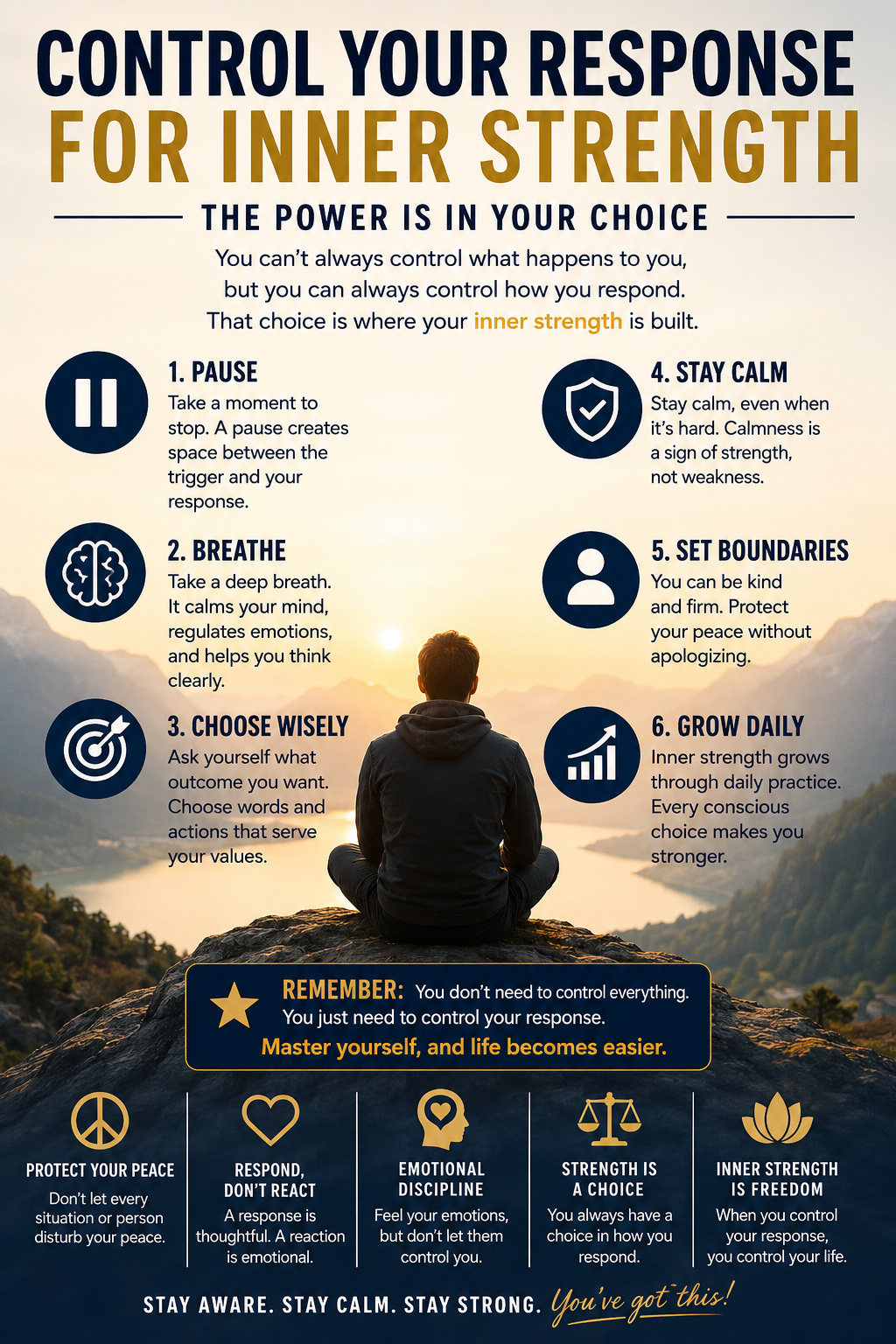
2. I Can Control My Response
You may not control what happens.
But you can work on how you respond.
3. I Do Not Need to Solve Everything Today
Some problems require time.
Focus on the next correct step.
4. I Can Learn What I Do Not Yet Know
Not knowing something does not mean you are incapable.
It means there is still something to learn.
5. My Progress Does Not Need to Look Like Someone Else’s
Constant comparison can steal clarity.
Work with your circumstances, your resources, and your path.
6. One Mistake Does Not Define My Life
Mistakes can become teachers when we are willing to examine them.
7. My Words Have Consequences
Speak carefully.
Especially to yourself.
8. Small Actions Matter
Five pages read.
One application submitted.
One phone call made.
One dollar saved.
One difficult conversation started.
Little progress is still progress.
9. I Can Begin Again
As long as you retain the ability to make decisions, you retain the possibility of changing direction.
10. Today I Will Give My Best
Not someone else’s best.
Not impossible perfection.
The best you can genuinely offer today.
A Five-Minute Morning Mindset Routine
You can begin your day with this simple practice.
Minute 1: Gratitude
Think of three things you appreciate.
They do not have to be extraordinary.
Being alive.
Having food.
Someone you love.
Another opportunity.
Minute 2: Priority
Ask yourself:
What deserves my attention most today?
Not twenty things.
One.
Minute 3: Thought
Choose one sentence to guide your thinking.
For example:
“Today I will respond calmly and act intentionally.”
Minute 4: Action
Identify one concrete action you can begin immediately.
Minute 5: Silence
Breathe slowly.
Allow yourself a few moments without news, social media, notifications, or outside noise.
Begin the day hearing your own direction before hearing everyone else’s.
Guard What Enters Your Mind
We cannot discuss constructive thinking without considering what we consume.
If the first hours of every day are filled only with:
bad news,
conflict,
criticism,
comparison,
gossip,
alarmist content,
and endless arguments,
it becomes much more difficult to maintain mental clarity.
This does not mean ignoring the world.
It means setting boundaries.
You can remain informed without becoming overwhelmed.
You can use social media without allowing it to determine your self-worth.
You can hear different opinions without allowing every comment to disturb your peace.
Your attention is one of your most valuable resources.
Protect it.
Beware of Toxic Positivity
There is another important truth.
Not every painful situation can be solved by telling someone:
“Just think positive.”
A person may be experiencing grief, unemployment, illness, family conflict, financial loss, or deeply difficult circumstances.
At those times, motivational statements alone may not be enough.
We may need support, professional guidance, treatment, community, planning, practical resources, or assistance from other people.
Being positive does not mean pretending something does not hurt.
Sometimes the healthiest thought is:
“This is difficult. I need help. But I will keep looking for the next step.”
That is strength too.
Your Mind Requires Training
We do not erase years of mental habits in one morning.
The mind needs repetition.
Practice.
Awareness.
Perhaps today you catch ten negative thoughts.
Tomorrow you catch nine.
Eventually you may learn to challenge them much faster.
Over time, you can develop one of the most powerful mental skills available:
You stop automatically believing everything you think.
Because a thought is not always a fact.
“I am going to fail” is a thought.
“Nobody cares about me” is a thought.
“I have no future” is a thought.
“I cannot learn” is a thought.
Before accepting an idea as truth, ask:
Do I have evidence?
Is there another way to interpret this situation?
What advice would I give someone I care about?
What can I do next?
Those questions can redirect your thinking.
Three Seeds to Plant Every Day
The First Seed: Hope
Hope is not a guarantee.
It is the willingness to keep open the possibility that something can improve.
The Second Seed: Responsibility
Ask:
What part of this situation can I work on?
Responsibility gives us back a sense of agency.
The Third Seed: Action
Constructive thinking should eventually create movement.
Even if that movement is small.
Hope without responsibility can become fantasy.
Responsibility without hope can become a burden.
Action without direction can become exhaustion.
When all three work together, we begin moving with intention.
Review Your Day Before Going to Sleep
Mental growth does not end in the morning.
At night, ask yourself three questions:
What did I do well today?
What can I do better tomorrow?
What do I need to release before going to sleep?
Do not use the evening to punish yourself.
Use it to learn.
The day is finished.
Tomorrow offers another beginning.
Conclusion: I Will Give My Best
Your entire life may not change tomorrow.
Your problems may not disappear this week.
Some situations may require months or even years to resolve.
But there is something you can begin changing today:
The way you approach each day.
Every morning, you can choose which thoughts deserve your attention.
You can choose intention instead of constant reaction.
Responsibility instead of endless excuses.
Learning instead of resignation.
Progress instead of waiting for perfect conditions.
You do not need to promise yourself that you will never experience another negative thought.
Make a more realistic promise:
When negative thoughts appear, I will not automatically allow them to control my decisions.
Tomorrow morning, when you open your eyes, before checking your phone, before thinking about every obligation, and before allowing the world to claim your attention, remember:
Today is a new day.
I cannot control everything that will happen, but I can work on how I respond.
I can learn.
I can correct my direction.
I can move forward.
I can plant better thoughts.
And above all:
Today, I Will Give My Best.
Call to Action
Start Today
You do not have to wait until you feel completely ready.
Tomorrow morning, begin with one sentence:
“Today, I will give my best.”
Then identify one concrete action that proves your commitment.
Thoughts can plant the seed.
Your actions build the result.
Frequently Asked Questions
How can I take control of my thoughts?
Begin by becoming aware of your inner dialogue, questioning automatic negative thoughts, and replacing them with more realistic and constructive perspectives, then follow with practical action.
Does positive thinking really work?
Positive thinking can be beneficial when combined with realism, planning, responsibility, and action. It does not eliminate problems, but it can help people approach difficulties more constructively.
How can I start my day with a positive mindset?
Begin with gratitude, identify your top priority, choose one guiding thought, and take one constructive action before letting news, social media, or other distractions dominate your attention.
How do I change negative thinking?
First recognize the thought. Then ask whether it represents a fact or an interpretation. Examine the evidence, consider alternative perspectives, and identify a constructive action you can take.
What thoughts should I repeat every morning?
Useful examples include: “Today I will give my best,” “I can control my response,” “I can learn,” “I do not have to solve everything today,” and “I will move forward one step at a time.”
Disclaimer
This article is provided for educational, motivational, and informational purposes only. It is not intended to replace medical, psychological, therapeutic, or other qualified professional advice. Positive and constructive thinking can support healthier habits and perspectives, but it is not a substitute for professional care when mental health, emotional, or medical concerns are present. Individual circumstances vary, and appropriate professional guidance should be sought when needed.
Debe estar conectado para enviar un comentario.