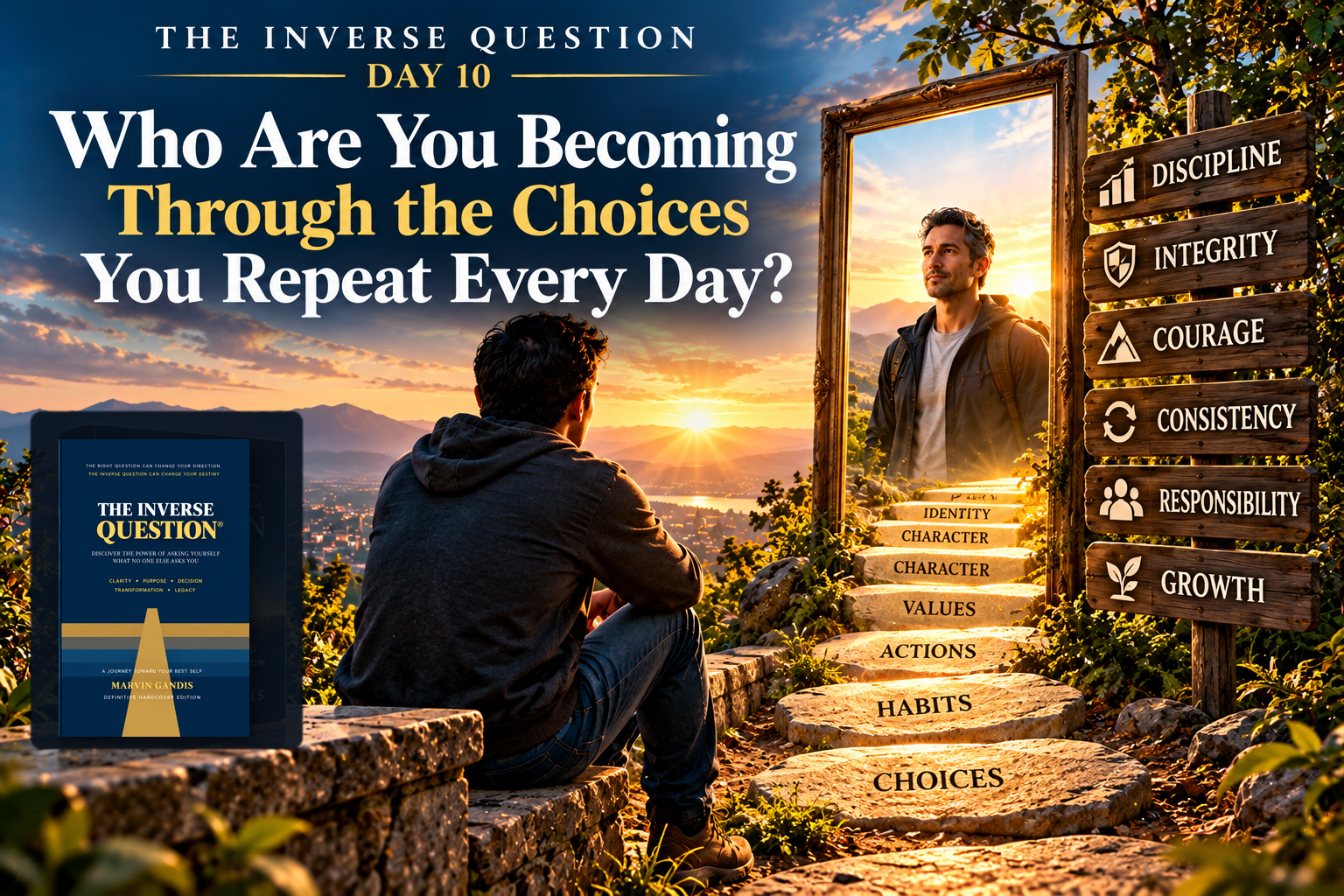
“Your habits do more than shape your results. They quietly shape the person you are becoming.”
— Marvin Gandis
We often judge our choices by what they produce.
Did this help me earn more?
Did this move the project forward?
Did this improve my health?
Did this make life easier?
Those are reasonable questions.
But there is another question that may be even more important:
Who am I becoming through the choices I repeat every day?
Because habits do not only create outcomes.
They create identity.
The things we do repeatedly begin to influence what feels normal.
What feels natural.
What we expect from ourselves.
What we tolerate.
What we believe we are capable of.
Over time, repeated choices become evidence.
And that evidence begins to answer one of the deepest questions in life:
What kind of person am I becoming?
RESULTS MATTER, BUT IDENTITY MATTERS TOO
Imagine two people who reach the same goal.
Both become successful.
Both earn more.
Both complete the project.
Both gain recognition.
But one becomes more disciplined, patient, generous, and grounded in the process.
The other becomes anxious, arrogant, exhausted, and disconnected from everything that once mattered.
Did they achieve the same result?
On paper, perhaps.
In reality, no.
Because success is not only about what you achieve.
It is also about what the process turns you into.
EVERY HABIT CASTS A VOTE
Every repeated behavior is a small vote for an identity.
When you keep a promise to yourself, you cast a vote for reliability.
When you study consistently, you cast a vote for discipline.
When you tell the truth when dishonesty would be easier, you cast a vote for integrity.
When you procrastinate repeatedly, you cast a vote for avoidance.
When you overspend repeatedly, you cast a vote for financial disorder.
When you complain without acting, you cast a vote for helplessness.
One vote does not define you.
But repeated votes begin to build a pattern.
And patterns become identity.
✦ THE INVERSE QUESTION ✦
For Day 10, ask yourself:
If someone observed my repeated choices for the next year, what kind of person would they say I am becoming?
Do not answer based on intention.
Answer based on evidence.
Your schedule.
Your spending.
Your words.
Your habits.
Your reactions.
Your priorities.
Your follow-through.
Your treatment of others.
Your willingness to learn.
Your response to difficulty.
That evidence may reveal more than your goals do.
IDENTITY IS BUILT IN ORDINARY MOMENTS
We often imagine identity being shaped through dramatic experiences.
And sometimes it is.
But most identity is built quietly.
You wake up when you said you would.
Or you do not.
You complete the task.
Or delay it.
You speak respectfully.
Or react impulsively.
You save.
Or spend.
You practice.
Or avoid.
You apologize.
Or defend your ego.
You listen.
Or interrupt.
These moments seem small.
But they are training.
Everyday choices teach you who you are willing to be.
THE PERSON YOU PRACTICE BECOMES EASIER TO BE
Repetition reduces friction.
The first disciplined decision may feel difficult.
The tenth may feel easier.
The hundredth may begin to feel normal.
The same is true for poor habits.
The more often we repeat something, the less resistance we feel.
That means habits are not neutral.
They are rehearsal.
You are practicing a version of yourself.
The question is:
Which version?
YOU CAN BECOME SUCCESSFUL AND STILL BECOME SOMEONE YOU DO NOT LIKE
This is worth saying plainly.
Achievement does not automatically improve character.
Money can expose poor judgment.
Recognition can expose insecurity.
Power can expose ego.
Pressure can expose impatience.
Success can magnify what already exists.
That is why personal growth should not focus only on capacity.
It should also focus on character.
Ask:
If I receive more responsibility, who will I become under that pressure?
That question matters before success arrives.
DISCIPLINE CHANGES MORE THAN YOUR SCHEDULE
Discipline is not merely time management.
It changes self-perception.
When you repeatedly do what you said you would do, you begin trusting yourself more.
You stop needing constant motivation.
You rely less on mood.
You become more dependable.
That becomes part of your identity.
You begin thinking:
- I am someone who follows through.
That belief was not created through affirmation alone.
It was built through evidence.
THE SAME IS TRUE OF INTEGRITY
Integrity grows through repetition.
You tell the truth when nobody would know otherwise.
You keep promises that are inconvenient.
You refuse shortcuts that violate your values.
You admit mistakes.
You correct them.
These decisions build something invisible.
Character.
And eventually, other people can feel it.
Trust is often the visible fruit of invisible integrity.
WHAT YOU TOLERATE FROM YOURSELF ALSO SHAPES IDENTITY
We often think identity is created only by what we do.
It is also influenced by what we allow.
If you tolerate chronic lateness from yourself, you begin normalizing unreliability.
If you excuse repeated procrastination, delay becomes part of your self-story.
If you accept poor preparation, you lower your internal standard.
If you continually abandon goals, you may begin believing:
- “I never finish anything.”
That belief then influences future behavior.
The cycle reinforces itself.
✦ THE MIRROR ✦
Complete these sentences:
One habit that is helping shape me into the person I want to become is: __________
One repeated choice that is moving me away from that person is: __________
One standard I need to raise is: __________
One behavior I need to stop excusing is: __________
One quality I want to strengthen is: __________
One action that would give me evidence of that quality is: __________
Now ask:
What identity am I reinforcing through the choices I repeat most often?
That is the heart of Day 10.
YOUR LANGUAGE ABOUT YOURSELF MATTERS
We often reinforce identity through language.
“I am terrible with money.”
“I am not disciplined.”
“I always procrastinate.”
“I am bad at relationships.”
“I cannot stay consistent.”
Those statements feel descriptive.
But repeated often enough, they can become instructions.
A healthier approach is not pretending the problem does not exist.
It is separating identity from behavior.
Instead of:
- “I am undisciplined.”
Try:
- “I have been inconsistent, and I am building better habits.”
Instead of:
- “I am bad with money.”
Try:
- “My current financial habits need improvement.”
Behavior can change.
Identity should not become a prison built from old evidence.
YOUR FUTURE IDENTITY NEEDS CURRENT EVIDENCE
You cannot become confident only by saying:
- “I am confident.”
Confidence grows when you collect evidence.
You speak.
You practice.
You fail.
You recover.
You improve.
You survive uncomfortable situations.
Evidence changes belief.
If you want to become disciplined, create evidence of discipline.
If you want to become reliable, create evidence of reliability.
If you want to become generous, practice generosity.
If you want to become courageous, take small courageous actions.
Identity grows from repeated proof.
THE GOAL IS NOT TO PERFORM FOR OTHERS
There is a danger here.
We can become obsessed with appearing disciplined.
Appearing successful.
Appearing wise.
Appearing generous.
But appearance and identity are not the same thing.
Social media rewards visible performance.
Character is often built when nobody is watching.
The question is not:
- “What do people think I am becoming?”
It is:
“Who am I becoming when there is no audience?”
That answer is often more honest.
WHAT YOU DO UNDER PRESSURE REVEALS TRAINING
Pressure does not always create character.
Often it reveals it.
When stressed, what do you default to?
Patience?
Anger?
Planning?
Avoidance?
Honesty?
Blame?
Discipline?
Impulse?
We tend to fall back on what we have practiced.
That is why daily choices matter before the crisis.
You are training your responses.
YOUR ENVIRONMENT PARTICIPATES IN YOUR IDENTITY
The people around you influence what seems normal.
If everyone around you avoids responsibility, responsibility can feel unusual.
If everyone around you is learning, growth can feel normal.
If your environment rewards distraction, distraction becomes easier.
If your environment rewards discipline, discipline becomes easier.
Ask:
What kind of person does my environment make easier to become?
That question deserves attention.
IDENTITY CAN CHANGE WITHOUT DENYING YOUR PAST
You are not required to remain loyal to an old version of yourself.
You may have been inconsistent.
You can become consistent.
You may have been financially careless.
You can become thoughtful.
You may have avoided difficult conversations.
You can learn to face them.
You may have quit before.
You can finish now.
Growth does not require pretending the past did not happen.
It requires refusing to let the past permanently define what happens next.
YOU BECOME WHAT YOU REHEARSE
Think of habits as rehearsal.
Every day you practice something.
Focus.
Distraction.
Patience.
Impatience.
Courage.
Avoidance.
Generosity.
Selfishness.
Responsibility.
Excuses.
Rehearsal matters because repetition makes behavior easier to access.
Eventually, the practiced response becomes the natural response.
That is how identity becomes automatic.
WHAT YOU REPEAT IN PRIVATE EVENTUALLY APPEARS IN PUBLIC
Private preparation becomes public competence.
Private discipline becomes public reliability.
Private study becomes public expertise.
Private financial habits become public stability.
Private character becomes public reputation.
The visible version is often the delayed result of invisible repetition.
That is why no private choice is completely insignificant.
YOUR GOALS SHOULD ASK FOR A PERSON, NOT ONLY A RESULT
Instead of asking only:
- “What do I want to achieve?”
also ask:
- “Who must I become to sustain it?”
A business may require discipline.
A healthy relationship may require patience.
Financial stability may require self-control.
Leadership may require humility.
A creative career may require persistence.
Achievement asks for action.
Sustainable achievement often asks for identity.
BECOMING TAKES TIME
Identity does not change instantly.
You may make one disciplined choice and still feel undisciplined.
That is normal.
The old identity has accumulated more evidence.
Keep creating new evidence.
One decision.
Then another.
Then another.
Eventually the balance begins to change.
You do not become a new person through one declaration.
You become through repeated behavior.
BE CAREFUL WHAT YOU REWARD
Behavior that receives reward tends to repeat.
If procrastination allows you to escape discomfort, procrastination gets rewarded.
If complaining earns attention, complaining may repeat.
If discipline produces satisfaction, discipline strengthens.
If generosity deepens connection, generosity strengthens.
Pay attention to the rewards hidden inside your habits.
Sometimes an unhealthy pattern continues because it is providing an immediate benefit.
Even when the long-term cost is high.
IDENTITY GROWS STRONGER WHEN VALUES AND ACTION ALIGN
There is peace in alignment.
When your actions match what you say matters.
When your spending reflects your priorities.
When your schedule reflects your values.
When your relationships reflect your standards.
When your habits support your goals.
Misalignment creates internal tension.
Alignment builds integrity.
That may be one of the clearest signs that you are becoming the person you intend to be.
MY DEAR READER AND FRIEND
You are becoming someone.
The process is already happening.
The question is not whether identity is being shaped.
It is whether it is being shaped intentionally.
Do not wait for a dramatic transformation.
Look at today.
What did you practice?
What did you reinforce?
What did you excuse?
What did you choose?
What did you repeat?
Then ask:
Is this the person I want to keep becoming?
If yes, continue.
If not, change one vote.
One habit.
One decision.
One repeated choice.
That is how identity begins to move.
WHO ARE YOU BECOMING THROUGH THE CHOICES YOU REPEAT EVERY DAY?
You are not only building a future.
You are building the person who will live in it.
That may be the most important project of all.
So ask yourself:
If I continue practicing today’s habits, will I respect the person they eventually create?
Your answer does not require shame.
It requires honesty.
And if something needs to change, the next vote can begin today.
With gratitude,
Marvin Gandis
Author of La Pregunta Inversa and The Inverse Question
CONTINUE THE JOURNEY
This is Day 10 of The Inverse Question English series.
Day 1: Today Begins a New Chapter
Day 2: Why Did I Write The Inverse Question?
Day 3: The Question That Changed the Way I Think
Day 4: Maybe You Have Been Looking for Answers to the Wrong Question
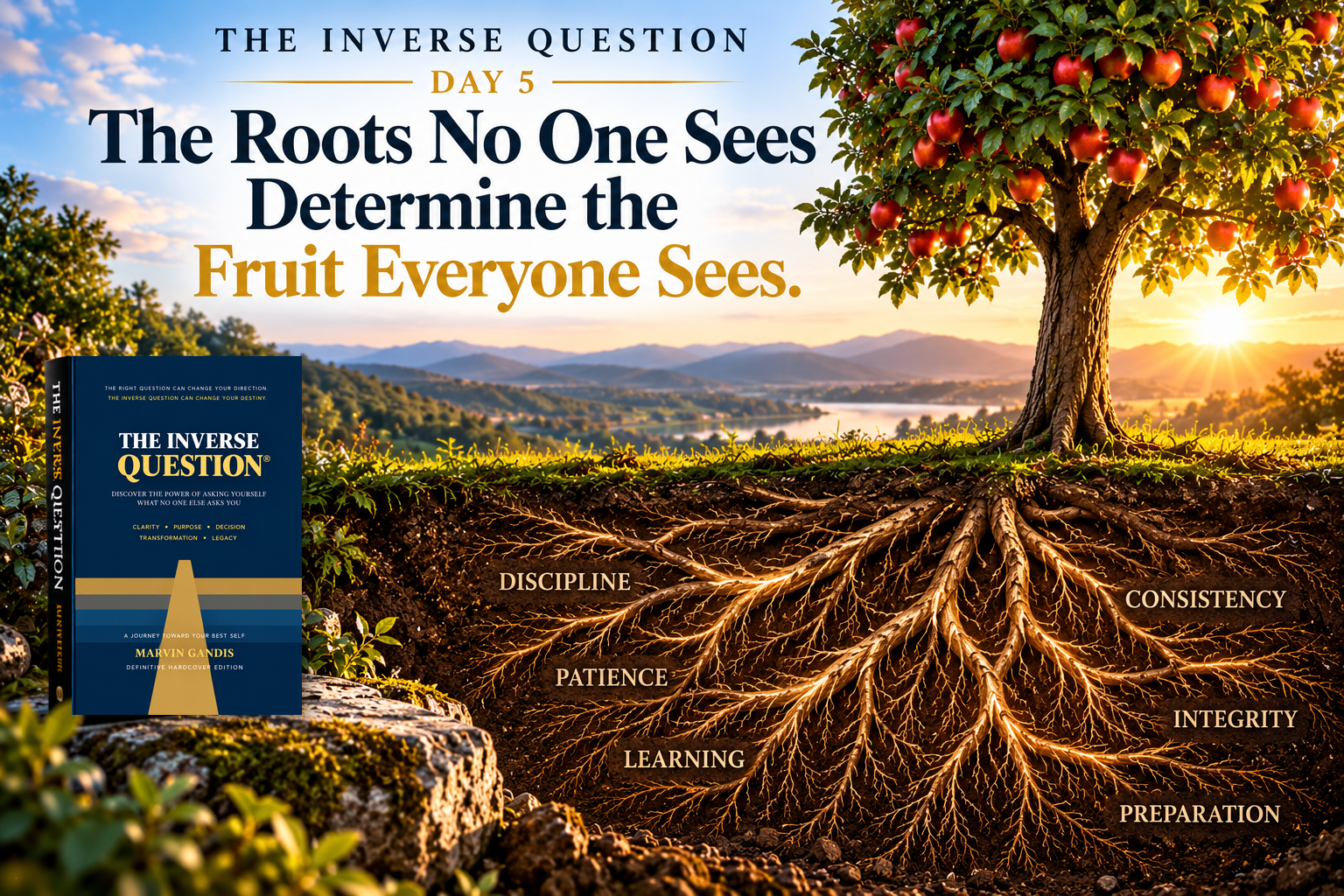
Day 5: The Roots No One Sees Determine the Fruit Everyone Sees
Day 6: Not Everything That Looks Like Progress Is Moving You Forward
Day 7: What Are You Tolerating Today That Is Building the Future You Do Not Want?
Day 8: Do Not Confuse Movement With Direction
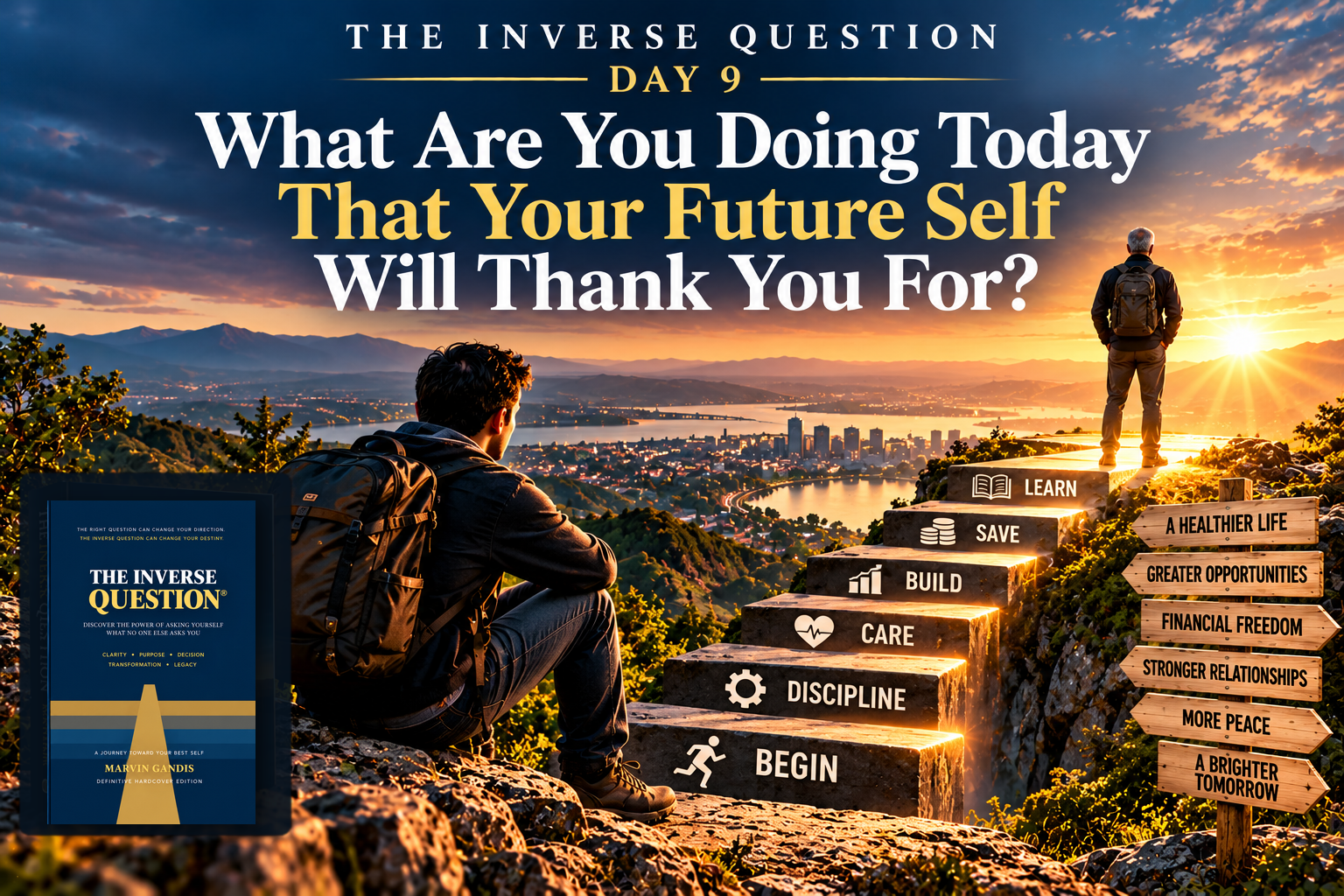
Day 9: What Are You Doing Today That Your Future Self Will Thank You For?
Day 10: Who Are You Becoming Through the Choices You Repeat Every Day?
Next:
Day 11 — What Are You Rehearsing Every Day That Is Quietly Becoming Your Identity?
Because repetition does not only improve behavior.
It turns behavior into something that begins to feel like you.
DISCLAIMER
This article is provided for educational, informational, motivational, and personal-reflection purposes only. It does not constitute medical, psychological, mental-health, legal, financial, business, career, relationship, or other professional advice.
The ideas presented about habits, identity, discipline, character, and personal growth are general and may not apply equally to every person or circumstance. People experiencing significant emotional, behavioral, psychological, medical, financial, or other difficulties should seek appropriately qualified professional guidance when needed.
No specific personal, professional, financial, relationship, business, health, or life outcome is promised or guaranteed.
The Inverse Question series is intended to encourage thoughtful reflection, learning, responsible decision-making, personal awareness, intentional growth, and independent judgment.
Debe estar conectado para enviar un comentario.