Publicado en Family, Human Awareness, Motivation, Personal Growth, Social Reflection, Spirituality

Tension on Our Planet: How to Find Clarity, Peace, and Responsibility in the Middle of Chaos

By Marvin Gandis

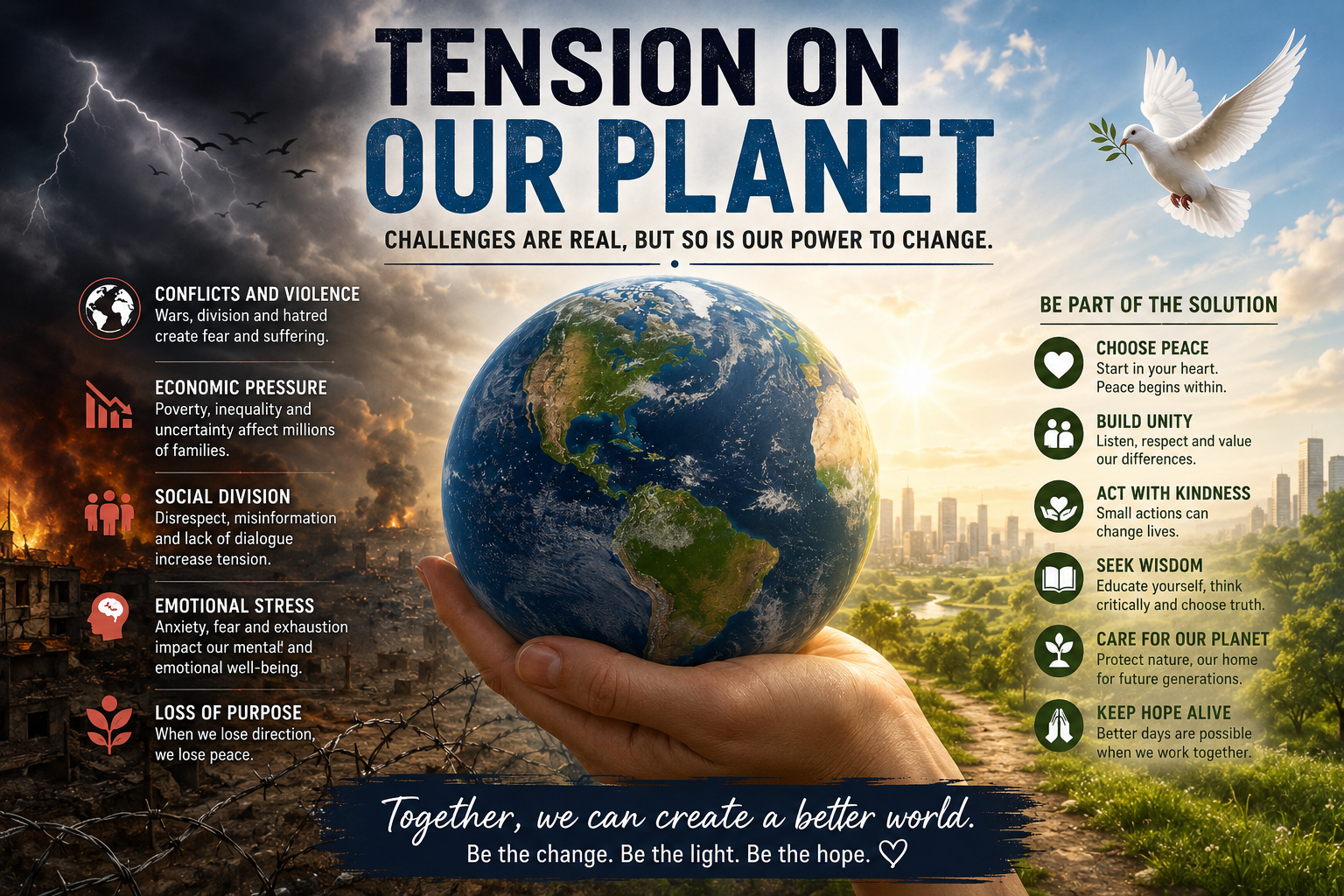
A World Under Pressure

We are living in a time when it feels as if the entire planet is under tension. There is tension in families, in the streets, in the economy, on social media, in politics, among nations, and even inside the human heart. Many people smile on the outside, but inside they carry exhaustion, worry, anxiety, frustration, and unanswered questions.

The tension on our planet is not limited to wars, economic crises, or social problems. There is also a silent tension: the tension of the human soul that cannot find rest. The tension of a father or mother who does not know how to keep the household running. The tension of a young person who does not know which path to take. The tension of a worker who feels they are trying hard but moving slowly. The tension of families who love each other but do not always know how to communicate. The tension of communities crying for justice but often receiving only promises.

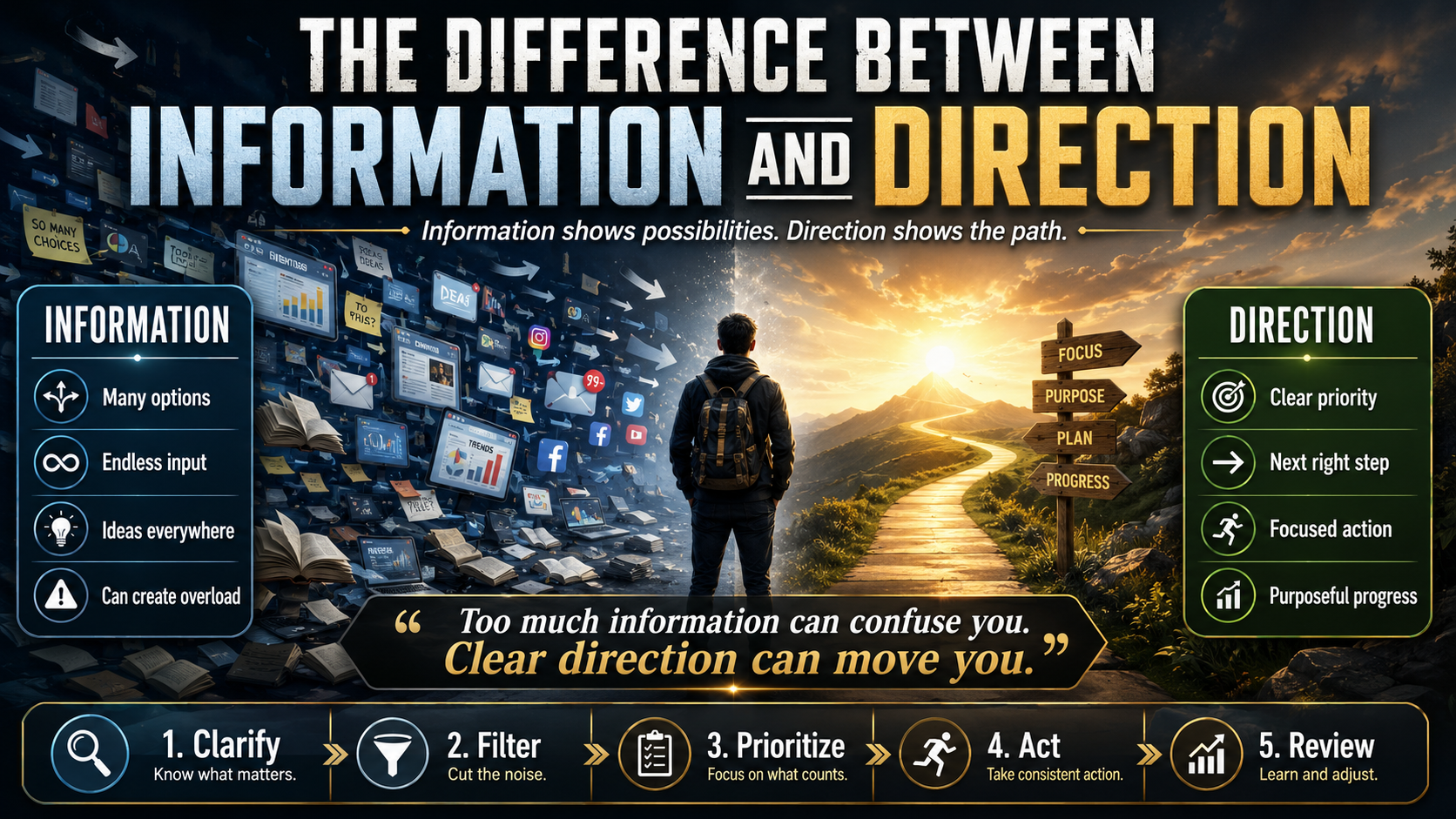
The world is full of information, but not necessarily wisdom. Many voices are speaking, but few people are listening. There are many opinions, but little reflection. There is a lot of noise, but very little direction.

And in the middle of all this tension, one important question arises:

  • How can we live with clarity, peace, and responsibility in a world so full of pressure?

Outer Tension Often Reflects Inner Tension

Before we only point at what is happening outside, we must look at what is happening within us. Many times, the chaos we see in the world also exists inside the human heart.

Some people are at war with their past. Others are fighting their mistakes, fears, guilt, or disappointments. Some carry resentment that was never healed. Others live comparing themselves to everyone else and feeling like they are never enough.

When a person does not have inner peace, they eventually bring conflict into everything they touch: their family, their work, their relationships, their decisions, and their words.

Global tension does not begin only in large systems; it also begins in unhealed hearts, confused minds, and people who react from pain instead of acting from wisdom.

That is why, if we want a planet with less tension, we must begin by examining our own lives.

  • We cannot demand peace while feeding hatred.
  • We cannot ask for unity while planting division.
  • We cannot claim justice while acting with indifference.
  • We cannot ask for clarity while refusing to listen to the truth.

Tension in Families: The First Battlefield

The planet will not change if homes continue to break down because of poor communication, pride, impatience, and unhealed wounds.

Many families are living under silent pressure. Parents are worried about the economy. Mothers are emotionally exhausted. Children feel alone even when surrounded by people. Marriages share the same house but not the same heart. Siblings barely speak because pride has become stronger than love.

Family tension becomes social tension. A child who grows up in an environment full of shouting, humiliation, or abandonment may become an adult full of insecurity, anger, or fear. A couple that never learns to communicate can spread bitterness throughout the entire home. A house without peace produces people who are tired, defensive, and disconnected.

World peace may sound like a big subject, but it begins in small places:

  • at the dinner table,
  • In an honest conversation,
  • In a sincere apology,
  • in a kind word,
  • in a needed embrace,
  • in the decision to listen before reacting.

If we want to reduce the tension on our planet, we must begin by reducing the tension in our homes.


Social Tension: Too Much Noise, Not Enough Understanding

Today, we live in an age where many people want to speak, but few truly want to understand. Social media has amplified voices, but it has also amplified conflict. Too often, an opinion becomes an attack, a difference becomes an enemy, and a conversation becomes a battlefield.

The problem is not that we think differently. The problem is that we have lost the ability to respect those who think differently.

A tense planet does not need more shouting. It needs more awareness. It does not need more insults. It needs more wisdom. It does not need more people trying to have the last word. It needs people willing to listen with humility.

Not every disagreement has to become a war. Not every conversation has to end in division. Not every truth has to be expressed violently. Truth also needs love, prudence, and responsibility.

When we learn to dialogue without destroying, we begin to plant peace in the middle of tension.


Economic Tension: When Survival Becomes a Daily Concern

One of the great tensions of our time is economic pressure. Many families work hard, but feel their money does not go far enough. Prices rise, responsibilities grow, and opportunities do not always seem equal for everyone.

This pressure affects the mind, the mood, and relationships. When a person is constantly worried about paying bills, feeding their family, or maintaining stability, it is easy to fall into stress, desperation, or frustration.

But we must also recognize something important: although we cannot always control the world economy, we can learn to better manage our decisions, habits, time, and opportunities.

Economic tension should awaken us, not defeat us. It should push us to learn, prepare, seek alternatives, develop skills, and think with greater clarity. Complaining may release pressure for a moment, but preparation can open new paths.

This is not about denying reality. It is about facing reality with responsibility.

The question is not only: Why is the situation so difficult?

We must also ask:

  • What can I learn?
  • What can I improve?
  • What habits do I need to change?
  • What new skills can I develop?
  • How can I better protect my family?

Tension can destroy the person who remains paralyzed, but it can also awaken the person who chooses to act with wisdom.


Spiritual Tension: When Humanity Loses Direction

One of the deepest tensions on our planet is spiritual. Many people have technology, entertainment, knowledge, and information, yet still feel empty. They have access to many things, but lack purpose.

When human beings lose their spiritual compass, they begin to live by reaction instead of direction. They are carried by the current, by popular opinion, by fear, by comparison, or by the pressure of the moment.

Spiritual tension appears when a person no longer knows who they are, why they live, what values sustain them, or what principles guide their decisions.

That is why, in times of chaos, we must return to what matters most:

  • faith,
  • prayer,
  • reflection,
  • humility,
  • truth,
  • love for our neighbor,
  • personal responsibility,
  • compassion,
  • forgiveness.

We cannot build a healthier world with empty hearts. Outer peace needs inner roots.


The Tension of Fear: The Silent Enemy

Fear is one of the strongest forces creating tension on our planet. Fear of the future. Fear of loss. Fear of failure. Fear of illness. Fear of not having enough. Fear of rejection. Fear of not being able to move forward.

Fear does not always shout. Sometimes it hides behind anger, control, anxiety, pride, or indifference.

A person driven by fear may attack before listening. They may close their heart before trusting. They may give up before trying. They may destroy an opportunity because they do not believe they deserve better.

But fear must not become our teacher. Fear can warn us, but it should not govern us.

We need to learn how to think calmly, act with faith, and make decisions from wisdom, not panic. The tension of the world increases when millions of people react out of fear. But hope grows when conscious people decide to act from truth, love, and responsibility.


We Cannot Change Everything, But We Can Change Something

One reason many people feel exhausted is that they look at the problems of the world and think, “This is too big. I cannot do anything.”

But that idea is not completely true.

  • Maybe you cannot stop every war.
  • Maybe you cannot change every system.
  • Maybe you cannot solve every economic problem.
  • Maybe you cannot heal every injustice in the world.

But you can do something.

  • You can treat your family better.
  • You can speak with more respect.
  • You can stop feeding rumors.
  • You can help someone in need.
  • You can teach your children values.
  • You can forgive an offense.
  • You can prepare yourself better.
  • You can pray for wisdom.
  • You can become a more responsible person.
  • You can be light in your environment.

Great changes often begin with small decisions repeated consistently.


Personal Responsibility in Times of Tension

We cannot live always blaming others without examining our own responsibility. Yes, injustice exists. Yes, systems fail. Yes, leaders disappoint. Yes, life can be difficult. But it is also true that every person must look honestly at their own life.

  • What am I doing with my time?
  • What am I feeding my mind?
  • What kind of words do I use?
  • What decisions do I keep repeating even though I know they harm me?
  • What am I teaching through my example?
  • Am I looking for solutions or only complaints?
  • Am I growing or only surviving?

Accepting responsibility does not mean blaming yourself for everything. It means regaining power over what you can change.

The world needs fewer excuses and more awareness. Less appearance and more truth. Less pride and more humility. Fewer impulsive reactions and more wise decisions.


How to Keep Inner Peace on a Tense Planet

Inner peace does not happen by accident. It is cultivated. It is protected. It is practiced.

Here are a few ways to maintain clarity in the middle of tension:

  • Protect what you consume mentally. Not everything that appears on a screen deserves to enter your heart.
  • Pray, meditate, and reflect. We need moments of silence to recover direction.
  • Speak with wisdom. One careless word can increase tension; one kind word can open a door.
  • Learn to rest. An exhausted mind interprets everything as a threat.
  • Surround yourself with people who build. Not everyone deserves access to your peace.
  • Accept your mistakes without destroying yourself. Healthy responsibility produces growth; toxic guilt produces paralysis.
  • Do good even when others do not. Peace is practiced, not only preached.

Hope Is Still Alive

Although our planet is experiencing tension, hope is not dead. There are still people helping. There are still families healing. There are still young people searching for purpose. There are still honest leaders. There are still communities rising. There are still hearts that want to do good.

Not everything is lost.

Tension can be a warning sign. It can show us that something needs to change. It can awaken us from indifference. It can invite us to return to truth, faith, responsibility, and love.

Sometimes, difficult times reveal who we are. And they can also reveal who we are called to become.


In the Middle of Tension, Be Part of the Solution

“Tension on Our Planet” is not only a social topic. It is a personal call. It is an invitation to look at the world with awareness, but also to look at our hearts with honesty.

We cannot control everything that happens on the planet, but we can decide how we will respond.

  • We can respond with hatred or with love.
  • With fear or with faith.
  • With indifference or with compassion.
  • With complaints or with action.
  • With pride or with humility.
  • With division or with peace.

The world needs awakened people. People who do not sugarcoat reality, but also do not lose hope. People who recognize problems, but also become part of the solution.

The tension on our planet is real. But the human capacity to heal, learn, change, forgive, build, and begin again is also real.

  • Today, you can choose to be a voice of calm in the middle of noise.
  • A light in the middle of confusion.
  • An example in the middle of disorder.
  • An answer in the middle of so many questions.

Because even when the planet is under tension, your heart can still choose peace, truth, and hope.


Share this article with someone who needs to reflect, breathe, and remember that we can still build something better

Change does not always begin with crowds.

Sometimes it begins with one person who chooses to Wake Up, Heal, and Act with Responsibility.


Disclaimer

This article is for educational, motivational, and reflective purposes only. It does not replace professional advice, therapy, personalized spiritual counseling, medical guidance, legal advice, or financial advice. If you are facing an emotional crisis, violence, immediate danger, or a situation affecting your well-being, seek professional help or contact emergency services in your area.

Publicado en Human Reflection, Motivation, Personal Development, Personal Responsibility, Self-Improvement, Social Awareness

Do Not Sugarcoat Reality: Accept Your Mistakes, Correct Your Path, and Do What Is Right

By Marvin Gandis

There are moments in life when truth does not need decoration. It does not need makeup, excuses, or beautiful speeches. When truth is real, it must be accepted with humility, responsibility, and courage.

We live in a time when many people prefer to justify their mistakes instead of correcting them. They blame the system, the family, the government, the economy, society, enemies, circumstances, and even the past. And while it is true that injustice, hardship, and external problems do exist, it is also true that many of the consequences we face come from our own decisions, omissions, attitudes, and mistakes.

  • Do not sugarcoat reality.
  • Do not hide what you know you must correct.
  • Do not turn your imperfections into a permanent excuse.
  • Nobody is perfect, but imperfection should never be used as permission to live without responsibility.

Accepting the Truth Is the First Step Toward Change

Accepting reality does not mean giving up. It means looking directly at what is happening and saying, “This is what is real. This is what I did. This is what I allowed. This is what I must correct.”

Many people want to change their lives without first accepting their situation. They want new results while repeating old decisions. They want peace, but they feed conflict. They want prosperity, but they do not manage wisely. They want respect, but they do not respect others. They want trust, but they do not act with honesty.

True transformation begins when we stop lying to ourselves.

Sometimes the problem is not that the whole world is against us. Sometimes the problem is that we have not been disciplined. We have not been consistent. We have not made wise decisions. We have not listened to good advice. We have not acted in time. Accepting that may hurt, but it also frees us.

  • Because when you recognize your mistake, you recover your power.
  • When you accept your responsibility, you recover your direction.
  • When you stop making excuses, you begin to move forward.

Nobody Is Perfect, But Everyone Can Choose to Do Good

Being imperfect is part of being human. We all fail. We have all made wrong decisions. We have all said things we should not have said. We have all missed opportunities. We have all felt fear. We have all experienced confusion.

But there is a difference between being imperfect and using imperfection as a shield to avoid growth.

  • You are not perfect, but you can be more honest.
  • You do not have all the answers, but you can seek wisdom.
  • You have made mistakes, but you can correct your path.
  • You have felt fear, but you do not have to live as a prisoner of fear.

Life does not require perfection before you begin. It requires humility, intention, and action. Doing what is right does not require you to be perfect. It requires you to be aware. It requires the courage to act correctly, even when it is not easy.

Responsibility Cannot Be Escaped Forever

The world may judge us, and sometimes that judgment can be unfair. But we must also recognize something important: we cannot forever escape responsibility by accusing others of inventing lies, harming us, or being the only cause of our situation.

  • Yes, people lie.
  • Yes, unfair systems exist.
  • Yes, corruption exists.
  • Yes, some structures benefit a few while leaving many behind.
  • But there are also personal decisions we must face.

Not everything we suffer is someone else’s fault. Sometimes it is the result of not acting on time. Sometimes it is the result of ignoring warning signs. Sometimes it is the result of trusting the wrong things. Sometimes it is the result of staying silent when we should have spoken, or speaking when we should have listened.

Maturity begins when we stop only asking, “Who is to blame?” and start asking, “What can I do now to correct this?”

Lies Often Wear Beautiful Disguises

We are surrounded by speeches. Politicians promise. The media gives opinions. Social media exaggerates. People pretend. Many talk about solutions, but few solve anything. Many talk about unity, but create division. Many promise truth, but hide personal interests.

Politicians often lie with elegance. When they fail, they have a great excuse. When they do not deliver, they create another explanation. When people suffer, they find someone else to blame. But it would be a mistake to think that lies live only in politics.

  • Lies can also live in a family when nobody dares to speak clearly.
  • They can live in a business when customers are deceived.
  • They can live in a relationship when intentions are hidden.
  • They can live in a community when everyone sees the problem, but nobody wants to get involved.
  • They can live inside us when we know the truth, but prefer to ignore it.

That is why, before pointing at the whole world, we must also examine ourselves. A society improves when its people decide to stop living behind appearances.

The Economy, the Family, and the Confusion of Today’s World

The economy is not working well for many families. Even though there is great wealth in the world, that wealth does not always reach those who struggle the most. There are homes where money is not enough, parents working hard, young people feeling confused, small businesses trying to survive, and heads of households who do not know how to move forward.

Many families suffer in silence. Not always because they lack effort, but because they lack direction, financial education, clear opportunities, emotional support, and vision. Some people want to improve, but they do not know where to begin. Others are so exhausted that they only survive each day without being able to plan for tomorrow.

On top of that, there is constant noise: negative news, conflict, social comparison, financial pressure, fear of the future, and a general feeling of disorder. It seems like there is information everywhere, but very little wisdom. There are opinions everywhere, but few answers. There are promises, but little clarity.

Meanwhile, wars continue, people suffer, families cry, communities divide, and humanity often seems to walk without direction.

We Need to Listen to Silence Again

One of the greatest problems of our time is that we are constantly bombarded by noise. Opinions, news, criticism, arguments, entertainment, propaganda, comparisons, false appearances, and messages push us from one side to another.

But in the middle of all this noise, we have lost the ability to listen to silence.

Silence is not emptiness. Silence can be clarity. In silence, we can review our lives. We can recognize our mistakes. We can hear our conscience. We can think before reacting. We can ask ourselves whether we are living in truth or simply surviving by habit.

  • We need less noise and more reflection.
  • Less excuses and more responsibility.
  • Less appearance and more truth.
  • Less blame toward others and more personal correction.
  • Less hatred and more humanity.

When a person learns to listen to silence, better decisions begin to emerge. Not because everything becomes easy, but because the mind begins to find order.

We Can Be Better, But We Must Decide

Humanity does not change through speeches alone. It changes through decisions. It changes when one person decides to be more honest. When a father chooses to guide his family better. When a mother decides not to give up. When a young person chooses to learn. When a leader chooses to serve instead of manipulate. When a citizen chooses to participate instead of only complaining.

We can be better. But becoming better requires action.

  • It is not enough to say we want peace if we continue creating conflict.
  • It is not enough to say we want justice if we act selfishly.
  • It is not enough to say we want the truth if we lie when it benefits us.
  • It is not enough to say we want change if we keep justifying what is wrong.

The difference begins when each person dares to correct their own part. Maybe you cannot change the whole world today, but you can change how you respond. You can change how you speak. You can change how you treat your family. You can change how you work. You can change how you make decisions. You can change how you live.

That is the first step.

The First Step of Humanity

Taking the first step of humanity does not mean waiting for governments to solve everything. It does not mean waiting for leaders to become perfect. It does not mean waiting for the world to calm down before we start living correctly.

The first step of humanity begins inside each person.

It begins when you say:

  • “I will stop sugarcoating reality.”
  • “I will accept my mistakes.”
  • “I will correct my path.”
  • “I will stop blaming everyone for everything.”
  • “I will do what is right even when nobody applauds me.”
  • “I will become more human.”
  • “I will be part of the solution.”

That first step may seem small, but it is not. Because when one person changes, they can influence a family. When a family changes, it can lift a community. When a community awakens, it can inspire others. And when enough people awaken, humanity can recover direction.

No More Excuses, More Truth and Action

Do not sugarcoat reality. If something is wrong, recognize it. If you made a mistake, accept it. If you made bad decisions, learn from them. If you are afraid, face it. If you have failed, rise again. If you know you can do good, do it.

Life does not need perfect people. It needs human beings willing to improve.

  • We need truth.
  • We need responsibility.
  • We need clarity.
  • We need direction.
  • We need compassion.
  • We need humanity.

And it all begins with one simple but powerful decision:

To Stop Hiding Behind Excuses And Start Doing What Is Right.


Disclaimer: This article is educational, reflective, and motivational in nature. It is not intended to attack any specific person, political party, religion, institution, or group. Its purpose is to invite personal responsibility, social awareness, honesty, and a sincere desire to improve as human beings.

Publicado en Leadership, Mental Clarity, Mindset, Motivation, Personal Development, Productivity, Self-Improvement

A Practical Guide to Think Clearly, Act with Purpose, and Create Better Results

Por Marvin Gandis

When Ideas Are Not Aligned, Life Feels Heavy

We all experience moments when the mind feels like a messy room: too many ideas, too many plans, too many worries, and not enough clarity.

  • We want to move forward, but we do not know where to begin.
  • We want to make decisions, but doubt gets in the way.
  • We want to create something meaningful, but our ideas seem to compete against each other.

The truth is simple: a scattered mind often creates scattered actions. But an aligned mind can turn confusion into direction, fear into decision, and loose ideas into real progress.

Aligning our ideas does not mean having everything perfect. It means learning how to organize what we think, understand what we truly want, and act according to our values, goals, and purpose.


What Does It Mean to Align Our Ideas?

Aligning our ideas means bringing our thoughts, goals, emotions, values, and actions into the same direction.

Many people live with conflicting ideas:

  • They want change, but keep repeating old habits.
  • They want peace, but feed worry every day.
  • They want success, but constantly doubt themselves.
  • They want to help others, but cannot organize their message.
  • They want progress, but never define priorities.

When our ideas are not aligned, we lose energy. When they are aligned, we gain clarity, confidence, and direction.

Alignment begins with one honest question:

Are my thoughts, words, and actions working together,

Or are they contradicting each other?


The First Step: Empty the Mind

Before we organize our ideas, we need to get them out of our heads.

Many times, we think we have a motivation problem when, in reality, we have a mental overload problem.

Take a notebook, a sheet of paper, or a digital note and write down everything on your mind:

  • Business ideas.
  • Concerns.
  • Unfinished goals.
  • Tasks.
  • Dreams.
  • Frustrations.
  • Projects.
  • Decisions you have been avoiding.

Do not judge anything at first. Just write. This exercise is powerful because it turns mental noise into visible information.

When an idea lives only in the mind, it may feel overwhelming. But once you write it down, you can look at it, evaluate it, and decide what to do with it.


Separate Ideas from Emotions

Not every idea that appears in your mind is in the right direction. Some ideas are born from inspiration, but others are born from fear, pressure, comparison, or frustration.

That is why it is important to ask:

  • Is this idea coming from purpose or anxiety?
  • Am I deciding from clarity or desperation?
  • Am I building something real or reacting to a temporary emotion?
  • Does this idea bring me closer to my values or pull me away from them?

Emotions matter, but they should not always drive the vehicle. An aligned idea may challenge you, but it should not destroy your inner peace.


Identify the Central Purpose

An idea without purpose becomes a distraction. An idea with purpose can become a mission.

Before you act, ask yourself:

Why do I want to do this?

It is not enough to say, “I want to make more money,” “I want to publish more content,” “I want to start a project,” or “I want to change my life.”

Go deeper:

  • I want to help my family.
  • I want to educate others.
  • I want to create freedom.
  • I want to use my experience to serve.
  • I want to leave a legacy.
  • I want to live with more peace and discipline.

When you understand the purpose behind your ideas, it becomes easier to decide which ideas deserve your energy and which ones are only distractions.


Prioritize: Not Every Idea Deserves Immediate Action

One reason many people do not move forward is that they try to do too much at once.

Having many ideas is not the problem. The problem is not knowing which idea should come first.

You can divide your ideas into four groups:

  • Urgent ideas: they need attention soon.
  • Important ideas: they support your main goals.
  • Future ideas: they are good, but not for this season.
  • Distracting ideas: they sound interesting, but pull you away from your path.

Mental maturity means understanding that not every good idea is an idea for today.

Sometimes saying “not yet” is a powerful way to protect your focus.


Align Ideas with Values

Your ideas must respect your values. If an idea promises results but requires you to betray your principles, it is not aligned.

Ask yourself:

  • Does this idea reflect who I want to become?
  • Can I execute it with honesty?
  • Does it help others or take advantage of them?
  • Will it give me peace or create inner conflict?
  • Is it sustainable long-term?

The most powerful ideas are not only profitable or attractive. They are ideas you can stand behind with integrity.

True alignment happens when your ambition does not destroy your character.


Create a Clear Message

Many people have good ideas, but they struggle to communicate them. And an idea that is not communicated clearly may lose its impact.

To clarify your message, answer these questions:

  • What do I want to say?
  • Who do I want to help?
  • What problem does this idea solve?
  • What transformation does it offer?
  • Why should the listener care?
  • What action do I want them to take?

An aligned idea should be easy to explain. If you need to make it too complicated, it may not be clear yet.

Clarity is not the absence of depth. Clarity is depth, well-organized.


Turn Ideas into a Plan

An idea without action remains a wish. To produce results, an idea must become a plan.

A simple plan may include:

  • Main objective.
  • Reason behind the objective.
  • Necessary steps.
  • Available resources.
  • Start date.
  • Weekly time commitment.
  • Expected result.
  • Way to measure progress.

You do not need every detail to be perfect. You need the next step to be clear.

Many people wait for complete clarity before they begin, but often clarity appears while we are already moving.


Avoid the Perfection Trap

Perfection is one of fear’s most elegant disguises. It makes us think we are preparing, when in reality we are avoiding action.

An aligned idea does not need to launch perfectly. It needs to launch with intention, structure, and honesty.

  • Publish.
  • Test.
  • Learn.
  • Correct.
  • Improve.
  • Repeat.

Imperfect action with direction is more valuable

than perfect intention without movement.


Review and Adjust Regularly

Aligning ideas is not something you do once. It is an ongoing process.

Life changes. Priorities change. Opportunities change. Your mindset must be reviewed, too.

Every week or every month, ask yourself:

  • Which ideas are still important?
  • What should I release?
  • What am I avoiding?
  • What is working?
  • What needs adjustment?
  • What action should I take now?

Alignment does not mean rigidity. It means direction with the ability to adjust.


The Importance of Silence and Reflection

We live in a noisy world. Social media, opinions, news, comparisons, messages, urgency, and distractions all compete for our attention.

That is why aligning our ideas requires moments of silence.

Silence reveals what noise hides.

In silence, you can hear your true priorities. You can distinguish between an authentic idea and external pressure. You can discover whether you are walking by conviction or comparison.

Do not underestimate the power of being still, thinking, praying, meditating, writing, or simply breathing.

Many great decisions are born in calm moments.


Align Ideas with Daily Action

The real test of an idea is not how beautiful it sounds, but how it shows up in your daily habits.

  • If you say you want to write, write.
  • If you say you want to serve, serve.
  • If you say you want to learn, study.
  • If you say you want to improve, practice.
  • If you say you want to grow, leave your comfort zone.

Alignment is proven through small, repeated actions.

You do not need to change your entire life in one day.

You need to begin living with more consistency each day.


Powerful Questions to Align Your Ideas

Use these questions when you feel confused:

  • What am I really trying to accomplish?
  • Why does this matter to me?
  • Which idea deserves my attention right now?
  • What should I save for later?
  • What thought is stealing my clarity?
  • What small action can I take today?
  • Is this decision aligned with my values?
  • Am I acting from purpose or pressure?
  • Am I building something that truly matters?

These questions do more than organize the mind. They awaken responsibility.


Clarity Does Not Happen by Accident

Aligning our ideas is an act of discipline, honesty, and purpose.

It is not about having a perfect mind. It is about learning how to direct your thoughts toward what truly matters.

When your ideas are aligned, your decisions become stronger. Your actions become more consistent. Your message becomes clearer. Your life begins to move with intention.

Remember this:

  • An idea aligned with purpose can change a decision.
  • An aligned decision can change a habit.
  • An aligned habit can change a life.

You do not need to have everything figured out today.

You only need to take the next step with clarity.


Today, take 15 minutes to write down your main ideas.

Then choose one idea that aligns with your values, your purpose, and your next season of growth.

Do not try to do everything. Begin with one clear idea, one honest action, and one firm commitment.

Your clarity begins when you decide to organize your mind and move with purpose.


Disclaimer

This article is for educational, informational, and motivational purposes only. It does not constitute professional, psychological, financial, legal, or medical advice. Every individual should evaluate their own situation, make responsible decisions, and seek professional guidance when necessary. Personal results may vary depending on discipline, circumstances, resources, decisions, and individual actions.