Publicado en Entrepreneurship, Financial Education, Growth Mindset, Leadership, Personal Development, Personal Finance, Productivity, Success Habits

The Real Formula for Building Wealth

Mindset, Value, Discipline, and Systems

«Wealth is not built through luck or overnight success. It is built through small decisions repeated with wisdom, discipline, and purpose.»

As we reach the end of this series, one thing should be clear.

This series was never about discovering a secret shortcut to becoming wealthy.

We did not promise overnight success.

We did not promote miracle investments.

We did not encourage chasing the latest trend.

Instead, we focused on something much more valuable.

We explored the habits, decisions, and principles that gradually shape a person’s future.

We began by asking an unusual question:

Why do so many people remain financially and personally stuck for years?

That question led us to an important realization.

Poverty often begins in the mind long before it appears in a bank account.

We examined the dangers of spending everything we earn.

We learned the difference between consuming and producing.

We discovered that blaming others often keeps us from taking responsibility for our own future.

We discussed continuous learning, discipline, perseverance, financial patience, and the importance of building systems instead of relying on motivation alone.

Each article represented one piece of a much larger picture.

Now it is time to bring those pieces together.

Not to reveal a magical formula.

But to understand that lasting wealth is built upon timeless principles that anyone can begin applying today.

Wealth Begins Long Before Money

Money matters.

It allows us to care for our families, invest in opportunities, support meaningful causes, and serve others more effectively.

But money rarely creates character.

More often, it reveals the character that already exists.

This explains why some people earn more yet never experience lasting financial stability.

If our habits remain unchanged, our results usually remain unchanged as well.

Lasting prosperity begins when the person changes.

When thinking changes.

When decisions improve.

When habits become stronger.

And when we learn to manage wisely what we already have before expecting more.

Pillar One: Mindset

Every lasting structure requires a strong foundation.

In life, that foundation is mindset.

People with a growth mindset understand that there is always something new to learn.

They do not view failure as a permanent identity.

They see it as valuable feedback.

Instead of waiting for perfect circumstances, they begin with the resources they already have while continuing to grow.

A healthy mindset asks better questions.

Instead of asking:

«Why is this happening to me?»

It asks:

«What can I learn from this experience?»

Instead of saying:

«I can’t do this.»

It asks:

«What skill do I need to develop?»

Better questions often lead to better decisions.

And better decisions build a better future.

Pillar Two: Value

One of the greatest lessons in this series is simple:

Money follows value.

People pay for solutions.

They pay for trust.

They pay for knowledge.

They pay for convenience.

They pay for expertise.

They pay for problems being solved.

Every profession creates value differently.

A teacher educates.

A farmer feeds people.

A doctor protects health.

An engineer improves systems.

An entrepreneur develops solutions.

The most important question is no longer:

«How can I make more money?»

It becomes:

«How can I create more value for others?»

As your value grows, your opportunities often grow as well.

Pillar Three: Discipline

Everyone experiences good days.

Everyone experiences difficult days.

The difference rarely lies in emotions.

The difference lies in discipline.

Discipline means doing what is right even when motivation fades.

Reading consistently.

Learning continuously.

Saving regularly.

Keeping your word.

Working with excellence.

Taking care of your health.

Managing your time wisely.

None of these actions seems extraordinary by itself.

Yet repeated over months and years, they produce extraordinary results.

Discipline transforms good intentions into daily habits.

And habits eventually shape character.

Pillar Four: Systems

Many people depend entirely on memory.

Others depend on motivation.

Successful people build systems.

A monthly budget.

A morning routine.

A learning schedule.

A savings plan.

A customer follow-up process.

A weekly review of goals.

Systems reduce confusion.

They simplify good decision-making.

They make progress sustainable.

Goals tell you where you want to go.

Systems help you get there.

Principles That Strengthen the Four Pillars

Throughout this series, we also explored several supporting principles that reinforce these four pillars.

Continuous Learning

Knowledge expands opportunities.

Every book.

Every course.

Every meaningful conversation.

Every life experience.

Each one can become an investment in your future.

Never stop learning.

Personal Responsibility

We cannot control every circumstance.

But we can control many of our responses.

Responsibility gives us back the power to act.

Financial Patience

Strong financial foundations take time.

Wise investments grow gradually.

Healthy habits produce long-term results.

Patience protects us from making impulsive decisions.

Perseverance

There will be seasons when progress seems invisible.

Do not confuse delayed results with failure.

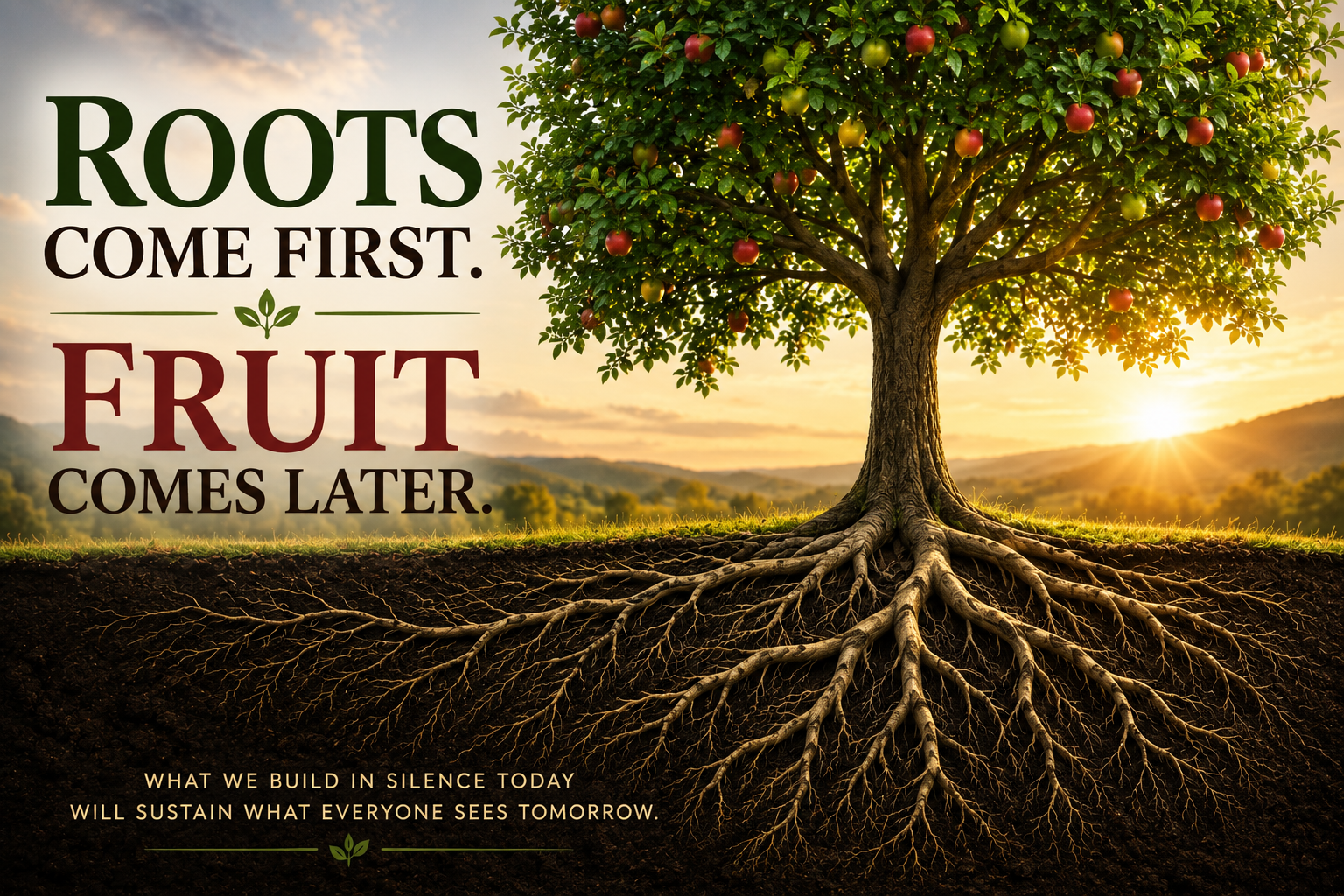
Roots grow before fruit appears.

Stay faithful to the process.

Self-Control

Modern culture rewards immediate gratification.

Real success often requires delayed gratification.

The ability to sacrifice a temporary pleasure for a greater future remains one of the most valuable skills anyone can develop.

A Better Definition of Wealth

Perhaps the greatest lesson of this series is that wealth is far more than money.

A truly wealthy person develops:

  • Integrity
  • Wisdom
  • Good health
  • Strong relationships
  • The ability to serve others
  • Knowledge
  • Responsible freedom
  • Inner peace
  • A meaningful purpose

Money is an important tool.

Character determines how that tool will be used.

Real prosperity always begins on the inside before it becomes visible on the outside.

A Practical Place to Begin

You do not need to change your entire life this week.

Start small.

Read for twenty minutes each day.

Learn a new skill.

Create a simple budget.

Save consistently.

Organize your priorities.

Spend time with people who inspire growth.

Serve others with excellence.

Honor your commitments.

Review your goals regularly.

Learn from your mistakes.

Celebrate steady progress.

Great achievements are often the result of many small, wise decisions made consistently over time.

Wealth Is Meant to Be Shared

Prosperity reaches its highest purpose when it benefits others.

Share what you know.

Encourage those who are just beginning.

Mentor someone.

Strengthen your family.

Serve your community.

Build people, not just profits.

The greatest legacy rarely appears on a financial statement.

It is reflected in the lives we influence, encourage, and help transform.

Final Reflection

My dear reader,

We have reached the end of this series.

But I sincerely hope this is not the end of your growth.

By now, you know there is no magical formula.

There is a way of living.

A mindset that keeps learning.

A heart willing to serve.

A discipline that remains steady.

And systems that support long-term progress.

You may not control everything that happens around you.

But you will always have the opportunity to choose your response.

One wise decision can change a habit.

One habit can transform a year.

One year can change a life.

And one transformed life can positively influence countless others.

Never underestimate the power of today’s right decision.

Most extraordinary stories do not begin with extraordinary events.

They begin with ordinary people who choose wisdom, perseverance, responsibility, and integrity day after day.

Thank you for joining me throughout this journey.

I hope these articles have done more than expand your knowledge.

I hope they have strengthened your character, renewed your hope, and inspired you to continue growing.

Always remember:

True wealth does not necessarily belong to the person who owns the most. It belongs to the person who wisely manages what they have, creates value for others, and builds a legacy founded on principles that endure.

May this not be the end of your story.

May it be the beginning of a life built on solid foundations.

Because the greatest wealth you will ever possess is the person you become while building everything else.


Disclaimer

This article is provided for educational and informational purposes only. The ideas, principles, and examples presented are intended to encourage personal growth, financial education, leadership, and responsible decision-making.

Nothing in this article should be interpreted as financial, legal, tax, accounting, investment, or professional advice. Every individual has unique circumstances, goals, and risk tolerance. Before making financial or business decisions, readers should carefully evaluate their situation and, when appropriate, seek guidance from a qualified professional.

While the principles discussed are based on widely recognized concepts of personal development, value creation, discipline, and responsible stewardship, no specific results are guaranteed. Success depends on many factors, including individual decisions, consistent effort, experience, market conditions, and circumstances beyond the author’s control.

References to companies, products, services, or brands are included solely for educational or illustrative purposes and should not be interpreted as endorsements unless explicitly stated.

Readers are encouraged to think critically, continue learning, and apply only those principles that are appropriate to their personal and professional circumstances.

Copyright © 2026 Marvin Gandis. All rights reserved.

Publicado en Entrepreneurship, Financial Education, Personal Development, Productivity, Wealth Mindset

Refusing to Learn New Skills: The Mistake That Makes Your Future Poorer

By Marvin Gandis

One of the most dangerous ways to fall behind in life is to stop learning.

The world changes. Technology changes. Business changes. The way people work changes. The way we communicate changes. Opportunities change.

But many people want new results with old skills.

They want more income, but they do not develop new abilities. They want better opportunities, but they do not prepare. They want financial freedom, but they do not learn how to manage, sell, communicate, create value, or adapt to the times.

In this sixth part of the series “The Reverse Question,” we will reflect on a simple but powerful truth: the person who stops learning begins to limit their future.

  • This is not about having perfect degrees.
  • This is not about knowing everything.
  • This is not about comparing yourself to anyone.

It is about keeping a teachable, humble, and willing mind.


The world does not wait for those who stay the same

Many people live as if the world will stay the same forever. But reality is different.

  • What worked ten years ago may not work the same way today.
  • What used to be enough may not be enough tomorrow.
  • What once felt secure can change suddenly.

Today, there are new tools, new platforms, new business models, new ways to sell, new ways to learn, and new opportunities for those willing to prepare.

The problem is not that the world changes. The problem is refusing to change while the world keeps moving forward.


Lack of skills creates dependency

When a person does not develop skills, they depend too much on one income source, one opportunity, one company, one person, or one circumstance.

  • They depend on the boss giving them an opportunity.
  • They depend on the economy improving.
  • They depend on someone rescuing them.
  • They depend on things not changing.
  • They depend on others deciding for them.

But a person with skills has more options.

  • They can adapt.
  • They can offer services.
  • They can solve problems.
  • They can start a business.
  • They can sell.
  • They can teach.
  • They can create content.
  • They can use digital tools.
  • They can increase their value in the marketplace.

Skills do not eliminate every problem, but they increase the ability to respond better.


Learning does not end in school

Many people believe learning belongs to the past: school, college, an old course, or an earlier stage of life.

But life itself is a school.

  • Every problem can teach.
  • Every mistake can teach.
  • Every failure can teach.
  • Every customer can teach.
  • Every conversation can teach.
  • Every book can teach.
  • Every tool can teach.
  • Every attempt can teach.

Continuous learning is an attitude. It is the decision not to live closed, proud, or resigned.

  • A person who keeps learning keeps growing.
  • A person who believes they already know everything begins to stop.

Skills are seeds of opportunity

One skill can change a life.

  • Learning to communicate better can open doors.
  • Learning sales can increase income.
  • Learning personal finance can reduce chaos.
  • Learning digital marketing can help promote a business.
  • Learning artificial intelligence can improve productivity.
  • Learning leadership can influence others better.
  • Learning to write can help educate, sell, or inspire.
  • A learning organization can reduce stress.
  • Learning customer service can improve results.

Each new skill is a seed. It may not produce fruit immediately, but if practiced with discipline, it can become an opportunity.


Pride can also make a person poorer

Sometimes a person does not learn because they believe they already know enough.

  • They do not ask.
  • They do not listen.
  • They do not accept correction.
  • They do not study.
  • They do not update their knowledge.
  • They do not recognize their weaknesses.
  • They do not allow anyone to teach them.

Pride closes doors that humility could open.

A humble mind says:

  • “I can still learn.”
  • “I can still improve.”
  • “I can still correct.”
  • “I can still ask for help.”

That attitude is powerful because it keeps the person growing.


The fear of learning new things

Many people do not learn because they are afraid.

  • Afraid of feeling ignorant.
  • Afraid of making mistakes.
  • Afraid of technology.
  • Afraid of starting late.
  • Afraid of not understanding.
  • Afraid that others will laugh.
  • Afraid of failing again.

But nobody is born knowing everything. Every expert was once a beginner. Every skill began with discomfort. Every breakthrough began with a first attempt.

Refusing to learn because of fear is allowing fear to decide the future.

The question should not be:

“What if I fail?”

The question should be:

“What could happen if I never learn?”


Important skills for building a better future

Not everyone needs to learn the same things, but some skills can help almost anyone grow.

1. Financial education

Learning how to manage money, create a budget, reduce debt, save, invest carefully, and make better financial decisions.

2. Communication

Knowing how to express ideas, listen, write clear messages, negotiate, explain, and connect with other people.

3. Sales

Selling is not manipulation. Selling is knowing how to present value, solve problems, and help others make informed decisions.

4. Digital marketing

Learning how to share messages, create content, build an audience, use platforms, attract prospects, and communicate offers ethically.

5. Artificial intelligence and technology

Using modern tools to research, organize ideas, create content, automate tasks, and improve productivity.

6. Leadership

Learning how to influence by example, serve, guide, build teams, and take responsibility.

7. Problem solving

People who solve problems become valuable. Where there are problems, there are also opportunities to serve.

8. Time management

Time used poorly makes life poorer. Time organized wisely builds.


Learning without applying does not transform

Learning is important, but applying is also important.

Some people buy courses, save videos, read quotes, listen to audios, and take notes, but never execute.

That creates an illusion of progress.

Learning without action is like storing seeds without planting them.

Transformation happens when what is learned is practiced.

  • Read, but apply.
  • Listen, but act.
  • Study, but produce.
  • Learn, but correct.
  • Research, but execute.

One small applied action is worth more than a large amount of unused information.


How to begin learning new skills

You do not need to change your entire life in one day. You can begin with small and consistent steps.

  • Choose one important skill.
  • Dedicate 20 or 30 minutes a day.
  • Look for reliable resources.
  • Take notes.
  • Practice what you learn.
  • Make mistakes without quitting.
  • Measure your progress.
  • Apply it in a real project.
  • Look for people who know more.
  • Repeat until you improve.

Consistency turns learning into ability.


The skill you need most may be connected to your current problem

Many times, the problem you are facing reveals the skill you need to develop.

  • If your finances are disorganized, you need financial education.
  • If you are not selling, you need sales and communication.
  • If nobody sees your message, you need marketing and content creation.
  • If you lack time, you need organization.
  • If you struggle to move forward, you need discipline.
  • If you do not know how to use digital tools, you need technology training.
  • If you struggle to lead, you need to develop leadership.

Problems can be signals. They show where you need to grow.


The future belongs to those who keep learning

  • The person who learns adapts.
  • The person who adapts survives change better.
  • The person who practices improves.
  • The person who improves creates more value.
  • The person who creates more value increases their opportunities.

The most talented person does not always win. Many times, the person who moves forward is the one who is more teachable, consistent, and willing to improve.

Continuous learning is a form of humility, but it is also a form of preparation.


Conclusion

Refusing to learn new skills can make a person’s future poorer. Not always immediately, but gradually.

While the world moves forward, the person who refuses to learn becomes more vulnerable, more dependent, and less prepared for opportunities.

My dear reader or friend, your age, your story, and your past mistakes do not have to stop you. You can still learn. You can still improve. You can still develop a skill that changes your direction.

You do not need to know everything. You only need to begin.

Learn something useful. Practice something new. Improve an ability. Ask for help. Use your time better. Develop value.

Because every skill you develop can become a door.

And an open door can change your future.


Disclaimer

This article is for educational, reflective, and informational purposes only. It should not be interpreted as financial, legal, professional, academic, employment, or investment advice. The purpose of this content is to encourage awareness about continuous learning, skill development, adaptation, discipline, and personal responsibility.

Every person’s circumstances are different. Access to education, technology, time, resources, family support, employment opportunities, and economic conditions can vary widely. Learning new skills may increase opportunities, but it does not guarantee income, employment, financial success, or specific results.

This content is not intended to judge, blame, or shame anyone facing educational, economic, technological, or personal limitations. Before making important decisions related to studies, career, business, investments, professional changes, or personal finances, it is recommended to consult qualified professionals.

The information shared is intended to inspire reflection, preparation, and responsible action.

Publicado en Education, Entrepreneurship, Leadership, Mindset, Personal Development, Technology

The New Illiteracy: Not Knowing How to Learn Again

By Marvin Gandis

The Problem Is No Longer Just Not Knowing

For a long time, when people talked about illiteracy, they thought about someone who could not read or write. But in today’s world, there is a new and dangerous form of illiteracy:

  • Not knowing how to learn again.

Today, a person may know how to read, write, use a phone, send messages, and browse the internet, yet still fall behind because they refuse to keep up.

The problem is not always a lack of intelligence. Many times, it is resistance to change.

We live in a time when tools, jobs, businesses, technology, the economy, and the way we communicate change.

That is why one of the most dangerous phrases a person can say is:

  • “I already know enough.”

Because in a constantly changing world, believing that you no longer need to learn can become a silent trap.


Knowing Yesterday Does Not Guarantee Understanding Today

Experience is valuable. No one should despise the years lived, the lessons learned, or the knowledge earned through effort.

But experience can become a limitation when we stop updating it.

  • What worked before may not work the same way today.
  • The way people sell has changed.
  • The way people communicate has changed.
  • The way people learn has changed.
  • The way people build trust has changed.
  • The way people work has changed.

This does not mean everything old is useless. It means we must learn how to combine wisdom with updating.

A wise person does not reject experience, but they also do not use it as an excuse to reject what is new.


Pride Is the Enemy of Learning

One of the biggest obstacles to learning again is pride.

Pride says:

  • “That is not for me.”
  • “I do not need to learn that.”
  • “That is for young people.”
  • “I have always done it this way.”
  • “That will not work.”
  • “I am too old to start.”

But humility says:

  • “I can learn.”
  • “I can improve.”
  • “I can ask for help.”
  • “I can start slowly.”
  • “I can update myself without losing my identity.”

Learning requires humility because it forces us to recognize that we do not know everything.

And that is not shame. That is wisdom.

The person who can learn again, even with experience, stays mentally alive.


Technology Does Not Wait Until We Feel Ready

Many people wait until they feel ready before learning something new.

But technology does not wait.

  • Platforms change.
  • Digital tools evolve.
  • Artificial intelligence advances.
  • Businesses become automated.
  • Consumers change their habits.
  • Audiences move into new spaces.

The person who waits too long may end up depending on others for everything.

This is not about becoming an expert overnight. It is about maintaining an attitude of constant learning.

  • Learn a new tool.
  • Understand a new concept.
  • Try a new strategy.
  • Read a guide.
  • Watch a tutorial.
  • Practice a little every day.

Technological ignorance does not always arrive suddenly. Sometimes it builds slowly through years of resistance.


Learning Again Does Not Mean Starting From Zero

Many people are afraid to learn something new because they feel it invalidates everything they already know.

But learning again does not erase your past.

It improves it.

  • Your experience is still valuable.
  • Your story still matters.
  • Your mistakes still teach.
  • Your character still counts.
  • Your wisdom still has weight.

The difference is that now you need to use all of it in a new context.

  • A teacher can learn digital tools.
  • A salesperson can learn online marketing.
  • A leader can learn modern communication.
  • An entrepreneur can learn automation.
  • An older person can learn technology step by step.

You are not starting from zero. You are building on what you already are.


The Person Who Learns Becomes Harder to Defeat

When a person decides to keep learning, they develop a quiet advantage.

  • They can adapt better.
  • They can recover faster.
  • They can understand new opportunities.
  • They can avoid repeated mistakes.
  • They can communicate with new generations.
  • They can find solutions where they once saw obstacles.

Learning does not guarantee an easy life, but it increases your ability to respond to life with intelligence.

The person who learns does not remain trapped in one version of themselves.

They can evolve.

And in times of change, evolving is a form of survival.


Learning Is Also a Personal Responsibility

It is easy to blame the world.

  • “The economy is difficult.”
  • “Technology is moving too fast.”
  • “People do not listen anymore.”
  • “Social media has changed.”
  • “Business is not like it used to be.”

There may be truth in those phrases. But we also need to ask ourselves:

  • What am I learning?
  • What am I avoiding learning?
  • What skill have I delayed for too long?
  • What tool intimidates me?
  • What part of my mindset needs to be updated?

Personal responsibility does not mean blaming yourself for everything. It means recognizing that you still have power to grow.

You cannot control every change in the world, but you can decide how you will respond to those changes.


Learning Requires Patience

One of the biggest mistakes is wanting to learn something new without going through the discomfort of the beginning.

Every learning process has an awkward stage.

  • At first, you may feel slow.
  • You may make mistakes.
  • You may get confused.
  • You may need help.
  • You may feel frustrated.

That is normal.

No one masters something important without going through a learning stage.

Patience helps you avoid quitting too soon.

  • Do not say, “I am not good at this.”
  • Say, “I am still learning.”

That small difference changes your mindset.


Education No Longer Ends With a Diploma

In the past, many people thought education was one stage of life.

You studied, you worked, and then you repeated what you learned for years.

But today, learning must be continuous.

  • It does not matter your age.
  • It does not matter what your profession is.
  • It does not matter your experience.
  • It does not matter what your current level is.

There is always something to learn.

  • Communication.
  • Technology.
  • Finances.
  • Marketing.
  • Leadership.
  • Emotional intelligence.
  • Digital security.
  • Content creation.
  • Human relationships.
  • Critical thinking.

Modern education does not end. It renews itself.


How to Overcome the New Illiteracy

First, accept that not knowing something is not shameful.

The shame is not in not knowing. The real loss is refusing to learn.

Second, choose one skill at a time.

Do not try to learn everything at once. Choose one important thing and begin.

Third, practice in small steps.

Dedicate 15 or 20 minutes a day to learning or practicing something new.

Fourth, ask without fear.

Asking for help does not make you less capable. It makes you wiser.

Fifth, apply what you learn.

Knowledge that is not used is forgotten. Learn, practice, adjust, and repeat.

Sixth, keep a flexible mind.

Not every change is a threat. Some changes are opportunities in disguise.


The Future Favors Learners

The future will not be kind to those who refuse to grow.

But it will offer opportunities to those willing to learn, unlearn, and learn again.

  • You do not need to know everything.
  • You do not need to master everything today.
  • You do not need to compete with experts immediately.

You only need to maintain a humble and active attitude:

  • “I can learn something new.”
  • “I can improve step by step.”
  • “I can update my mind.”
  • “I can adapt without losing my essence.”

That attitude can change your life.


It Is Never Too Late to Learn Again

My dear reader and friend, the new illiteracy is not the inability to read. It is the refusal to keep learning in a world that keeps changing.

Do not allow pride, fear, age, comfort, or frustration to steal your opportunity to grow.

  • Learning again does not make you weak.
  • It makes you flexible.
  • It makes you wise.
  • It makes you useful.
  • It keeps you relevant.
  • It makes you better prepared.

The world will keep changing.

The question is:

  • Will you also change with wisdom?

You do not have to do everything perfectly. Just begin.

  • Learn something new.
  • Ask a question.
  • Read a guide.
  • Practice a tool.
  • Improve a skill.
  • Update your mind.

Because in the modern world, the person who stops learning begins to fall behind.

But the person who learns again opens new doors.


Disclaimer:


This article is provided for educational, motivational, inspirational, and informational purposes only. It is intended to encourage reflection, continuous learning, personal growth, digital awareness, adaptability, and responsible decision-making.

The content should not be interpreted as financial, legal, medical, psychological, technological, educational, or professional advice. Any examples related to personal development, technology, digital tools, business, entrepreneurship, leadership, online learning, or success are not guarantees of specific results.

Individual outcomes may vary depending on effort, consistency, experience, access to resources, personal discipline, market conditions, technological changes, learning ability, and other factors beyond our control.

Readers are encouraged to use their own judgment, conduct their own research, and seek qualified professional guidance when necessary. The purpose of this content is to inspire and educate, not to promise instant results or replace professional advice.