
Suscríbete para seguir leyendo
Suscríbete para obtener acceso al contenido íntegro de esta entrada y demás contenido exclusivo para suscriptores.
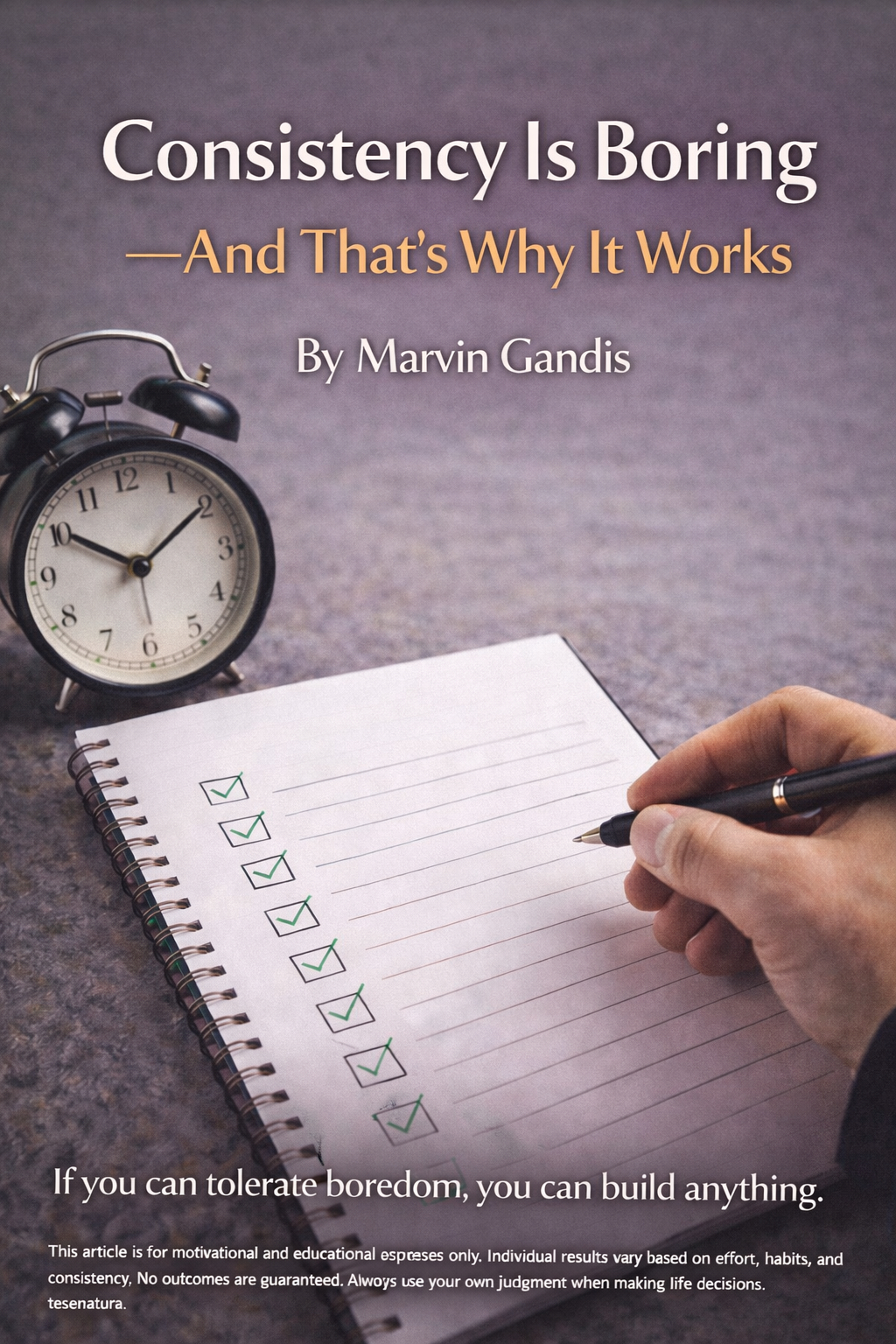
Suscríbete para obtener acceso al contenido íntegro de esta entrada y demás contenido exclusivo para suscriptores.

🔥 Article #8
By Marvin Gandis
Confidence isn’t built by what you say —
It’s built by what you keep.
Every time you make a promise to yourself and don’t follow through, something
invisible breaks:
self-trust.
And without self-trust, motivation fades, discipline weakens, and doubt grows louder.
But the opposite is also true:
Every kept promise — no matter how small — rebuilds trust with yourself.
When you trust yourself:
Self-trust is the foundation of momentum.
Without it, you hesitate.
With it, you move.
Broken promises don’t make you lazy —
They teach your mind that your word doesn’t matter.
That’s why many people struggle with consistency:
They don’t believe themselves anymore.
The solution isn’t trying harder —
It’s starting smaller.
Make promises that are:
Examples:
Then keep them — no excuses.
Trust is rebuilt one promise at a time.
1️⃣ Make a realistic promise
2️⃣ Keep it
3️⃣ Create evidence
4️⃣ Build trust
5️⃣ Raise your standard (slowly)
Momentum grows when your word becomes reliable.
You don’t need grand declarations.
You need quiet consistency.
Become someone who keeps promises to yourself —
and confidence will follow naturally.
→ Say No to What Steals Your Power — Boundaries, Focus, and Self-Value
Article #9 will reveal how boundaries protect your energy, sharpen your focus, and elevate your self-respect.
This article is for motivational and educational purposes only. Individual results vary based on effort, habits, and consistency. No outcomes are guaranteed. Always use your own judgment when making life decisions.
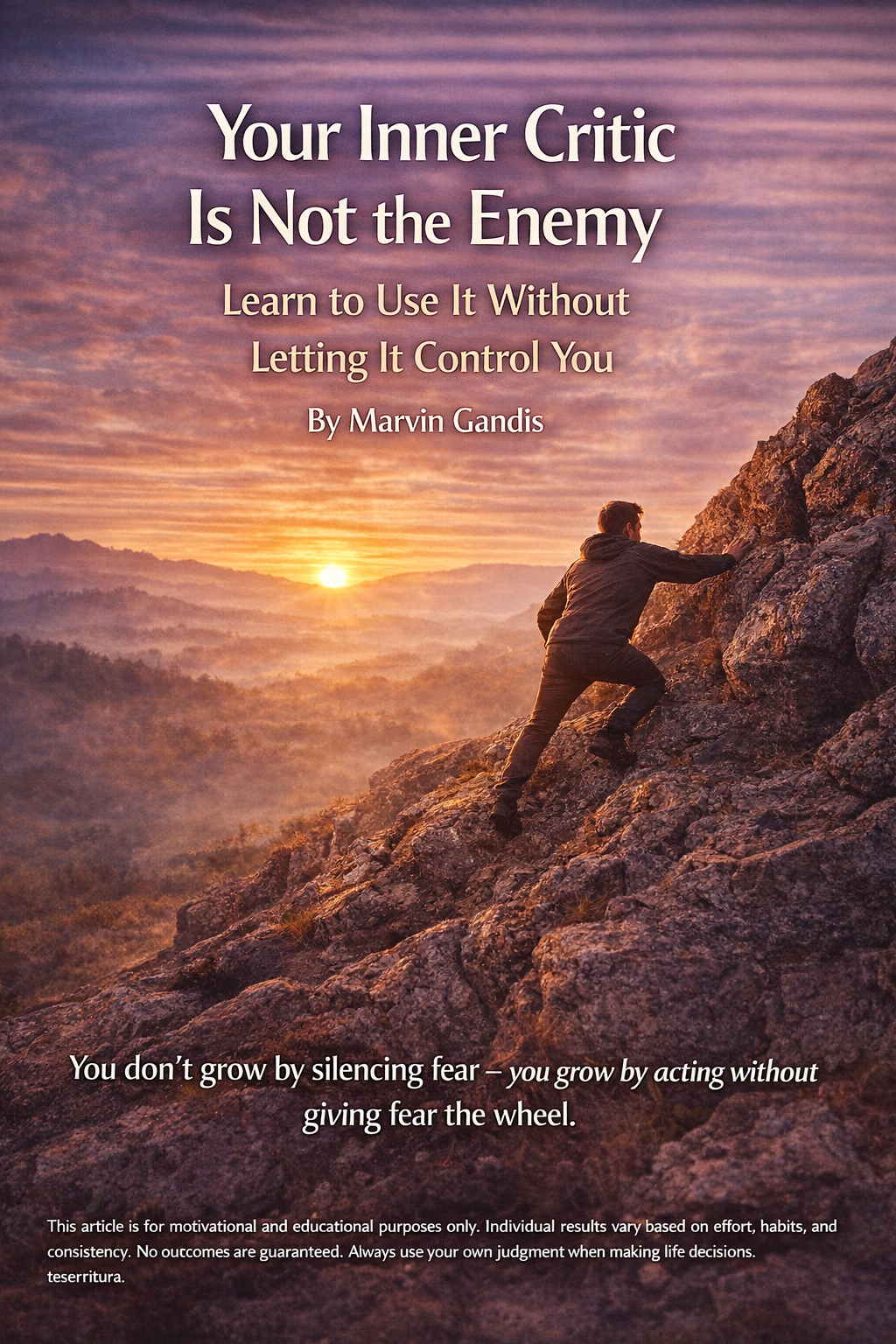
🔥 Article #7
By Marvin Gandis
Most people believe their inner critic is the problem —
the voice that says “you’re not good enough,” “you’ll fail,” “don’t try.”
So they fight it.
They try to silence it.
They judge themselves for having it.
But here’s the truth:
Your inner critic is not the enemy —
your relationship with it is.
That voice isn’t there to destroy you.
It’s there to protect you — even if it does so poorly.
Your inner critic developed to:
The problem is that safety and growth don’t live in the same place.
So when you try something new, your critic speaks louder.
Not because you’re weak —
But because you’re expanding.
They obey the critic.
They hear:
“You’re not ready.”
“You’ll look foolish.”
“Now isn’t the right time.”
And they stop.
But the goal is not to eliminate the voice —
It’s to stop letting it decide.
Instead of asking:
“How do I shut this voice up?”
ask:
“What is this voice trying to protect me from?”
Then respond with leadership:
You don’t argue.
You don’t obey.
You acknowledge and act.
That’s maturity.
Give your inner critic a name.
This creates distance and reduces its power.
When it speaks, say:
“That’s just [name] talking — not reality.”
You are not your thoughts.
You are the one who chooses which thoughts to follow.
Because each time you act despite the critic,
You prove:
“I am capable of leading myself.”
Your inner critic will never disappear.
But it doesn’t need to disappear for you to succeed.
You don’t grow by silencing fear —
you grow by acting without giving fear the wheel.
→ The Power of Self-Promises — How to Build Unbreakable Trust With Yourself
Article #8 will show how keeping small promises to yourself builds confidence, discipline, and self-respect.
This article is for motivational and educational purposes only. Individual results vary based on effort, habits, and consistency. No outcomes are guaranteed. Always use your own judgment when making life decisions.
Debe estar conectado para enviar un comentario.