Publicado en Entrepreneurship, Financial Education, History and Society, Mindset, Personal Development, Prosperity

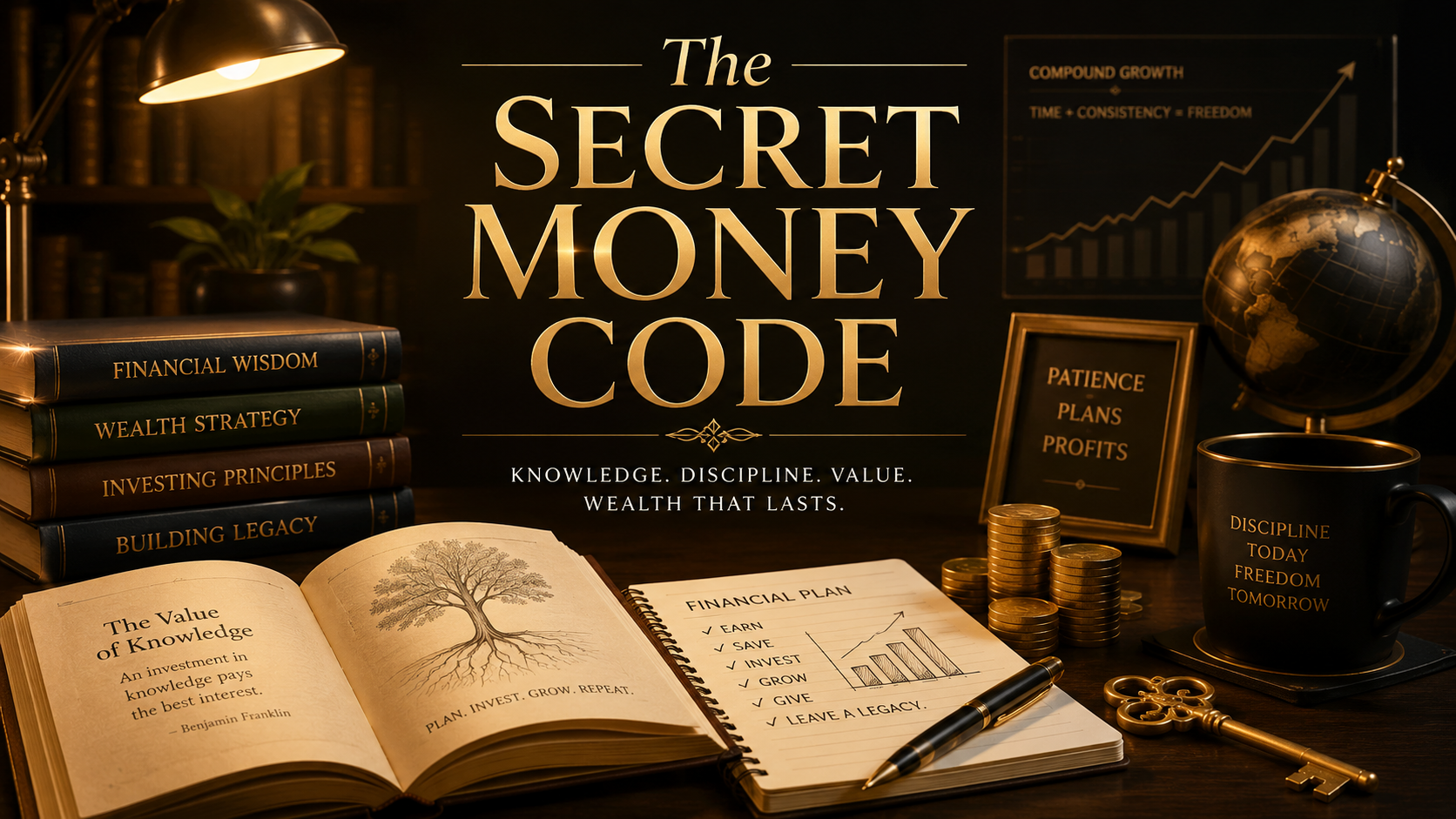
The Secret Money Code: The Truth Behind the “Secret” and the Real Principles of Prosperity

By Marvin Gandis

For many years, people have talked about the “secret money code” as if there were a hidden formula known only by certain families, communities, wealthy people, or powerful groups. Many people want quick answers: how to become rich, how to multiply money, how to think like the wealthy, or how to discover the supposed secret behind prosperity.

But the truth is deeper and more responsible than that.

Money does not obey magic, race, religion, or conspiracy. Money responds to principles: knowledge, discipline, value, management, patience, reputation, community, and long-term thinking.

That is why, when people say that certain groups, including Jewish communities or other prosperous communities, “know something others do not know,” we must be careful. We should never turn the success of a people or community into suspicion or prejudice. The right approach is to study history, learn principles, and reject stereotypes.

The real “secret money code” is not hidden inside an elite group. It is hidden inside habits that most people ignore.


The great confusion: Is there really a hidden secret?

Yes and No.

There is no magical, exclusive, mysterious secret that belongs to one race, religion, or closed group. But there are principles that many people do not practice, even though they are available to everyone.

The problem is that many people seek money before they seek understanding. They want results without financial education. They want abundance without discipline. They want freedom without order. They want prosperity without changing their habits.

That is the real secret: we do not lack information; we lack formation.

Information says: “Save, invest, learn, work, manage.”
Formation says: “Do it every day, even when you do not feel like it.”

That is where the difference begins.


The history behind the myth

Historically, some Jewish communities were connected to trade, credit, education, writing, accounting, and strong family networks. However, this should not be interpreted as a “secret plan.” It is the result of a complex history.

During certain periods in European history, Jews were excluded from many professions, land ownership, public positions, and trade guilds. In some places, they were pushed into limited economic activities, including trade and lending. Over time, this historical reality was distorted by prejudice, propaganda, and false theories.

That is how one of the most harmful errors was born: the idea that an entire group “controls money” or possesses hidden knowledge to dominate others.

That is not education. That is prejudice.

The correct historical lesson is different: many communities that have suffered exclusion develop habits of survival, education, cooperation, and financial management. Some families teach their children to study, save, build businesses, negotiate, and protect their reputation. That is not an ethnic secret; it is culture, discipline, and the transmission of values.


What prosperous people really know

Prosperous people are not always those who earn the most. Many times, they are the ones who manage better, learn better, and make better decisions.

The real code is made of simple principles that are difficult to practice consistently.

1. Money is a tool, not a god

When money becomes a god, it destroys. When it becomes a tool, it serves.

Money can feed a family, protect a home, build a business, support a cause, pay for education, and open opportunities. But if a person lives only to accumulate, they may lose peace, purpose, and humanity.

True prosperity does not begin in the pocket. It begins in the conscience.


2. Financial education changes destiny

Many people work hard their entire lives but never learn how money works. They know how to earn, but not how to manage. They know how to spend, but not how to invest. They know how to complain, but not how to create value.

Financial education teaches important questions:

  • What do I do with what I earn?
  • How much am I spending without thinking?
  • Which debts are enslaving me?
  • Which skills can increase my value?
  • What assets can I build?
  • How can I protect my family?

Financial ignorance is expensive. Financial education is an investment.


3. Control the outflow before increasing the income

Many people believe the main problem is that they do not earn enough. Sometimes that is true. But many times, the problem is a lack of control.

If a person earns more but also spends more, they do not progress. They simply move to a higher level of pressure.

Before seeking more income, we must honestly ask:

  • Where is my money going?
  • Which expenses are impulsive?
  • What am I buying to impress others?
  • What can I reduce?
  • What can I organize better?

Prosperity begins when money stops escaping without direction.


4. Value produces money

Money follows value. If you want to earn more, you need to create more value.

Value can be a skill, service, product, solution, idea, connection, tool, or experience that helps others.

The question should not only be: “How can I make more money?”
The better question is: “How can I serve better, solve better, or contribute more value?”

Those who increase their personal and professional value increase their economic possibilities.


5. Reputation is invisible capital

Some people have money but no trust. Others may have less money, but their reputation is so strong that doors open.

Reputation is built through small actions:

  • Keeping your word.
  • Being on time.
  • Paying what you owe.
  • Being honest.
  • Avoiding deception.
  • Avoiding manipulation.
  • Not promising what you cannot deliver.

Money can buy advertising, but it cannot buy true trust. Trust must be earned.


6. Community multiplies opportunities

An isolated person learns more slowly, falls harder, and rises with greater difficulty. A healthy community shares information, contacts, advice, encouragement, and opportunities.

This does not mean depending on others. It means understanding that prosperity is also built through relationships.

Strong families, mentors, churches, educational groups, professional associations, teams, and entrepreneurial communities can help a person think better and act with more direction.

The right community does not drain you; it lifts you.


7. Patience is part of the code

We live in a time when everyone wants immediate results. Fast money. Fast success. Fast fame. Fast business. But what comes fast often falls fast.

Real prosperity is often boring in the beginning. It requires saving, learning, repeating, correcting, waiting, reinvesting, and improving.

  • A tree does not bear fruit the same day it is planted.
  • A business does not mature in its first month.
  • A mind does not change after one reading.
  • Wealth is not built by impulses, but by processes.

Patience is not passivity. It is sustained discipline.


The real secret money code

We can summarize it this way:

  • Learn before you spend.
  • Manage before you ask for more.
  • Create value before you demand reward.
  • Save before you show off.
  • Invest before you waste.
  • Serve before you sell.
  • Build a reputation before you seek fame.
  • Think in generations, not only in the next paycheck.

That is the code.

It is not hidden.
It is written in the habits of those who practice responsibility.


What we can learn from prosperous communities without falling into prejudice

We can learn from many communities: Jewish, Asian, Christian, Muslim, immigrant, merchant, farming, business, craft, and working families.

Some common characteristics include:

  • Education is a priority.
  • Respect for work.
  • Family support.
  • Discipline with spending.
  • Long-term thinking.
  • Reputation as value.
  • Ability to adapt.
  • Communication between generations.
  • Entrepreneurship as a tool for freedom.
  • Faith, identity, and purpose.

The mistake is saying: “They have a secret and are hiding it.”
The truth is saying: “They practice principles that I can also learn.”


Money and the Bible: prosperity with responsibility

From a biblical perspective, prosperity should never be separated from character. The Bible does not condemn money itself; it warns against the disordered love of money, greed, injustice, and oppression.

Money can be a blessing when managed with wisdom. But it can become a trap when it rules the heart.

True prosperity includes:

  • Inner peace.
  • Honesty.
  • Generosity.
  • Dignified work.
  • A cared-for family.
  • Controlled debt.
  • Wise decisions.
  • Service to others.
  • Dependence on God, not on money.

Prosperity is not only about having more. It is living better, deciding better, and serving better.


How to learn and share this knowledge

If you want to learn and share this topic correctly, you must do it with responsibility.

  • Do not teach hatred.
  • Do not repeat conspiracy theories.
  • Do not blame one group for the world’s economic problems.
  • Do not sell fantasies of quick wealth.
  • Do not promise impossible results.

Teach principles.

You can share the message from an educational angle:

“The money code does not belong to an elite. It belongs to anyone willing to learn, organize their life, create value, manage with discipline, and think long term.”

That message builds. That message does not divide. That message helps.


Practical application: 10 steps to begin

1. Write down your real income and expenses

You cannot correct what you refuse to look at. Financial clarity begins with numbers.

2. Reduce unnecessary expenses

This is not about living miserably. It is about stopping waste.

3. Create an emergency fund

A lack of reserve can turn a small problem into a crisis.

4. Learn a high-value skill

Sales, marketing, technology, writing, communication, finance, leadership, or a specialized trade.

5. Avoid toxic debt

Not all debt is bad, but impulsive debt can destroy peace.

6. Build a second source of income

Do not depend only on one financial source.

7. Invest in education

Books, courses, mentorship, practice, and experience.

8. Protect your reputation

Your name is part of your wealth.

9. Surround yourself with people of direction

Conversations shape mindset.

10. Think about legacy

Do not live only to survive this month. Learn to build for tomorrow.


Conclusion

The secret money code is not hidden behind a religion, race, or mysterious elite. It is hidden inside principles that many people know but few practice.

True prosperity begins when a person decides to learn, manage, serve, save, invest, improve character, and think beyond the present moment.

The history behind the code should not lead us to prejudice. It should lead us to education.

  • Do not ask: “Who is hiding the secret from me?”
  • Ask instead: “Which principle have I been ignoring?”

Because many times, the door to prosperity is not locked.
We simply have not learned the key.


Disclaimer

This article is for educational and reflective purposes only. It does not promote hatred, prejudice, antisemitism, conspiracy theories, or generalizations against any religious, ethnic, or cultural group. References to prosperous communities are presented from a historical and educational perspective, not as accusations or claims of superiority. The financial information shared does not constitute financial, legal, or professional advice. Each reader should evaluate their personal situation and consult qualified professionals before making important financial decisions.


Publicado en Digital Marketing, Entrepreneurship, Leadership, Mindset, Personal Development, Productivity

The Difference Between Having Information and Having Direction

By Marvin Gandis

When You Know a Lot, But Still Feel Confused

We live in a time when information is more available than ever before.

There are videos, courses, books, articles, podcasts, posts, trainings, tutorials, motivational messages, business strategies, and advice for almost everything.

  • You can learn about digital marketing.
  • You can learn about finances.
  • You can learn about leadership.
  • You can learn about technology.
  • You can learn about faith, discipline, habits, sales, entrepreneurship, and personal growth.

But here is a modern paradox:

Many people have more information than ever, but less direction than before.

  • They know a lot, but they do not know what to do first.
  • They consume content, but they do not take action.
  • They save ideas, but they do not build systems.
  • They listen to advice, but remain confused.
  • They start many things, but finish almost nothing.

The problem is not always a lack of information.

Sometimes the problem is a lack of direction.


Information Shows You Possibilities; Direction Shows You the Path

Information can open your mind.

  • It shows you options.
  • It gives you ideas.
  • It presents tools.
  • It teaches concepts.
  • It helps you understand what exists.

But direction does something different.

  • Direction helps you decide.
  • It helps you prioritize.
  • It helps you choose a path.
  • It helps you say yes to what matters and no to what distracts.
  • It helps you turn knowledge into concrete steps.

Information says, “Here are many things you can do.”

The direction says, “This is what you should do now.”

And that difference can change a life.


Too Much Information Can Paralyze You

Although information is valuable, too much information without order can create anxiety.

  • You hear one piece of advice, and it sounds good.
  • Then you hear another piece of advice, and it also sounds good.
  • Then you see a new strategy, and it feels urgent.
  • Later, someone says you need to change your method.
  • Then a new tool appears.
  • Then another expert says something different.

And in the end, instead of moving forward, you freeze.

Not because you are incapable, but because your mind is overloaded.

Information overload can make you feel busy without being productive.

You can spend hours learning and still avoid the most important action.

That is why you do not need to consume everything. You need to discern what information truly serves your current season.


Not All Information Is for You Right Now

One key to maturity is understanding that something can be good, but not necessary for this moment.

  • A course may be good, but not your priority.
  • A strategy may work, but not fit your stage.
  • A tool may be useful, but not solve your main problem.
  • An opportunity may sound interesting, but pull you away from your purpose.

Not everything good is right for now.

Direction helps you filter.

It asks:

  • What do I need to strengthen first?
  • What problem must I solve now?
  • What action creates the greatest progress?
  • What information can I save for later?
  • What should I stop consuming because it only distracts me?

Wisdom is not knowing everything. Wisdom is knowing what to apply at the right time.


Information Without Action Becomes Weight

Learning is important. But if you never apply what you learn, information can become a burden.

You have notes, ideas, links, files, saved videos, and recommendations.

But there is no implementation.

Then knowledge begins to create guilt:

  • “I should have done this.”
  • “I should have started that.”
  • “I should have finished that course.”
  • “I should have applied that strategy.”
  • “I should have been more consistent.”

Unapplied information can feel like mental debt.

That is why, after learning something valuable, ask:

How can I apply this in one small action this week?

You do not need to apply everything. But you do need to apply something.

Action turns information into transformation.


Direction Is Born From Clarity

To have direction, you need clarity.

  • Clarity about who you are.
  • Clarity about what you are building.
  • Clarity about whom you want to serve.
  • Clarity about what problem you want to solve.
  • Clarity about your values.
  • Clarity about your priorities.
  • Clarity about your next step.

Without clarity, any advice can move you.

  • A post moves you.
  • A criticism moves you.
  • A new trend moves you.
  • A comparison moves you.
  • An offer moves you.
  • An emotion moves you.

But when you have clarity, not everything pulls you away.

You can listen to information without losing your center.


Direction Helps You Say No

Many people believe progress means saying yes to more things.

  • More courses.
  • More platforms.
  • More ideas.
  • More projects.
  • More strategies.
  • More opportunities.

But many times, progress requires saying no.

  • No to distraction.
  • No to excess information.
  • No to starting another project before finishing the previous one.
  • No to copying everyone’s strategy.
  • No to acting under pressure.
  • No to living in comparison.
  • No to changing direction every week.

Saying no is not always a loss.

Sometimes it is protection.

  • Protection of your time.
  • Protection of your focus.
  • Protection of your energy.
  • Protection of your purpose.

Direction gives you the strength to choose.


Having Direction Does Not Mean Having Everything Figured Out

Some people wait to have the full map before they begin.

  • They want to know every step.
  • They want to eliminate every risk.
  • They want to feel completely sure.
  • They want guarantees before they act.

But many times, direction does not appear as a complete map.

Sometimes it appears as the next right step.

You may not always know the whole path, but you can know what to do today.

  • Send the email.
  • Publish the article.
  • Learn the tool.
  • Create the page.
  • Call the person.
  • Organize your ideas.
  • Correct the message.
  • Make the pending decision.

Direction does not always show you ten years. Sometimes it shows you the next hour clearly.

And that also counts.


Faith Also Needs Direction

For a person of faith, it is not enough to say, “God will open doors,” and then live without order, discipline, or responsibility.

Faith does not remove the need for direction.

  • Faith sustains you.
  • Prayer strengthens you.
  • Wisdom guides you.
  • Discipline moves you.
  • Obedience aligns you.
  • Action positions you.
  • You can trust God and still organize your life.
  • You can pray and still create a plan.
  • You can have hope and still correct mistakes.
  • You can believe in a purpose and still prepare yourself.

Mature faith is not passivity. It is trust with direction.


How to Move From Information to Direction

First, define your main objective.

What do you want to accomplish in this season? Not twenty things. One clear priority.

Second, identify your biggest current obstacle.

What is really blocking you? Lack of clarity? Lack of traffic? Lack of follow-up? Lack of discipline? Lack of trust? Lack of skills?

Third, choose only one strategy to move forward.

You do not need to apply ten methods at the same time.

Fourth, turn information into weekly action.

After learning, decide: What will I do with this?

Fifth, review results without desperation.

Direction can also be adjusted. Not everything will work perfectly at first.

Sixth, protect your focus.

Reduce the noise. Do not consume information that only feeds anxiety.

Seventh, seek wisdom, not only motivation.

Motivation encourages you, but wisdom guides you.


Direction Turns Knowledge Into a Path

A person with information can talk about many things.

But a person with direction begins to build.

  • They build habits.
  • They build messages.
  • They build relationships.
  • They build systems.
  • They build trust.
  • They build results.
  • They build character.

Information can inspire you for a moment.

Direction can transform your life over time.


You Do Not Need to Know Everything; You Need to Walk With Clarity

My dear reader and friend, do not allow the abundance of information to become a new form of confusion.

  • You do not need to consume everything.
  • You do not need to master everything.
  • You do not need to follow every trend.
  • You do not need to compare your process with everyone else’s.
  • You do not need to have every answer before moving forward.
  • You need clarity.
  • You need focus.
  • You need wisdom.
  • You need one priority.
  • You need the next step.
  • You need direction.

Because information without direction can exhaust you.

But direction turns what you know into a path, what you learn into action, and what you dream into construction.

  • Do not seek only more information. Seek direction.
  • And when you have it, walk with faith, discipline, and purpose.

Disclaimer:


This article is provided for educational, motivational, inspirational, and informational purposes only. It is intended to encourage reflection, personal growth, mental clarity, focus, responsible learning, better decision-making, and purposeful action.

The content should not be interpreted as financial, legal, medical, psychological, spiritual counseling, business, marketing, educational, or professional advice. Any examples related to personal development, digital marketing, entrepreneurship, productivity, leadership, faith, direction, or success are not guarantees of specific results.

Individual outcomes may vary depending on personal effort, consistency, experience, discipline, clarity, available resources, timing, market conditions, audience response, personal circumstances, and other factors beyond our control.

Readers are encouraged to use their own judgment, conduct their own research, and seek qualified professional guidance when necessary. The purpose of this content is to inspire and educate, not to promise instant results or replace professional advice.

Publicado en Communication, Content Creation, Digital Marketing, Entrepreneurship, Personal Brand, Personal Development

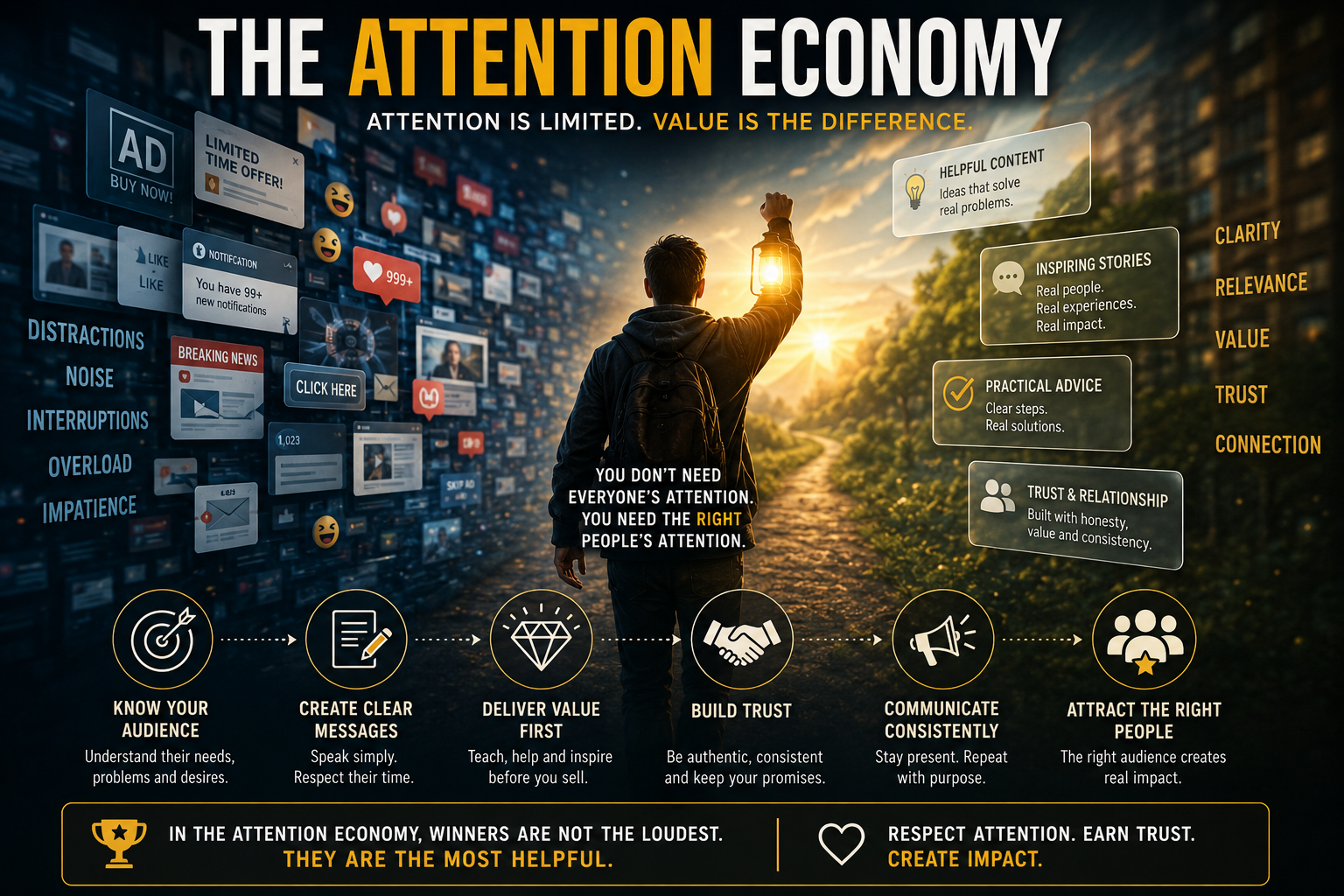
The Attention Economy: Why Your Message Must Deserve to Be Heard

By Marvin Gandis

Attention Is the New Currency

We live in a time when many people have more information than ever before, but very limited attention.

Every day, a person may see posts, videos, ads, emails, messages, news, offers, notifications, and opinions. Everything is competing for a few seconds of their mind.

That is why one of the greatest challenges today is not simply having something to say.

The real challenge is getting someone to stop, listen, understand, and trust.

In the digital world, attention has become a very valuable currency.

But here is the problem: many people want attention without first building enough value to deserve it.

They publish, promote, invite, insist, and push… but they do not always ask themselves:

  • Does my message deserve to be heard?

That question can completely change the way you communicate.


People Are Not Obligated to Listen to Us

Even when we have good intentions, nobody is obligated to give us their attention.

  • Nobody is obligated to read our article.
  • Nobody is obligated to open our email.
  • Nobody is obligated to watch our video.
  • Nobody is obligated to buy our product.
  • Nobody is obligated to answer our message.

Attention is not demanded. It is earned.

And it is earned when our message offers something the person considers useful, clear, human, interesting, or necessary.

This may sound strong, but it is also liberating.

Because if attention is earned, then we can improve.

  • We can write better titles.
  • We can explain with more clarity.
  • We can tell better stories.
  • We can serve before selling.
  • We can connect with real problems.
  • We can respect the audience’s time more.

Attention is not an automatic right. It is a communication responsibility.


Digital Noise Has Trained People to Ignore

Many people no longer ignore because they lack interest. They ignore it as a form of protection.

  • They ignore because they are tired.
  • They ignore because they have received too many promises.
  • They ignore it because they have seen too much exaggeration.
  • They ignore it because they do not want to waste time.
  • They ignore because they do not know whom to trust.
  • They ignore because everything seems urgent, but very little seems important.

In a world saturated with messages, the mind learns to filter.

That is why, if your message feels generic, confusing, exaggerated, or too sales-driven, it will probably be ignored.

  • Not because people are bad.
  • Not because your offer has no value.
  • Not because your effort does not matter.

But because the busy mind protects its attention.


A Good Message Respects the Person’s Time

One of the most common mistakes in marketing and communication is thinking only about what we want to say, without thinking about what the other person needs to receive.

An effective message respects the reader’s time.

  • It does not begin with confusion.
  • It does not wander unnecessarily.
  • It does not promise more than it can deliver.
  • It does not pressure without offering value.
  • It does not speak only about the product.
  • It does not ignore the person’s real problem.

A good message says clearly:

  • “I understand your situation.”
  • “This is what may help you.”
  • “This is why it matters.”
  • “This is the next step.”

Clarity is a form of respect.

When you are clear, you save your audience mental energy.


Attention Is Earned Through Relevance

People pay attention when they feel something connects with their life.

That is why a relevant message touches a real need.

  • It can touch a pain.
  • It can touch a concern.
  • It can touch a desire.
  • It can touch a question.
  • It can touch a frustration.
  • It can touch a hope.

For example, it is not the same to say:

  • “We offer a cloud backup system.”

As it is to say:

“If your phone was lost tomorrow or your computer suddenly failed, would your photos, documents, and important files be protected?”

The second message touches a real concern.

Relevance turns a general idea into something personal.


Attention Without Trust Does Not Last

You can get attention with a strong title, an attractive image, or a powerful phrase.

But if there is no substance afterward, attention disappears.

Attention may open the door, but trust keeps the person inside.

That is why it is not enough to create curiosity. You must also deliver value.

  • If you promise to teach, teach.
  • If you promise to help, help.
  • If you promise to explain, explain.
  • If you promise to guide, guide.
  • If you promise clarity, do not deliver confusion.

Manipulated attention becomes distrust.

Attention earned with value becomes a relationship.


Not Every Piece of Content Should Sell Immediately

Many people lose attention because they turn every message into a direct sale.

  • Every post sells.
  • Every email sells.
  • Every story sells.
  • Every phrase pushes an offer.

That becomes exhausting.

Not because selling is bad. Selling is necessary when there is a legitimate solution. But selling without educating, serving, and building trust can damage the relationship.

Your content should have different purposes.

  • Some messages educate.
  • Some inspire.
  • Some explain.
  • Some answer questions.
  • Some share stories.
  • Some invite action.

When everything is on sale, the audience protects itself.

When there is a consistent value, the sale feels more natural.


Story Captures What Information Cannot

Information can be useful, but a story makes the message memorable.

People do not always remember data, but they remember experiences.

  • They remember the entrepreneur who kept going when nobody applauded.
  • They remember the person who lost important files because they were not prepared.
  • They remember the worker who had to learn again in order not to fall behind.
  • They remember the leader who built trust with patience.
  • They remember the creator who stopped disappearing because they found clarity.

Stories help people see the message in their own lives.

A good story not only informs. It illuminates.


Attention Also Requires Intelligent Repetition

Many people say something once and become frustrated because nobody responds.

But audiences need repetition.

  • People need to see you several times.
  • They need to hear your message several times.
  • They need to understand your message from different angles.
  • They need to become familiar with you.
  • They need to confirm that you are consistent.

But repetition does not mean saying the same thing in a boring way.

You can repeat an idea as an article, image, email, story, question, list, reflection, short video, or testimonial.

Intelligent repetition does not annoy. It builds presence.


How to Create Messages That Deserve Attention

First, begin with the real problem.

Before talking about your solution, show that you understand what the person is facing.

Second, use clear and human titles.

A title should awaken curiosity, but it should also promise something honest.

Third, deliver value early.

Do not make the person wait too long to find the main idea.

Fourth, speak simply.

Clarity beats confusion.

Fifth, combine teaching with emotion.

People think, but they also feel. A good message touches both areas.

Sixth, include a clear next step.

After reading, the person should know what they can do: reflect, learn more, register, reply, share, or apply an idea.

Seventh, respect trust.

Do not use exaggerated fear or false promises to gain quick attention.


The Most Valuable Attention Comes From the Right Person

You do not need everyone to listen to you.

You need the right person to listen.

  • The person who needs your message.
  • The person who values your approach.
  • The person who connects with your story.
  • The person who respects the way you communicate.
  • The person who can benefit from what you offer.

Sometimes we chase big numbers and forget the quality of attention.

  • One thousand distracted people may ignore you.
  • One right person may read, trust, respond, and act.

Do not only chase attention. Build a connection.


Your Message Must Earn the Right to Be Heard

My dear reader and friend, in a world full of noise, attention is not gained simply by speaking louder.

It is gained by communicating better.

  • It is not enough to publish. You must provide value.
  • It is not enough to sell. You must build trust.
  • It is not enough to insist. You must be relevant.
  • It is not enough to appear. You must serve with clarity.

Attention is valuable because people’s lives are full of distractions, responsibilities, doubts, and exhaustion.

That is why, when someone gives you their attention, respect it.

  • Respect it with honesty.
  • Respect it with clarity.
  • Respect it with useful content.
  • Respect it with humanity.
  • Respect it with purpose.

Because in the attention economy, the winner is not the one who shouts the most.

The winner is the one who knows how to communicate value in a way the mind understands, and the heart recognizes.

  • Your message does not need to be perfect.
  • But it must be clear, honest, useful, and worthy of being heard.

Disclaimer:


This article is provided for educational, motivational, inspirational, and informational purposes only. It is intended to encourage reflection, better communication, digital awareness, ethical marketing, content improvement, and responsible decision-making.

The content should not be interpreted as financial, legal, medical, psychological, business, marketing, or professional advice. Any examples related to digital marketing, content creation, online visibility, audience engagement, trust-building, personal branding, or business growth are not guarantees of specific results.

Individual outcomes may vary depending on effort, consistency, experience, strategy, audience, market conditions, platform changes, technology, communication skills, and other factors beyond our control.

Readers are encouraged to use their own judgment, conduct their own research, and seek qualified professional guidance when necessary. The purpose of this content is to inspire and educate, not to promise instant results or replace professional advice.