
Suscríbete para seguir leyendo
Suscríbete para obtener acceso al contenido íntegro de esta entrada y demás contenido exclusivo para suscriptores.
Suscríbete para obtener acceso al contenido íntegro de esta entrada y demás contenido exclusivo para suscriptores.

By Marvin Gandis
There comes a moment in life when you realize that staying stuck in the pain of yesterday will never create the future you dream about. That moment may arrive after disappointment, failure, betrayal, loss, delay, or a season of confusion. It may come when you feel tired of starting over, tired of trying, or tired of pretending that everything is fine. But even in that moment, something powerful remains inside you: the ability to rise.
No matter what happened before, your story is not over.
You may have made mistakes. You may have trusted the wrong people. You may have watched opportunities slip through your hands. You may have lost time, money, confidence, or momentum. But the truth is this: the past can teach you, but it does not have the right to define you forever. A bad chapter is not the whole book. A difficult season is not your final identity. A setback is not the end of your purpose.
Sometimes the hardest battle is not against the world. It is against the voice inside that keeps repeating, “It’s too late,” “You’re not enough,” or “Maybe this just isn’t for you.” That voice grows louder when life gets heavy. It feeds on regret, fear, and discouragement. But you do not have to obey every thought that enters your mind. You can challenge it. You can replace it. You can decide that the next chapter of your life will be written from a different mindset.
Rising does not always look dramatic. It is not always a huge public comeback or a perfect moment of victory. Sometimes rising looks simple. It looks like getting out of bed when your heart feels heavy. It looks like praying one more time. It looks like sending one more message, making one more plan, learning one more lesson, and taking one more small step. The world may not applaud those moments, but they matter. Small acts of courage often become the foundation of a transformed life.
To get inspired again, you may need to remember who you were before fear became so loud. Before disappointment stole your excitement. Before rejection made you question your worth. Deep inside, there is still vision. There is still strength. There is still creativity. There is still a purpose waiting to be activated. Inspiration is not always something that falls from the sky. Sometimes it is something you rebuild by choosing to believe again.
That is why you must be careful what you feed your spirit. If you constantly fill your mind with negativity, comparison, hopelessness, and noise, it becomes harder to see possibilities. But when you begin to guard your thoughts, speak life over yourself, and focus on what is still possible, your inner world starts to change. And when your inner world changes, your actions begin to change too.
Moving forward does not mean pretending the pain never happened. It means refusing to let pain have the final word. It means carrying the lessons without carrying the chains. It means learning, healing, and choosing not to build your future around old wounds. Many people stay trapped because they keep replaying what should have happened, what could have happened, or what someone else should have done differently. But freedom begins when you say, “I cannot change the past, but I can decide what I do next.”
This is where a new story begins.
A new story begins the moment you stop introducing yourself through your failures and start identifying with your growth. It begins when you stop saying, “This is just how I am,” and start saying, “I am becoming stronger, wiser, and more focused.” It begins when you stop waiting for perfect conditions and start taking action with what you already have. A new story is not written in comfort. It is written in commitment.
You do not need to have everything figured out to move forward. You do not need to know every step before taking the first one. Many people never begin because they are waiting for total clarity, guaranteed results, or instant confidence. But progress rarely works that way. Confidence often comes after action, not before it. Direction becomes clearer while you move, not while you stay frozen.
If you have been carrying shame, let this be your reminder: shame is a poor architect for the future. It builds small rooms, locked doors, and narrow thinking. But grace, faith, and discipline build something much better. They build resilience. They build wisdom. They build the kind of character that can survive storms and still dream again.
You are allowed to begin again. You are allowed to outgrow old versions of yourself. You are allowed to walk away from what keeps breaking your spirit. You are allowed to believe that your best days are not behind you. Too many people live as though one failure canceled all future possibilities. That is not true. Some of the strongest people you will ever meet are those who had every reason to quit but chose to keep going.
Maybe this is your time to stand back up emotionally. Maybe it is your time to rebuild financially, spiritually, mentally, or professionally. Maybe it is your time to stop living in survival mode and start living with intention. Whatever area of life needs renewal, the principle is the same: do not let yesterday write tomorrow’s ending.
Get inspired again by the fact that you are still here. You still have breath. You still have time. You still have choices. You still have something to offer. Your life still carries value, even if the results have not matched your hopes yet. Your current position is not proof of your permanent future. It is simply the place from which you begin again.
And when you begin again, do it with honesty. Be honest about what hurt you. Be honest about what distracted you. Be honest about where you gave up too soon. But do not stay there. Use that honesty as fuel for change, not as an excuse for defeat. The goal is not to shame yourself into growth. The goal is to wake up, refocus, and move with purpose.
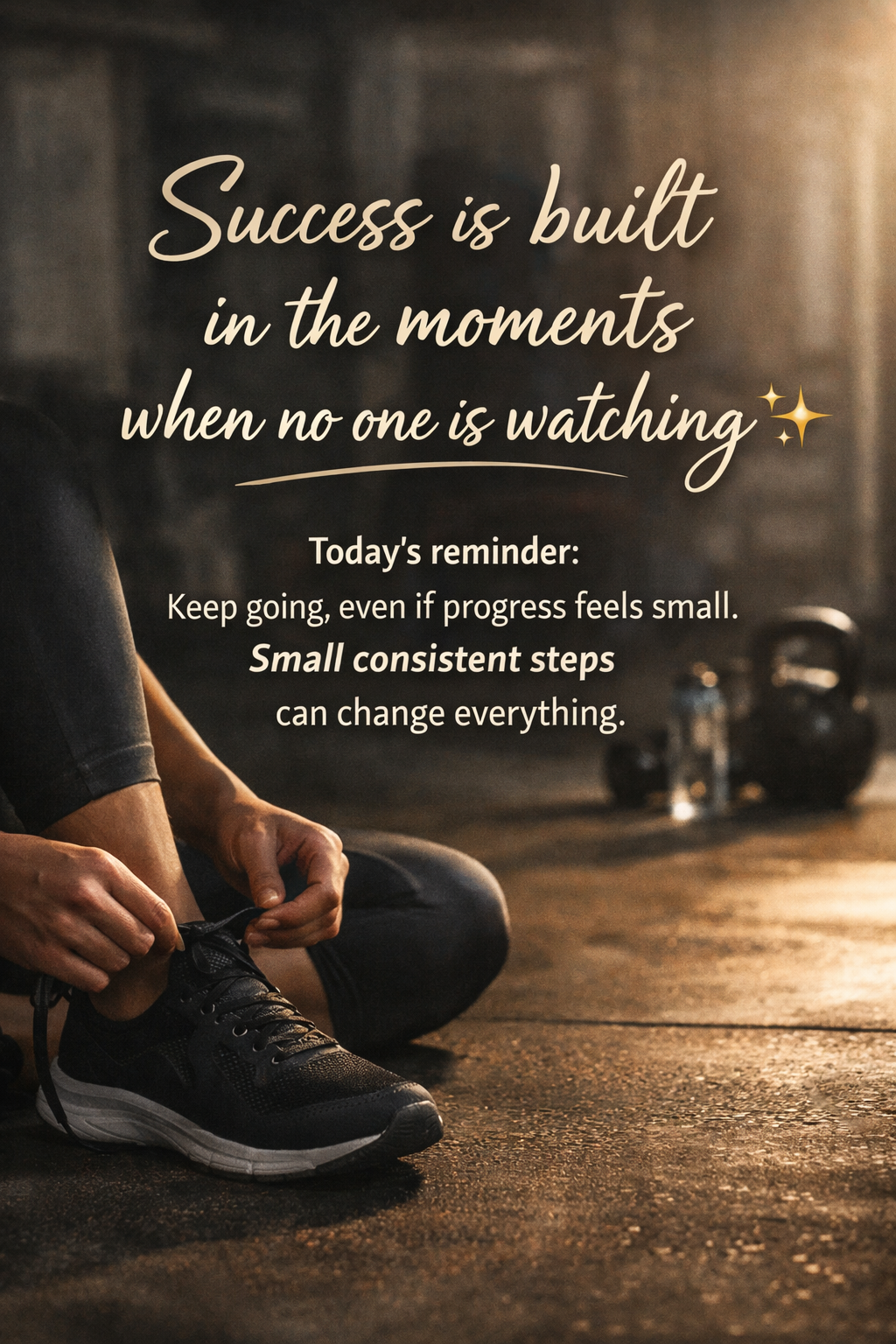
There will be days when the process feels slow. Days when your emotions are mixed. Days when your progress seems invisible. Keep going anyway. Seeds grow in silence before they break through the surface. Character is built in private before it shows up in public. Your consistency during quiet seasons may be preparing you for doors you cannot yet see.
Do not compare your journey to someone else’s highlight reel. Some people are ahead in one area and behind in another. Some people look successful on the outside but are empty on the inside. Your assignment is not to copy another person’s path. Your assignment is to become faithful with your own.
If you want a new story, start writing it with your daily decisions. Write it with discipline. Write it with prayer. Write it with courage. Write it with better habits, cleaner thinking, stronger boundaries, and renewed faith. Write it by showing up when it would be easier to disappear. Write it by believing that growth is still possible for you.
Rise. Get inspired. Keep moving forward. Do not give up.
The future does not belong only to the people who never fell. It belongs to the people who kept getting back up. So leave behind what needs to stay behind. Learn from the past, but do not live there. Today is a new opportunity. Today is a fresh page. Today is a good day to write a new story.
This article is for educational and inspirational purposes only. It does not replace professional medical, mental health, legal, or financial advice. Results, outcomes, and personal growth experiences may vary from person to person.
By Marvin Gandis
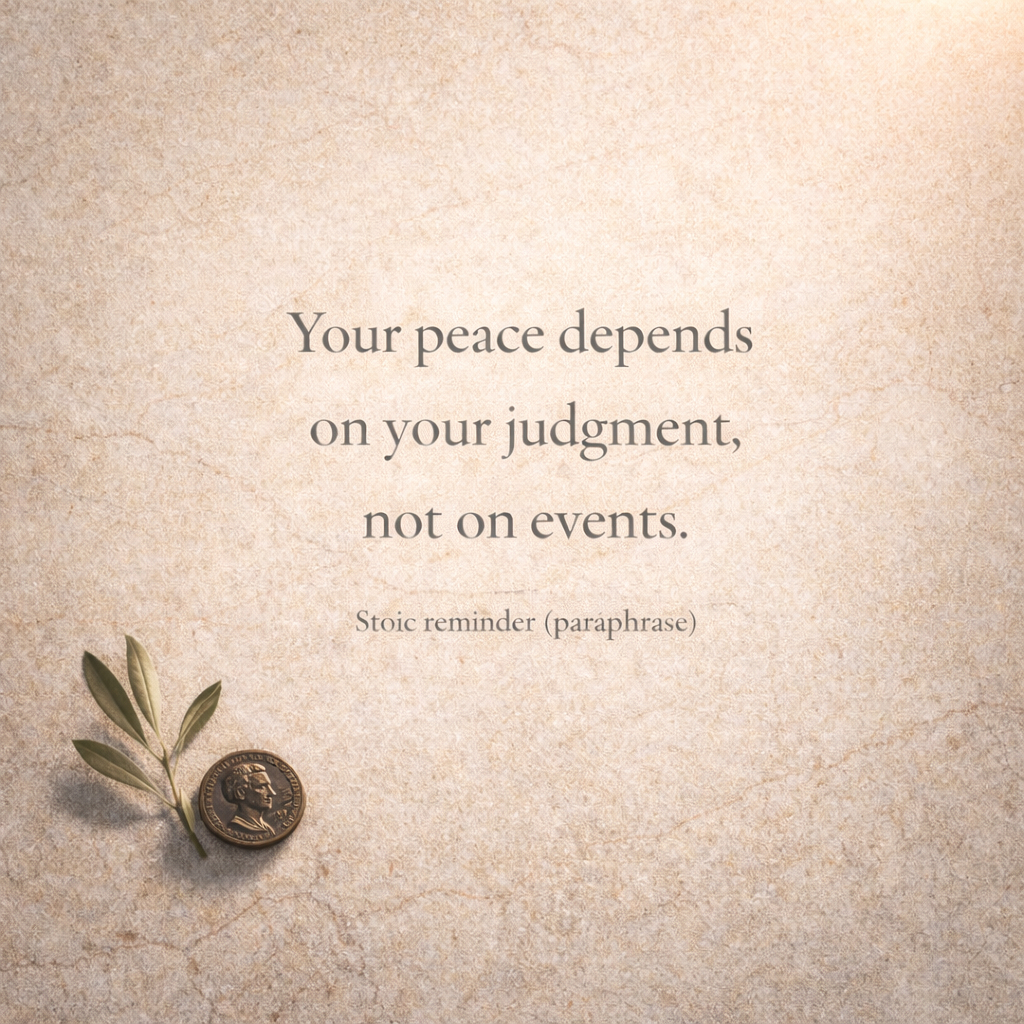
Stoic reminder (paraphrase): Your peace depends on your judgment, not on events.
Most people believe peace arrives when life finally “behaves”—when problems disappear, people cooperate, money is stable, and everything goes according to plan.
But Stoicism flips that belief:
Peace doesn’t come from controlling life.
Peace comes from controlling the meaning you assign to life.
Events happen. That is normal.
What creates suffering is often the story you attach to it.
Stoics teach a simple separation:
Example:
But the event itself is neutral.
Your judgment creates the emotional storm.
✅ Key Stoic truth:
You can’t always control what happens, but you can control the interpretation you choose.
Your brain doesn’t just experience reality—it explains it.
When you’re under stress, your mind tries to protect you by predicting danger. That’s why you may overthink:
Stoicism doesn’t shame fear—it trains you to manage the interpretation that fuels fear.
If you want more peace, you don’t need a new life.
You need a new pause.
A Stoic pause looks like this:
This is where freedom lives: between stimulus and response.
✅ Practice:
When you feel disturbed, ask:
“What judgment am I making right now?”
Stoicism is not denial. It doesn’t pretend everything is fine.
It simply teaches:
A Stoic doesn’t say: “This isn’t hard.”
A Stoic says: “This is hard—and I can meet it with strength.”
✅ Stoic upgrade:
Replace “This is ruining my life” with
“This is challenging me to grow.”
What you repeatedly focus on becomes your reality.
Your peace grows when your mind stops rehearsing worst-case scenarios.
If you lead yourself well, you can lead anything.
Calm is not weakness.
Calm is control.
Every day for 7 days, do this:
This is how peace becomes a habit.
Events will always change.
People will always vary.
Life will always surprise you.
But your inner stability can become constant—if you guard your judgments.
Your peace depends on your judgment, not on events.
So protect your mind like it’s sacred—because it is.
This article is for educational and informational purposes only and does not constitute financial, legal, medical, or professional advice. Results vary based on effort, experience, and circumstances. Always do your own research and consult qualified professionals when needed.
Debe estar conectado para enviar un comentario.