Publicado en career growth, Digital Transformation, 💼 Leadership & Digital Growth, marketing leadership, Professional Development

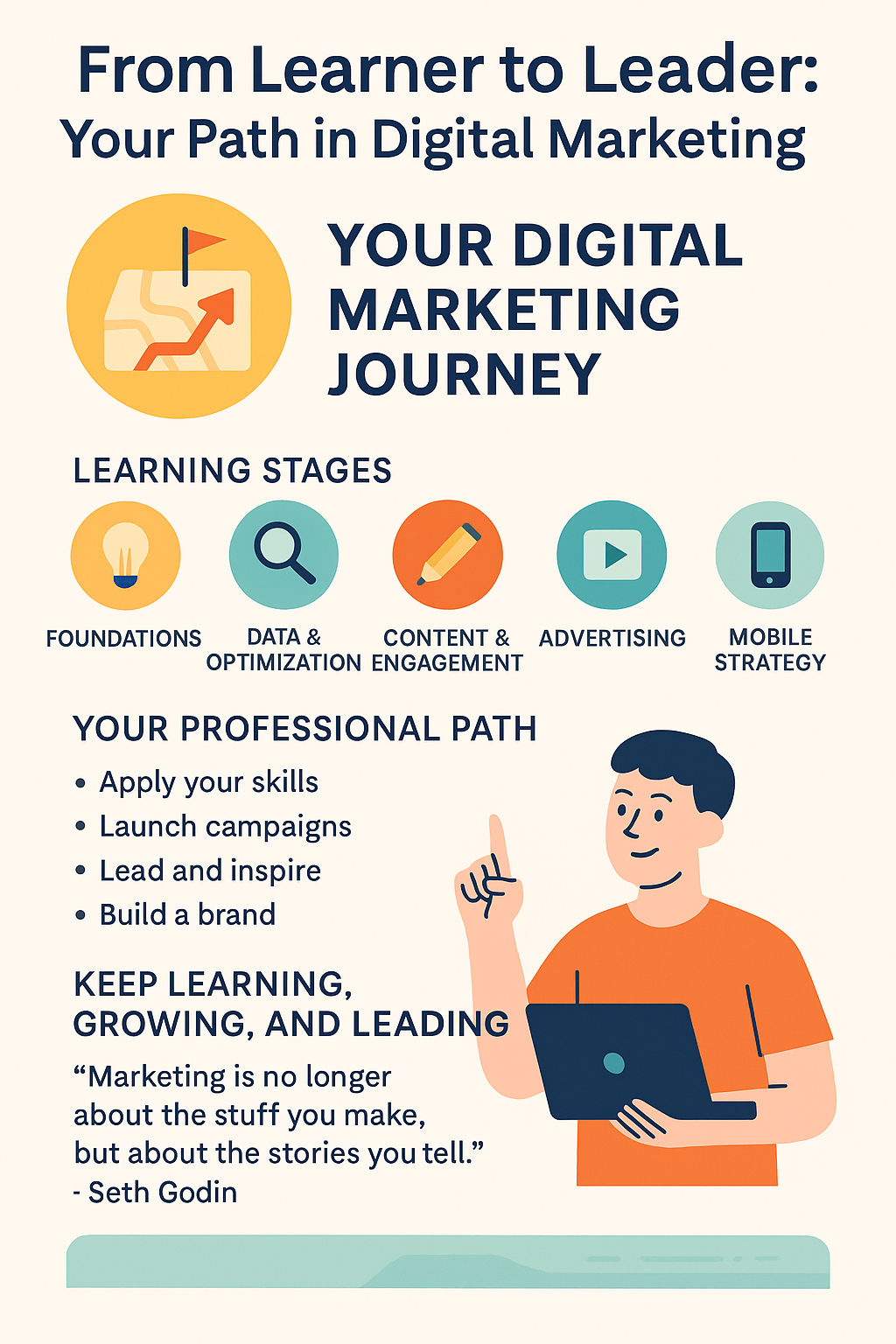
From Learner to Leader: Your Path in Digital Marketing

🚀 Your Digital Marketing Journey


Reflect on your 18-week digital marketing journey. Discover how each lesson builds the foundation for mastery — from strategy to execution — and learn what’s next for your growth.


🌟 Introduction

Every great marketer starts with curiosity — a desire to understand how ideas spread, how brands connect, and how stories move people to action.

Over the past 18 weeks, you’ve explored the essential building blocks of digital marketing — from mastering data and analytics to crafting powerful content and mobile strategies. But your journey doesn’t end here… it evolves.

This final article is a roadmap for what comes next — how to turn knowledge into mastery, and mastery into leadership.


🧭 1. Looking Back: What You’ve Learned

Through this 18-week adventure, you’ve developed a complete understanding of the modern marketing ecosystem. Let’s revisit the core stages of your learning journey:

🌐 Foundations — The Digital Groundwork

You started by learning the fundamentals: digital channels, audience behavior, and collaboration. These are the roots of every successful marketer.

📊 Data & Optimization — Turning Insight Into Action

You learned how to analyze, test, and measure performance using tools like Google Analytics and keyword tracking — the science behind creative marketing.

✍️ Content & Engagement — Storytelling That Converts

You explored the art of communication, from crafting engaging social media posts to building content that informs, inspires, and influences.

🎥 Advertising & Visual Communication — The Power of Emotion

You discovered how video, visuals, and targeted ads can spark instant attention — transforming viewers into loyal followers.

📱 Mobile & App Strategy — Marketing in Motion

You mastered how to reach audiences wherever they are — on their phones, in their inboxes, or through apps that build daily habits and loyalty.

Each lesson brought you closer to understanding that digital marketing isn’t just a skill — it’s an ecosystem that thrives on creativity, empathy, and analytics combined.


💡 2. The New Mindset: From Knowledge to Execution

Information is power, but implementation is transformation.

The best marketers don’t just learn concepts — they test them, refine them, and apply them to real-world results.

Here’s how to evolve from student to strategist:

  • 🔁 Apply What You Learn: Turn every theory into a test campaign.
  • 📈 Track Results: Analyze every post, ad, or email — data reveals direction.
  • 🤝 Collaborate: Marketing grows through connection — share, network, and co-create.
  • 🧠 Keep Learning: The digital world changes fast — stay curious, adaptable, and innovative.

“Marketing is no longer about the stuff you make, but about the stories you tell.” — Seth Godin


💼 3. Building Your Professional Path

Digital marketing offers endless opportunities — from freelancing to entrepreneurship. Here are ways to use your new knowledge:

Launch Your Own Brand: Apply what you’ve learned to promote your products or services.

Offer Freelance Marketing Services: Help small businesses build their online presence.

Specialize in a Niche: Focus on what excites you — SEO, content, social media, or video.

Lead a Marketing Team: Use your skills to inspire others, manage campaigns, and create results.

Teach & Mentor: Share your experience — the best way to master something is to teach it.

You’ve gained not just tools, but a mindset that sees opportunities where others see challenges.


🌍 4. Your Legacy as a Digital Marketer

Digital marketing isn’t just about algorithms and ads — it’s about impact.

It’s about helping businesses grow, inspiring people to take action, and building bridges between brands and hearts.

Every campaign you run, every story you tell, and every audience you reach adds to your legacy as a marketer.

Be the kind of digital leader who doesn’t just sell — but serves. Who doesn’t just create content — but creates change.


✨ 5. The Journey Continues

This isn’t the end. It’s the beginning of your next chapter — where you evolve from student to strategist, and strategist to leader.

👉 Continue exploring, experimenting, and educating others.

👉 Turn your website into your digital hub — a place where education meets inspiration.

👉 And remember: your growth inspires others to start their own journey.


💬 Conclusion

Your 18-week transformation proves one thing — success in digital marketing is built on consistency, curiosity, and courage.

Keep moving forward. Keep learning. Keep leading.

Because the best marketers don’t wait for opportunity — they create it.

Publicado en Content Marketing, Digital Marketing, Email Marketing, Marketing Education, Online Marketing, SEO Strategies, Small Business Marketing, Social Media Marketing

Mastering the Art of Marketing: A Step-by-Step Guide for New Marketers

Mastering Marketing for Beginners: Step-by-Step Guide by Marvin Gandis

Welcome, future marketing experts! 🎉 Whether you’re just starting your journey into the world of marketing or looking to refine your skills, this guide is here to provide you with everything you need to succeed. Marketing isn’t just about selling products; it’s about connecting with people, understanding their needs, and offering solutions that genuinely help. In this article, we’ll dive deep into the strategies, tools, and techniques that will turn you into a successful marketer. Let’s get started!


1. Understanding the Marketing Landscape

A. What is Marketing?

Marketing is the art of communicating value to your target audience. It involves everything from identifying potential customers to convincing them that your product or service is the best solution to their problem. Understanding this concept is crucial because it forms the foundation of all your marketing efforts.

B. Key Marketing Categories

  • Digital Marketing: Focuses on online platforms like websites, social media, and email.
  • Content Marketing: Creating valuable content to attract and engage an audience.
  • Email Marketing: Sending targeted messages to your audience’s inboxes to build relationships and drive sales.
  • Social Media Marketing: Leveraging platforms like Facebook, Instagram, and Twitter to connect with your audience.
  • SEO (Search Engine Optimization): Optimizing your content to rank higher in search engine results, making it easier for people to find you online.

C. Target Audience

Before you start marketing, you need to know who you’re marketing to. This means understanding your target audience. Ask yourself:

  • Who is your ideal customer?
  • What are their needs, desires, and pain points?
  • Where do they spend their time online?

Understanding your audience helps you tailor your messages to resonate with them, increasing your chances of success. 👥


2. Essential Marketing Techniques for Beginners

A. Building a Strong Online Presence

  1. Create a Professional Website: Your website is often the first impression potential customers will have of your business. Make sure it’s professional, easy to navigate, and mobile-friendly. Include clear calls to action (CTAs) like “Sign Up,” “Buy Now,” or “Learn More.”
  2. Leverage Social Media: Choose the platforms where your audience spends the most time. Consistently post engaging content that reflects your brand’s personality. Use emojis, visuals, and interactive elements to make your posts more engaging. 📱
  3. Utilize Email Marketing: Start building an email list from day one. Offer a lead magnet (like a free eBook or discount) to encourage sign-ups. Send regular newsletters that provide value and gently nudge subscribers toward making a purchase.

B. Content is King 👑

Content marketing is about providing valuable information to your audience. It can come in many forms:

  • Blog Posts: Write informative articles that answer common questions or solve problems your audience faces.
  • Videos: Create engaging videos that demonstrate your products or explain complex concepts.
  • Infographics: Use visual content to simplify complex information.
  • Podcasts: Share your expertise through audio content that your audience can listen to on the go.

Make sure your content is SEO-optimized to rank higher on search engines. Use keywords naturally in your titles, headers, and body text. Include internal links to other content on your site to keep visitors engaged.

C. Building Trust and Authority

People buy from brands they trust. Here’s how to build that trust:

  1. Consistency: Be consistent in your messaging, branding, and posting schedule. Consistency builds reliability.
  2. Testimonials and Reviews: Social proof is powerful. Encourage satisfied customers to leave reviews and share testimonials. Feature these prominently on your website and social media.
  3. Engage with Your Audience: Respond to comments, messages, and reviews. Show your audience that you’re listening and that you value their feedback.

3. Advanced Marketing Strategies

A. Analyzing Data and Making Adjustments

As you begin to implement your marketing strategies, you’ll need to track your results and make adjustments as needed. Use tools like Google Analytics to monitor your website’s performance. Pay attention to metrics like:

  • Traffic: How many people are visiting your site?
  • Conversion Rate: How many visitors are taking the desired action (e.g., signing up, purchasing)?
  • Bounce Rate: How many visitors leave your site after viewing only one page?

Use this data to tweak your strategies. If something isn’t working, don’t be afraid to change it.

B. Building a Sales Funnel

A sales funnel guides potential customers through the buying process, from awareness to purchase. Here’s how to create one:

  1. Top of the Funnel (Awareness): Use content marketing, social media, and SEO to attract visitors to your site.
  2. Middle of the Funnel (Consideration): Provide more detailed information, like case studies or testimonials, to help potential customers make informed decisions.
  3. Bottom of the Funnel (Decision): Offer a compelling call to action, like a discount or free trial, to encourage the final purchase.

C. Networking and Collaboration

Networking is a powerful tool in marketing. Build relationships with other marketers, influencers, and industry leaders. Collaborate on projects, share each other’s content, and support each other’s efforts. These connections can open doors to new opportunities and help you grow your audience.


4. Staying Ahead of the Curve

Marketing is constantly evolving. To stay ahead, you need to keep learning and adapting. Here’s how:

  • Stay Updated: Follow industry blogs, attend webinars, and read the latest marketing books to keep up with trends and best practices.
  • Experiment: Don’t be afraid to try new things. Experiment with different strategies and see what works best for your audience.
  • Learn from Others: Join marketing communities where you can share ideas, ask questions, and learn from the experiences of others.

Conclusion

Becoming a successful marketer takes time, effort, and a willingness to learn. But with the right strategies and a commitment to continuous improvement, you can master the art of marketing and achieve your goals. Remember, marketing is about building relationships, providing value, and solving problems. Stay focused on these principles, and success will follow.

Happy marketing! 🚀