Publicado en career growth, Digital Transformation, 💼 Leadership & Digital Growth, marketing leadership, Professional Development

From Zero to Digital Hero: How to Build a Marketing Career from Scratch

💼 How to Build a Digital Marketing Career from Scratch


Learn how to start your digital marketing career from scratch — even without experience. Discover key skills, tools, and strategies to grow into a confident and successful marketer.


🌟 Introduction

If you’ve ever scrolled through social media and wondered, “How do people make a living online?” — you’re not alone.

The truth is, anyone can build a digital marketing career from scratch — no degree, no expensive courses, just passion, consistency, and the right guidance.

Digital marketing isn’t about luck; it’s about understanding people, learning the tools, and taking small, consistent steps toward mastery.

Let’s walk through a realistic roadmap to help you start your journey — from your very first step to becoming a digital marketing professional.


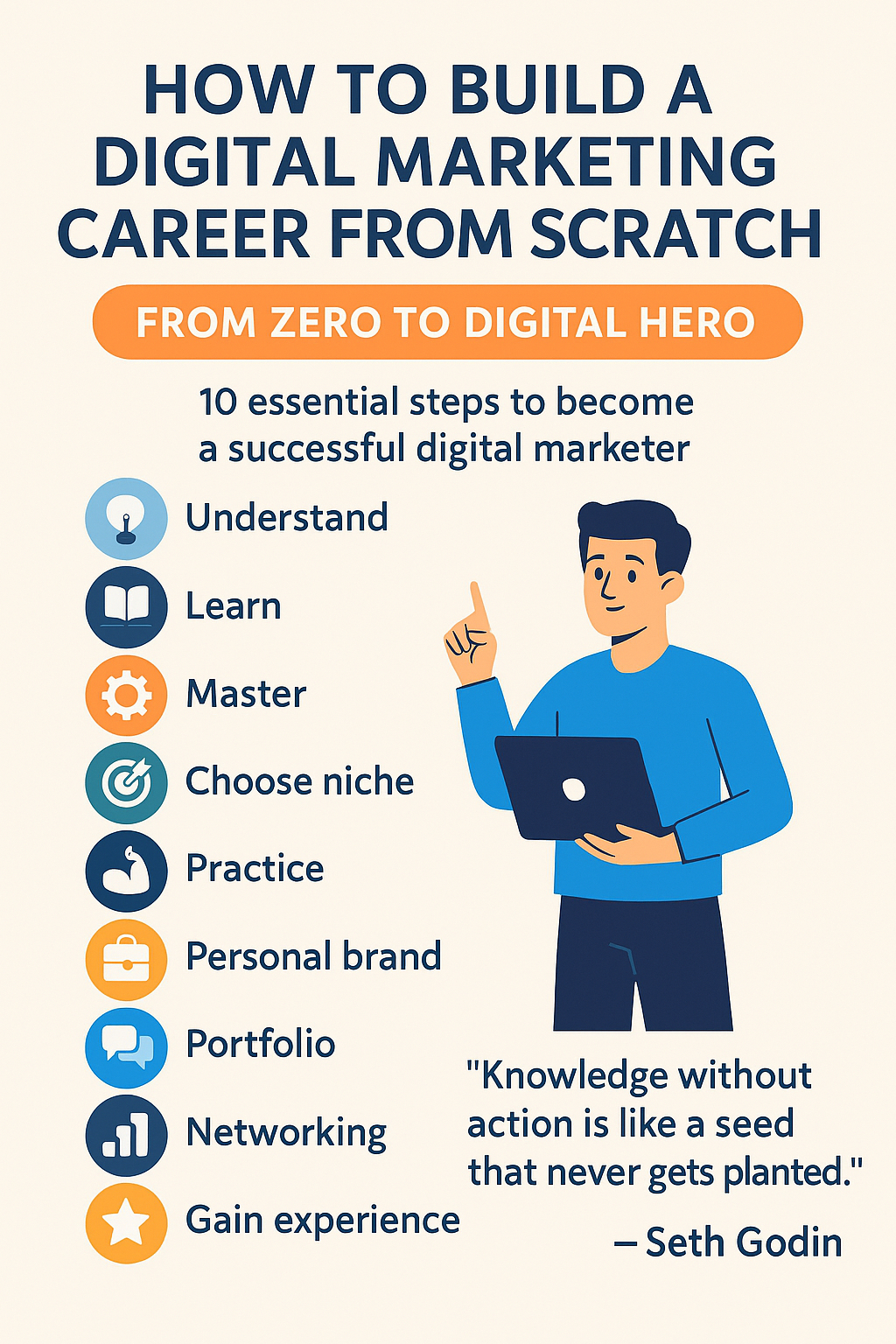
🚀 1. Understand What Digital Marketing Really Is

Before you jump in, you need clarity.

Digital marketing is promoting products, services, or brands through online platforms — like websites, social media, email, and search engines.

It’s made up of multiple specialties:

  • 🌐 SEO (Search Engine Optimization)
  • 📧 Email Marketing
  • 📱 Social Media Management
  • 📈 Paid Advertising (Google & Facebook Ads)
  • ✍️ Content Marketing
  • 📊 Analytics and Data Tracking

You don’t need to master them all at once — start with curiosity, and focus on one area that excites you most.


🧠 2. Learn the Fundamentals

You can’t run before you walk.

Start with the core principles of digital marketing:

✅ How websites attract traffic
✅ What SEO means and how keywords work
✅ The buyer’s journey and conversion funnel
✅ How email and content build relationships
✅ How analytics measure performance

💡 Tip: Platforms like Google Digital Garage, HubSpot Academy, and GetResponse Academy offer free certifications to start learning the right way.


🛠️ 3. Master the Essential Tools

Digital marketers rely on tools — not luck.

Here are some must-learn platforms to build confidence and credibility:

CategoryTools to Learn
SEO & KeywordsGoogle Keyword Planner, Ahrefs, SEMrush
Email MarketingGetResponse, AWeber, Mailchimp
AnalyticsGoogle Analytics, Looker Studio
Content CreationCanva, Notion, Grammarly
Social MediaMeta Business Suite, Buffer, Hootsuite
AdsGoogle Ads, Meta Ads Manager

Experiment with free versions. The more you explore, the faster you’ll learn how the online world works.


🧩 4. Choose Your Niche

Digital marketing is broad — but success comes faster when you specialize.

Ask yourself:

  • Do you love writing and storytelling? → Focus on Content Marketing.
  • Are you analytical and numbers-driven? → Focus on SEO or Analytics.
  • Do you enjoy social media and visuals? → Focus on Social Media Marketing or Ads.
  • Want to build automation systems? → Try Email Marketing or Funnels.

🧭 Your niche will evolve — but start somewhere and refine as you grow.


💪 5. Practice Every Day

The best marketers are doers, not just learners.

You can start today:

  • Write a short blog post about something you love.
  • Create an Instagram story about a product you use.
  • Build a mock ad in Canva.
  • Analyze a competitor’s website using Google Analytics.

Real practice builds real confidence.

“Knowledge without action is like a seed that never gets planted.” 🌱


💼 6. Build Your Personal Brand

Once you have skills, it’s time to show them off.

Here’s how to position yourself like a pro:

✅ Create a LinkedIn profile with a professional headline (“Digital Marketing Enthusiast | Content Creator | Future Strategist”).
✅ Start sharing insights and small wins weekly.
✅ Join marketing groups and engage with posts.
✅ Add your certifications and projects to your profile.

Over time, your consistency will make people recognize your name in the digital space.


🌍 7. Build a Portfolio

Even if you haven’t worked for clients yet, you can still show results.

Include in your portfolio:

  • A blog you’ve written
  • A sample ad campaign (mock or real)
  • Analytics reports
  • Email designs or funnels
  • Social media post examples

🧰 Use tools like Canva, Notion, or Google Sites to create a simple digital portfolio that grows with you.


💬 8. Start Networking

Success in digital marketing isn’t just what you know — it’s who you connect with.

Engage with other marketers, join communities, or participate in free webinars.

💡 Tip: Reach out with genuine curiosity. Don’t ask for jobs — ask for advice or insights. Relationships often open doors that resumes can’t.


📈 9. Gain Experience

Once you have basic skills, start applying them:

  • Offer free or low-cost help to small businesses.
  • Join affiliate programs (like GotBackUp or ListElevate) to apply your skills.
  • Take on freelance projects on platforms like Fiverr or Upwork.
  • Help local organizations build awareness online.

Each project builds experience, confidence, and testimonials.


🏆 10. Keep Learning and Stay Relevant

Digital marketing evolves every few months — and so should you.

Follow marketing blogs, YouTube channels, and newsletters to stay updated.

Some great resources:

  • Neil Patel
  • HubSpot Blog
  • Social Media Examiner
  • GetResponse Blog
  • Marvin Gandis — Ir de Compras Online 😉

🌠 Conclusion

Building a career in digital marketing from scratch is not about being perfect — it’s about being persistent.

Start small. Stay consistent. Keep learning.

Every blog you write, ad you test, or email you send is another step closer to mastery.

👉 Remember: the best digital marketers don’t just chase trends — they create impact.
Publicado en career growth, Digital Transformation, 💼 Leadership & Digital Growth, marketing leadership, Professional Development

From Learner to Leader: Your Path in Digital Marketing

🚀 Your Digital Marketing Journey


Reflect on your 18-week digital marketing journey. Discover how each lesson builds the foundation for mastery — from strategy to execution — and learn what’s next for your growth.


🌟 Introduction

Every great marketer starts with curiosity — a desire to understand how ideas spread, how brands connect, and how stories move people to action.

Over the past 18 weeks, you’ve explored the essential building blocks of digital marketing — from mastering data and analytics to crafting powerful content and mobile strategies. But your journey doesn’t end here… it evolves.

This final article is a roadmap for what comes next — how to turn knowledge into mastery, and mastery into leadership.


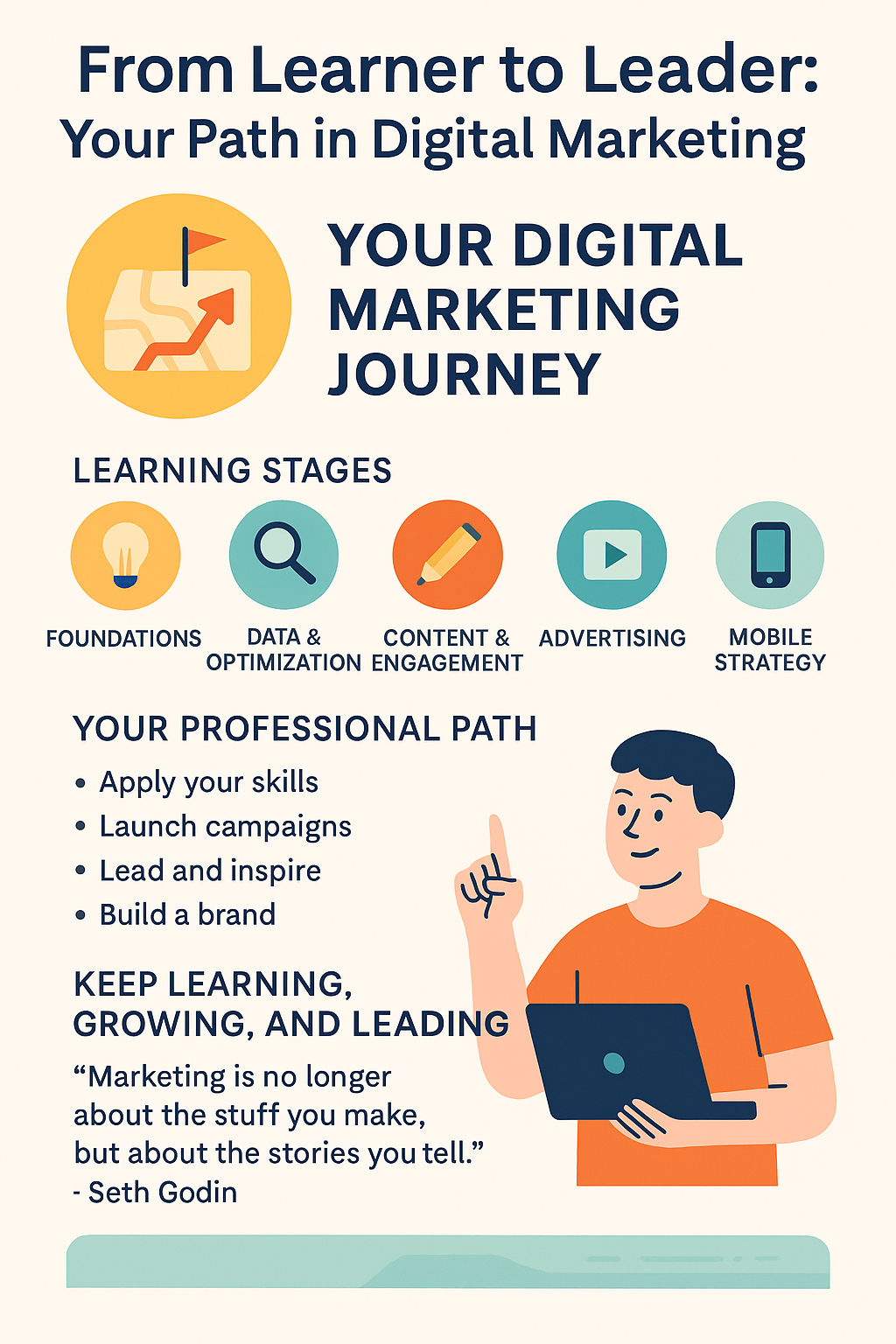
🧭 1. Looking Back: What You’ve Learned

Through this 18-week adventure, you’ve developed a complete understanding of the modern marketing ecosystem. Let’s revisit the core stages of your learning journey:

🌐 Foundations — The Digital Groundwork

You started by learning the fundamentals: digital channels, audience behavior, and collaboration. These are the roots of every successful marketer.

📊 Data & Optimization — Turning Insight Into Action

You learned how to analyze, test, and measure performance using tools like Google Analytics and keyword tracking — the science behind creative marketing.

✍️ Content & Engagement — Storytelling That Converts

You explored the art of communication, from crafting engaging social media posts to building content that informs, inspires, and influences.

🎥 Advertising & Visual Communication — The Power of Emotion

You discovered how video, visuals, and targeted ads can spark instant attention — transforming viewers into loyal followers.

📱 Mobile & App Strategy — Marketing in Motion

You mastered how to reach audiences wherever they are — on their phones, in their inboxes, or through apps that build daily habits and loyalty.

Each lesson brought you closer to understanding that digital marketing isn’t just a skill — it’s an ecosystem that thrives on creativity, empathy, and analytics combined.


💡 2. The New Mindset: From Knowledge to Execution

Information is power, but implementation is transformation.

The best marketers don’t just learn concepts — they test them, refine them, and apply them to real-world results.

Here’s how to evolve from student to strategist:

  • 🔁 Apply What You Learn: Turn every theory into a test campaign.
  • 📈 Track Results: Analyze every post, ad, or email — data reveals direction.
  • 🤝 Collaborate: Marketing grows through connection — share, network, and co-create.
  • 🧠 Keep Learning: The digital world changes fast — stay curious, adaptable, and innovative.

“Marketing is no longer about the stuff you make, but about the stories you tell.” — Seth Godin


💼 3. Building Your Professional Path

Digital marketing offers endless opportunities — from freelancing to entrepreneurship. Here are ways to use your new knowledge:

Launch Your Own Brand: Apply what you’ve learned to promote your products or services.

Offer Freelance Marketing Services: Help small businesses build their online presence.

Specialize in a Niche: Focus on what excites you — SEO, content, social media, or video.

Lead a Marketing Team: Use your skills to inspire others, manage campaigns, and create results.

Teach & Mentor: Share your experience — the best way to master something is to teach it.

You’ve gained not just tools, but a mindset that sees opportunities where others see challenges.


🌍 4. Your Legacy as a Digital Marketer

Digital marketing isn’t just about algorithms and ads — it’s about impact.

It’s about helping businesses grow, inspiring people to take action, and building bridges between brands and hearts.

Every campaign you run, every story you tell, and every audience you reach adds to your legacy as a marketer.

Be the kind of digital leader who doesn’t just sell — but serves. Who doesn’t just create content — but creates change.


✨ 5. The Journey Continues

This isn’t the end. It’s the beginning of your next chapter — where you evolve from student to strategist, and strategist to leader.

👉 Continue exploring, experimenting, and educating others.

👉 Turn your website into your digital hub — a place where education meets inspiration.

👉 And remember: your growth inspires others to start their own journey.


💬 Conclusion

Your 18-week transformation proves one thing — success in digital marketing is built on consistency, curiosity, and courage.

Keep moving forward. Keep learning. Keep leading.

Because the best marketers don’t wait for opportunity — they create it.

Publicado en Business Development, Business Opportunities, Entrepreneurial Growth, Lead Generation, Lead Mastery, Marketing Tactics, Networking Success, Networking Tips, Personal Development, Personal Growth, Professional Development, Referral Strategies

Unlocking Success in Networking: How to Approach Prospects the Right Way

The Secret to Inviting Prospects Without Sounding Pushy! By: Marvin Gandis

Starting a business or promoting a program is one thing, but getting people to join you is a whole different ballgame. Whether it’s friends, family, or total strangers, the way you approach, communicate, and present yourself will determine your success in the world of networking. If you’ve struggled to get people to follow your lead, or if you’re concerned about coming off as too pushy, then this guide is for you.

We’ll go through everything from what to say to keep prospects engaged, what words to avoid to prevent being banned, how to invite friends and family, and finding the perfect prospects. Let’s make sure you’re on the path to success by eliminating the mistakes most marketers commit, helping you become the professional everyone wants to follow.


Understanding Networking: The Foundation for Success

Before diving into strategies, it’s crucial to understand what networking really is. Networking is building relationships based on mutual benefits. It’s about creating connections that add value to both parties. While many people think of networking as just another sales tactic, it’s much more than that. Done correctly, it builds long-lasting relationships that go beyond business.

Where to Start? Start by identifying your “Why.” Why do you want to get into networking? Why should others join you? Once you have a clear understanding of your motivations and how they can benefit others, your messaging will come off as more authentic and attractive.


What to Say to Prospects (And What to Avoid)

When talking to new prospects, it’s important to use language that shows empathy and understanding, while avoiding any form of pressure. Here’s a guide on what to say:

  1. Focus on Benefits, Not Features: Instead of saying: “Join my program and sell X product.”
    Say: “With this program, you can learn how to build a steady income stream while helping others solve their problems.”
  2. Use Inclusive Language: Instead of saying: “You need to sign up because I did it.”
    Say: “We’re growing an amazing community, and I’d love for you to be part of it.”
  3. Avoid Overused Buzzwords: Words like “opportunity of a lifetime,” “get rich quick,” or “ground floor opportunity” are huge turn-offs. People have heard these terms too many times, and they come off as insincere.
  4. Don’t Sound Desperate or Pushy: Avoid phrases like “You need to do this,” “This is your only chance,” or “Why haven’t you signed up yet?” Instead, use positive reinforcement and invite them to explore more on their own terms.

How to Invite Friends or Family (Without Being Annoying)

Inviting friends and family to join your business can be tricky. You want them to see the value but not feel obligated. Here’s how to do it right:

  • Keep it Casual: Start with a light conversation about what’s new in your life. Share your excitement naturally without pitching.
  • Show, Don’t Tell: Demonstrate how the business or program is benefiting you. Share your personal growth or new skills you’ve gained.
  • Ask for Support, Not Sign-Ups: If you want family or friends to join, position it as a way for them to support your journey, rather than just another sign-up.

Finding the Perfect Prospect

The perfect prospect is not everyone. To avoid wasting time and effort, narrow down your search to those who are more likely to be interested in your program. Here’s who you should look for:

  1. Individuals Open to Change: Look for people who are open to new opportunities and are not satisfied with the status quo.
  2. Self-Starters: Those who have an entrepreneurial mindset and are self-motivated will thrive in networking businesses.
  3. People Interested in Personal Development: Networking often involves learning new skills, so prospects interested in self-growth will be more inclined to join.

Where to Find Them:

  • Social Media Groups and Forums: Join groups related to business development or entrepreneurship.
  • Networking Events: Attend virtual or in-person events where like-minded individuals gather.
  • Professional Platforms: LinkedIn is a great place to find professionals interested in additional income streams.

How to Get More Leads and Referrals

Leads are the lifeblood of any networking business. Here’s how you can get more leads and referrals without coming off as spammy or annoying:

  1. Create Value-Driven Content: Share content that educates and informs your audience. This will position you as a knowledgeable leader and attract people to you.
  2. Utilize Email Marketing: Use newsletters to stay in touch with your leads. Share valuable tips and updates rather than just promotional content.
  3. Leverage Social Proof: Share testimonials, success stories, and results. This helps build trust and credibility.
  4. Ask for Referrals the Right Way: Instead of directly asking people to refer others, frame it as: “Who do you think would benefit from this opportunity?” This makes it less intrusive and shows that you care about helping others.

Achieving Success in Networking: A Professional’s Guide

Success in networking is not just about signing people up; it’s about nurturing relationships, providing value, and being a leader people want to follow. Here’s what you need to do:

  1. Be Consistent: Show up every day. Share content, connect with people, and build your brand consistently.
  2. Listen More, Talk Less: Pay attention to what your prospects are looking for and tailor your messaging to fit their needs.
  3. Offer Help, Not Just a Product: Be the person who genuinely wants to help others succeed, whether they join your program or not.

Common Mistakes to Avoid

Most marketers fail because they fall into common traps. Here are some to watch out for:

  • Being Overly Salesy: Pushing for a sign-up on the first conversation often results in rejections.
  • Not Following Up Properly: Failing to follow up or being too aggressive in your follow-up can scare off potential prospects.
  • Neglecting Relationship Building: Remember, networking is all about relationships. Focus on building trust and rapport.

Final Thoughts: Become the Leader Everyone Wants to Follow

If you can master these strategies, you’ll become the person people naturally gravitate toward. It’s not just about having a good product or program; it’s about being a genuine, helpful, and knowledgeable leader who can guide others to success.

Use this guide as a blueprint to not only get more prospects but also to turn them into loyal followers and successful members of your network.

Stay true to yourself, and you’ll soon find that people will start seeking you out rather than the other way around! 🚀💼