Publicado en analytics tools, data analytics, 📊 Data & Optimization Strategies, keyword strategy, marketing performance, SEO optimization

Keyword Management: Mastering the Words That Drive Results

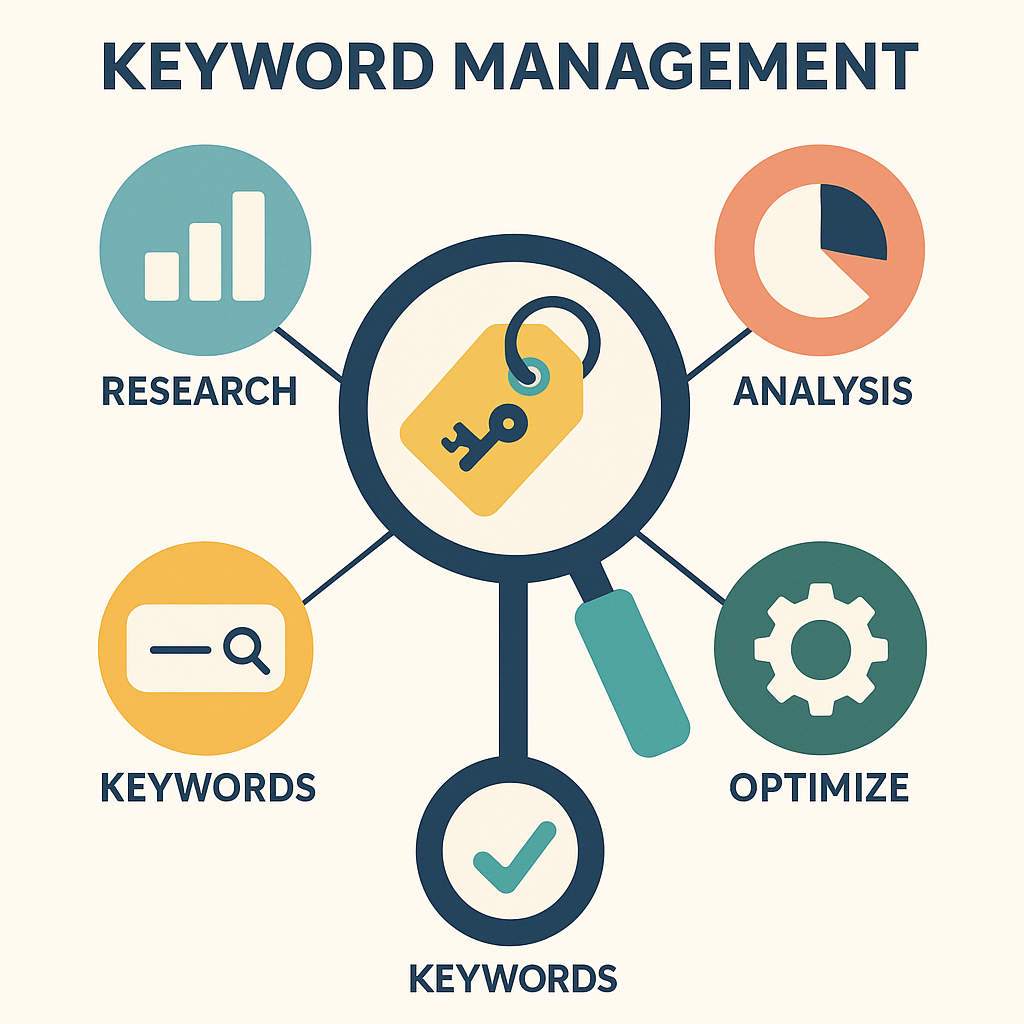
🔑 Week 13: Keyword Management


Discover how to find, organize, and optimize the right keywords for your website and campaigns. Learn how keyword management improves SEO, increases visibility, and drives qualified traffic.


🌟 Introduction

Behind every successful digital marketing campaign is one simple truth — keywords are the bridge between you and your audience. They’re the words people type into search engines when they’re looking for solutions, products, or inspiration.

Keyword management is the art of selecting, organizing, and optimizing those words strategically to boost visibility, attract the right visitors, and convert them into loyal customers. Let’s dive into how mastering keywords can elevate your entire digital presence.


🧠 1. What Is Keyword Management?

Keyword management is the ongoing process of researching, selecting, analyzing, and refining the keywords your business targets in SEO and paid campaigns.

It’s not just about finding words — it’s about understanding intent.

When you manage your keywords effectively, you connect with people who are ready to take action.

Example:

  • Someone searching “best running shoes 2025” is ready to buy.
  • Someone searching “how to start running” is seeking education.

Both are valuable — but require different strategies.


📈 2. Why Keyword Management Matters

Keywords are the foundation of all digital marketing strategies. They determine how search engines index your content and how your audience finds you.

Here’s why keyword management is vital:

  • 🚀 Increases Visibility: Helps your content appear on relevant searches.
  • 🎯 Improves Targeting: Reaches the right people with the right message.
  • 💰 Maximizes ROI: Ensures your ad spend and SEO efforts focus on profitable terms.
  • 🧩 Guides Content Creation: Provides direction for blog posts, videos, and campaigns.
  • 📊 Tracks Performance: Allows you to measure and refine strategies based on data.

Without keyword management, you’re shooting in the dark. With it, you’re aiming with precision.


🔍 3. Types of Keywords You Should Know

Understanding the different types of keywords helps you build a balanced strategy:

1. Short-Tail Keywords (Head Terms)

  • Example: “Shoes,” “Digital Marketing”
  • High volume, high competition, but broad intent.

2. Long-Tail Keywords

  • Example: “Best running shoes for women under $100”
  • Lower competition, highly specific, and higher conversion rates.

3. LSI (Latent Semantic Indexing) Keywords

  • Related terms that help search engines understand context.
  • Example: For “email marketing,” related words might be “automation,” “lead nurturing,” or “open rates.”

4. Geo-Targeted Keywords

  • Focused on location to attract local customers.
  • Example: “Digital marketing agency in Las Vegas.”

5. Branded vs. Non-Branded Keywords

  • Branded: “Nike running shoes”
  • Non-Branded: “lightweight running shoes”

A strong SEO strategy blends all these types for maximum impact.


⚙️ 4. The Keyword Management Process

Here’s a simple 5-step system to manage your keywords effectively:

Step 1: Research

Use tools like Google Keyword Planner, Ahrefs, or Semrush to find terms people are searching for in your niche.

Step 2: Analyze

Evaluate keywords based on:

  • Search Volume
  • Competition
  • Relevance
  • Intent

Step 3: Organize

Group keywords by theme or campaign goal — such as “Product Keywords,” “Educational Keywords,” or “Local Keywords.”

Step 4: Implement

Integrate them naturally into:

  • Website copy
  • Blog posts
  • Product descriptions
  • Meta titles and descriptions
  • Ad campaigns

Step 5: Monitor & Optimize

Track performance regularly and adjust based on which keywords bring traffic or conversions.


💡 5. Tools for Effective Keyword Management

These tools simplify research and help you stay ahead of your competitors:

  • Google Keyword Planner – Free and reliable keyword insights.
  • Semrush / Ahrefs – In-depth analytics and keyword tracking.
  • Ubersuggest – Great for beginners and content ideas.
  • Moz Keyword Explorer – Measures keyword difficulty and opportunity.
  • AnswerThePublic – Generates questions and phrases people search for.

Each tool gives you a different layer of insight — together, they form your keyword command center.


📊 6. Common Mistakes to Avoid

❌ Stuffing too many keywords into your content.
❌ Ignoring long-tail and local search terms.
❌ Not tracking performance or revisiting your keyword list.
❌ Using the same keywords for every page.

SEO success is about relevance and strategy, not repetition.


🚀 Conclusion & Call to Action

Keyword management is like tuning an instrument — precision and consistency create harmony. The right words attract the right audience, leading to higher visibility, engagement, and conversions.

👉 This week, perform a keyword audit. Identify 10 new keywords that match your goals, and optimize one existing article or ad around them.

Next week: Week 14 — Google Analytics: Understanding Your Data Like a Pro.

Publicado en Content Marketing, Digital Media, Writing and Publishing

🚀 Mastering the Art of Crafting Viral Articles

Welcome, fellow writers, to the realm where words wield power and ideas spark movements. 🌟 In this digital age, where attention spans waver and trends evolve at the blink of an eye, the quest for crafting viral content has become both an art and a science. As a seasoned freelance writer with a penchant for penning bestsellers, I’m thrilled to share insights on how to create articles that captivate audiences, garner subscribers, and set the internet ablaze.

  1. Know Your Audience: Understanding your audience is paramount. Conduct thorough audience research to identify demographics, interests, and pain points. Whether targeting Millennials seeking authentic connection or Gen Z craving bite-sized, visually appealing content, tailor your articles to resonate with their needs and desires.
  2. Craft Irresistible Headlines: Your headline is the gateway to your content. Make it magnetic. 🔥 Utilize keywords, such as «viral content,» «article writing,» and «audience engagement,» to optimize for searchability. Embrace curiosity, urgency, or controversy to grab attention and entice clicks.
  3. Provide Value: Content is king, but value reigns supreme. Offer actionable insights, practical tips, or entertaining anecdotes that enrich your audience’s lives. Solve their problems, educate them, or entertain them—ideally, all three. Use keywords relevant to your niche or category to attract targeted readers.
  4. Harness the Power of Visuals: In the digital landscape, visuals are non-negotiable. Incorporate eye-catching images, engaging infographics, or captivating videos to enhance your content’s appeal. Optimize your visuals with alt text and descriptive filenames to improve accessibility and SEO ranking.
  5. Spark Engagement: Encourage interaction and foster a sense of community among your audience. Pose thought-provoking questions, solicit feedback, or invite them to share their experiences. Use keywords related to engagement, such as «comments,» «shares,» and «interactions,» to drive participation and increase visibility.
  6. Optimize for SEO: While creating viral content is essential, ensuring it’s discoverable is equally crucial. Embrace SEO best practices to improve your content’s visibility on search engines. Conduct keyword research, optimize meta tags, and structure your content with relevant keywords to attract organic traffic.
  7. Amplify Your Reach: Don’t rely solely on organic reach to spread your content. Leverage social media, email marketing, and influencer partnerships to amplify your reach. Tailor your promotion strategy to each platform, utilizing hashtags, tagging relevant accounts, and engaging with trending topics. Collaborate with influencers or thought leaders in your niche to extend your content’s reach to new audiences.

In the ever-evolving landscape of digital content, mastering the art of crafting viral articles requires a combination of creativity, strategy, and adaptability. By knowing your audience, crafting irresistible headlines, providing value, harnessing the power of visuals, sparking engagement, optimizing for SEO, and amplifying your reach, you can elevate your content to bestseller status and cultivate a loyal subscriber base. Embrace experimentation, learn from your successes and failures, and above all, stay true to your voice and vision. Here’s to writing articles that not only go viral but also leave a lasting impact on the hearts and minds of your audience. 🌈


Here are some books and articles that can provide valuable insights into crafting viral content, attracting subscribers, and understanding online engagement:

Books:

  1. «Contagious: How to Build Word of Mouth in the Digital Age» by Jonah Berger – This book explores the science behind why certain ideas and products go viral, providing practical strategies for creating contagious content.
  2. «Everybody Writes: Your Go-To Guide to Creating Ridiculously Good Content» by Ann Handley – Ann Handley offers valuable advice on writing compelling content that resonates with audiences and drives results.
  3. «Epic Content Marketing: How to Tell a Different Story, Break through the Clutter, and Win More Customers by Marketing Less» by Joe Pulizzi – Joe Pulizzi shares insights on creating epic content that captivates audiences and builds relationships with customers.
  4. «Hooked: How to Build Habit-Forming Products» by Nir Eyal – While primarily focused on product development, this book offers valuable lessons on creating content that hooks audiences and keeps them coming back for more.
  5. «The Content Code: Six Essential Strategies to Ignite Your Content, Your Marketing, and Your Business» by Mark W. Schaefer – Mark Schaefer discusses strategies for distributing and promoting content effectively to maximize its reach and impact.

Articles:

  1. «The Anatomy of Viral Content» by BuzzSumo – This article analyzes the characteristics of viral content based on extensive research, providing insights into what makes content shareable and engaging.
  2. «10 Principles of Effective Online Content» by Neil Patel – Neil Patel outlines key principles for creating online content that attracts and retains audiences, from providing value to optimizing for search engines.
  3. «The Psychology of Social Sharing: Why We Share Online» by Hootsuite – This article delves into the psychological motivations behind social sharing, helping writers understand what drives audiences to engage with content.
  4. «The Ultimate Guide to Content Marketing in 2024» by Content Marketing Institute – This comprehensive guide offers actionable tips and strategies for creating and distributing content in the current digital landscape.
  5. «How to Write Viral Headlines: New BuzzSumo Research» by BuzzSumo – This research-backed article explores the elements of viral headlines and provides data-driven insights into crafting attention-grabbing titles.

These resources cover a range of topics related to creating viral content, attracting subscribers, and understanding online engagement. Whether you prefer books or articles, each offers valuable knowledge and practical advice for aspiring writers and content creators.