
The knowledge that can protect your decisions, expand your opportunities, and change a family’s destiny
By Marvin Gandis
For generations, many people were taught that getting ahead required earning an education, finding a stable job, working for decades, saving part of their income, and patiently waiting for retirement.
That model helped many families in the past. However, the economic world is changing rapidly.
Housing, food, insurance, education, transportation, and basic services continue to place pressure on millions of households. At the same time, automation, artificial intelligence, e-commerce, independent work, and digital platforms are transforming how we work, produce, shop, save, and invest.
In this new environment, knowing how to earn money is no longer enough.
We must also learn how to manage it, protect it, grow it, and use it with purpose.
Financial education does not guarantee instant wealth. It does not eliminate every risk in life. However, it can help us avoid expensive mistakes, make more thoughtful decisions, and build a more stable economic future.
What is financial education?
Financial education is the ability to understand how money works and use that knowledge to make better economic decisions.
It includes learning how to:
- Create and follow a budget.
- Separate needs from wants.
- Control spending.
- Use credit responsibly.
- Avoid unnecessary debt.
- Build an emergency fund.
- Save for important goals.
- Understand interest and inflation.
- Evaluate risk.
- Invest prudently.
- Protect income and property.
- Prepare for retirement.
- Recognize fraud and misleading financial promises.
- Develop more than one source of income.
Financial education is not limited to learning banking terms or studying complex investments.
It is primarily about developing habits that allow us to take control of our decisions.
The problem with earning money without knowing how to manage it
A person can earn a high income and still live in constant financial stress.
Another person may earn a modest income and gradually build stability through discipline, planning, and wise decisions.
The difference is not always how much someone earns. It is how much they keep, how they use it, and what they build with it.
Without financial understanding, a person is more likely to:
- Spend everything they receive.
- Depend on credit cards for basic needs.
- Have no emergency savings.
- Pay excessive interest.
- Make impulsive purchases.
- Confuse income with wealth.
- Ignore investment risks.
- Believe promises of fast money.
- Retire without sufficient preparation.
Increasing income is important, but increasing financial knowledge is equally important.
Earning more without improving our habits may simply cause us to spend more.
Inflation and the loss of purchasing power
Inflation is one of the most important concepts in financial education.
Inflation occurs when prices rise over time and money loses part of its purchasing power.
This means that an amount of money that purchases certain products today may not purchase the same products several years from now.
Inflation especially affects people who:
- Keep all their money without earning a return.
- Depend on fixed income that does not increase.
- Fail to review their budgets regularly.
- Do not plan for future expenses.
- Carry high-interest debt.
Understanding inflation helps us recognize that saving is necessary, but we must also think long term.
This does not mean investing impulsively. It means learning about available alternatives, evaluating risk, and finding responsible ways to preserve the value of our resources.
The economic future will demand new skills
The future job market will likely become more dynamic, technological, and competitive.
Many repetitive tasks are being automated. At the same time, new opportunities are emerging in technology, data analysis, content creation, digital education, e-commerce, cybersecurity, remote service, and artificial intelligence.
This does not mean every job will disappear.
It means many roles will change.
People who develop new skills will have a greater ability to adapt. Those who depend only on what they learned many years ago may face greater challenges.
Important skills for the economic future may include:
- Continuous learning.
- Digital literacy.
- Clear communication.
- Problem-solving.
- Adaptability.
- Project and priority management.
- Professional reputation building.
- Independent and remote work.
- Basic sales and marketing knowledge.
- Responsible use of artificial intelligence.
- Personal financial management.
Financial knowledge and professional development will become increasingly connected.
A job is important, but it may not be enough
For many years, stable employment was considered the primary foundation of financial security.
Employment remains essential for millions of people. However, depending entirely on one source of income can create risk.
An illness, layoff, technological change, recession, or family emergency can suddenly affect that income.
For this reason, many people are exploring additional options such as:
- Freelance work.
- Professional services.
- Small businesses.
- E-commerce.
- Affiliate marketing.
- Content creation.
- Consulting.
- Renting property or equipment.
- Selling digital products.
- Part-time employment.
- Investments appropriate for their risk profile.
Developing additional income does not mean pursuing every opportunity that appears.
It means patiently building a second economic ability that can complement your primary income.
Every opportunity should be investigated carefully. Understand its costs, risks, requirements, terms, and realistic potential before investing money.
The importance of a budget
A budget is not a punishment.
It is a plan that gives your money a purpose.
Without a budget, it is easy to spend first and later wonder where the money went. With a budget, resources can be assigned to necessities, savings, debt, goals, and enjoyment.
A simple budget can contain five areas:
1. Essential expenses
Housing, food, transportation, utilities, insurance, healthcare, and required payments.
2. Savings
Emergency savings and money reserved for specific goals.
3. Debt repayment
Especially debts carrying high interest rates.
4. Personal development
Courses, books, tools, or training that can improve income potential.
5. Personal spending
Entertainment, restaurants, travel, and nonessential purchases within reasonable limits.
The goal is not to remove every enjoyable experience.
The goal is to prevent today’s spending from destroying tomorrow’s opportunities.
The emergency fund: a financial defense
An emergency can happen at any time.
A vehicle may break down. A medical bill, home repair, job loss, or unexpected family situation may arise.
Without savings, these situations often become debt.
An emergency fund is money reserved exclusively for necessary, unexpected expenses.
To begin:
- Establish a small initial goal.
- Set aside money from every paycheck.
- Keep it in an accessible but separate account.
- Do not use it for regular purchases.
- Replenish it after an emergency.
Over time, many people seek to accumulate several months of essential expenses. The appropriate amount depends on each household’s income, responsibilities, and employment stability.
The most important step is to begin.
Credit: a tool or a trap
Credit can be helpful when used responsibly.
It may make it possible to purchase a home, finance education, develop a business, or address an important need.
However, it can also become a burden when it is used to support a lifestyle that income cannot sustain.
Before using credit, ask:
- Do I truly need this purchase?
- Can I pay for it without borrowing?
- What is the interest rate?
- How much will I pay in total?
- Are there additional charges?
- Could I make the payments if my income decreased?
- Will this debt improve my well-being or only my appearance?
Credit is not extra money.
It is future income being committed today.
Saving and investing are not the same
Saving means setting money aside for future needs and short- or medium-term goals.
Investing means placing money into an asset with the expectation that it may increase in value or generate income, while accepting a degree of risk.
Savings are commonly used for:
- Emergencies.
- Repairs.
- Travel.
- Planned purchases.
- Near-term goals.
Investments are commonly associated with:
- Retirement.
- Long-term wealth building.
- Future financial goals.
- Potential income generation.
Every investment includes risk. No one should invest in something they do not understand.
Before making a decision, investigate:
- How the investment works.
- The risks involved.
- Fees and expenses.
- How easily the money can be accessed.
- Who regulates or manages the product.
- What could happen in a negative scenario.
High returns are never guaranteed. When someone promises major profits without risk, extreme caution is necessary.
Productive debt and dangerous debt
Not every debt serves the same purpose or produces the same consequences.
Debt may be productive when it helps purchase an asset, improve a skill, or develop an activity that creates value.
However, even debt considered productive can become a problem when payments exceed a person’s financial capacity.
Dangerous debt often includes:
- Loans carrying excessive interest rates.
- Cash advances.
- Impulsive purchases financed over time.
- Debt used to pay other debt.
- Credit accepted without reading the terms.
- Loans for unverified opportunities.
- Minimum payments that extend debt for years.
The main question should not simply be, “Will I be approved?”
The better question is, “Can I accept this obligation without endangering my essential needs and future goals?”
Technology is changing our relationship with money
Today, people can open accounts, transfer money, invest, apply for loans, operate businesses, and purchase products through a mobile phone.
This convenience provides major advantages, but it also creates risks.
Digital platforms can encourage:
- Impulsive purchases.
- Forgotten subscriptions.
- Fraud.
- Identity theft.
- Hasty investment decisions.
- Exposure to false experts.
- Unrealistic income promises.
Modern financial education must include digital security.
Essential protections include:
- Using strong, unique passwords.
- Activating two-factor authentication.
- Verifying websites before entering information.
- Never sharing security codes.
- Reviewing accounts regularly.
- Avoiding suspicious links.
- Distrusting messages that create artificial urgency.
- Protecting personal documents.
- Never sending money to unknown individuals.
- Researching companies and opportunities before paying.
In the digital economy, protecting information also means protecting money.
Artificial intelligence and the future of work
Artificial intelligence can assist with writing, information analysis, automation, content creation, customer service, and productivity.
It can also change job responsibilities, reduce certain tasks, and increase performance expectations.
The best response is not to ignore technology or fear it automatically.
The best response is to learn how to use it.
People can prepare by:
- Taking introductory artificial intelligence courses.
- Learning tools related to their professions.
- Developing critical-thinking skills.
- Verifying AI-generated information.
- Using data ethically and responsibly.
- Combining human abilities with technological tools.
Empathy, judgment, creativity, trust, experience, and the ability to understand human needs will remain valuable.
Technology can perform tasks. People must still establish goals, evaluate consequences, and make responsible decisions.
Teaching financial education at home
Financial education should begin long before a person receives a first credit card.
Children and young adults can learn:
- Money is earned by working, serving, or creating value.
- Not every desire must be satisfied immediately.
- Saving requires patience.
- Purchases have consequences.
- Sharing and helping others are also part of responsible money management.
- Debt should be accepted carefully.
- Opportunities that seem too good to be true require investigation.
- Economic success does not determine human worth.
Family conversations about money should not be based only on fear or conflict.
They can also include goals, planning, generosity, responsibility, and hope.
Financial education is also emotional
Many financial decisions are not made logically. They are influenced by emotion.
People shop to feel accepted. They spend when they feel sad. They invest because they fear missing out. They borrow to impress others. They avoid reviewing their accounts because they feel anxious.
An important part of financial education is recognizing those emotions.
Before making a major financial decision, ask:
- Am I acting from necessity or impulse?
- Am I trying to impress someone?
- Am I afraid of missing an opportunity?
- Do I truly understand what I am accepting?
- Have I investigated alternatives?
- Can I wait 24 or 48 hours before deciding?
Sometimes the best financial decision is simply to pause and think.
Wealth is not only about money
A healthy vision of the economic future should go beyond accumulating possessions.
True stability may also include:
- Time with family.
- Freedom to make decisions.
- Good health.
- Peace of mind.
- The ability to help others.
- Freedom from destructive debt.
- A safe home.
- Emergency preparation.
- Purposeful work.
- A dignified retirement.
- Resources to leave a legacy.
Money is an important tool, but it should not become the absolute measure of a person’s value.
Financial education should help us live better, not cause us to become obsessed with comparison.
How to improve your financial education
You do not need to learn everything in one day.
Begin with simple actions:
Step 1: Understand your current situation
List your income, expenses, debts, savings, and obligations.
Step 2: Track your spending
Record every expense for one month. This may reveal habits you had not previously recognized.
Step 3: Create a realistic budget
Do not create a perfect budget that is impossible to follow. Design one that fits your actual life.
Step 4: Begin an emergency fund
Even when the first amount is small, begin.
Step 5: Address expensive debt
Organize your debts and pay close attention to interest rates.
Step 6: Learn before investing
Read, compare, consult reliable sources, and avoid decisions made under pressure.
Step 7: Improve one marketable skill
Choose a skill that could increase your income or improve your employment opportunities.
Step 8: Review insurance and protection
Determine whether your family, income, health, home, and property have appropriate protection.
Step 9: Establish specific goals
Instead of saying, “I want to save,” define how much, for what purpose, and by what date.
Step 10: Review your progress monthly
Financial education is a continuing process, not a one-time assignment.
A simple monthly financial protocol
At the beginning or end of each month:
- Review all income.
- Confirm essential expenses.
- Identify unnecessary spending.
- Transfer money into savings.
- Make required debt payments.
- Review account transactions.
- Cancel unused subscriptions.
- Evaluate progress toward goals.
- Prepare for unusual expenses.
- Learn one new financial concept.
This process may require little time, but its accumulated impact can be significant.
The economic future belongs to those who prepare
No one can predict exactly what the economy will look like ten or twenty years from now.
We can expect change.
Some industries will grow. Others will decline. New professions will emerge. Tools will change. Prices will fluctuate. Technology will continue transforming daily life.
Preparation does not eliminate uncertainty.
It helps us face uncertainty with better resources.
A financially educated person does not necessarily know every answer. That person knows how to research, compare, ask questions, calculate, plan, and recognize when a decision requires more time.
That ability can make an enormous difference.
Final reflection
Financial education should not be reserved for bankers, business owners, or professional investors.
It is necessary for every worker, family, student, entrepreneur, and retiree.
Every economic decision we make affects our future in some way.
When we learn to budget, save, use credit wisely, protect ourselves from fraud, develop new abilities, and create realistic goals, we begin to build something more valuable than a bank account.
We build confidence.
We build choices.
We build stability.
We build the ability to assist our families and serve others.
We may not control the entire economy, rising prices, economic crises, or technological change. However, we can improve the way we respond to them.
The best time to learn about money may have been many years ago.
The second-best time is today.
Call to action
Use this week to conduct an honest review of your finances.
Identify one expense you can reduce, one debt you need to organize, one small amount you can save, and one skill you can begin developing.
You do not need to transform your economic life in a single day.
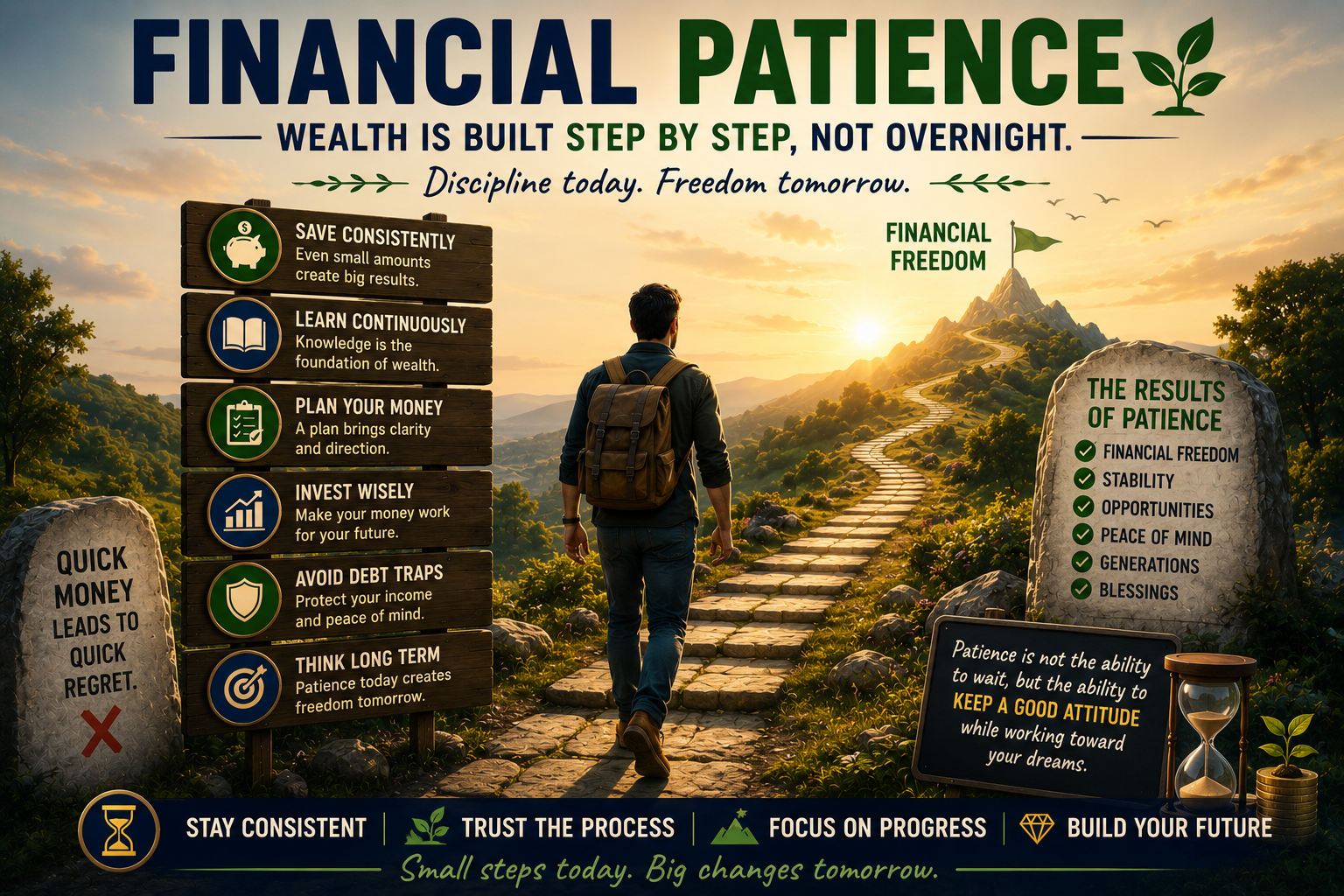
You need to begin with one responsible decision and continue moving forward.
The economic future is not built only through high income.
It is also built through knowledge, patience, discipline, and conscious decisions.
Begin strengthening your economic future today. Review your expenses, organize your debts, establish a savings goal, and learn one new financial concept every week.
Disclaimer
Disclaimer: This article is provided exclusively for educational, informational, and general reflection purposes. Its content does not constitute personalized financial, legal, tax, accounting, or investment advice. Individual circumstances, needs, objectives, and levels of risk tolerance may differ significantly.
Before applying for credit, making an investment, starting a business, modifying a retirement plan, or making any major financial decision, carefully investigate the relevant terms, costs, and risks. When appropriate, consult a properly qualified financial, legal, tax, or accounting professional.
Every investment involves some degree of risk, including the possible partial or total loss of the invested capital. Past performance does not guarantee future results. No income, profit, or investment return is guaranteed. References to digital businesses, additional income sources, affiliate marketing, freelance work, or entrepreneurship do not represent a promise of results. Success depends on multiple factors, including preparation, experience, effort, costs, market conditions, and individual decisions.
The author and website assume no responsibility for losses, damages, or consequences arising from the use or interpretation of this information. Each reader is responsible for verifying the information, evaluating personal circumstances, and making decisions according to individual needs and objectives.

Debe estar conectado para enviar un comentario.