Publicado en Business Education, Consumer Psychology, Digital Marketing, Entrepreneurship, Online Businesses, Sales

Buyer Psychology: How to Understand Purchasing Decisions and Communicate More Effectively

By Marvin Gandis

Every purchase begins long before someone takes out a credit card, completes a form, or clicks the “Buy Now” button.

Behind each decision is a combination of needs, emotions, experiences, expectations, fears, desires, and perceptions. A person may claim to buy entirely through logic, but most purchasing decisions are also influenced by emotional and psychological factors.

Buyer psychology studies those factors. Its purpose should not be to manipulate people, but to understand how they think, what they need, what risks they perceive, and what information they require to make an informed decision.

For an entrepreneur, salesperson, content creator, affiliate marketer, or marketing professional, understanding this process makes it possible to develop clearer messages, more relevant offers, and purchasing experiences that inspire confidence.

The goal is not to pressure buyers. It is to help them determine whether a solution is appropriate for their situation.


What Is Buyer Psychology?

Buyer psychology is the study of the thoughts, emotions, and behaviors that influence how a person:

  • Recognizes a need or problem.
  • Searches for information.
  • Compares different alternatives.
  • Evaluates possible risks.
  • Decides whether to buy.
  • Reacts after the purchase.
  • Recommends or abandons a brand.

This field combines principles from psychology, consumer behavior, behavioral economics, communication, sales, and marketing.

Understanding it helps answer important questions:

  • Why does someone choose one brand and reject another?
  • Why do some offers inspire confidence while others create suspicion?
  • Why does a buyer visit a page several times before purchasing?
  • Why can a guarantee improve conversions?
  • Why can too many choices make a decision more difficult?
  • What causes a customer to return or recommend a product?

A purchase is not an isolated event. It is a process.


People Do Not Buy Products Alone

People rarely buy a product solely because of its physical or technical features. They buy the result, transformation, convenience, or feeling they expect to receive.

For example:

  • They do not merely buy cloud storage; they buy peace of mind and file protection.
  • They do not merely buy a course; they buy knowledge, progress, or a new opportunity.
  • They do not merely buy email marketing software; they buy a way to communicate, save time, and grow a business.
  • They do not merely buy insurance; they buy protection against a possible loss.
  • They do not merely buy a membership; they buy access, belonging, or continuing benefits.
  • They do not merely buy a car for transportation; they may buy safety, comfort, independence, or status.

Effective communication must therefore explain both the features and their practical benefits.

A feature answers:

“What is included?”

A benefit answers:

“How will this improve my situation?”

A transformation answers:

“What could my life, work, or business become after using it?”


The Relationship Between Emotion and Logic

Emotions often attract attention and create interest. Logic helps justify, verify, and confirm the decision.

A buyer may feel attracted to a solution because it communicates:

  • Hope.
  • Security.
  • Confidence.
  • Relief.
  • Curiosity.
  • Belonging.
  • Control.
  • Convenience.
  • Recognition.
  • Progress.

Before purchasing, however, the buyer may also search for rational reasons:

  • Price.
  • Features.
  • Guarantee.
  • Duration.
  • Compatibility.
  • Customer reviews.
  • Return policy.
  • Quality.
  • Company credibility.
  • Comparison with other alternatives.

A balanced strategy connects with emotion without abandoning evidence.

For example:

“Protect your important photographs and documents so you do not have to live with the fear of losing them.”

This communicates an emotional benefit.

It can then be supported by rational information:

“The platform provides secure storage, access from multiple devices, and file-sharing options.”

Emotion opens the door. Logic reduces uncertainty.


Buyers Want to Escape Pain or Move Toward a Benefit

Many human decisions are influenced by two major forces:

  1. Avoiding difficulty, loss, frustration, or risk.
  2. Achieving improvement, reward, convenience, or aspiration.

Pain-related motivations

  • Avoid losing money.
  • Protect important information.
  • Save time.
  • Reduce stress.
  • Eliminate a complicated task.
  • Avoid feeling disorganized.
  • Prevent mistakes.
  • Resolve an urgent situation.

Benefit-related motivations

  • Gain more freedom.
  • Improve productivity.
  • Learn a skill.
  • Increase income.
  • Enjoy greater convenience.
  • Feel prepared.
  • Receive recognition.
  • Build stability.
  • Belong to a community.

Responsible communication may discuss a problem without exaggerating it or using fear abusively.

The goal is to show:

  • The current situation.
  • The reasonable consequences of leaving it unresolved.
  • The available solution.
  • The process for moving forward.
  • The realistic result a buyer may expect.

Major Psychological Factors That Influence Purchases

Trust

Without trust, even an excellent offer may fail.

Buyers need to feel that:

  • The company is real and accessible.
  • The information is clear.
  • The product serves a legitimate purpose.
  • The price is explained.
  • There are no hidden charges.
  • Their data will be protected.
  • Help is available.
  • The promises are reasonable.

Trust is built through consistency, transparency, and performance.

Ways to strengthen trust include:

  • Providing contact information.
  • Explaining who is behind the business.
  • Using authentic testimonials.
  • Presenting clear policies.
  • Answering frequently asked questions.
  • Avoiding exaggerated promises.
  • Maintaining professional design.
  • Using straightforward language.
  • Delivering what was promised.

Trust cannot be demanded. It must be earned.


Social Proof

When people are uncertain, they often observe what others have done.

Social proof may include:

  • Testimonials.
  • Reviews.
  • Ratings.
  • Case studies.
  • Customer stories.
  • User numbers.
  • Professional recommendations.
  • Customer-generated content.

Social proof must be honest. Invented testimonials, false numbers, and manipulated reviews can destroy a brand’s reputation.

Effective social proof is specific. Instead of saying:

“This product is excellent.”

It is more useful to explain:

“The tool helped me organize my contacts and reduce the time I spent sending manual follow-up messages.”

Specificity improves credibility.


Authority

People tend to place more confidence in a solution when they perceive knowledge, experience, or specialization.

Authority can be developed through:

  • Educational articles.
  • Tutorials.
  • Demonstrations.
  • Legitimate certifications.
  • Professional experience.
  • Verifiable studies and data.
  • Clear answers to difficult questions.
  • Honest comparisons.
  • Practical case studies.

Authority does not mean pretending to know everything. Acknowledging limitations can also strengthen credibility.


Reciprocity

When a business provides value before asking for a purchase, people may become more receptive to its message.

Examples of advance value include:

  • A free guide.
  • A class.
  • A demonstration.
  • A temporary trial.
  • A template.
  • A checklist.
  • An introductory consultation.
  • An educational article.

Ethical reciprocity does not create an artificial obligation. The free resource should be genuinely useful even when the person chooses not to buy.


Scarcity

Scarcity attracts attention when an opportunity is genuinely limited.

There may be limited:

  • Time.
  • Inventory.
  • Enrollment capacity.
  • Bonuses.
  • Early access.
  • Service availability.

Problems arise when marketers use false countdown timers, invented availability, or offers that supposedly end every day.

Scarcity should be real, verifiable, and clearly explained.


Urgency

Urgency encourages action within a defined period.

It may be appropriate when:

  • Enrollment has a closing date.
  • An event is approaching.
  • A promotional price has a genuine expiration date.
  • A need requires immediate attention.
  • A bonus is available for a limited time.

Ethical urgency helps people avoid unnecessary delay. Manipulative urgency attempts to prevent buyers from thinking.

A good offer should withstand reasonable evaluation.


Loss Aversion

For many people, the possibility of losing something feels more powerful than the possibility of gaining an equivalent benefit.

This is why messages such as these can have an impact:

  • “Do not lose your important files.”
  • “Avoid paying for features you do not use.”
  • “Protect the progress you have already made.”
  • “Do not allow your access to expire.”

This principle must be used carefully. Informing buyers about a real risk is reasonable. Exaggerating consequences to create fear is not.


Ease and Simplicity

When an offer appears confusing or difficult, buyers may abandon it even when they are interested.

Friction may come from:

  • Forms that are too long.
  • Unclear instructions.
  • Too many choices.
  • Complicated checkout processes.
  • Excessively technical language.
  • Missing information.
  • Slow-loading pages.
  • Buttons that are difficult to locate.

Simplicity improves the experience:

  • One primary message.
  • One clear call to action.
  • Fewer steps.
  • Easy-to-identify benefits.
  • Understandable pricing.
  • Frequently asked questions.
  • Simple navigation.

When buyers understand what to do, they are more likely to continue.


5.9 Commitment and Consistency

When people voluntarily take a small action, they may become more prepared to continue.

Examples include:

  • Downloading a guide.
  • Joining an email list.
  • Completing an assessment.
  • Attending a demonstration.
  • Starting a free trial.
  • Saving a product.
  • Answering a question.

These small actions can form part of a developing relationship. Each step, however, should respect the user’s freedom.


Identity and Belonging

People also make decisions based on how they see themselves and who they want to become.

They may think:

  • “This is for entrepreneurs.”
  • “I want to become more organized.”
  • “I want to join a community that values learning.”
  • “I want to protect my family more effectively.”
  • “I consider myself a responsible person.”
  • “I am building a professional business.”

Strong brands do not merely sell objects. They also communicate values, lifestyles, and identities.

Marketing should allow buyers to identify naturally without making them feel pressured or excluded.


The Stages of the Buying Process

Stage 1: Problem Recognition

The buyer recognizes a need.

Examples:

  • Important files are not protected.
  • A business is not generating enough leads.
  • Too much time is being lost on repetitive tasks.
  • A new skill is needed.
  • The current solution costs too much.

Educational content is especially valuable at this stage.

Stage 2: Information Search

The person begins researching:

  • Reading articles.
  • Watching videos.
  • Asking other people.
  • Comparing providers.
  • Reviewing testimonials.
  • Examining prices.

A helpful brand answers questions before attempting to close the sale.

Stage 3: Evaluation of Alternatives

The buyer compares:

  • Features.
  • Price.
  • Ease of use.
  • Support.
  • Guarantee.
  • Reputation.
  • Risk.
  • Expected results.

Clarity and differentiation are essential.

Stage 4: Purchase Decision

The person is close to acting but may still have concerns:

  • “Is this right for me?”
  • “Will I be able to use it?”
  • “Is it worth the price?”
  • “What happens if it does not work?”
  • “Can I cancel?”
  • “Is the purchase secure?”

A good sales page anticipates these questions.

Stage 5: Post-Purchase Experience

The relationship does not end when the payment is completed.

After purchasing, the customer needs:

  • Confirmation.
  • Instructions.
  • A welcome message.
  • Support.
  • Early results.
  • Follow-up.
  • Guidance on the next step.

An excellent post-purchase experience reduces refunds and increases loyalty.

Stage 6: Repeat Purchases and Recommendations

A satisfied customer may:

  • Renew.
  • Purchase another product.
  • Upgrade a plan.
  • Recommend the brand.
  • Share a testimonial.
  • Become an affiliate or ambassador.

Customer loyalty begins by fulfilling the first promise.


The Most Common Buyer Objections

An objection does not always mean rejection. It often represents a question that has not yet been answered.

“It is too expensive”

This may mean:

  • The buyer does not understand the value.
  • The buyer does not have the budget.
  • The buyer does not perceive enough difference.
  • The buyer does not trust the outcome.
  • The buyer is comparing alternatives.

The answer is not always to reduce the price. The business must explain the value, use, savings, duration, and expected result.

“I need to think about it”

This may mean:

  • The buyer is afraid of making a mistake.
  • Another person must be consulted.
  • There is no reason to act now.
  • The offer is confusing.
  • There is not enough trust.
  • The buyer is not ready.

Instead of applying pressure, ask:

“What additional information would help you evaluate the decision?”

“I am not sure it will work for me”

This concern requires:

  • Relevant examples.
  • Demonstrations.
  • An explanation of the process.
  • Clear requirements.
  • Realistic outcomes.
  • A guarantee, when appropriate.

“I do not have time”

This can be addressed by showing:

  • Ease of use.
  • Approximate time requirements.
  • Automation.
  • Support.
  • A step-by-step process.
  • Long-term benefits.

“I already use another solution”

Explain the differences without attacking the competitor.

An objective comparison should clarify:

  • What makes the offer different?
  • Who is it best suited for?
  • What limitations does it have?
  • When would changing not be worthwhile?

Honesty can turn a comparison into trust.


How to Apply Buyer Psychology to a Sales Page

An effective page may follow this structure:

1. Main headline

Communicate a clear result.

Example:

“Protect your important photographs and documents with a simple cloud backup solution.”

2. Problem identification

Describe the reader’s situation with empathy.

“A device failure, theft, or accidental deletion can place years of memories and important documents at risk.”

3. Solution introduction

Explain what the product is and how it helps.

4. Primary benefits

Present specific benefits, not only features.

5. How it works

Reduce uncertainty by explaining a few simple steps.

6. Proof or demonstration

Include authentic testimonials, examples, images, or a demonstration.

7. Objection handling

Clarify pricing, cancellation, support, compatibility, and guarantees.

8. Call to action

Use a direct instruction:

  • “Start your trial.”
  • “Download the guide.”
  • “Request information.”
  • “Create your account.”
  • “Schedule a demonstration.”

9. Risk reduction

Explain the guarantee, free trial, or cancellation policy without hiding conditions.


The Importance of Understanding the Ideal Buyer

Not every buyer is looking for the same thing.

An offer may be excellent and still be inappropriate for certain people.

To understand the ideal buyer, research:

  • What problem are they trying to solve?
  • What result do they want?
  • What have they tried before?
  • What disappointed them?
  • What are they afraid of losing?
  • What questions do they have?
  • What language do they use?
  • What level of knowledge do they possess?
  • What factors influence their decision?
  • What could prevent them from buying?

This information can be gathered through:

  • Surveys.
  • Interviews.
  • Sales conversations.
  • Forms.
  • Comments.
  • Support emails.
  • Reviews.
  • Frequently asked questions.
  • Behavioral analysis.
  • Message testing.

Marketing improves when a business listens before it communicates.


The Role of Stories

Stories help transform abstract ideas into human experiences.

A customer story may show:

  1. The original situation.
  2. The problem.
  3. The search for a solution.
  4. The decision.
  5. The process.
  6. The result.
  7. The lesson learned.

For example:

“Anna managed her contacts manually and frequently forgot important follow-up messages. After organizing her list and creating an automated sequence, she maintained more consistent communication without spending as many hours on repetitive tasks.”

A responsible story does not promise that everyone will receive the same result. It describes a specific experience and explains the factors that contributed to it.


The Power of Words in Purchasing Decisions

Language can either improve or obstruct understanding.

Instead of vague expressions such as:

  • “Revolutionary solution.”
  • “Incredible results.”
  • “Once-in-a-lifetime opportunity.”
  • “Secret system.”
  • “Guaranteed success.”

Use specific messages:

  • “Organize your contacts in one place.”
  • “Automate follow-up emails.”
  • “Access your files from multiple devices.”
  • “Try the service for seven days.”
  • “Cancel according to the stated conditions.”

Specific language reduces uncertainty.

Persuasive communication does not need to be exaggerated. It needs to be relevant, clear, and credible.


Common Mistakes When Applying Buyer Psychology

Manipulating fear

Presenting false or exaggerated risks may produce immediate sales, but it damages trust.

Creating false scarcity

Resetting countdown timers and permanently urgent offers teach the audience not to believe the brand.

Promising guaranteed results

Results often depend on effort, experience, market conditions, and other variables.

Hiding important information

Terms, recurring payments, and cancellation policies should be explained clearly.

Talking only about the product

Buyers want to know how the solution relates to their situation.

Applying excessive pressure

A decision made under pressure can lead to regret, refunds, or criticism.

Ignoring the post-purchase experience

A sale without guidance or support weakens the customer relationship.

Copying tactics without understanding the audience

A strategy that succeeds in one market may fail in another.


Buyer Psychology and Ethical Marketing

Understanding human behavior creates responsibility.

Buyer psychology should be used to:

  • Explain more effectively.
  • Simplify decisions.
  • Present relevant information.
  • Reduce uncertainty.
  • Build trust.
  • Design useful experiences.
  • Connect genuine solutions with genuine needs.

It should not be used to:

  • Deceive.
  • Hide information.
  • Exploit vulnerabilities.
  • Invent testimonials.
  • Create false threats.
  • Pressure people who do not understand the offer.
  • Promise impossible results.
  • Make cancellation unnecessarily difficult.

A helpful ethical question is:

“Would I still consider this message fair if I were the buyer?”

When the answer is no, the strategy should be revised.


A Practical Strategy for Applying These Principles

Step 1: Define the problem

Clearly state the difficulty your product solves.

Step 2: Identify the desired result

Describe the improvement the buyer hopes to experience.

Step 3: Separate features from benefits

For every feature, explain its practical usefulness.

Step 4: List the objections

Write down the most common concerns and answer them honestly.

Step 5: Reduce risk

Include demonstrations, legitimate guarantees, trials, or transparent information.

Step 6: Simplify the action

Use one main call to action and remove unnecessary steps.

Step 7: Add evidence

Present verifiable testimonials, examples, data, or demonstrations.

Step 8: Review the language

Remove exaggeration, ambiguity, and unrealistic promises.

Step 9: Improve follow-up

Educate and guide the person after they express interest.

Step 10: Measure and learn

Analyze:

  • Clicks.
  • Conversions.
  • Abandonment.
  • Replies.
  • Questions.
  • Cancellations.
  • Refunds.
  • Satisfaction.
  • Retention.

Numbers show what is happening. Conversations help explain why it is happening.


Example of Message Transformation

Seller-centered message

“We have the best platform on the market. Buy now before it is too late.”

Buyer-centered message

“Are you concerned about losing important photographs, documents, or files? This solution allows you to create cloud backups and access your information from multiple devices. Review its features, conditions, and options to determine whether it fits your needs.”

The second message:

  • Identifies a concern.
  • Explains the solution.
  • Presents a benefit.
  • Avoids an absolute promise.
  • Respects the buyer’s ability to decide.

Checklist Before Publishing an Offer

Before publishing a page, advertisement, or email, ask:

  • Does the message identify a genuine problem?
  • Does it clearly explain the product?
  • Does it distinguish features from benefits?
  • Does it present a realistic result?
  • Does it answer the main objections?
  • Does it include authentic evidence?
  • Does it explain pricing and terms?
  • Is the call to action easy to see?
  • Is the process simple?
  • Is the urgency genuine?
  • Is the guarantee clearly explained?
  • Does the message avoid manipulation?
  • Can the person make an informed decision?
  • Is the post-purchase experience prepared?

Conclusion

Buyer psychology is not about discovering secret words that can force someone to make a purchase. It is about understanding how people recognize problems, evaluate risk, search for trust, and make decisions.

Buyers want to feel understood, respected, and secure. They want to know what they are buying, how much it costs, how it works, what results they can reasonably expect, and what will happen if they change their minds.

Businesses that listen, educate, and keep their promises build stronger relationships than businesses that depend on pressure and exaggeration.

True persuasion does not remove the freedom to choose. It strengthens that freedom through clear information, credible evidence, and a relevant solution.

When we understand buyers through empathy, marketing stops becoming a pursuit and begins becoming a service.


Disclaimer

This article is provided for educational and informational purposes only. Its content does not constitute psychological, legal, financial, business, or professional advice.

The principles related to buyer psychology, consumer behavior, persuasion, and marketing should be applied ethically, transparently, and responsibly. They should not be used to manipulate, deceive, pressure, exploit vulnerabilities, or influence anyone to make a decision they do not fully understand.

Results from any marketing, sales, or communication strategy may vary depending on the product, market, audience, experience, execution, budget, and other factors. No specific result is guaranteed.

Before applying these ideas to campaigns, sales pages, emails, advertisements, or business processes, each reader should evaluate their own circumstances and comply with all applicable advertising, consumer protection, privacy, and electronic commerce laws in their jurisdiction.

The author and website assume no responsibility for decisions, losses, damages, or results arising directly or indirectly from the use of the information presented in this article.
Publicado en Audience Engagement, Content Marketing, Copywriting, Writing

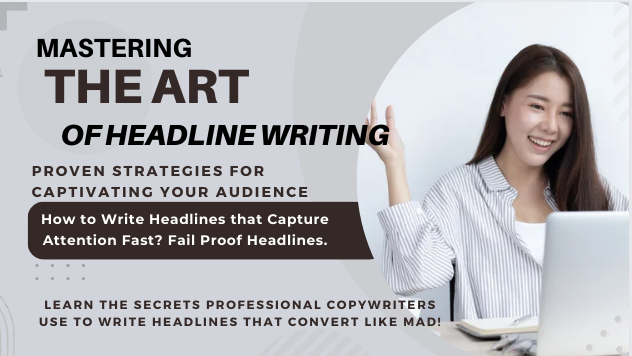
Mastering the Art of Headline Writing: Proven Strategies for Captivating Your Audience

How to Write Headlines that Capture Attention Fast? Fail Proof Headlines. Learn the Secrets Professional Copywriters use to write headlines that convert like mad!


Introduction: In the competitive landscape of content creation, headlines serve as the gateway to engaging your audience. Crafting headlines that grab attention and entice readers to click is an art form mastered by professional copywriters. In this comprehensive guide, we delve into the secrets and strategies employed by these experts to write fail-proof headlines that convert like wildfire.


Understanding the Anatomy of a Compelling Headline

Crafting a compelling headline is akin to constructing the doorway to your content kingdom – it must be inviting, intriguing, and impossible to ignore. Effective headlines possess key elements that entice readers to click, engage, and ultimately consume your content. Let’s delve into the fundamental components that contribute to the allure of a captivating headline.

1. Clarity: Clarity is paramount when it comes to headline writing. A clear headline communicates the essence of your content in a concise and straightforward manner. It leaves no room for ambiguity, ensuring that readers understand what they can expect upon clicking. For instance, consider the following headline: «5 Tips for Mastering Time Management.» This headline clearly communicates the topic (time management) and the promise (tips for mastery) in a succinct manner.

2. Relevance: Relevance is the glue that binds your headline to your target audience’s interests and needs. A relevant headline speaks directly to the pain points, desires, or aspirations of your audience, making them more likely to engage with your content. For example, «10 Healthy Breakfast Recipes to Kick Start Your Day» is highly relevant to health-conscious individuals seeking nutritious meal ideas.

3. Urgency: Creating a sense of urgency compels readers to act swiftly. Headlines that convey urgency prompt readers to click now rather than later, fearing they might miss out on valuable information or opportunities. Phrases like «Limited Time Offer» or «Last Chance to Save» instill a sense of urgency, motivating readers to take immediate action.

4. Curiosity: Curiosity is the secret sauce that ignites intrigue and compels readers to delve deeper into your content. A headline that piques curiosity leaves readers with unanswered questions, enticing them to click to satisfy their curiosity. For instance, «The Surprising Benefits of Mindfulness Meditation» intrigues readers by hinting at unexpected advantages, prompting them to discover more.

Examples of Attention-Grabbing Headlines:

1. News Headline:
«Breaking: Scientists Discover Potential Cure for Alzheimer’s»

2. Lifestyle Blog Post:
«Unlock Your Full Potential: The 7 Habits of Highly Successful People»

3. Marketing Email Subject Line:
«Hurry! 24-Hour Flash Sale: Get 50% Off Your Favorite Products»

4. Social Media Post:
«Unleash Your Creativity: Learn How to Paint Like a Pro in Just 7 Days!»

5. Magazine Cover Story:
«The Ultimate Guide to Travel Hacks: How to See the World on a Budget»

Effective headlines are the linchpin of content marketing success. By incorporating elements such as clarity, relevance, urgency, and curiosity into your headlines, you can captivate your audience’s attention and compel them to engage with your content. Remember, a well-crafted headline is not just a doorway but a gateway to deeper connections with your audience.


Tapping into Emotions: The Power of Emotional Triggers

Emotions are potent drivers of human behavior, and savvy marketers understand the profound impact they can have on headline effectiveness. By tapping into emotions like curiosity, fear, joy, and urgency, you can create headlines that resonate deeply with your audience, compelling them to take action. Let’s delve into how leveraging emotional triggers can supercharge your headline game and explore techniques for infusing emotional appeal into your headlines.

1. Curiosity: Curiosity is a powerful motivator that compels individuals to seek answers and satisfy their innate desire for knowledge. To harness the power of curiosity in your headlines, pose intriguing questions, tease intriguing revelations, or hint at secrets waiting to be uncovered. For example:

  • «The Secret Behind Elon Musk’s Success Revealed»
  • «What You Didn’t Know About the Future of Artificial Intelligence»

2. Fear: Fear is a primal emotion that grabs attention and prompts action by highlighting potential risks or consequences. While it’s essential to tread carefully with fear-based headlines to avoid sensationalism, judiciously incorporating elements of fear can increase urgency and drive engagement. Consider headlines that address common fears or challenges your audience faces, offering solutions or insights to alleviate their concerns:

  • «Avoid These 5 Deadly Mistakes When Investing in Stocks»
  • «Is Your Home Secure? The Top 10 Security Risks You Need to Know»

3. Joy: Joyful emotions evoke positive associations and can create a sense of excitement or anticipation in your audience. Headlines that inspire joy or happiness can uplift your readers and foster a deeper connection with your content. Inject humor, positivity, or uplifting stories into your headlines to evoke feelings of joy and delight:

  • «Laugh Your Way to Better Health: The Science of Humor and Happiness»
  • «Discover the Simple Pleasures: 10 Life Hacks for a Happier You»

4. Urgency: Creating a sense of urgency in your headlines taps into the fear of missing out (FOMO) and compels readers to act promptly. Incorporate time-sensitive language, limited offers, or impending deadlines to instill a sense of urgency and drive immediate action:

  • «Limited Time Only: Don’t Miss Out on Our Exclusive Black Friday Deals!»
  • «Act Fast: Reserve Your Spot for Our Free Webinar Before It’s Too Late!»

Techniques for Infusing Emotional Appeal:

  • Use evocative language that triggers emotional responses in your audience.
  • Appeal to your audience’s aspirations, desires, or pain points to create resonance.
  • Tell stories or anecdotes that elicit specific emotions and relate to your content.
  • Experiment with different emotional triggers to see what resonates best with your audience.
  • Test headlines to gauge their emotional impact and optimize for maximum effectiveness.

Emotions are a potent currency in the realm of headline writing, offering a direct pathway to capturing audience attention and driving engagement. By skillfully leveraging emotional triggers such as curiosity, fear, joy, and urgency, you can craft headlines that resonate deeply with your audience, compelling them to click, engage, and ultimately take action. Mastering the art of infusing emotional appeal into your headlines is key to unlocking the full potential of your content marketing efforts.


Crafting Irresistible Offers: The Art of Value Proposition

In the competitive landscape of content marketing, capturing audience attention and enticing them to click requires more than just catchy phrases or clever wordplay. Crafting headlines that convey irresistible offers and compelling value propositions is essential to cut through the noise and compel readers to take action.

Let’s explore the importance of conveying value upfront in headlines and strategies for articulating unique selling points and solving pain points through headline messaging.

1. Importance of Conveying Value: In a world inundated with content, readers are discerning about where they invest their time and attention. A headline that clearly communicates the value and benefits of engaging with your content is more likely to capture attention and drive clicks. By highlighting what readers stand to gain upfront, you demonstrate that your content addresses their needs or interests, making it more compelling and relevant to them.

2. Strategies for Articulating Unique Selling Points:

a. Identify Your Unique Selling Proposition (USP): Determine what sets your content apart from competitors and why readers should choose to engage with it. Whether it’s expertise, innovation, or a unique perspective, your USP should be prominently featured in your headline.

b. Emphasize Benefits, Not Features: Instead of focusing solely on features or attributes, highlight the tangible benefits or outcomes readers can expect from consuming your content.

How will it improve their lives, solve their problems, or fulfill their desires?

c. Use Persuasive Language: Employ persuasive language that resonates with your audience and speaks directly to their needs and aspirations. Whether it’s conveying exclusivity, savings, convenience, or results, choose words that evoke desired emotions and motivations.

d. Solve Pain Points: Addressing pain points or challenges your audience faces positions your content as a solution provider. Craft headlines that explicitly identify common pain points and promise solutions or insights to alleviate them.

3. Showcasing Value Proposition Through Headline Messaging:

a. «Unlock the Secrets of Successful Investing: Maximize Your Returns with Our Expert Tips»

b. «Transform Your Productivity: Discover the Time Management Strategies That Will Revolutionize Your Workday»

c. «Revolutionize Your Skincare Routine: Say Goodbye to Acne with Our Dermatologist-Approved Tips»

d. «Master the Art of Public Speaking: Conquer Your Fear and Command the Stage with Confidence»

Crafting headlines that convey irresistible offers and compelling value propositions is essential to engage today’s discerning audience effectively. By emphasizing the value and benefits of engaging with your content upfront and articulating unique selling points that address audience needs and pain points, you can create headlines that captivate attention, drive clicks, and ultimately deliver meaningful results. Mastering the art of crafting irresistible offers is key to standing out in a crowded digital landscape and connecting with your target audience on a deeper level.


Playing with Words: The Psychology of Language

Language is a powerful tool in the arsenal of headline writers, capable of influencing reader perceptions, emotions, and actions. By understanding the psychological impact of specific words and phrases, you can craft headlines that resonate deeply with your audience, driving engagement and conversion rates. Let’s delve into the fascinating realm of the psychology of language and explore actionable tips for selecting words that evoke desired emotions and perceptions in headlines.

1. The Power of Emotional Triggers: Certain words and phrases have the ability to evoke strong emotional responses in readers, influencing their decision-making process and behavior. For example:

  • Positive Emotions: Words like «love,» «joy,» «happiness,» and «excitement» evoke positive emotions, creating a sense of optimism and enthusiasm in readers.
  • Negative Emotions: Conversely, words like «fear,» «anger,» «anxiety,» and «pain» trigger negative emotions, compelling readers to seek solutions or alleviation.

2. Persuasive Language Techniques:

a. Power Words: Incorporate power words that command attention and convey authority or urgency, such as «discover,» «unleash,» «ultimate,» «limited time,» and «exclusive.»

b. Sensory Language: Appeal to readers’ senses by using descriptive language that creates vivid mental imagery, allowing them to visualize and experience the benefits or outcomes you’re promising.

c. Social Proof: Use words and phrases that leverage social proof and validation, such as «trusted by millions,» «expert-approved,» «top-rated,» and «recommended by professionals.»

3. Cognitive Bias and Framing: Understand common cognitive biases and framing effects that influence reader perceptions and decision-making.

For instance:

  • Loss Aversion: Highlight potential losses or missed opportunities to motivate action, leveraging phrases like «don’t miss out,» «limited availability,» and «act now to save.»
  • Anchoring: Frame your headline in a way that establishes a reference point or comparison, influencing readers’ perceptions of value and relevance.

4. Tailoring Language to Your Audience: Consider the demographics, psychographics, and preferences of your target audience when selecting words and phrases for your headlines.

What language resonates with them? What emotions or aspirations do they prioritize?

5. Testing and Iteration: Continuously test different language variations and monitor their impact on reader engagement and conversion rates. A/B testing allows you to refine your headline language based on real-time feedback and data insights.

Actionable Tips for Selecting Words:

  • Use emotion-rich language to elicit desired emotional responses in readers.
  • Incorporate power words and persuasive language techniques to command attention and drive action.
  • Leverage cognitive biases and framing effects to shape reader perceptions and decision-making.
  • Tailor language to resonate with your specific audience demographics and preferences.
  • Test different language variations to optimize headline effectiveness over time.

The psychology of language is a potent tool for headline writers, offering insights into how specific words and phrases can influence reader perceptions, emotions, and actions. By leveraging emotional triggers, persuasive language techniques, and cognitive biases, you can craft headlines that resonate deeply with your audience, driving engagement and conversion rates. Mastering the art of playing with words is key to creating headlines that captivate attention, inspire action, and ultimately deliver results in the competitive landscape of content marketing.


Harnessing the Power of Numbers and Data

In the realm of headline writing, numbers, statistics, and data-driven insights wield significant influence, enhancing credibility, relevance, and reader engagement. By incorporating numerical elements into your headlines, you can effectively capture attention, communicate value, and compel action.

Let’s explore the effectiveness of leveraging numbers and data in headlines and delve into best practices for seamlessly integrating numerical elements into your headline copy.

1. Enhancing Credibility and Relevance: Numerical elements lend an air of credibility and authority to your headlines, signaling to readers that your content is grounded in tangible evidence and insights. Statistics and data-driven insights provide concrete proof of your claims, making your headline more compelling and trustworthy.

For example:

  • «7 Proven Strategies for Increasing Website Traffic»
  • «75% of Customers Report Improved Satisfaction After Using Our Product»

2. Communicating Value and Specificity: Numbers add specificity and clarity to your headline messaging, offering readers a clear understanding of what they can expect from your content. Whether it’s a listicle, a percentage increase, or a specific data point, numerical elements convey value and relevance upfront. Consider headlines like:

  • «10 Life-Changing Tips for Mastering Time Management»
  • «The Top 5 Reasons Why Our Product Outperforms the Competition»

3. Creating Curiosity and Intrigue: Numbers have a magnetic effect on readers, arousing curiosity and prompting them to learn more. Incorporating numerical elements into your headlines can spark interest and drive engagement by highlighting key insights or highlighting the scope of your content.

For instance:

  • «Discover the Surprising Truth Behind the 80/20 Rule»
  • «Unveiling the 3 Hidden Secrets to Financial Freedom»

4. Best Practices for Integration:

a. Use Odd Numbers: Odd numbers are perceived as more authentic and attention-grabbing than even numbers. Consider using odd-numbered lists or statistics to make your headlines stand out.

b. Leverage Percentages and Ratios: Percentages and ratios provide context and relevance, demonstrating the impact or significance of your content. Incorporate them strategically to convey value and credibility.

c. Be Specific and Accurate: Ensure that the numerical elements in your headline are accurate and relevant to your content. Avoid vague or misleading claims that undermine your credibility.

d. Balance Numerical Elements with Compelling Copy: While numbers are powerful attention-grabbers, they should complement, not overshadow, the rest of your headline copy. Pair numerical elements with persuasive language that entices readers to click and learn more.

Harnessing the power of numbers and data in your headlines can elevate your content marketing efforts, enhancing credibility, relevance, and reader engagement. By incorporating numerical elements strategically and adhering to best practices for integration, you can create headlines that captivate attention, communicate value, and drive action. Whether you’re highlighting statistics, showcasing specific data points, or crafting numbered lists, numbers have the potential to make your headlines more compelling, memorable, and effective in the competitive landscape of content marketing.


Testing and Iterating: Optimizing Headlines for Maximum Impact

In the dynamic world of content marketing, the quest for the perfect headline is an ongoing journey. While crafting compelling headlines is essential, the real magic happens when you refine and optimize them based on real-world data and feedback.

A/B testing and experimentation are invaluable tools for fine-tuning headline performance over time, maximizing engagement, and driving meaningful results.

Let’s explore the importance of testing and iterating headlines and share tools and resources to conduct tests and analyze results effectively.

1. Importance of A/B Testing: A/B testing involves comparing two or more variations of a headline to determine which performs better in terms of engagement, click-through rates, and conversions.

By systematically testing different headline variations, you can uncover insights into what resonates best with your audience and refine your approach accordingly.

2. Benefits of Experimentation:

a. Optimized Performance: A/B testing allows you to identify high-performing headline elements and optimize them for maximum impact.

b. Iterative Improvement: Continuous experimentation enables you to iterate on your headlines, refining and enhancing them over time based on real-time data and insights.

c. Data-Driven Decision-Making: By relying on empirical data rather than guesswork, you can make informed decisions about headline strategies and prioritize efforts that yield the greatest results.

3. Conducting Headline Tests:

a. Identify Variables: Determine specific elements of your headlines to test, such as wording, length, tone, or formatting.

b. Create Variations: Develop multiple headline variations for each test, ensuring that they differ only in the variable you’re testing.

c. Randomized Testing: Randomly assign each headline variation to different segments of your audience to ensure unbiased results.

d. Measure Performance: Track key metrics such as click-through rates, conversion rates, and engagement metrics to assess the performance of each headline variation.

4. Tools for Headline Testing:

a. Google Optimize: A free tool that allows you to run A/B tests on your website, including headlines, copy, and design elements.

b. Optimizely: A comprehensive experimentation platform that enables A/B testing across various digital channels, including websites, mobile apps, and email campaigns.

c. HubSpot: A marketing automation platform that offers A/B testing capabilities for email subject lines and website content, allowing you to optimize headlines for maximum engagement.

d. Hotjar: A user behavior analytics tool that provides insights into how users interact with your website, helping you identify opportunities for headline optimization.

5. Analyzing Results and Iterating:

a. Statistical Significance: Ensure that test results are statistically significant before drawing conclusions or implementing changes.

b. Identify Winning Variations: Determine which headline variations perform best based on predefined success metrics.

c. Iterate and Refine: Use insights from successful tests to inform future iterations of your headlines, continuously refining and optimizing them for maximum impact.

A/B testing and experimentation are essential components of an effective headline optimization strategy. By systematically testing different headline variations, analyzing results, and iterating based on data-driven insights, you can fine-tune your headlines for maximum impact, driving engagement, conversions, and ultimately, achieving your content marketing goals. Embrace a culture of continuous improvement, and let data be your guide as you embark on the journey of optimizing headlines for success in the ever-evolving landscape of content marketing.


Case Studies: Real-World Examples of Headline Success

Examining real-world examples of successful headline campaigns provides valuable insights into the strategies and tactics that drive engagement, clicks, and conversions across different industries.

Let’s showcase a few compelling case studies and dissect the strategies behind their effectiveness, extracting key takeaways and actionable insights for headline-writing efforts.

1. Buzzfeed: «Which Friends Character Are You?»

  • Strategy: Buzzfeed leveraged the popularity of the TV show «Friends» and capitalized on the trend of personality quizzes. The headline promises personalized results, tapping into users’ curiosity and desire for self-discovery.
  • Takeaways:
    • Tap into popular culture and trends to make headlines relevant and appealing.
    • Promise personalized or interactive content to engage readers on a deeper level.

2. Airbnb: «Live Anywhere on Airbnb»

  • Strategy: Airbnb launched a headline campaign targeting remote workers, emphasizing the flexibility and freedom of their platform. The headline appeals to the desire for adventure and remote work opportunities.
  • Takeaways:
    • Understand your target audience’s aspirations and lifestyle preferences.
    • Highlight unique value propositions that resonate with specific audience segments.

3. HubSpot: «10 Marketing Trends You Need to Know in 2022»

  • Strategy: HubSpot capitalized on the anticipation surrounding the new year by offering insights into upcoming marketing trends. The headline promises valuable insights and positions HubSpot as a thought leader in the industry.
  • Takeaways:
    • Anticipate and capitalize on seasonal or trend-driven content opportunities.
    • Position your brand as an authoritative source of industry insights and expertise.

4. Nike: «Just Do It»

  • Strategy: Nike’s iconic slogan embodies a powerful call to action, inspiring individuals to take action and overcome obstacles. The headline conveys a message of empowerment and determination.
  • Takeaways:
    • Craft concise and impactful headlines that inspire action and convey a clear brand message.
    • Emphasize the emotional benefits and aspirational values associated with your brand.

5. The New York Times: «The Truth Is Hard»

  • Strategy: The New York Times employed a headline campaign emphasizing the importance of trustworthy journalism in an era of misinformation. The headline appeals to the value of integrity and credibility.
  • Takeaways:
    • Align headlines with core brand values and mission statements.
    • Address prevalent societal issues or concerns to evoke emotional resonance and relevance.

Key Takeaways and Actionable Insights:

  • Understand your audience’s interests, aspirations, and pain points to craft headlines that resonate with their needs.
  • Leverage popular culture, trends, and seasonal opportunities to make headlines relevant and timely.
  • Communicate clear value propositions and promises to entice readers and drive engagement.
  • Emphasize emotional benefits and aspirational values to forge deeper connections with your audience.
  • Align headlines with your brand’s identity, values, and mission to reinforce brand messaging and credibility.

By analyzing successful headline campaigns across various industries, we can glean valuable insights into the strategies and tactics that drive engagement and conversion. Whether it’s tapping into trends, highlighting unique value propositions, or inspiring action, the key to crafting effective headlines lies in understanding your audience and delivering messages that resonate with their needs and aspirations. Incorporate these actionable insights into your headline-writing efforts to maximize impact and achieve your content marketing goals.


Recommended Reading: Books to Master the Art of Headline Writing

  1. «Cashvertising: How to Use More Than 100 Secrets of Ad-Agency Psychology to Make Big Money Selling Anything to Anyone» by Drew Eric Whitman
    • Summary: This classic copywriting book delves into the psychology behind effective advertising and offers practical strategies for crafting persuasive headlines that drive sales and conversions. Whitman shares insights into human behavior and provides actionable techniques for creating attention-grabbing headlines that resonate with audiences.
    • Insights: Learn how to leverage psychological triggers and persuasive language to craft compelling headlines that captivate attention and drive action.
  2. «Words That Sell: More than 6000 Entries to Help You Promote Your Products, Services, and Ideas» by Richard Bayan
    • Summary: As a comprehensive guide to persuasive language, «Words That Sell» offers a treasure trove of words and phrases tailored for various marketing purposes, including headline writing. Bayan provides examples and explanations for each entry, empowering writers to choose the most impactful words for their headlines.
    • Insights: Explore a vast array of language options and learn how to select words that evoke desired emotions and perceptions in your headlines.
  3. «Hey, Whipple, Squeeze This: The Classic Guide to Creating Great Ads» by Luke Sullivan
    • Summary: This influential book provides valuable insights into the creative process behind successful advertising campaigns. Sullivan covers various aspects of advertising, including headline writing, and offers practical advice, case studies, and examples to inspire creativity and innovation.
    • Insights: Gain a deeper understanding of the principles of effective advertising and learn how to apply them to crafting headlines that stand out and resonate with your audience.
  4. «Contagious: How to Build Word of Mouth in the Digital Age» by Jonah Berger
    • Summary: Berger explores the science behind why certain ideas, products, or content go viral while others don’t. Through engaging anecdotes and research-based insights, he reveals the key factors that influence contagiousness and offers practical tips for creating shareable content, including headlines.
    • Insights: Understand the psychological principles that drive sharing behavior and learn how to create headlines that inspire curiosity, emotion, and action.
  5. «Influence: The Psychology of Persuasion» by Robert B. Cialdini
    • Summary: Cialdini examines the psychology behind persuasion and outlines six universal principles that influence human behavior. From reciprocity to scarcity, he explains how these principles can be applied to crafting persuasive headlines that compel readers to take action.
    • Insights: Explore the foundational principles of persuasion and learn how to incorporate them into your headline-writing strategy to increase engagement and conversions.

Insights:

  • Each of these books offers unique perspectives and actionable strategies for mastering the art of headline writing.
  • By combining insights from multiple sources, readers can gain a comprehensive understanding of effective headline-writing techniques and tailor them to their specific needs and objectives.
  • Experiment with different approaches and techniques to find what works best for your audience and content style.

Whether you’re a novice looking to learn the fundamentals of headline writing or a seasoned copywriter seeking to refine your skills, these recommended books provide invaluable resources and insights to help you craft headlines that captivate, persuade, and convert. Dive into these classics and contemporary favorites to unlock the secrets of effective headline writing and elevate your content marketing efforts to new heights.