
By Marvin Gandis
Every purchase begins long before someone takes out a credit card, completes a form, or clicks the “Buy Now” button.
Behind each decision is a combination of needs, emotions, experiences, expectations, fears, desires, and perceptions. A person may claim to buy entirely through logic, but most purchasing decisions are also influenced by emotional and psychological factors.
Buyer psychology studies those factors. Its purpose should not be to manipulate people, but to understand how they think, what they need, what risks they perceive, and what information they require to make an informed decision.
For an entrepreneur, salesperson, content creator, affiliate marketer, or marketing professional, understanding this process makes it possible to develop clearer messages, more relevant offers, and purchasing experiences that inspire confidence.
The goal is not to pressure buyers. It is to help them determine whether a solution is appropriate for their situation.
What Is Buyer Psychology?
Buyer psychology is the study of the thoughts, emotions, and behaviors that influence how a person:
- Recognizes a need or problem.
- Searches for information.
- Compares different alternatives.
- Evaluates possible risks.
- Decides whether to buy.
- Reacts after the purchase.
- Recommends or abandons a brand.
This field combines principles from psychology, consumer behavior, behavioral economics, communication, sales, and marketing.
Understanding it helps answer important questions:
- Why does someone choose one brand and reject another?
- Why do some offers inspire confidence while others create suspicion?
- Why does a buyer visit a page several times before purchasing?
- Why can a guarantee improve conversions?
- Why can too many choices make a decision more difficult?
- What causes a customer to return or recommend a product?
A purchase is not an isolated event. It is a process.
People Do Not Buy Products Alone
People rarely buy a product solely because of its physical or technical features. They buy the result, transformation, convenience, or feeling they expect to receive.
For example:
- They do not merely buy cloud storage; they buy peace of mind and file protection.
- They do not merely buy a course; they buy knowledge, progress, or a new opportunity.
- They do not merely buy email marketing software; they buy a way to communicate, save time, and grow a business.
- They do not merely buy insurance; they buy protection against a possible loss.
- They do not merely buy a membership; they buy access, belonging, or continuing benefits.
- They do not merely buy a car for transportation; they may buy safety, comfort, independence, or status.
Effective communication must therefore explain both the features and their practical benefits.
A feature answers:
“What is included?”
A benefit answers:
“How will this improve my situation?”
A transformation answers:
“What could my life, work, or business become after using it?”
The Relationship Between Emotion and Logic
Emotions often attract attention and create interest. Logic helps justify, verify, and confirm the decision.
A buyer may feel attracted to a solution because it communicates:
- Hope.
- Security.
- Confidence.
- Relief.
- Curiosity.
- Belonging.
- Control.
- Convenience.
- Recognition.
- Progress.
Before purchasing, however, the buyer may also search for rational reasons:
- Price.
- Features.
- Guarantee.
- Duration.
- Compatibility.
- Customer reviews.
- Return policy.
- Quality.
- Company credibility.
- Comparison with other alternatives.
A balanced strategy connects with emotion without abandoning evidence.
For example:
“Protect your important photographs and documents so you do not have to live with the fear of losing them.”
This communicates an emotional benefit.
It can then be supported by rational information:
“The platform provides secure storage, access from multiple devices, and file-sharing options.”
Emotion opens the door. Logic reduces uncertainty.
Buyers Want to Escape Pain or Move Toward a Benefit
Many human decisions are influenced by two major forces:
- Avoiding difficulty, loss, frustration, or risk.
- Achieving improvement, reward, convenience, or aspiration.
Pain-related motivations
- Avoid losing money.
- Protect important information.
- Save time.
- Reduce stress.
- Eliminate a complicated task.
- Avoid feeling disorganized.
- Prevent mistakes.
- Resolve an urgent situation.
Benefit-related motivations
- Gain more freedom.
- Improve productivity.
- Learn a skill.
- Increase income.
- Enjoy greater convenience.
- Feel prepared.
- Receive recognition.
- Build stability.
- Belong to a community.
Responsible communication may discuss a problem without exaggerating it or using fear abusively.
The goal is to show:
- The current situation.
- The reasonable consequences of leaving it unresolved.
- The available solution.
- The process for moving forward.
- The realistic result a buyer may expect.
Major Psychological Factors That Influence Purchases
Trust
Without trust, even an excellent offer may fail.
Buyers need to feel that:
- The company is real and accessible.
- The information is clear.
- The product serves a legitimate purpose.
- The price is explained.
- There are no hidden charges.
- Their data will be protected.
- Help is available.
- The promises are reasonable.
Trust is built through consistency, transparency, and performance.
Ways to strengthen trust include:
- Providing contact information.
- Explaining who is behind the business.
- Using authentic testimonials.
- Presenting clear policies.
- Answering frequently asked questions.
- Avoiding exaggerated promises.
- Maintaining professional design.
- Using straightforward language.
- Delivering what was promised.
Trust cannot be demanded. It must be earned.
Social Proof
When people are uncertain, they often observe what others have done.
Social proof may include:
- Testimonials.
- Reviews.
- Ratings.
- Case studies.
- Customer stories.
- User numbers.
- Professional recommendations.
- Customer-generated content.
Social proof must be honest. Invented testimonials, false numbers, and manipulated reviews can destroy a brand’s reputation.
Effective social proof is specific. Instead of saying:
“This product is excellent.”
It is more useful to explain:
“The tool helped me organize my contacts and reduce the time I spent sending manual follow-up messages.”
Specificity improves credibility.
Authority
People tend to place more confidence in a solution when they perceive knowledge, experience, or specialization.
Authority can be developed through:
- Educational articles.
- Tutorials.
- Demonstrations.
- Legitimate certifications.
- Professional experience.
- Verifiable studies and data.
- Clear answers to difficult questions.
- Honest comparisons.
- Practical case studies.
Authority does not mean pretending to know everything. Acknowledging limitations can also strengthen credibility.
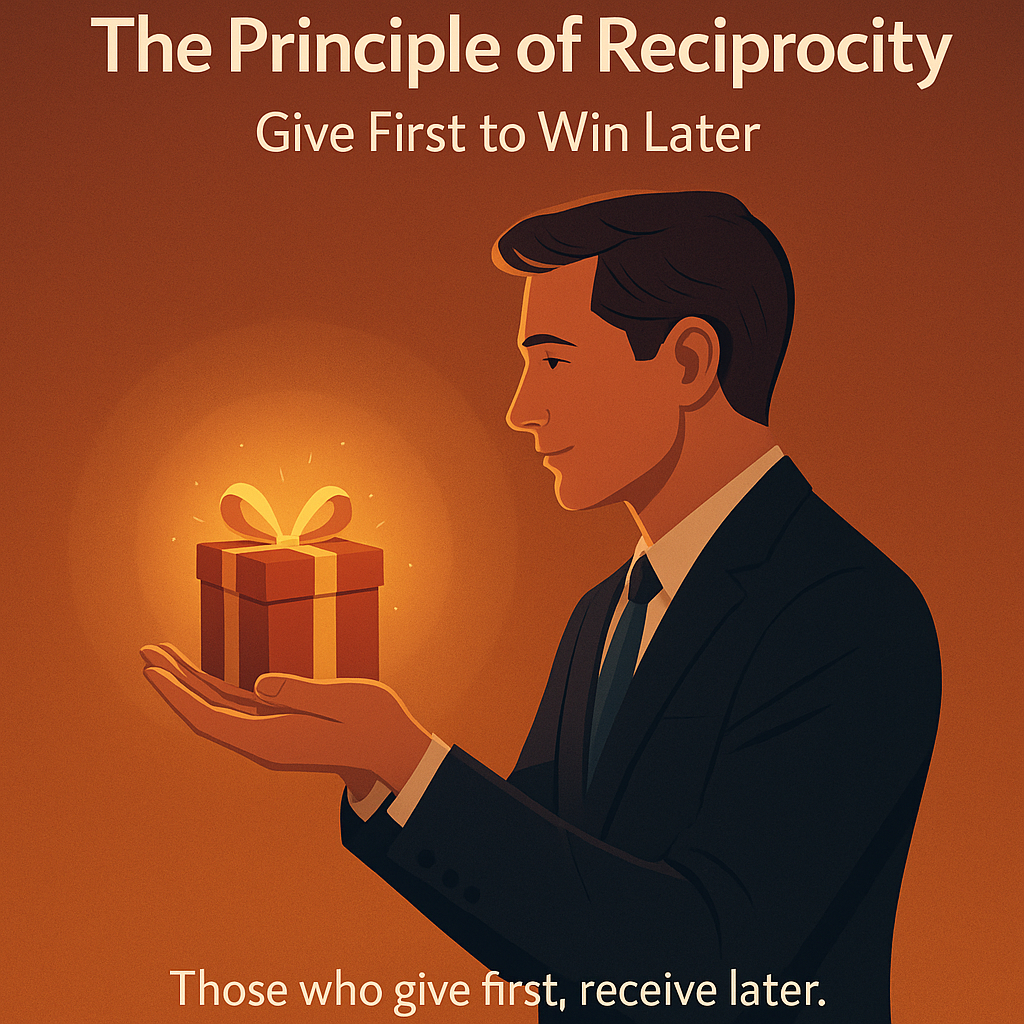
Reciprocity
When a business provides value before asking for a purchase, people may become more receptive to its message.
Examples of advance value include:
- A free guide.
- A class.
- A demonstration.
- A temporary trial.
- A template.
- A checklist.
- An introductory consultation.
- An educational article.
Ethical reciprocity does not create an artificial obligation. The free resource should be genuinely useful even when the person chooses not to buy.
Scarcity
Scarcity attracts attention when an opportunity is genuinely limited.
There may be limited:
- Time.
- Inventory.
- Enrollment capacity.
- Bonuses.
- Early access.
- Service availability.
Problems arise when marketers use false countdown timers, invented availability, or offers that supposedly end every day.
Scarcity should be real, verifiable, and clearly explained.
Urgency
Urgency encourages action within a defined period.
It may be appropriate when:
- Enrollment has a closing date.
- An event is approaching.
- A promotional price has a genuine expiration date.
- A need requires immediate attention.
- A bonus is available for a limited time.
Ethical urgency helps people avoid unnecessary delay. Manipulative urgency attempts to prevent buyers from thinking.
A good offer should withstand reasonable evaluation.
Loss Aversion
For many people, the possibility of losing something feels more powerful than the possibility of gaining an equivalent benefit.
This is why messages such as these can have an impact:
- “Do not lose your important files.”
- “Avoid paying for features you do not use.”
- “Protect the progress you have already made.”
- “Do not allow your access to expire.”
This principle must be used carefully. Informing buyers about a real risk is reasonable. Exaggerating consequences to create fear is not.
Ease and Simplicity
When an offer appears confusing or difficult, buyers may abandon it even when they are interested.
Friction may come from:
- Forms that are too long.
- Unclear instructions.
- Too many choices.
- Complicated checkout processes.
- Excessively technical language.
- Missing information.
- Slow-loading pages.
- Buttons that are difficult to locate.
Simplicity improves the experience:
- One primary message.
- One clear call to action.
- Fewer steps.
- Easy-to-identify benefits.
- Understandable pricing.
- Frequently asked questions.
- Simple navigation.
When buyers understand what to do, they are more likely to continue.
5.9 Commitment and Consistency
When people voluntarily take a small action, they may become more prepared to continue.
Examples include:
- Downloading a guide.
- Joining an email list.
- Completing an assessment.
- Attending a demonstration.
- Starting a free trial.
- Saving a product.
- Answering a question.
These small actions can form part of a developing relationship. Each step, however, should respect the user’s freedom.
Identity and Belonging
People also make decisions based on how they see themselves and who they want to become.
They may think:
- “This is for entrepreneurs.”
- “I want to become more organized.”
- “I want to join a community that values learning.”
- “I want to protect my family more effectively.”
- “I consider myself a responsible person.”
- “I am building a professional business.”
Strong brands do not merely sell objects. They also communicate values, lifestyles, and identities.
Marketing should allow buyers to identify naturally without making them feel pressured or excluded.
The Stages of the Buying Process
Stage 1: Problem Recognition
The buyer recognizes a need.
Examples:
- Important files are not protected.
- A business is not generating enough leads.
- Too much time is being lost on repetitive tasks.
- A new skill is needed.
- The current solution costs too much.
Educational content is especially valuable at this stage.
Stage 2: Information Search
The person begins researching:
- Reading articles.
- Watching videos.
- Asking other people.
- Comparing providers.
- Reviewing testimonials.
- Examining prices.
A helpful brand answers questions before attempting to close the sale.
Stage 3: Evaluation of Alternatives
The buyer compares:
- Features.
- Price.
- Ease of use.
- Support.
- Guarantee.
- Reputation.
- Risk.
- Expected results.
Clarity and differentiation are essential.
Stage 4: Purchase Decision
The person is close to acting but may still have concerns:
- “Is this right for me?”
- “Will I be able to use it?”
- “Is it worth the price?”
- “What happens if it does not work?”
- “Can I cancel?”
- “Is the purchase secure?”
A good sales page anticipates these questions.
Stage 5: Post-Purchase Experience
The relationship does not end when the payment is completed.
After purchasing, the customer needs:
- Confirmation.
- Instructions.
- A welcome message.
- Support.
- Early results.
- Follow-up.
- Guidance on the next step.
An excellent post-purchase experience reduces refunds and increases loyalty.
Stage 6: Repeat Purchases and Recommendations
A satisfied customer may:
- Renew.
- Purchase another product.
- Upgrade a plan.
- Recommend the brand.
- Share a testimonial.
- Become an affiliate or ambassador.
Customer loyalty begins by fulfilling the first promise.
The Most Common Buyer Objections
An objection does not always mean rejection. It often represents a question that has not yet been answered.
“It is too expensive”
This may mean:
- The buyer does not understand the value.
- The buyer does not have the budget.
- The buyer does not perceive enough difference.
- The buyer does not trust the outcome.
- The buyer is comparing alternatives.
The answer is not always to reduce the price. The business must explain the value, use, savings, duration, and expected result.
“I need to think about it”
This may mean:
- The buyer is afraid of making a mistake.
- Another person must be consulted.
- There is no reason to act now.
- The offer is confusing.
- There is not enough trust.
- The buyer is not ready.
Instead of applying pressure, ask:
“What additional information would help you evaluate the decision?”
“I am not sure it will work for me”
This concern requires:
- Relevant examples.
- Demonstrations.
- An explanation of the process.
- Clear requirements.
- Realistic outcomes.
- A guarantee, when appropriate.
“I do not have time”
This can be addressed by showing:
- Ease of use.
- Approximate time requirements.
- Automation.
- Support.
- A step-by-step process.
- Long-term benefits.
“I already use another solution”
Explain the differences without attacking the competitor.
An objective comparison should clarify:
- What makes the offer different?
- Who is it best suited for?
- What limitations does it have?
- When would changing not be worthwhile?
Honesty can turn a comparison into trust.
How to Apply Buyer Psychology to a Sales Page
An effective page may follow this structure:
1. Main headline
Communicate a clear result.
Example:
“Protect your important photographs and documents with a simple cloud backup solution.”
2. Problem identification
Describe the reader’s situation with empathy.
“A device failure, theft, or accidental deletion can place years of memories and important documents at risk.”
3. Solution introduction
Explain what the product is and how it helps.
4. Primary benefits
Present specific benefits, not only features.
5. How it works
Reduce uncertainty by explaining a few simple steps.
6. Proof or demonstration
Include authentic testimonials, examples, images, or a demonstration.
7. Objection handling
Clarify pricing, cancellation, support, compatibility, and guarantees.
8. Call to action
Use a direct instruction:
- “Start your trial.”
- “Download the guide.”
- “Request information.”
- “Create your account.”
- “Schedule a demonstration.”
9. Risk reduction
Explain the guarantee, free trial, or cancellation policy without hiding conditions.
The Importance of Understanding the Ideal Buyer
Not every buyer is looking for the same thing.
An offer may be excellent and still be inappropriate for certain people.
To understand the ideal buyer, research:
- What problem are they trying to solve?
- What result do they want?
- What have they tried before?
- What disappointed them?
- What are they afraid of losing?
- What questions do they have?
- What language do they use?
- What level of knowledge do they possess?
- What factors influence their decision?
- What could prevent them from buying?
This information can be gathered through:
- Surveys.
- Interviews.
- Sales conversations.
- Forms.
- Comments.
- Support emails.
- Reviews.
- Frequently asked questions.
- Behavioral analysis.
- Message testing.
Marketing improves when a business listens before it communicates.
The Role of Stories
Stories help transform abstract ideas into human experiences.
A customer story may show:
- The original situation.
- The problem.
- The search for a solution.
- The decision.
- The process.
- The result.
- The lesson learned.
For example:
“Anna managed her contacts manually and frequently forgot important follow-up messages. After organizing her list and creating an automated sequence, she maintained more consistent communication without spending as many hours on repetitive tasks.”
A responsible story does not promise that everyone will receive the same result. It describes a specific experience and explains the factors that contributed to it.
The Power of Words in Purchasing Decisions
Language can either improve or obstruct understanding.
Instead of vague expressions such as:
- “Revolutionary solution.”
- “Incredible results.”
- “Once-in-a-lifetime opportunity.”
- “Secret system.”
- “Guaranteed success.”
Use specific messages:
- “Organize your contacts in one place.”
- “Automate follow-up emails.”
- “Access your files from multiple devices.”
- “Try the service for seven days.”
- “Cancel according to the stated conditions.”
Specific language reduces uncertainty.
Persuasive communication does not need to be exaggerated. It needs to be relevant, clear, and credible.
Common Mistakes When Applying Buyer Psychology
Manipulating fear
Presenting false or exaggerated risks may produce immediate sales, but it damages trust.
Creating false scarcity
Resetting countdown timers and permanently urgent offers teach the audience not to believe the brand.
Promising guaranteed results
Results often depend on effort, experience, market conditions, and other variables.
Hiding important information
Terms, recurring payments, and cancellation policies should be explained clearly.
Talking only about the product
Buyers want to know how the solution relates to their situation.
Applying excessive pressure
A decision made under pressure can lead to regret, refunds, or criticism.
Ignoring the post-purchase experience
A sale without guidance or support weakens the customer relationship.
Copying tactics without understanding the audience
A strategy that succeeds in one market may fail in another.
Buyer Psychology and Ethical Marketing
Understanding human behavior creates responsibility.
Buyer psychology should be used to:
- Explain more effectively.
- Simplify decisions.
- Present relevant information.
- Reduce uncertainty.
- Build trust.
- Design useful experiences.
- Connect genuine solutions with genuine needs.
It should not be used to:
- Deceive.
- Hide information.
- Exploit vulnerabilities.
- Invent testimonials.
- Create false threats.
- Pressure people who do not understand the offer.
- Promise impossible results.
- Make cancellation unnecessarily difficult.
A helpful ethical question is:
“Would I still consider this message fair if I were the buyer?”
When the answer is no, the strategy should be revised.
A Practical Strategy for Applying These Principles
Step 1: Define the problem
Clearly state the difficulty your product solves.
Step 2: Identify the desired result
Describe the improvement the buyer hopes to experience.
Step 3: Separate features from benefits
For every feature, explain its practical usefulness.
Step 4: List the objections
Write down the most common concerns and answer them honestly.
Step 5: Reduce risk
Include demonstrations, legitimate guarantees, trials, or transparent information.
Step 6: Simplify the action
Use one main call to action and remove unnecessary steps.
Step 7: Add evidence
Present verifiable testimonials, examples, data, or demonstrations.
Step 8: Review the language
Remove exaggeration, ambiguity, and unrealistic promises.
Step 9: Improve follow-up
Educate and guide the person after they express interest.
Step 10: Measure and learn
Analyze:
- Clicks.
- Conversions.
- Abandonment.
- Replies.
- Questions.
- Cancellations.
- Refunds.
- Satisfaction.
- Retention.
Numbers show what is happening. Conversations help explain why it is happening.
Example of Message Transformation
Seller-centered message
“We have the best platform on the market. Buy now before it is too late.”
Buyer-centered message
“Are you concerned about losing important photographs, documents, or files? This solution allows you to create cloud backups and access your information from multiple devices. Review its features, conditions, and options to determine whether it fits your needs.”
The second message:
- Identifies a concern.
- Explains the solution.
- Presents a benefit.
- Avoids an absolute promise.
- Respects the buyer’s ability to decide.
Checklist Before Publishing an Offer
Before publishing a page, advertisement, or email, ask:
- Does the message identify a genuine problem?
- Does it clearly explain the product?
- Does it distinguish features from benefits?
- Does it present a realistic result?
- Does it answer the main objections?
- Does it include authentic evidence?
- Does it explain pricing and terms?
- Is the call to action easy to see?
- Is the process simple?
- Is the urgency genuine?
- Is the guarantee clearly explained?
- Does the message avoid manipulation?
- Can the person make an informed decision?
- Is the post-purchase experience prepared?
Conclusion
Buyer psychology is not about discovering secret words that can force someone to make a purchase. It is about understanding how people recognize problems, evaluate risk, search for trust, and make decisions.
Buyers want to feel understood, respected, and secure. They want to know what they are buying, how much it costs, how it works, what results they can reasonably expect, and what will happen if they change their minds.
Businesses that listen, educate, and keep their promises build stronger relationships than businesses that depend on pressure and exaggeration.
True persuasion does not remove the freedom to choose. It strengthens that freedom through clear information, credible evidence, and a relevant solution.
When we understand buyers through empathy, marketing stops becoming a pursuit and begins becoming a service.
Disclaimer
This article is provided for educational and informational purposes only. Its content does not constitute psychological, legal, financial, business, or professional advice.
The principles related to buyer psychology, consumer behavior, persuasion, and marketing should be applied ethically, transparently, and responsibly. They should not be used to manipulate, deceive, pressure, exploit vulnerabilities, or influence anyone to make a decision they do not fully understand.
Results from any marketing, sales, or communication strategy may vary depending on the product, market, audience, experience, execution, budget, and other factors. No specific result is guaranteed.
Before applying these ideas to campaigns, sales pages, emails, advertisements, or business processes, each reader should evaluate their own circumstances and comply with all applicable advertising, consumer protection, privacy, and electronic commerce laws in their jurisdiction.
The author and website assume no responsibility for decisions, losses, damages, or results arising directly or indirectly from the use of the information presented in this article.

Debe estar conectado para enviar un comentario.