
Publicado en Financial Education, Habits, Mindset, Personal Finance, Resilience

Master Your Money: It’s Not Prediction—It’s Risk Control and Habits (2026)

By Marvin Gandis

✅ ARTICLE 9

Introduction

Most people want “financial mastery,” which really means:

  • stability under pressure,
  • peace during market drops,
  • the ability to handle emergencies without debt,
  • and progress without feeling behind.

Mastery isn’t the perfect investment or a magic business.
Mastery is two things:

Risk + habits.

Money isn’t only lost to кризis—
It’s lost to improvisation.


1) The Common Mistake: Thinking Mastery Means Earning More

Income helps, but it doesn’t fix the system if spending and risk stay uncontrolled.

Mastery = control.
Control = habits.


2) Risk Control: The Muscle Few People Train

Risk = how vulnerable you are if something goes wrong.

Risk rises when you have no emergency fund, one income source, toxic debt, high fixed costs, or unclear spending.

Risk falls when you build margin, buffers, and alternatives.


3) The 5 Habits That Create Real Financial Mastery

  1. Weekly “Money Time” (15–30 minutes)
  2. Automatic saving (even small)
  3. Budget margin (buffer)
  4. Debt control system (minimum autopay + fixed extra)
  5. Second income stream (for stability)

4) The 3-Level Mastery System

Level 1 stability, level 2 resilience, level 3 expansion—in order.


Checklist — Mastery in 7 Days

✅ Schedule Money Time
✅ Automate saving
✅ Cut one leak
✅ Set a 3–5% buffer
✅ Attack one debt with a fixed extra payment
✅ Take one income action


Disclaimer

This content is for educational purposes only and is not financial, legal, or investment advice. Consult a qualified professional before making decisions.

Publicado en Budgeting, Family Finance, Financial Education, Personal Finance, Resilience

Inflation-Proof Budgeting: The 3-Zone Method + a Volatility Buffer (2026)

By Marvin Gandis

✅ ARTICLE 5

Introduction

When everything rises—food, gas, utilities, insurance—many people say:
“There’s nothing I can do.”

But there is.

Inflation isn’t fought only with more income. It’s fought with something powerful:

A budget that can take hits without breaking.

Most people have a “pretty budget” that works in normal times… and collapses in expensive times.

Today you’ll learn a simple, realistic 2026 system:

✅ 3 spending zones
✅ + a volatility buffer (for sudden spikes)


1) Why Budgets Fail When Prices Rise

They fail because:

  1. They don’t separate essentials from negotiables
  2. They have no margin for surprises
  3. They’re based on hope, not reality

In uncertain times, the keyword is: margin.


2) The 3-Zone Method (Simple and Powerful)

Zone 1: ESSENTIAL (non-negotiable)

Housing, core food, basic transportation, minimum utilities, insurance, essential meds.

Zone 2: FLEXIBLE (adjustable)

Entertainment, dining out, non-urgent shopping, subscriptions, extras.

Zone 3: EMERGENCY CUT (shut off in crisis)

Impulse spending, “stress buys,” luxuries disguised as normal, duplicate subscriptions.


3) The Volatility Buffer (What Saves Your Budget)

Inflation creates sudden spikes.

A volatility buffer is a budget line for “price jumps and surprises.”

Suggested levels:

  • 3% if tight
  • 5% if possible
  • 10% for strong protection

Rule: the buffer is protected.


4) Build It in 20 Minutes

  1. Write net monthly income
  2. List essentials first
  3. Assign buffer before fun
  4. Allocate the remaining to flexible
  5. Set one automatic adjustment rule

5) The Gold Trick: Weekly Budgeting

Monthly budgets feel “endless” and break faster.

Split your plan into weeks and track weekly like mini-months.


Checklist — Start Today

✅ Define your 3 zones
✅ Identify 5 “Zone 3” expenses to remove
✅ Add a 3–5% buffer
✅ Create a weekly budget
✅ Set one auto-adjustment rule
✅ Review 15 minutes every Sunday


Closing

Inflation doesn’t ask permission.
But you don’t have to live in reaction mode.

A strong budget isn’t the prettiest one.
It’s the one that keeps you steady when everything rises.


Disclaimer

This content is for educational purposes only and is not financial, legal, or investment advice. Consult a qualified professional before making decisions.

Publicado en Debt, Family Budgeting, Financial Education, Personal Finance, Resilience

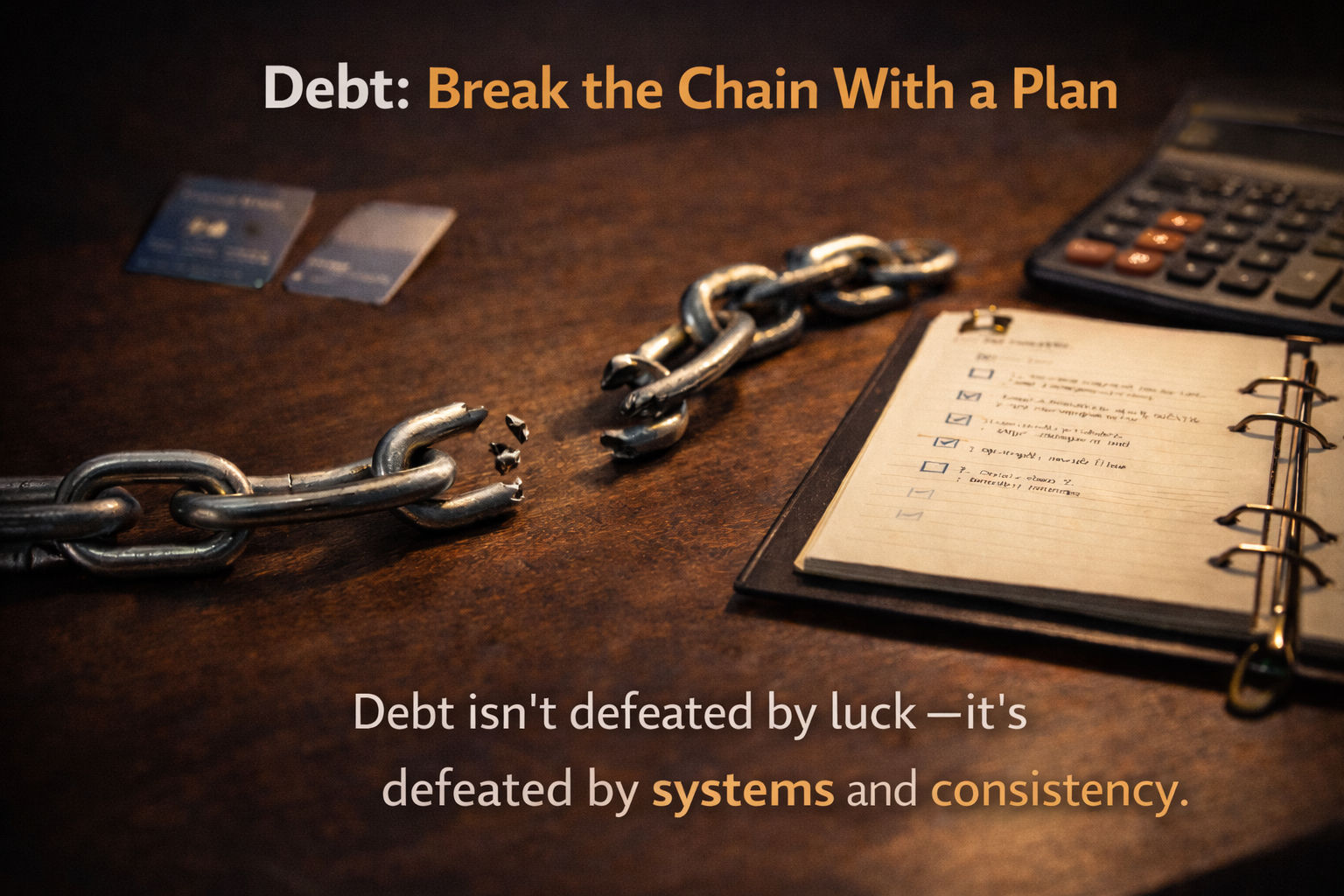
Debt in Hard Times: How to Get Out Without Suffocating (2026)

By Marvin Gandis

✅ ARTICLE 4

Introduction

Debt doesn’t always start with irresponsibility. Often it starts with necessity: an emergency, a tight month, an unexpected hit.

But in uncertain times, debt—especially high-interest debt—becomes dangerous because it does two things at once:

  1. It steals your margin today (monthly payments)
  2. It steals your future (compounding interest)

This article isn’t here to judge you.


It’s here to give you a realistic, clear, executable plan to get out—without suffocating.


1) In Crisis, the Real Problem Isn’t the Balance—It’s the Interest

High interest behaves like a silent tax on your life:

  • it grows even when you stand still,
  • It keeps you trapped month to month.

Your goal isn’t “pay everything today.”
Your goal is to stop the bleeding.


2) Identify “Toxic Debt”

Not all debt is equal. But in a crisis, these are the most dangerous:

🔥 Common toxic debt:

  • high-interest credit cards
  • loans with heavy monthly payments
  • impulse-financed purchases
  • living on minimum payments

Clear sign: if the debt steals your sleep, it’s toxic.


3) The 5-Step Anti-Suffocation Plan

A simple system that works for most people:

Step 1: Freeze the damage (today)

  • Stop using cards for spending, you can reduce
  • Eliminate impulse buys
  • Cancel invisible subscriptions

Step 2: Build a mini-buffer (even small)

Before aggressive payoff, build a small buffer ($200–$500 if possible).
It prevents a small emergency from throwing you back into debt.

Step 3: Choose your method (Avalanche or Snowball)

✅ Avalanche: attack the highest interest first (most efficient).
✅ Snowball: attack the smallest balance first (most motivating).

Guidance:

  • disciplined → avalanche
  • need momentum → snowball

Step 4: Negotiate and lower the cost

Ask for:

  • lower interest
  • payment plans
  • consolidation options (only if it truly reduces cost)

Step 5: Automate the win

  • autopay minimums
  • fixed extra payments weekly/biweekly
  • monthly review (15 min)

4) The 5 Rules to Avoid Falling Back

  1. If it’s not in the budget, don’t buy it.
  2. If you don’t have a mini fund, don’t treat debt like an emergency plan.
  3. Don’t live on minimum payments.
  4. Don’t finance “wants.”
  5. Keep one money review day monthly.

Checklist — Start Today

✅ Freeze impulse spending for 24 hours
✅ List all debts (balance + interest + minimum)
✅ Build a mini buffer ($200–$500 if possible)
✅ Choose avalanche or snowball
✅ Automate minimum payments
✅ Set a fixed weekly extra payment


Closing

Getting out of debt isn’t punishment.
It’s getting your air back.

Financial freedom begins when debt stops making decisions for you.


Disclaimer

This content is for educational purposes only and is not financial, legal, or investment advice. Consult a qualified professional before making decisions.