
Suscríbete para seguir leyendo
Suscríbete para obtener acceso al contenido íntegro de esta entrada y demás contenido exclusivo para suscriptores.

Suscríbete para obtener acceso al contenido íntegro de esta entrada y demás contenido exclusivo para suscriptores.
By Marvin Gandis
✅ ARTICLE 5
When everything rises—food, gas, utilities, insurance—many people say:
“There’s nothing I can do.”
But there is.
Inflation isn’t fought only with more income. It’s fought with something powerful:
A budget that can take hits without breaking.
Most people have a “pretty budget” that works in normal times… and collapses in expensive times.
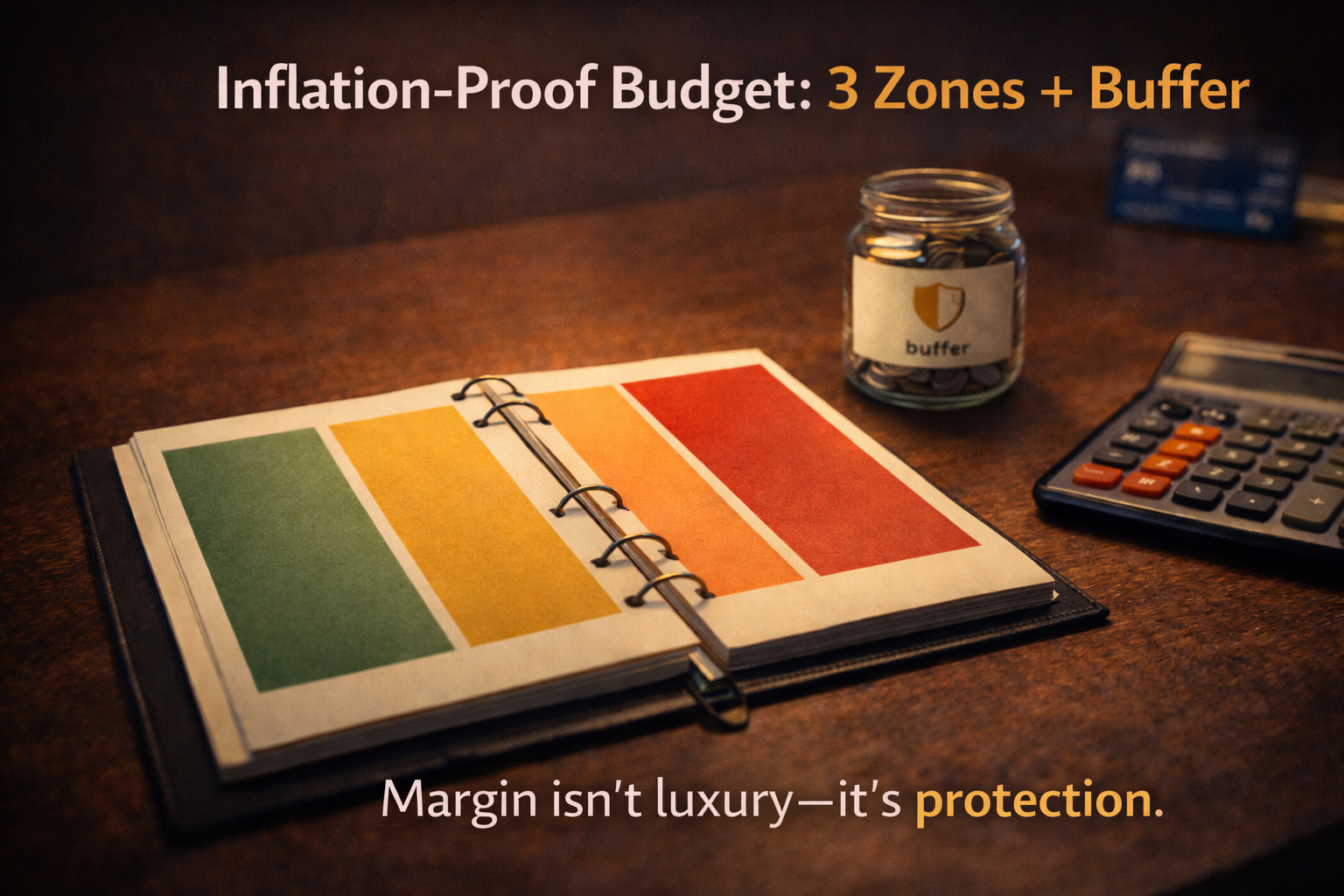
Today you’ll learn a simple, realistic 2026 system:
✅ 3 spending zones
✅ + a volatility buffer (for sudden spikes)
They fail because:
In uncertain times, the keyword is: margin.
Housing, core food, basic transportation, minimum utilities, insurance, essential meds.
Entertainment, dining out, non-urgent shopping, subscriptions, extras.
Impulse spending, “stress buys,” luxuries disguised as normal, duplicate subscriptions.
Inflation creates sudden spikes.
A volatility buffer is a budget line for “price jumps and surprises.”
Suggested levels:
Rule: the buffer is protected.
Monthly budgets feel “endless” and break faster.
Split your plan into weeks and track weekly like mini-months.
✅ Define your 3 zones
✅ Identify 5 “Zone 3” expenses to remove
✅ Add a 3–5% buffer
✅ Create a weekly budget
✅ Set one auto-adjustment rule
✅ Review 15 minutes every Sunday
Inflation doesn’t ask permission.
But you don’t have to live in reaction mode.
A strong budget isn’t the prettiest one.
It’s the one that keeps you steady when everything rises.
This content is for educational purposes only and is not financial, legal, or investment advice. Consult a qualified professional before making decisions.
Debe estar conectado para enviar un comentario.