Publicado en Financial Education, Habits, Mindset, Personal Finance, Resilience

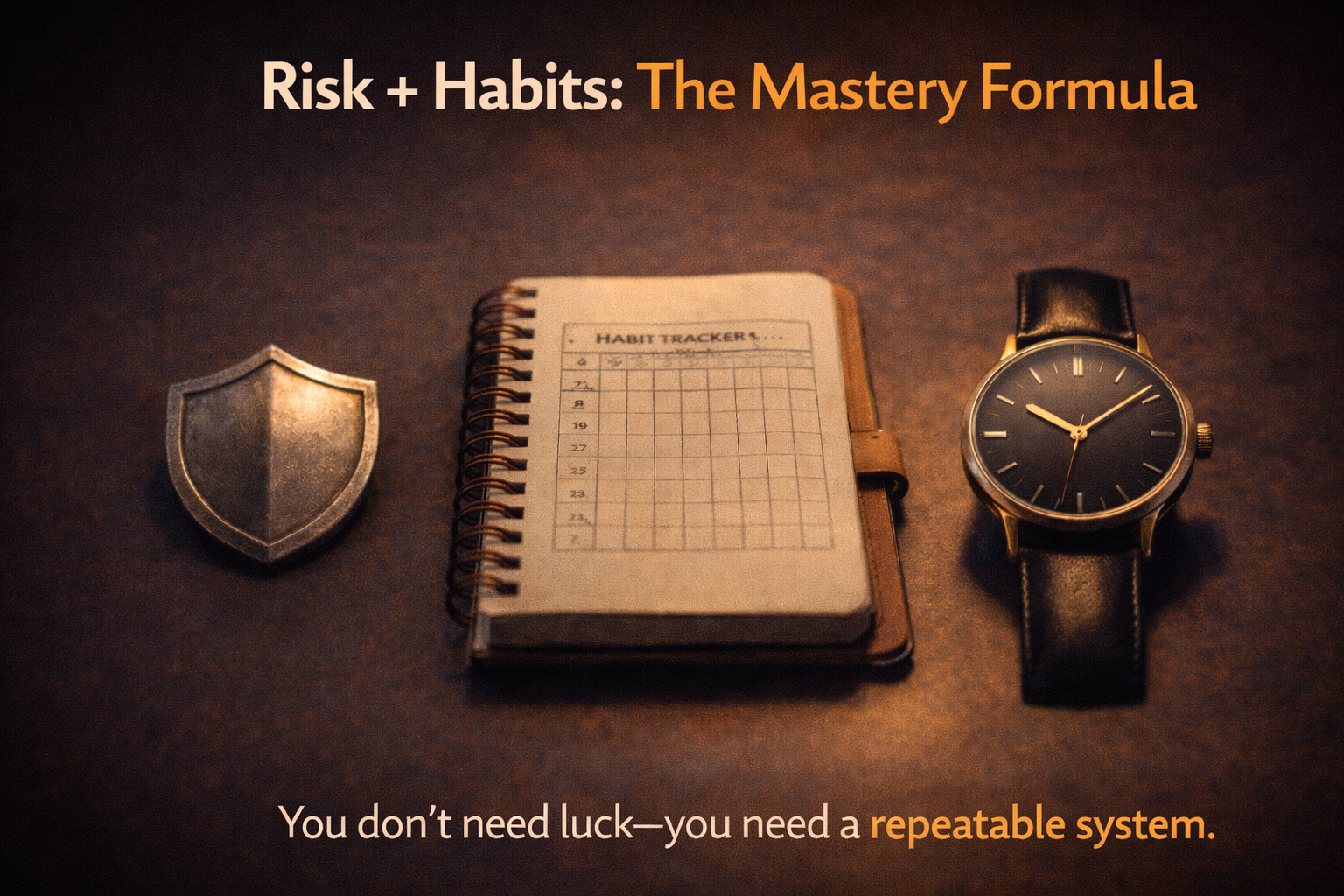
Master Your Money: It’s Not Prediction—It’s Risk Control and Habits (2026)

By Marvin Gandis

✅ ARTICLE 9

Introduction

Most people want “financial mastery,” which really means:

  • stability under pressure,
  • peace during market drops,
  • the ability to handle emergencies without debt,
  • and progress without feeling behind.

Mastery isn’t the perfect investment or a magic business.
Mastery is two things:

Risk + habits.

Money isn’t only lost to кризis—
It’s lost to improvisation.


1) The Common Mistake: Thinking Mastery Means Earning More

Income helps, but it doesn’t fix the system if spending and risk stay uncontrolled.

Mastery = control.
Control = habits.


2) Risk Control: The Muscle Few People Train

Risk = how vulnerable you are if something goes wrong.

Risk rises when you have no emergency fund, one income source, toxic debt, high fixed costs, or unclear spending.

Risk falls when you build margin, buffers, and alternatives.


3) The 5 Habits That Create Real Financial Mastery

  1. Weekly “Money Time” (15–30 minutes)
  2. Automatic saving (even small)
  3. Budget margin (buffer)
  4. Debt control system (minimum autopay + fixed extra)
  5. Second income stream (for stability)

4) The 3-Level Mastery System

Level 1 stability, level 2 resilience, level 3 expansion—in order.


Checklist — Mastery in 7 Days

✅ Schedule Money Time
✅ Automate saving
✅ Cut one leak
✅ Set a 3–5% buffer
✅ Attack one debt with a fixed extra payment
✅ Take one income action


Disclaimer

This content is for educational purposes only and is not financial, legal, or investment advice. Consult a qualified professional before making decisions.
Publicado en Confidence, Growth, Habits, Identity, Personal Development, Self-Discipline

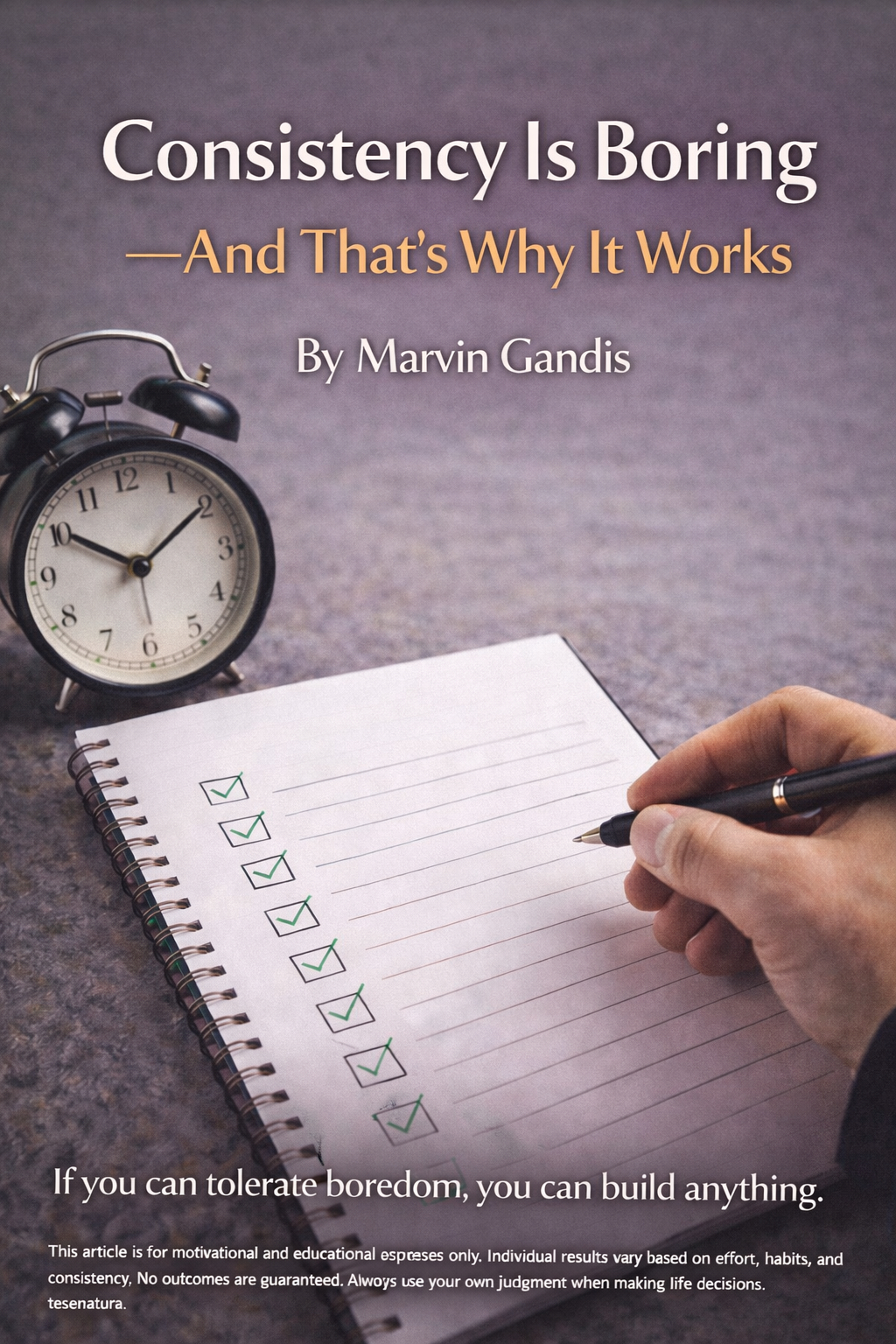
The Power of Self-Promises — How to Build Unbreakable Trust With Yourself

🔥 Article #8

By Marvin Gandis

Confidence isn’t built by what you say —


It’s built by what you keep.

Every time you make a promise to yourself and don’t follow through, something

invisible breaks:


self-trust.

And without self-trust, motivation fades, discipline weakens, and doubt grows louder.

But the opposite is also true:

Every kept promise — no matter how small — rebuilds trust with yourself.


🧠 Why Self-Trust Changes Everything

When you trust yourself:

  • Action feels lighter
  • Decisions feel clearer
  • Confidence feels grounded
  • Discipline feels natural

Self-trust is the foundation of momentum.

Without it, you hesitate.


With it, you move.


🔎 The Hidden Cost of Broken Promises

Broken promises don’t make you lazy —


They teach your mind that your word doesn’t matter.

That’s why many people struggle with consistency:


They don’t believe themselves anymore.

The solution isn’t trying harder —


It’s starting smaller.


🔐 The Self-Promise Rule

Make promises that are:

  • small
  • specific
  • non-negotiable

Examples:

  • “I will walk for 10 minutes.”
  • “I will write one paragraph.”
  • “I will show up, even briefly.”

Then keep them — no excuses.

Trust is rebuilt one promise at a time.


🔁 The Self-Trust Loop

1️⃣ Make a realistic promise
2️⃣ Keep it
3️⃣ Create evidence
4️⃣ Build trust
5️⃣ Raise your standard (slowly)

Momentum grows when your word becomes reliable.


🚀 Final Thought

You don’t need grand declarations.


You need quiet consistency.

Become someone who keeps promises to yourself —
and confidence will follow naturally.


🔥 Tomorrow’s Article

Say No to What Steals Your Power — Boundaries, Focus, and Self-Value


Article #9 will reveal how boundaries protect your energy, sharpen your focus, and elevate your self-respect.


⚠️ Disclaimer

This article is for motivational and educational purposes only. Individual results vary based on effort, habits, and consistency. No outcomes are guaranteed. Always use your own judgment when making life decisions.