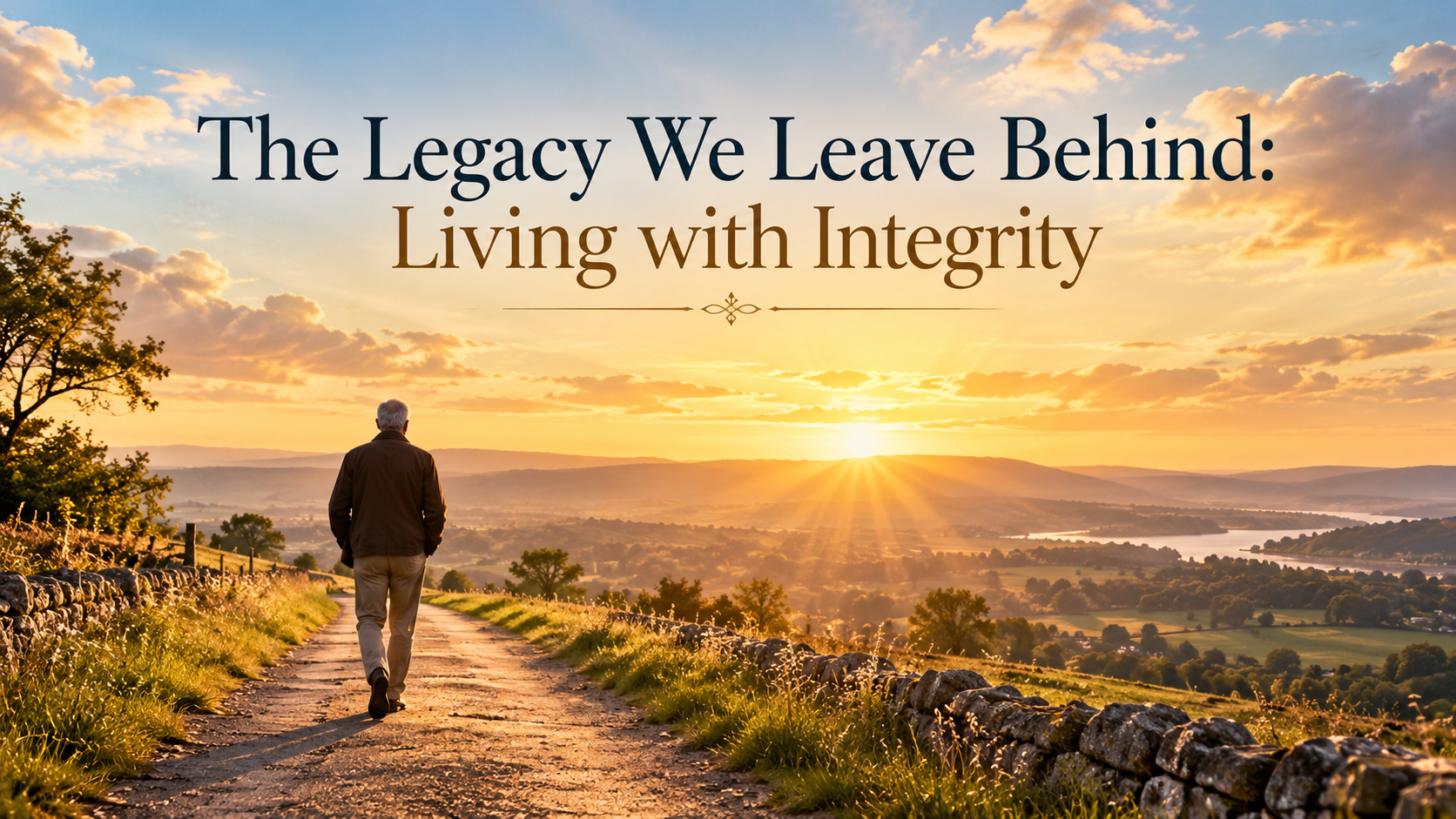
It is not about achieving perfection. It is about living with integrity, acknowledging our mistakes, and leaving a positive impact on the people whose lives intersect with ours.
By Marvin Gandis | Ir de Compras Online
Introduction: The Question We Should All Ask Ourselves
My Dear Reader and Friend,
There are questions that emerge when we begin looking beyond our daily responsibilities, financial ambitions, personal commitments, and the goals we still hope to accomplish.
One of those questions deserves particular attention:
What will remain of us when we are no longer here to explain our intentions, defend our decisions, or tell our own story?
Perhaps we have spent many years working, developing businesses, raising families, helping others, or sharing knowledge.
- But is that enough to build a truly meaningful legacy?
Society often measures success through wealth, recognition, possessions, professional titles, and popularity.
Yet there is another way to evaluate the significance of our lives.
A quieter and more meaningful approach begins by asking how our presence affects other people.
Because our legacy does not begin when our lives end.
- Our legacy begins with how we choose to live today.
Legacy Is Not What We Accumulate, but What We Plant
When we hear the word legacy, we often imagine material inheritance.
A home, a savings account, a family business, or property passed from one generation to the next.
But some forms of inheritance cannot be measured in money.
- The values we demonstrate.
- The trust we inspire.
- The honesty with which we treat others.
- The hope we help restore when someone is struggling.
A person may accumulate considerable wealth yet leave behind few affectionate memories.
Another individual may live modestly and be remembered for generations because of kindness, wisdom, and generosity.
This does not mean material achievements are unimportant.
It means that the possessions we leave behind and the meaning of our lives are not the same thing.
Money can create opportunities. Education can open doors. Hard work can provide stability.
But character influences how we use those resources.
- Reflection: Are we investing as much energy in developing our character as we invest in improving our financial circumstances?
Being Busy Does Not Always Mean Moving Forward
We live in an age when constant activity is often mistaken for productivity.
We launch businesses, develop projects, publish content, learn new technologies, and continuously search for the next opportunity.
- Initiative is valuable.
- Perseverance matters.
But there is a significant difference between being in motion and moving in the right direction.
We can maintain a full schedule while neglecting what matters most.
We can communicate with hundreds of people online while failing to listen to those closest to us.
We can spend hours teaching others about personal growth while overlooking those same principles during our own difficulties.
We may even continue pursuing goals that no longer reflect our deepest values.
That is why examining our priorities is essential.
Not every opportunity deserves our time.
Not every disagreement requires our participation.
Not every project must become a permanent commitment.
Maturity includes knowing when to stop, reconsider, and make a different choice.
- Sometimes progress means doing fewer things with greater intention.
Our Credibility Depends on the Distance Between Our Words and Actions
Everyone has opinions.
We also share recommendations, advice, personal experiences, and knowledge that we believe may benefit others.
- But speaking about integrity is different from practicing it.
We may publicly defend honesty while avoiding an uncomfortable conversation after making a mistake.
We may encourage generosity while overlooking the needs of someone close to us.
We may speak about humility while remaining unwilling to accept criticism.
- These contradictions are part of the human struggle.
The essential question is not whether we have ever been inconsistent.
It is what we do when we recognize that inconsistency.
- Do we justify it?
- Do we hide it?
- Do we blame someone else?
Or do we acknowledge that change is necessary?
Credibility grows when our behavior aligns with our principles.
It also grows when we dare to correct ourselves publicly, especially when our words or actions may have affected others.
We do not need to pretend that we are always right. We need to demonstrate that truth matters more than pride.
Mistakes Do Not Necessarily Destroy a Meaningful Legacy
No human life is free from mistakes.
At some point, we may trust the wrong person, make a careless decision, defend an incorrect belief, or say something that causes pain.
- Some consequences will be temporary.
- Others may follow us for years.
But there is an important difference between making a mistake and refusing to learn from it.
Acknowledging wrongdoing requires humility.
Apologizing requires courage.
Repairing harm may require sacrifice.
And changing behavior demands perseverance.
We will not always have the opportunity to reverse the consequences of our decisions.
Nor can we demand immediate forgiveness from those we have hurt.
What we can do is accept responsibility and choose a different way forward.
A worthy legacy does not necessarily describe someone who never fell.
It may tell the story of someone who, after falling, found the courage to stand again, acknowledge wrongdoing, and change.
Perfection is not the measure of integrity. Taking responsibility for our actions is one of its most important tests.
The Responsibility That Comes With Influencing Others
Today, almost anyone can reach a substantial audience.
Digital platforms allow us to share opinions, business recommendations, educational content, religious reflections, and personal experiences with people around the world.
- This creates extraordinary opportunities.
- But it also creates responsibility.
When recommending an economic opportunity, we should make reasonable efforts to verify the information and explain the risks.
When teaching, we should distinguish verified facts from personal experience and opinion.
When sharing messages of hope, we should avoid suggesting that every hardship can be overcome through positive thinking alone.
And when discussing faith, we should respect the dignity and circumstances of those who listen.
Influence should never become a means of exploiting someone else’s trust.
- It should become an opportunity to inform, guide, and serve.
Before sharing a message, we might ask ourselves:
Am I sharing this because it may genuinely benefit someone, or because I want attention, approval, or recognition?
- That question can help us use our voices more responsibly.
Our Legacy Begins at Home and in Our Closest Relationships
It is possible to receive professional recognition while neglecting personal relationships.
It is equally possible to have limited resources or little public visibility while leaving an extraordinary impact on family and community.
This is why popularity should never be confused with lasting significance.
Our loved ones will not remember only our accomplishments.
They will also remember whether we listened.
How we responded to disagreements.
How patient we were during difficult times.
Whether we were present when they needed support.
And perhaps the occasions when we were absent.
This does not mean we should live entirely according to other people’s expectations.
It means our relationships deserve deliberate attention.
Sometimes the most important decision of the day has nothing to do with accepting a new business opportunity.
It involves listening without interrupting.
Recognizing that someone needs our presence.
Keeping a simple promise.
- Or sincerely saying, «I was wrong. I’m sorry.»
Our public legacy may reach thousands, but our private legacy reveals how we treated those who shared their lives with us.
Faith Should Be Reflected in Our Conduct
For those of us who find spiritual guidance in Christian teachings, legacy also carries a dimension of faith.
Scripture does not measure human worth solely through possessions or public recognition.
Micah 6:8 in the King James Version offers this guidance:
«…to do justly, and to love mercy, and to walk humbly with thy God.»
These are brief words with demanding implications.
Doing justly encourages us to act fairly and honestly.
Loving mercy reminds us that other people experience weakness, failure, and suffering too.
Walking humbly before God reminds us that our knowledge, judgments, and actions are not perfect.
Spirituality should not become a justification for claiming moral superiority over others.
- It should inspire humble service.
Speaking about love means little if our everyday behavior consistently contradicts the message.
Encouraging forgiveness loses credibility when we refuse to acknowledge our own mistakes.
The faith we hope to share becomes more meaningful when our decisions reflect compassion, justice, and responsibility.
The Danger of Living Only to Be Remembered
Wanting to leave behind good memories is understandable.
Most of us hope our existence will have mattered.
But there is a danger in making other people’s future approval our central purpose.
We may become overly concerned with protecting our image.
We may feel pressured to constantly demonstrate success.
We might even conceal our failures to preserve a favorable reputation.
Yet a carefully managed public image does not necessarily represent a life of integrity.
- We cannot control how everyone will remember us.
Some people will appreciate our efforts.
Others will interpret our decisions differently.
And some may remember our failures more clearly than our achievements.
This is why our lives need a foundation stronger than public approval.
It is better to live with integrity, even when not everyone understands us, than to spend our lives manufacturing an image of perfection.
It Is Never Too Late to Reconsider Our Direction
One of life’s greatest opportunities is the ability to reconsider our decisions while we still have time to act.
We do not need to experience a crisis before examining our priorities.
Nor must we reach a particular age before questioning our purpose.
- We can begin today.
Perhaps we need to spend more time with family.
Maybe we should reconsider a belief we have defended for years.
It might be necessary to step away from a project that consumes our energy without contributing to our well-being.
Or perhaps we need the courage to speak with someone we have hurt.
We may also discover that our experiences can help others avoid mistakes or find a better direction.
Genuine transformation does not always require dramatic decisions.
Often, it begins with small, repeated actions.
Listening more carefully.
Making fewer promises and keeping more of them.
Acknowledging our limitations.
Sharing knowledge honestly.
Giving credit where it is due.
Practicing gratitude.
Treating people with dignity, even when they have nothing to offer us in return.
These everyday choices are also writing our life stories.
A Personal Exercise: Five Questions About Your Legacy
Before concluding, I invite you to spend a few quiet moments considering these questions. You do not need to share your answers publicly.
- What values do I claim to defend, and which ones are genuinely reflected in my actions?
- Is there someone I need to apologize to, listen to more carefully, or make an effort to repair harm with?
- Do my projects and commitments reflect my deepest priorities, or do they simply keep me busy?
- Am I using my knowledge and influence responsibly, even when doing so offers no immediate personal benefit?
- If my possessions, titles, and recognition disappeared, what human memories would I hope to leave with those who knew me?
- There are no perfect answers.
What matters is having the courage to answer sincerely and allowing those answers to influence how we live.
Let Our Lives Speak for Us
One day, our daily activities will come to an end.
Businesses will change ownership.
Technologies we consider essential today will eventually be replaced.
Many of our publications will stop attracting attention.
Some achievements that now seem extraordinary will lose their importance as time passes.
But the effects of our actions may remain.
A lesson shared with humility.
An opportunity offered with honesty.
Someone who regained hope because we cared enough to be present.
A child, relative, or friend who learned integrity by watching our example.
A mistake acknowledged before it caused further harm.
A reconciliation that once seemed impossible.
Perhaps these are among the most meaningful things we can leave behind.
- We do not know how much time lies ahead.
But we can decide what to do with the time we have today.
We do not need to live obsessed with being remembered.
We need to strive to make our presence a positive influence while we are here.
Because the most meaningful legacy is not making people remember our name, but helping make their lives better because they knew us.
And before we conclude, my dear reader and friend, consider one final question:
If tomorrow no one remembered your possessions, businesses, publications, or achievements, but the people who knew you remembered how you treated them, would you be satisfied with that legacy?
Perhaps your answer will mark the beginning of a transformation that is still possible today.
Editorial Disclaimer: This article is intended for educational purposes, personal reflection, and inspiration. Its ideas encourage readers to examine their values, decisions, and influence on others. Biblical references are presented from a Christian perspective and are not intended to impose religious beliefs or replace psychological, professional, or spiritual guidance when such support may be needed.

Debe estar conectado para enviar un comentario.