Publicado en ✍️ Content & Engagement Marketing, Content Strategy, engagement tips, online growth, Social Media Marketing, storytelling

Social Media Campaigns: How to Create Posts That Drive Action

📢 Week 12: Social Media Campaigns


Learn how to design social media campaigns that captivate attention, inspire engagement, and drive real results. Discover strategies to plan, execute, and measure effective campaigns.


🌟 Introduction

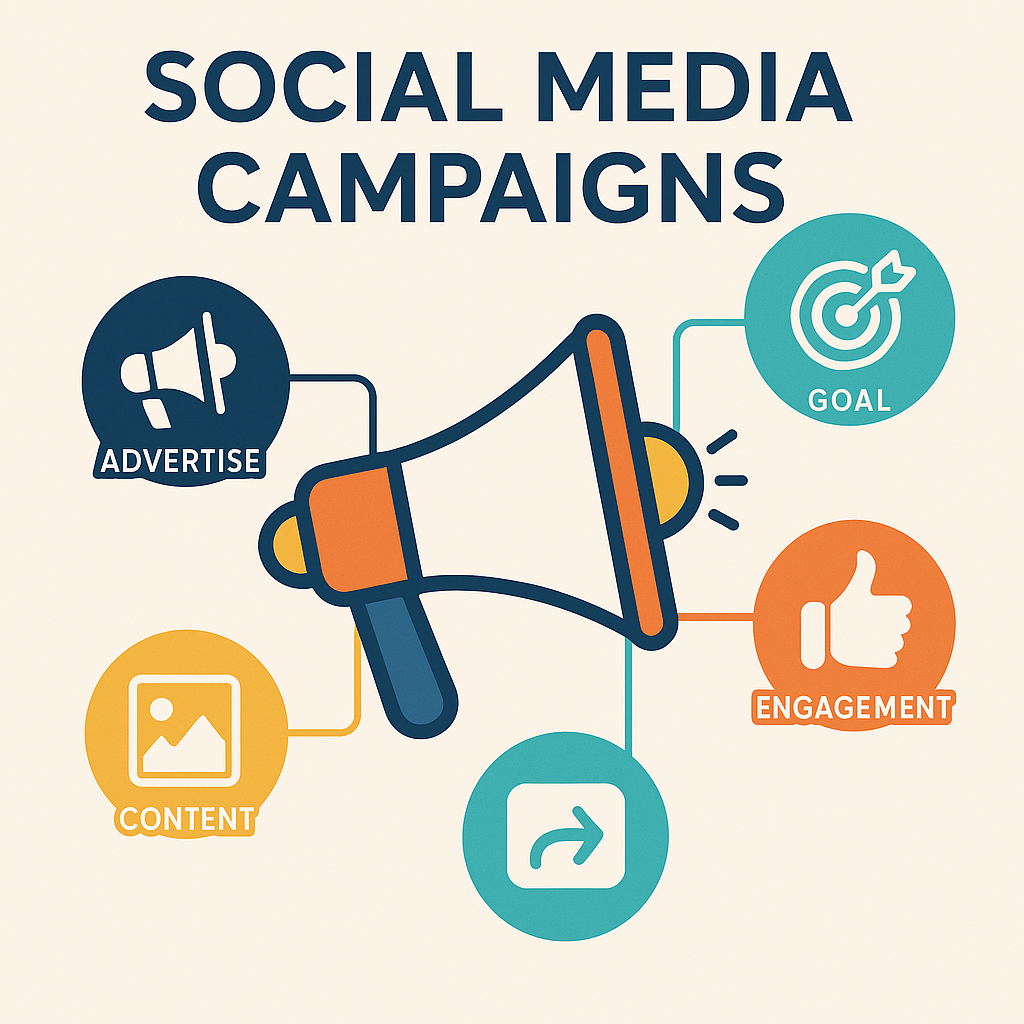
Social media isn’t just about posting content — it’s about creating campaigns with purpose. A campaign is a coordinated series of posts, visuals, and messages built around a single goal — whether it’s growing followers, generating leads, or promoting a product.

When done strategically, social media campaigns have the power to turn casual scrollers into loyal fans and paying customers. In this week’s lesson, we’ll break down how to plan, execute, and analyze campaigns that deliver results.


🎯 1. What Is a Social Media Campaign?

A social media campaign is a focused marketing effort using one or more platforms to achieve a specific goal. Unlike random daily posts, campaigns are strategic, goal-oriented, and measurable.

Examples of common campaign goals:

  • Boost brand awareness
  • Promote a new product or event
  • Drive traffic to a landing page
  • Collect leads or email subscribers
  • Encourage user-generated content

Every successful campaign starts with one clear question:

👉 What do I want my audience to do?


🧠 2. The Anatomy of a Great Campaign

Strong campaigns share a few essential traits — clarity, creativity, and consistency.

Here’s what every campaign should include:

  1. A Clear Objective: Know exactly what success looks like.
  2. A Defined Audience: Identify who you want to reach.
  3. A Compelling Message: Craft a central idea that resonates.
  4. Eye-Catching Visuals: Use design and video to grab attention.
  5. Engaging Content Mix: Combine posts, reels, polls, stories, and ads.
  6. A Measurable Timeline: Set a start and end date with trackable milestones.

Without a structure, campaigns lose direction — with one, they inspire action.


💡 3. How to Plan an Effective Campaign

A strong campaign doesn’t happen by accident. Follow these five steps:

Step 1: Set SMART Goals

Make your goals Specific, Measurable, Achievable, Relevant, and Time-bound.

Example: “Gain 1,000 new Instagram followers in 30 days.”

Step 2: Choose the Right Platform

Pick where your audience spends most of their time. Instagram might be best for visuals, while LinkedIn works better for professionals.

Step 3: Develop a Content Theme

Every campaign needs a consistent story — whether it’s empowerment, innovation, or fun.

Example: “30 Days of Motivation” or “New Product Countdown.”

Step 4: Create a Posting Schedule

Plan your posts ahead of time using tools like Later, Buffer, or Meta Business Suite.

Step 5: Track and Adjust

Monitor performance daily and adjust based on engagement and feedback.


📣 4. Types of Social Media Campaigns That Work

Here are some campaign styles proven to deliver high engagement and conversions:

Giveaway Campaigns

Boost engagement by offering prizes in exchange for likes, shares, or tags.

Example: “Tag a friend for a chance to win our latest product!”

Hashtag Challenges

Create your own branded hashtag to encourage user participation.

Example: #MyHealthyHabit or #TravelWithUs.

Product Launches

Build anticipation with teaser posts, countdowns, and live unveilings.

Awareness Campaigns

Promote a social cause or message that aligns with your brand values.

Testimonial & Review Campaigns

Showcase happy customers or client success stories to build trust.

Seasonal Campaigns

Leverage holidays or events (e.g., Black Friday, New Year, Valentine’s Day).


📊 5. Measuring Campaign Success

To know if your campaign worked, track key performance indicators (KPIs) such as:

  • Engagement Rate (likes, shares, comments)
  • Follower Growth
  • Click-Through Rate (CTR)
  • Conversions or Leads
  • Reach and Impressions

Tools like Google Analytics, Meta Insights, and Hootsuite Reports can give you real-time performance data.


🧩 6. The Secret Ingredient: Emotional Connection

The best campaigns don’t just sell — they make people feel.

Use storytelling, empathy, and authenticity to create emotional resonance.

When your audience relates to your message, they’ll engage, share, and remember your brand long after the campaign ends.


🚀 Conclusion & Call to Action

Social media campaigns are your opportunity to inspire, engage, and convert. They’re not random posts — they’re carefully crafted experiences.

👉 This week, brainstorm one campaign idea for your business. Define the goal, choose the platform, and map out 5–7 post ideas. Start simple — consistency will do the rest.

Next week: Week 13 — Keyword Management: Mastering the Words That Drive Results.

Publicado en ✍️ Content & Engagement Marketing, Content Strategy, engagement tips, online growth, Social Media Marketing, storytelling

Social Media Marketing: Building Connections That Convert

📱 Week 9: Social Media Marketing


Discover how to use social media marketing to build authentic connections, grow your audience, and turn followers into loyal customers using strategic and engaging content.


🌟 Introduction

In today’s digital era, social media is the heartbeat of online marketing. From Facebook to TikTok, millions of people interact, share, and make buying decisions every second. Social media marketing isn’t just about posting pretty pictures — it’s about creating genuine relationships that drive engagement, trust, and sales.

When done right, it allows your brand to speak directly to your audience, inspire emotion, and turn casual followers into loyal advocates. Let’s explore how to build connections that not only grow your community but also convert into measurable results.


💬 1. What Is Social Media Marketing?

Social Media Marketing (SMM) is the process of using social platforms to promote your brand, connect with your audience, and boost your business growth.

It goes beyond advertising — it’s storytelling, communication, and community-building combined.

Examples of Social Media Platforms for Marketing:

  • Facebook: Great for community groups and ads.
  • Instagram: Perfect for visuals and brand storytelling.
  • LinkedIn: Ideal for professional networking and B2B marketing.
  • TikTok: Excellent for creative, viral, and short-form video content.
  • X (Twitter): Real-time updates and brand conversations.

Each platform has its personality — your goal is to understand where your audience spends their time and what type of content they love.


🎯 2. The Power of Connection

People don’t join social media to be sold to — they join to connect. Brands that succeed are those that listen, engage, and provide value.

Here’s how social media creates powerful relationships:

  • 💬 Engagement: Responding to comments builds trust.
  • 🎨 Storytelling: Authentic posts humanize your brand.
  • 📣 Community: Building groups and discussions creates loyalty.
  • 💡 Inspiration: Positive, motivational content encourages sharing.

When people feel connected, they naturally become your promoters.


📈 3. Benefits of Social Media Marketing

The impact of a strong social media presence goes far beyond likes and shares:

  • 🌍 Global Reach: Reach audiences worldwide instantly.
  • 💰 Cost-Effective: Many platforms offer free organic exposure.
  • 🔍 Enhanced Visibility: Boost SEO and brand awareness.
  • 🧠 Customer Insights: Track what content performs best.
  • 🤝 Relationship Building: Turn followers into long-term customers.

Social media transforms your audience from spectators into participants in your brand story.


📆 4. Building a Successful Social Media Strategy

A winning strategy balances creativity, consistency, and connection.

Step 1: Define Your Goals

Decide what success means for you — brand awareness, leads, or sales.

Step 2: Know Your Audience

Identify demographics, interests, and problems your content can solve.

Step 3: Create Quality Content

Mix formats — videos, carousels, stories, polls, live streams — to keep things fresh.

Step 4: Post Consistently

Use a social media calendar to maintain visibility. Consistency builds recognition.

Step 5: Engage Daily

Reply to comments, ask questions, and celebrate your followers’ successes.

Step 6: Track & Optimize

Use tools like Meta Business Suite, Hootsuite, or Later to analyze engagement and adjust strategies.


💡 5. Tips to Boost Engagement

✅ Use emojis to express your brand’s personality.
✅ Include calls to action (“Tag a friend!” or “Comment your opinion”).
✅ Share user-generated content (testimonials, photos, reviews).
✅ Go live — real-time interactions build stronger relationships.
✅ Tell stories, not just sales pitches.

Remember: People may forget your product, but they’ll never forget how you made them feel.


🧰 6. Best Tools for Social Media Success

These tools simplify your strategy and amplify your results:

  • Canva / Adobe Express: Design captivating visuals.
  • Hootsuite / Buffer: Schedule posts across platforms.
  • Meta Ads Manager: Run targeted ad campaigns.
  • Later / Planoly: Organize content visually.
  • CapCut / InVideo: Create stunning video content.

The right tools save time, increase consistency, and enhance creativity.


🚀 Conclusion & Call to Action

Social media is not just about exposure — it’s about emotion and connection. When you show up consistently with authenticity, people will not only follow you but also believe in you.

👉 This week, focus on building a genuine connection: reply to every comment, share a personal story, or celebrate a customer’s success. Those small actions create loyal fans and a lasting impact.

Next week: Week 10 — Results Analysis: Understanding What Works and Why.

Publicado en ✍️ Content & Engagement Marketing, Content Strategy, engagement tips, online growth, Social Media Marketing, storytelling

Paid Search Marketing: How to Reach Buyers Ready to Take Action

💰 Week 8: Paid Search Marketing


Learn how paid search marketing (PPC) helps you target people ready to buy. Discover how to create effective ads, manage budgets, and measure results for higher ROI.


🌟 Introduction

Imagine having your business appear at the exact moment someone searches for what you offer. That’s the power of Paid Search Marketing (PPC) — a fast, measurable way to reach people who are already looking for your products or services.

Unlike organic marketing, which takes time to grow, paid search ads deliver instant visibility and results. The key is learning how to craft campaigns that convert — not just clicks, but customers.

Let’s explore how to make paid search your most profitable marketing channel.


🔎 1. What Is Paid Search Marketing?

Paid Search Marketing (also called Pay-Per-Click Advertising, or PPC) is a model where advertisers pay each time someone clicks on their ad.

These ads appear on search engines like Google, Bing, or Yahoo, typically above or beside organic search results.

Example:

If you sell eco-friendly shoes, and someone searches “best eco-friendly sneakers,” your ad can appear at the top — ready to attract a motivated buyer.


💡 2. How Paid Search Works

Here’s how PPC functions behind the scenes:

  1. Keywords: You choose search terms related to your offer.
  2. Ad Auction: Search engines hold an instant auction every time someone searches.
  3. Bidding: You set how much you’re willing to pay per click.
  4. Ad Rank: Your ad’s position depends on your bid and quality score (relevance, landing page quality, CTR).
  5. Click: When someone clicks, they’re taken to your landing page — and you pay for that click.

It’s a precise, performance-based way to attract ready-to-buy customers.


📈 3. Benefits of Paid Search Marketing

Why use paid search when SEO exists? Because it offers speed, control, and measurable results.

Top Benefits:

  • Instant Visibility: Your brand appears on page one immediately.
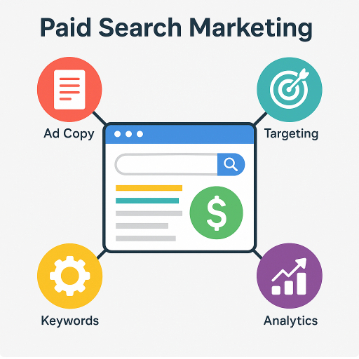
  • 🎯 Highly Targeted: Reach people based on keywords, location, or even device.
  • 💰 Pay Only for Results: You only pay when someone clicks your ad.
  • 📊 Data-Driven: Every impression, click, and conversion is tracked.
  • 🔁 Scalable: You can start small and increase your budget as you see results.

PPC is like a light switch — turn it on and your traffic flows instantly.


🧠 4. Crafting an Effective PPC Campaign

To succeed with paid search, you need a smart, structured approach.

Step 1: Research the Right Keywords

Use tools like Google Keyword Planner or Semrush to find terms your target audience actually searches for.

👉 Focus on long-tail keywords (e.g., “affordable SEO consultant in Las Vegas”) — they’re cheaper and more targeted.

Step 2: Write Compelling Ad Copy

Your ad must grab attention and promise value.
Example:

“Secure Your Files in the Cloud – 7-Day Free Trial. Protect What Matters Most!”

Always include a CTA (Call to Action) like Get Started, Learn More, or Try Free.

Step 3: Optimize Your Landing Page

When users click, they should land on a page that matches your ad promise.

  • Use a clear headline
  • Highlight benefits
  • Include testimonials
  • Add one strong CTA

Step 4: Set Your Budget & Bids

Start small, analyze, then scale what works. Google Ads allows you to set daily limits, so you’ll never overspend.

Step 5: Track, Test, and Improve

Use Google Ads Dashboard and Google Analytics to monitor conversions, cost per click (CPC), and ROI.


💬 5. The Power of Remarketing

One of PPC’s most effective strategies is remarketing — showing ads to people who visited your site but didn’t convert.

It’s like a gentle reminder saying:

“Hey, remember us? Here’s that offer you viewed earlier.”

This keeps your brand top of mind and increases your chances of turning visitors into buyers.


⚙️ 6. Tools to Boost Your PPC Performance

Here are some powerful tools to improve your paid search campaigns:

  • Google Ads Editor: Manage campaigns offline.
  • Semrush / Ahrefs: Keyword research and competition tracking.
  • SpyFu: See what ads competitors are running.
  • Optmyzr: Automate PPC optimization.
  • Hotjar: Analyze user behavior after they click your ad.

🚀 Conclusion & Call to Action

Paid search marketing is one of the most effective ways to drive instant traffic and sales. When done right, it connects you with people who already have buying intent — no convincing required.

👉 This week, try setting up a simple Google Ads campaign targeting one of your best keywords. Test, measure, and refine. You’ll be surprised how fast you can get results!

Next week: Week 9 — Social Media Marketing: Building Connections That Convert.