By Marvin Gandis
Promoting an offer online is no longer simply about posting a link repeatedly and hoping somebody buys.
Consumer behavior has changed.
People compare, research, watch, ask questions, and most importantly, look for signs of trust before making a decision.
That is why the strategies working best today combine education, useful content, demonstrations, follow-up, and relationships.
This applies especially to digital offers, affiliate programs, subscription services, data-protection tools, courses, memberships, and online business opportunities.
The right question is no longer:
“Where can I post my link?”
The better question is:
“How can I move someone from discovery to trust, and from trust to action?”
Promote the Problem Before the Product
One of the most common marketing mistakes is talking about the product too early.
The prospect may not know you yet.
They may not even understand why they need what you are offering.
That is why it often makes more sense to begin with the problem.
For example, if you promote a digital backup service, you could ask:
What would happen if you lost your phone today?
How many important photos exist on only one device?
Which documents would be difficult to replace if your computer stopped working?
These questions connect with a real concern.
When the prospect understands the problem, the solution begins to make sense.
Use Short Videos to Capture Attention
Short-form video continues to be one of the strongest ways to capture attention quickly.
Facebook Reels, Instagram Reels, YouTube Shorts, and similar platforms can help you reach people who do not know you yet.
The goal does not always have to be selling.
It can simply be teaching one useful idea.
Examples:
- Three files you should back up today.
- One mistake that could cost you your photos.
- The difference between storage and backup.
- What to do before replacing your phone.
- How to protect important family documents.
A thirty-second video can create enough curiosity for someone to want more information.
Your call to action can be simple:
“If you want to see a practical way to protect your files, check the information below.”
You do not need to turn every video into a sales presentation.
First, earn attention.
Then build trust.
Build an Email List
One of the smartest decisions in digital marketing is building your own contact list.
Social media can help you gain visibility.
But the platform controls your reach.
Your email list gives you a direct way to continue communicating with people who voluntarily asked for more information.
A simple system could be:
Content → Landing Page → Email → Follow-Up → Offer
For example, you could offer:
Free Checklist: 7 Things You Should Protect Before Losing Your Files
The visitor enters a name and email address to receive it.
Then an automated sequence begins.
Now that visitor is no longer just a click.
They have become a prospect.
Educate Before You Sell
Educational marketing works because it lowers resistance.
Instead of saying:
“Buy this.”
You can say:
“Let me explain the problem and show you the available options.”
An educational series could cover:
- What cloud backup is.
- What redundancy means.
- Which files families should protect.
- How to reduce the risk of digital loss.
- How to organize important documents.
- The difference between storage and backup.
- How data recovery works.
At the end of each piece, you can introduce your recommendation naturally.
The sale becomes a possible result of education rather than pressure.
Demonstrate the Product
One of the strongest forms of marketing is showing instead of merely telling.
Many people hesitate because they do not understand how a service works.
A demonstration can remove that barrier.
You could record your screen while showing:
- How to create an account.
- How to choose files.
- How to begin a backup.
- How to restore a document.
- How to share files.
- How to manage the service.
A demonstration provides something that traditional advertising often lacks:
credibility.
When people see the service working, they can imagine themselves using it.
Turn One Piece of Content Into Many
You do not need to invent completely new material every day.
One strong article can become:
- A long-form video.
- Five short videos.
- Three Facebook posts.
- An email.
- An infographic.
- A LinkedIn post.
- A frequently asked questions section.
- A message for an email list.
This is called content repurposing.
The advantage is significant.
You create one strong piece of content and distribute it through several channels.
That reduces workload while keeping your message consistent.
Use Real Stories
People often remember stories better than technical features.
A story might begin:
“Many families keep years of photos on one phone without ever thinking about what would happen if that device disappeared.”
Then you can explain the problem, reflection, and solution.
You can also tell your own reason for using or recommending a service.
You do not need to invent a disaster.
Authenticity is more persuasive.
Your story could simply be:
“I started taking file protection more seriously when I realized how much important information depended on one device.”
Stories create emotional connection.
Facts help justify the decision.
Both matter.
Participate in Communities Without Spamming
Groups and online communities can create excellent conversations.
But there is a major difference between participating and spamming.
A poor approach would be:
“Buy here.”
A better approach would be responding to a genuine question.
For example:
“A good practice is keeping more than one copy of important files. I use a backup solution for this myself. If you want, I can explain how I set mine up.”
That answer helps first.
Then it opens a conversation.
Permission-based selling generally feels far more natural than aggressive promotion.
Improve Your Facebook Strategy
Posting only promotional graphics can exhaust your audience.
A healthier mix might be:
60% education
20% conversation and stories
20% offers or invitations
Sample week:
Monday: Educational tip.
Tuesday: Question or poll.
Wednesday: Short video.
Thursday: Article.
Friday: Story or practical example.
Saturday: Invitation to explore the offer.
Sunday: Human, community, or inspirational content.
This allows your page to build relationships instead of looking like a nonstop sales board.
Use YouTube for Searchable Education
Short videos are excellent for discovery.
Longer educational videos work well when someone is actively looking for an answer.
Possible titles include:
How to Automatically Back Up Your Files
What Is Cloud Backup?
Where Should You Store Important Family Photos?
How to Avoid Losing Digital Documents
Cloud Storage vs. Cloud Backup
Searchable educational videos can continue attracting visitors for weeks, months, or longer.
That makes them digital assets rather than temporary posts.
Use Safelists More Intelligently
Safelists can still be used as additional traffic sources.
But instead of sending visitors directly to a long business presentation, it may be better to send them first to a simple landing page.
For example:
Safelist → Landing Page → Free Resource → Emails → Offer
Why?
Because many people who click are not yet ready to buy.
But they may be willing to download a useful guide.
Once you have permission to continue communicating with them, you can educate them over time.
Build a Follow-Up Sequence
Many sales do not happen during the first contact.
That is why follow-up matters.
A simple sequence could look like this:
Email 1 — Welcome
Deliver the free resource.
Email 2 — The Problem
Explain why relying on one copy can be risky.
Email 3 — Education
Explain what backup means.
Email 4 — Common Mistake
Discuss false confidence around digital storage.
Email 5 — Solution
Introduce the tool you use.
Email 6 — Demonstration
Show how it works.
Email 7 — Invitation
Invite the reader to try the service.
Once configured, that system can work automatically.
Promote the Trial Before the Sale
If the offer includes a free trial, it can often be easier to promote the experience rather than asking for an immediate purchase.
Instead of:
“Buy now.”
You can say:
“Try it and decide whether it is useful for you.”
Psychologically, that is a much smaller commitment.
Once the prospect experiences the product, they may understand its value more clearly.
Use Referral Marketing
A satisfied customer can become a source of new customers.
Instead of asking:
“Do you know anyone who wants a business opportunity?”
ask:
“Do you know someone else who would want to protect important photos or documents?”
The second question is based on a real need.
Not a financial pitch.
That often creates a much more natural conversation.
Separate the Product From the Business Opportunity
When an offer includes both a product and an income opportunity, avoid trying to explain everything at once.
That can overwhelm the prospect.
A cleaner strategy is to use two paths.
Customer Path
Problem → Education → Product → Trial → Customer
Business Path
Product → Experience → Recommendation → Referral Program → Opportunity
First, allow the person to understand the product.
Then, if there is interest, introduce the possibility of earning through referrals.
This reduces confusion.
Use a Landing Page With One Objective
A good landing page does not need to explain twenty things.
It should quickly answer:
What is this?
Why should I care?
What should I do next?
Example:
Protect Your Photos and Documents Before It Is Too Late
Discover a simple way to keep important digital files backed up.
Button:
See How It Works
Or:
Start the Trial
The clearer the objective, the less distraction you create.
Turn Frequently Asked Questions Into Content
Questions from prospects are an excellent source of marketing material.
Examples:
Do I need technical experience?
What types of files can I back up?
How much storage do I need?
What happens when I replace my computer?
Can my family use it?
Every question can become:
- A video.
- A post.
- An email.
- An article section.
- A website page.
Your audience can tell you what content to create if you listen carefully.
Build Content Around Objections
Objections can also become content.
If someone says:
“I already use cloud storage.”
Create:
Cloud Storage and Backup: Are They the Same Thing?
If someone says:
“Nothing has ever happened to my files.”
Create:
Why Waiting Until You Lose Your Files May Be Too Late
If someone says:
“I am not good with technology.”
Create:
How to Start Backing Up Your Files Even If You Are Not Tech-Savvy
Every objection contains an educational opportunity.
Avoid Exaggerated Promises
This is particularly important when an offer includes an income opportunity.
Avoid claims such as:
“Guaranteed income.”
“Automatic money for everyone.”
“Get rich quickly.”
“Do nothing and get paid.”
A professional presentation should make it clear that results depend on many factors, including skill, consistency, effort, traffic, follow-up, and demand.
Credibility is more valuable than hype.
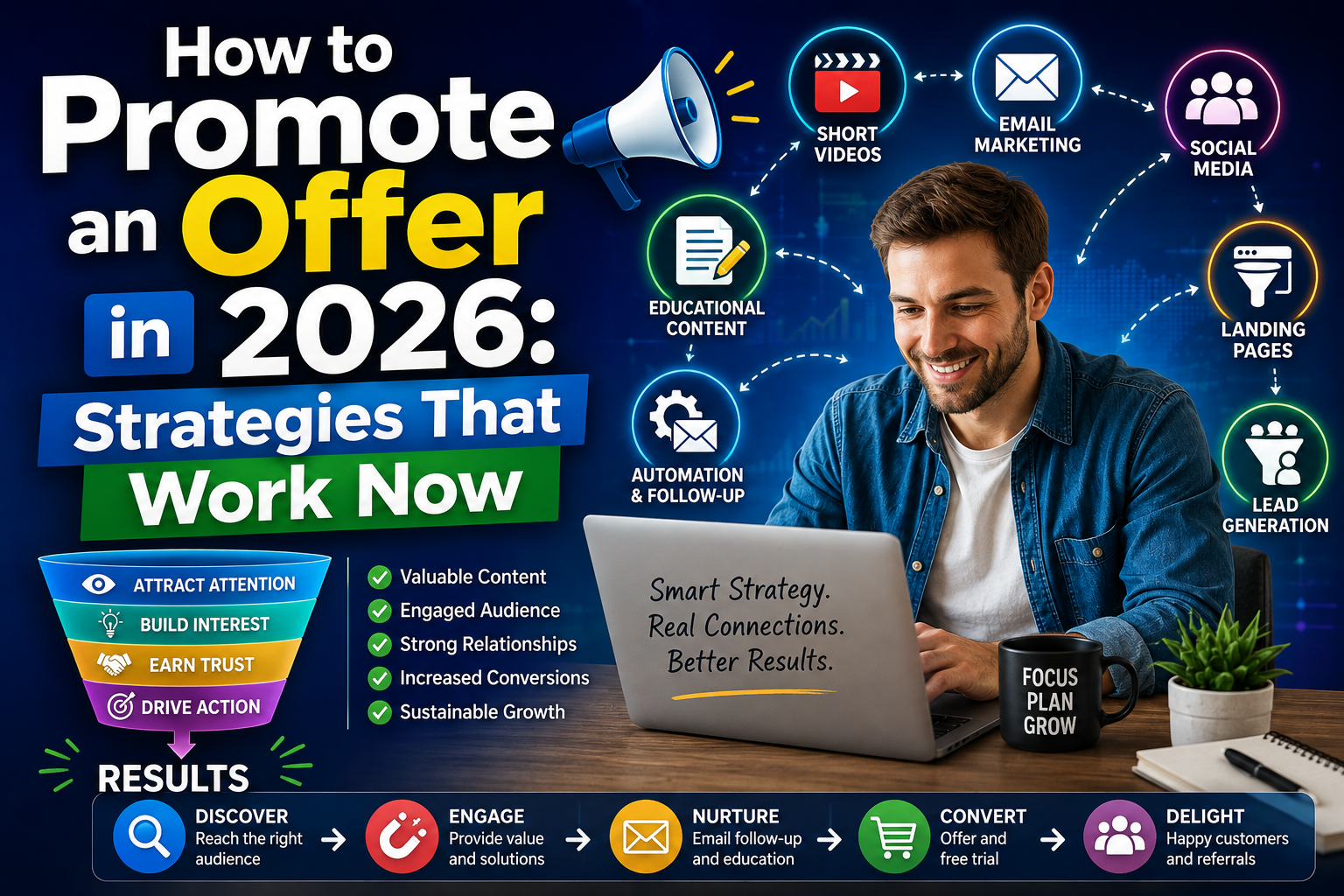
The Complete System
A modern promotional system can look like this:
Attention
Short videos, posts, articles, and referrals.
↓
Interest
Educational content and questions.
↓
Capture
Landing page.
↓
Relationship
Email.
↓
Education
Follow-up sequence.
↓
Demonstration
Video or presentation.
↓
Offer
Free trial or purchase.
↓
Experience
Product usage.
↓
Referrals
Recommendations.
↓
Opportunity
Affiliate or business presentation for interested people.
This is far more powerful than depending entirely on sending traffic straight to an affiliate link.
Conclusion: Promote Better, Not Simply More
The future of marketing does not necessarily belong to the person who publishes the most advertisements.
It belongs to the person who builds the smarter system.
People first need attention.
Then information.
Then trust.
Only after that are they truly prepared to make a decision.
That is why a strong strategy combines:
Content.
Education.
Video.
Email.
Demonstration.
Follow-Up.
Relationships.
Referrals.
The best promotion does not always look like advertising.
Often, it looks like a useful answer to a real problem.
When you accomplish that, you stop chasing people.
You create a path for the right people to discover your solution.
And that difference can completely change your marketing results.
Disclaimer
This article is provided for educational and informational purposes only. The marketing strategies discussed do not guarantee sales, income, or specific results. Outcomes may vary depending on the offer, audience, market conditions, content quality, investment, experience, and consistency. If you promote products through affiliate links, clearly disclose your commercial relationship and comply with applicable laws, advertising policies, and platform requirements.
