Publicado en Consumer Psychology, Digital Marketing, Persuasion, Sales

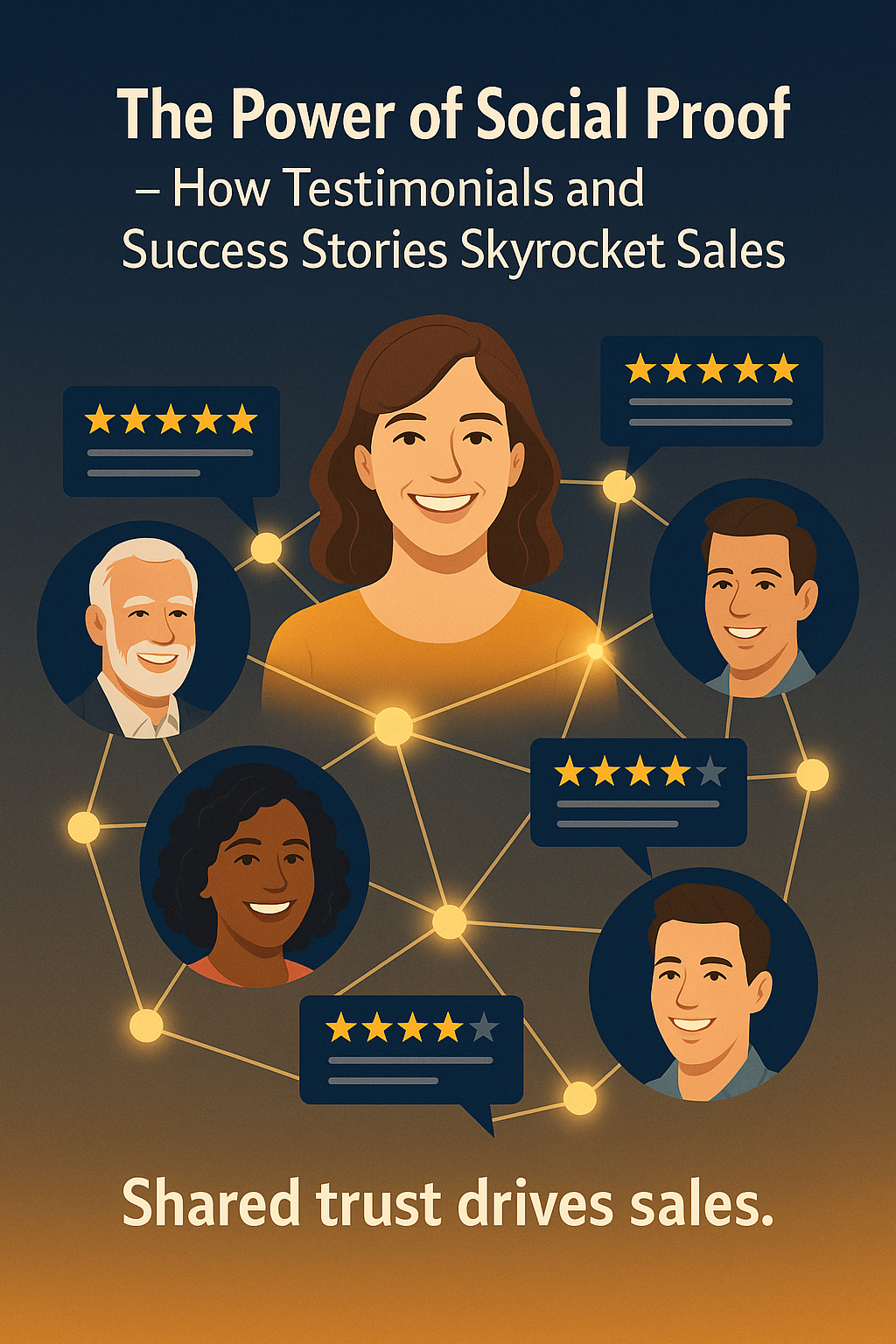
🧩 The Power of Social Proof

How Testimonials and Success Stories Skyrocket Sales

🌟 Introduction

We live in an age where trust is everything.


Customers no longer buy just because of what you say — they buy because of what others say about you.

This is the essence of the Psychological Principle of Social Proof, one of the most powerful persuasion triggers ever discovered.

“If others are doing it, it must be good.”

Social proof is the invisible force that drives people to take action, trust faster, and feel safer when making a decision.


👥 The Buyer’s Mind: The Need for Validation

The human brain doesn’t like making decisions alone.


When uncertain, people look around to see what others are doing.

This behavior dates back to ancient survival instincts — following the tribe meant staying safe.


Today, it translates into modern consumer habits:

  • Reading reviews before buying.
  • Checking comments on social media.
  • Trusting recommendations over ads.

🧠 How Social Proof Works

Each time someone sees others trusting your product or service, their brain automatically makes an emotional calculation:

“If others have done it and they’re happy, I can do it too — safely.”

That single thought reduces hesitation, increases confidence, and accelerates buying decisions.


💬 Types of Social Proof

  1. Testimonials:
    Real opinions from satisfied customers.
    🟢 Use names, photos, and specific results.
    Example: “In my first week with GotBackUp, I already made my first commission!”
  2. Success Stories:
    Emotional storytelling of transformation.
    Show the before and after effect of your product or service.
  3. Numbers and Statistics:
    📊 “Over 10,000 people trust our system.”
  4. Authority Endorsements:
    🏆 Mentions, awards, or partnerships that boost credibility.
  5. Live Social Proof:
    💬 Visible comments, shares, and engagement on social media or your sales page.

⚙️ How to Apply It Strategically

  • Place testimonials at the top and bottom of your page.
  • Combine text with real images or short videos.
  • Keep your reviews recent and relevant.
  • Highlight emotional benefits and measurable results.

Example:

“Before GotBackUp, I worried about losing my data. Now I have full protection and recurring income every month.”


💬 Golden Quote

“The best advertising isn’t what you say… it’s what your customers say about you.”


💼 Conclusion

Social proof bridges the gap between doubt and decision.


Each testimonial, each story, each result builds a wall of trust in your prospect’s mind.

Never underestimate its power — one real success story can sell more than a thousand ads.


🚀 Start building your own success stories today.


Help others achieve results and let their voices sell for you.


👉 Begin your GotBackUp journey and become the next success story

⚠️ Disclaimer

This content is provided for educational purposes only. The psychological strategies described should be applied ethically and transparently, using authentic and verifiable testimonials. Success may vary depending on context, experience, and consistent effort.

Publicado en Consumer Psychology, Persuasion, Sales

🧩 The Principle of Reciprocity

Why Giving First Makes People Want to Buy Later

🌟 Introduction

One of the most powerful — and ethical — psychological triggers in sales is the Principle of Reciprocity.


It’s based on a fundamental human law of behavior:

When someone gives us something, we feel the need to give something back.

Top brands, marketers, and sellers use this principle daily — and it works because it appeals to one of the deepest instincts of human connection.


The good news? You can use it too, in an authentic and value-driven way.


🎁 The Power of Giving Without Expecting

When you offer value first, before asking for a sale, your prospect’s defense walls drop.


Their brain shifts from “They’re trying to sell me something” to “This person is helping me.”

That emotional shift opens the door to trust and gratitude — and gratitude is one of the strongest psychological motivators for taking action.

Real examples:

  • A salesperson gives a free sample.
  • A marketer offers a free eBook or educational guide.
  • A coach delivers a free training before presenting a premium program.

In all cases, the prospect’s subconscious says:

“This person helped me; the least I can do is listen to their offer.”


🧠 Why Reciprocity Works

The human brain craves balance.


When someone gives freely, we feel a social and emotional debt.


This invisible pull to “even the scale” is what drives the urge to respond positively.

💡 That’s the same reason waiters who give a mint with the bill often receive bigger tips — it activates reciprocity instantly.


⚙️ How to Apply Reciprocity Ethically in Sales

  1. Offer Real Value:
    Give something that truly helps or educates your audience.
    🎯 Example: “Here’s a free guide that shows you how to start your online business from zero.”
  2. Don’t Demand Immediately:
    The magic of reciprocity fades if the customer feels pressured.
    Let the goodwill mature before making your offer.
  3. Make It Personal:
    A genuine gift or story builds emotional depth.
    Example: “I faced the same struggle — that’s why I’m sharing this resource that helped me change everything.”

💬 Golden Quote

“Provide value first. The money always follows.”

That single mindset separates average sellers from the truly great ones.


💼 Conclusion

Reciprocity isn’t manipulation — it’s humanity applied to sales.


When you give without expectation, you plant seeds of trust.


And once trust grows, sales follow naturally.


🚀 Give value, share knowledge, and watch your business grow with purpose.


👉 Start applying the principle of reciprocity right now with GotBackUp

A tool that gives real value while protecting your data and creating passive income


⚠️ Disclaimer

This material is for educational purposes only. The psychological strategies described should always be applied ethically and responsibly, respecting customer autonomy and integrity. Success depends on individual execution, consistency, and context.