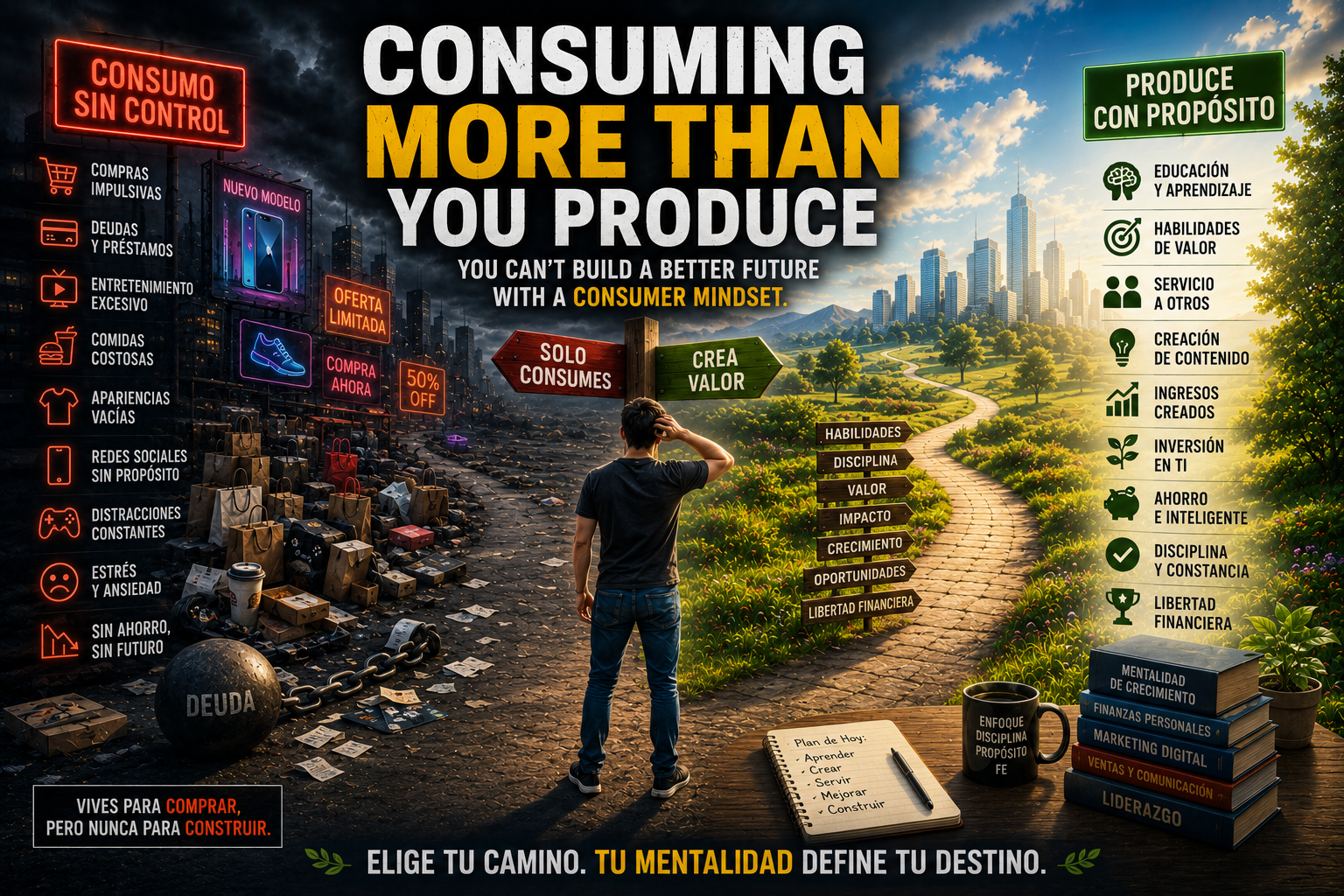
By Marvin Gandis
We live in a time when consuming seems easier than producing.
Every day, we are exposed to ads, offers, recommendations, videos, trends, promotions, perfect lifestyles, and messages inviting us to buy more, try more, upgrade more, and desire more.
The problem is not consumption itself. We all need to consume food, services, tools, education, transportation, technology, and resources to live. The problem begins when a person consumes more than they produce, spends more value than they create, and lives trapped in a mindset of dependency.
In this fourth part of the series “The Reverse Question,” we will reflect on one of the most silent traps of modern life: living as a permanent consumer, but not as a creator of value.
- Because the person who only consumes depends.
- But the person who produces value begins to build options.
The culture of constant consumption
Modern society teaches us to desire constantly.
- A new phone.
- New clothes.
- More entertainment.
- More comfort.
- More appearances.
- More subscriptions.
- More eating out.
- More impulsive purchases.
- More things to make us feel like we are moving forward.
But many times, we are not moving forward. We are only buying.
Consumption can provide temporary pleasure, but it does not always produce growth. It may distract, entertain, impress, or calm an emotion for a while, but without value production, the result can become dependency, debt, frustration, and lack of real progress.
The question is not whether you consume. We all consume.
The question is:
Are you also producing value?
Consuming is not the same as growing
A person can consume a lot of information and still not grow.
- They can watch motivational videos every day.
- They can listen to success podcasts.
- They can save inspiring quotes.
- They can buy courses.
- They can read posts about wealth.
- They can follow successful people on social media.
But if they do not apply, practice, create, serve, organize, and take action, that consumption becomes entertainment disguised as learning.
Learning is important. But learning without application can become another form of stagnation.
- Information alone does not transform.
- Application transforms.
- Practice transforms.
- Discipline transforms.
- Creation transforms.
The consumer waits; the producer creates
A consumer mindset waits for someone else to solve, entertain, motivate, educate, organize, provide, or open opportunities.
A productive mindset asks:
- What can I create?
- What problem can I solve?
- What skill can I develop?
- What service can I offer?
- What knowledge can I share?
- What value can I bring?
- What can I improve today?
The consumer asks:
“What can I receive?”
The producer asks:
“What can I build?”
That difference changes the direction of a life.
Dependency begins when value is not produced
When a person does not produce value, they depend too much on what others decide to give them.
- They depend on one income.
- They depend on one opportunity.
- They depend on other people’s opinions.
- They depend on the economy.
- They depend on the boss.
- They depend on the system.
- They depend on luck.
But when a person develops skills and learns to produce value, they begin to create more options.
- They can serve better.
- They can sell better.
- They can communicate better.
- They can solve problems.
- They can start a business.
- They can teach.
- They can create content.
- They can build an audience.
- They can open new doors.
Producing value does not guarantee instant results, but it strengthens the ability to move forward.
The trap of appearing productive
Not all activity is production.
A person can be busy all day and still not create real value.
- They can check social media.
- They can share posts without a strategy.
- They can open many tabs on the computer.
- They can talk about ideas without executing them.
- They can study without applying.
- They can plan without acting.
- They can move a lot without progressing.
True productivity is not measured only by exhaustion. It is measured by results, learning, creation, improvement, and value delivered.
The important question is:
Did what I do today produce something useful, improve something, or move my life closer to a real goal?
Producing value does not always mean owning a business
When we talk about producing, many people think only about owning a company or selling something. But producing value can take many forms.
- An employee produces value when they improve their work, solve problems, and become more useful.
- An entrepreneur produces value when they offer real solutions.
- A creator produces value when they educate, inspire, or help others.
- A parent produces value when they guide, form, and support their family.
- A student produces value when they develop skills to serve better in the future.
- A leader produces value when they help others grow.
Producing value does not always begin with money. Many times, it begins with service, responsibility, and excellence.
Skills that help you produce more value
A person who wants to stop depending only on consumption needs to develop skills that increase their ability to contribute.
Some important skills include:
- Communication.
- Sales.
- Writing.
- Financial education.
- Digital marketing.
- Responsible use of artificial intelligence.
- Personal organization.
- Leadership.
- Problem solving.
- Customer service.
- Content creation.
- Time management.
- Strategic thinking.
Each new skill can increase your ability to produce value. And when you produce more value, you also increase your chances of creating better opportunities.
Create value before asking for results
Many people want results before delivering value.
- They want sales without trust.
- They want income without service.
- They want followers without useful content.
- They want success without consistency.
- They want recognition without contribution.
- They want wealth without solving problems.
But life often rewards sustained value.
- If you want more opportunities, increase your ability to serve.
- If you want a better income, increase your ability to solve problems.
- If you want more trust, deliver more consistency.
- If you want to grow, improve what you offer.
The question is not only:
“How can I earn more?”
The question should also be:
“How can I become more useful?”
Intelligent consumption can also help you
Not all consumption is bad. Some consumption feeds growth.
- Consuming quality education.
- Buying useful tools.
- Investing in training.
- Reading good books.
- Learning from mentors.
- Using technology to improve.
- Searching for information that supports better decisions.
The difference is purpose.
- Impulsive consumption distracts you.
- Intelligent consumption prepares you.
- Disorganized consumption weakens you.
- Purposeful consumption equips you.
The key is not to stop consuming completely. The key is to consume better and produce more.
How to move from consumer to value creator
Change does not happen overnight, but it can begin with small steps.
Ask yourself every morning:
“What can I create today?”
Before buying something, ask:
“Does this help me grow or only distract me?”
Before consuming content, ask:
“Will I apply something from this?”
Before complaining about lack of opportunities, ask:
“What skill can I develop to create an opportunity?”
Every day, you can decide to produce something:
- An organized idea.
- A useful message.
- Educational content.
- An improvement in your work.
- A valuable conversation.
- A solution for someone.
- A step in your project.
- A written page.
- A practiced skill.
- An action that builds the future.
Wealth is built by creating value
True wealth does not come only from having money. It comes from learning to consistently create value.
- Value for your family.
- Value for your clients.
- Value for your community.
- Value for your work.
- Value for your readers.
- Value for your projects.
- Value for people who need a solution.
When a person becomes someone who contributes value, they stop seeing life only through need and begin seeing it through contribution.
And when contributions grow, opportunities can grow as well.
Conclusion
Consuming more than you produce can keep you dependent, distracted, and stuck. Modern culture invites people to buy, watch, desire, and appear successful, but a life with purpose requires something deeper: creating, serving, learning, applying, and contributing value.
My dear reader or friend, this is not about refusing to enjoy life. It is about refusing to live only as a consumer. You have talents, experiences, ideas, skills, and possibilities that can become valuable for others.
Start small. Learn something. Apply something. Create something. Serve someone. Improve a process. Share a lesson. Finish a task. Build a skill.
- Because the person who only consumes waits.
- But the person who produces value begins to build the future.
Disclaimer
This article is for educational, reflective, and informational purposes only. It should not be interpreted as financial, legal, accounting, professional, or investment advice. The purpose of this content is to encourage awareness about consumption habits, the importance of creating value, skill development, personal discipline, and financial responsibility.
Consuming more than you produce can affect financial, emotional, and personal stability; however, every person’s circumstances are different. Income, expenses, family responsibilities, opportunities, debt, employment conditions, and personal situations can vary widely.
This content is not intended to judge, blame, or shame anyone facing financial difficulties. Many people navigate complex situations shaped by personal, family, social, economic, employment-related, and structural factors.
Before making important decisions related to money, debt, investments, business, budgeting, financial education, or professional changes, it is recommended to consult a qualified professional.
The information shared is intended to inspire reflection, learning, and responsible action, but results depend on each person’s situation, decisions, consistency, and reality.
Debe estar conectado para enviar un comentario.