Publicado en Pasos para Comprar

How to Start an Embroidery Business from Home: A Complete Guide to Building Your Craft Empire 🧵✨

Starting your own embroidery business from home is an exciting and rewarding venture! Whether you’re a seasoned embroidery artist or someone who has recently fallen in love with the craft, there’s never been a better time to turn your passion into profit. 💡💰

In this comprehensive guide, we’ll walk you through every step of launching your embroidery business from home 🏠. We’ll also cover how to use SEO (Search Engine Optimization) to attract customers online, ensuring your business stands out in a crowded market. Ready to get started? Let’s dive in! 🚀


1. Why Start an Embroidery Business from Home? 🤔

Embroidery is a creative and timeless art form that can be turned into a successful home-based business. Here’s why starting an embroidery business from home is a great idea:

  • Low Startup Costs 💸: You can start small with basic equipment and supplies.
  • Flexibility ⏳: Work on your own schedule and at your own pace.
  • Creative Fulfillment 🎨: Express your artistic side while building a business.
  • High Demand 📈: Personalized embroidery items are always in demand, from custom t-shirts to baby blankets, hats, and home décor.

2. Getting Started: What You Need to Begin 🛠️

Before you start stitching your way to success, it’s essential to have the right tools and materials. Here’s a basic list of what you’ll need:

  • Embroidery Machine 🖥️: Depending on your budget, you can start with a basic model or invest in a more advanced one with multiple capabilities.
  • Embroidery Software 💾: Helps you digitize designs and create custom patterns.
  • Supplies 🧵: Includes thread, needles, fabric, stabilizers, and hoops.
  • Workspace 💺: Set up a dedicated area where you can work efficiently without distractions.

3. Choosing Your Niche: Standing Out in a Crowded Market 🎯

In the world of embroidery, standing out is key! With so many options available, choosing a niche helps you focus your efforts and become an expert in that area. Some popular niches include:

  • Personalized Gifts 🎁: Embroidered names or messages on baby clothes, towels, or robes.
  • Corporate Branding 🏢: Logos on uniforms, hats, or bags.
  • Home Décor 🛋️: Custom designs for pillows, curtains, and wall art.
  • Wedding and Event Items 💍: Customized handkerchiefs, sashes, and table runners.

4. Creating a Business Plan 📋

A well-thought-out business plan will guide your embroidery business toward success. Key elements to include are:

  • Business Name 🏷️: Choose a name that reflects your brand and is easy to remember.
  • Target Market 🎯: Define your ideal customer. Are you targeting new moms, brides-to-be, or corporate clients?
  • Budget 💰: Outline your initial costs, including equipment, supplies, and marketing.
  • Marketing Plan 📢: Include strategies for SEO, social media, and email marketing.

5. Setting Up Your Workspace 🏡

Your home embroidery workspace should be organized, functional, and comfortable. Here are a few tips for setting up:

  • Lighting 💡: Good lighting is essential for detailed work.
  • Storage 📦: Keep your supplies neat and easy to access.
  • Comfort 🪑: Invest in a comfortable chair and ergonomic setup to avoid fatigue during long hours of embroidery.

6. Investing in the Right Equipment ⚙️

The embroidery machine you choose will be the backbone of your business. If you’re just starting out, here are two common options:

  • Single-Needle Machine 🪡: Great for beginners, affordable, and easy to use.
  • Multi-Needle Machine 🌟: Ideal for more complex designs and higher production

7. Pricing Your Products 💵

Pricing can be tricky, but it’s important to strike a balance between covering your costs and offering competitive rates. Consider the following when pricing your products:

  • Cost of Materials 🧶: Factor in fabric, thread, stabilizers, and other supplies.
  • Labor ⏱️: Account for the time it takes to complete each project.
  • Market Rates 💼: Research what similar businesses are charging.

8. Marketing Your Embroidery Business: SEO and Beyond 🌐

Marketing is where many home businesses struggle, but by using SEO effectively, you can drive traffic to your website and social media pages. Here are a few key strategies:

  • Keyword Optimization 🔍: Use relevant keywords in your website content, such as “custom embroidery,” “personalized gifts,” and “embroidery services.”
  • Content Marketing 📝: Start a blog on your website and write articles like “How to Choose the Perfect Embroidered Gift” or “Creative Embroidery Ideas for Beginners.”
  • Local SEO 📍: If you’re targeting local customers, include location-based keywords like “Las Vegas custom embroidery.”

Don’t forget about social media! Platforms like Instagram and Pinterest are perfect for showcasing your work and connecting with potential customers. 📸🎨


9. Building an Online Presence: Website and Social Media 📱

A professional website is a must for any embroidery business. Here’s what to include:

  • Portfolio 🖼️: Showcase your best work with high-quality photos.
  • Online Store 🛒: Make it easy for customers to browse and purchase your products.
  • Contact Information 📧: Ensure customers can reach you easily.

Also, use social media to promote your work. Share behind-the-scenes photos 📸, new designs 🧵, and satisfied customer testimonials 💬.


10. Delivering Excellent Customer Service 💬

Customer service is the heart of any successful business. Ensure your customers have a positive experience by:

  • Communicating Clearly 🗣️: Be upfront about turnaround times, prices, and shipping.
  • Following Up 📞: After a sale, send a thank-you email and ask for feedback.
  • Handling Complaints 🛠️: Address any issues promptly and professionally.

12. Conclusion: Take Action and Grow Your Business 💼

Starting your embroidery business from home can be the beginning of a fulfilling journey. By following these steps, you’ll be well on your way to success. Remember, the key to growing your business lies in dedication, creativity, and effective marketing. 🧵✨


Get Started Today! 🚀

If you’re ready to start your embroidery business from home, there’s no better time than now! Begin by gathering your supplies, choosing your niche, and building your online presence. Want more tips and personalized advice? Sign up for our free newsletter today 📧 to receive weekly updates on growing your embroidery business, plus exclusive offers on the best embroidery tools and software! 🛠️✨


Publicado en finanzas

Build Wealth In 2023: Here’s What You Need To Start Investing In NOW!

On todays Table Talk With AO we Join Brandy and David on their journey to uncover the secrets of creating, keeping and transferring wealth in the black community.

In this video we learn why we need to change our mindset to reach a positive net worth, and what positive assets we can use to get there. I mean we talk about what liabilities are, the difference between capital gains and cash flow, and what your personal financial strategy should be! Wait a minute? Do you have a financial advisor?

Let’s help you get a plan! Here you get exclusive access to Brandy and David’s valuable information and advice and learn how to get the Keys to Black Wealth and how you can be apart of their upcoming event in Ohio on February 25th!

To start investing in 2023, here are some key steps to take:

  1. Start by setting clear financial goals: What do you want to achieve through investing? Do you want to build a retirement fund, save for a down payment on a house, or create a passive income stream? Identify your goals and create a plan to achieve them.
  2. Educate yourself on investing: Before you start investing, it’s important to understand the basics of investing, such as the different types of investment products, risk management, and portfolio diversification. There are plenty of free resources available online, such as investing blogs, podcasts, and YouTube channels.
  3. Create a budget: To start investing, you need to have money to invest. Creating a budget can help you identify areas where you can cut back on expenses and free up money for investing.
  4. Choose your investment products: Once you have a clear understanding of your financial goals, risk tolerance, and budget, it’s time to choose your investment products. This can include stocks, bonds, mutual funds, exchange-traded funds (ETFs), or real estate.
  5. Consider working with a financial advisor: A financial advisor can help you create a personalized investment plan based on your financial goals and risk tolerance. They can also provide guidance on tax-efficient investing and help you make informed investment decisions.

Remember, investing involves risk, and there are no guarantees of returns. It’s important to do your research and make informed decisions when investing your money. By starting early, being disciplined, and diversifying your portfolio, you can increase your chances of building wealth over time.

Publicado en ahorros

A Realistic Money Savings Challenge for Smaller Budgets

Okay, so we have all have seen those money savings challenges going around where you put money away each week and by the end of the year, you end up with anywhere from $5,000 to $10,000.

Well, the idea is nice and it’s great if you actually have $430 per week for weeks 50, 51, and 52 which end up being the weeks leading up to Christmas and the New Year!

I don’t know about you but for me, I don’t have $1600 dollars to put away each month right before Christmas.

Many people can start the challenge but then fail after they run out of extra money 6 weeks into it. The reason these challenges fail is because the money saving challenge starts out slow but then revs up the savings as time goes on. The system just doesn’t work for people who are not used to saving or people working with smaller budgets.

It’s kind of like following someone on their financial journey when they posted that they paid off $40k in 2 months but then you find out they make 6x as much income as you do. Well shoot, if I had that much money, I’d be sitting pretty too, amiright?

Does this sound like you?

Finally, a Money Savings Challenge for Small Budgets

In the most popular savings challenge, the 52 week savings challenge, it starts out with saving $1 in week 1, $2 in week 2, and so forth. By week 52, you are saving $52. You end up with $1,378 in the bank.

The problem with this is that in the last 4 weeks, you are saving an average of $202 compared to only $10 in the first 4 weeks. For most people with limited funds around the holidays, this challenge will fail.

I’ve decided to make my own savings challenge and design it with you in mind.

I’m also going to put a unique spin on it by NOT doing the standard 52 weeks.

Because of the fact that I budget by paycheck, I’ll be creating the 26 paycheck money savings challenge.

The 26 Paycheck Savings Challenge

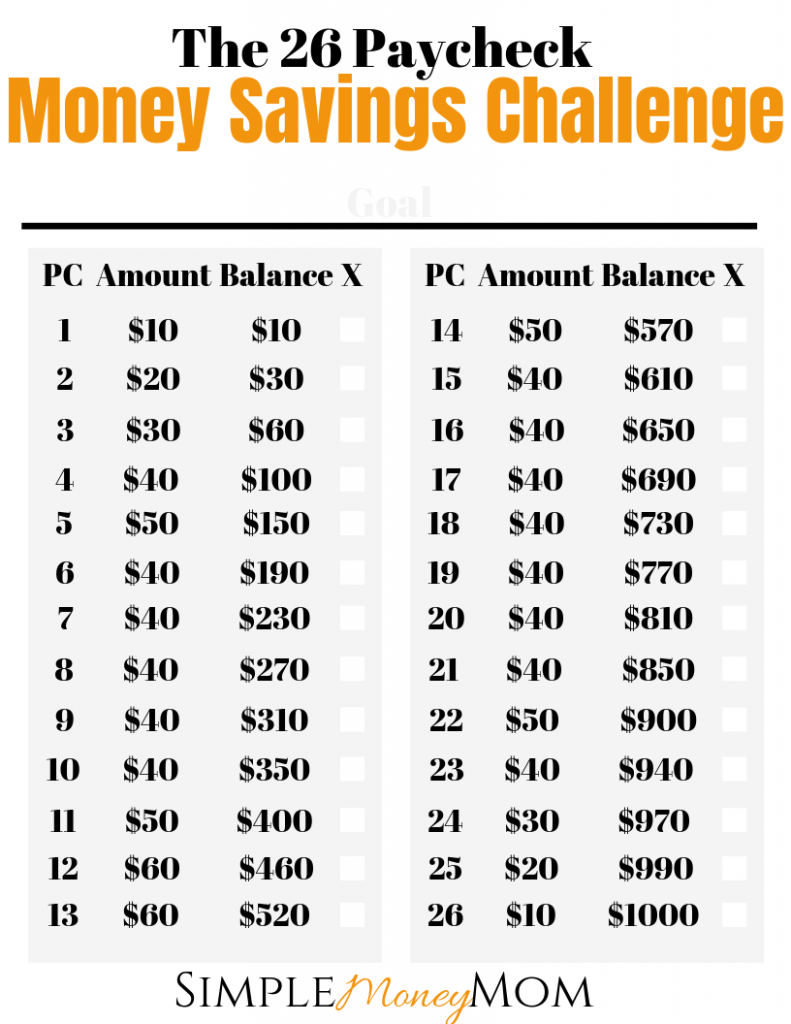
With this 26 paycheck money saving challenge for small budgets, you start out by saving just $10 from your first paycheck.

Then, you’ll increase your savings as time goes on until you reach the middle, where you will peak at only $110 in a 4 week period.

After that, you’ll plateau for a while then begin decreasing your savings around the holidays making your savings effortless at that point.


Who is this challenge for

This system is great for:

  • Those just starting out with savings challenges
  • Low income families
  • Middle class families with debt or large expenses

Anyone can do this challenge but I wanted to make something manageable and achievable for you.

How to be Successful with the Money Savings Challenge with a Small Budget

In order to be successful with this challenge, or any savings challenge really, you need to have the right mindset.

Dave Ramsey got it right when he said that personal finance is 20% math and 80% mentality, or something like that.

Find your WHY

To start the New Year off right AND to get in the right mindset, I want you to find your WHY.

Why are you doing this challenge?

Are you building an emergency fund?

Are you saving for Christmas so you can have a debt-free Christmas?

Do you want to go on a vacation soon?

Trying to pay down debt?

Write it down

Write it down. Put it on a sticky note and plaster that sucker on your bathroom mirror so you will be reminded every morning of why you are doing this savings challenge.

Heck, make it a wallpaper on your phone if you have to.

When you have your why, I want you to get fired up.

You can do this! You got this! You are a money saving machine!

Make a plan

Now, sit down and make a plan. Every month, I want you do to one thing, just one, to either decrease your expenses or increase your income.

It can be as simple as negotiating your car insurance or selling something you no longer need.

Doing one thing per month makes the system realistic and manageable, especially for moms.

Origen: A Realistic Money Savings Challenge for Smaller Budgets | Simple Money Mom