Publicado en Entrepreneurship, Financial Education, Personal Development, Productivity, Wealth Mindset

Refusing to Learn New Skills: The Mistake That Makes Your Future Poorer

By Marvin Gandis

One of the most dangerous ways to fall behind in life is to stop learning.

The world changes. Technology changes. Business changes. The way people work changes. The way we communicate changes. Opportunities change.

But many people want new results with old skills.

They want more income, but they do not develop new abilities. They want better opportunities, but they do not prepare. They want financial freedom, but they do not learn how to manage, sell, communicate, create value, or adapt to the times.

In this sixth part of the series “The Reverse Question,” we will reflect on a simple but powerful truth: the person who stops learning begins to limit their future.

  • This is not about having perfect degrees.
  • This is not about knowing everything.
  • This is not about comparing yourself to anyone.

It is about keeping a teachable, humble, and willing mind.


The world does not wait for those who stay the same

Many people live as if the world will stay the same forever. But reality is different.

  • What worked ten years ago may not work the same way today.
  • What used to be enough may not be enough tomorrow.
  • What once felt secure can change suddenly.

Today, there are new tools, new platforms, new business models, new ways to sell, new ways to learn, and new opportunities for those willing to prepare.

The problem is not that the world changes. The problem is refusing to change while the world keeps moving forward.


Lack of skills creates dependency

When a person does not develop skills, they depend too much on one income source, one opportunity, one company, one person, or one circumstance.

  • They depend on the boss giving them an opportunity.
  • They depend on the economy improving.
  • They depend on someone rescuing them.
  • They depend on things not changing.
  • They depend on others deciding for them.

But a person with skills has more options.

  • They can adapt.
  • They can offer services.
  • They can solve problems.
  • They can start a business.
  • They can sell.
  • They can teach.
  • They can create content.
  • They can use digital tools.
  • They can increase their value in the marketplace.

Skills do not eliminate every problem, but they increase the ability to respond better.


Learning does not end in school

Many people believe learning belongs to the past: school, college, an old course, or an earlier stage of life.

But life itself is a school.

  • Every problem can teach.
  • Every mistake can teach.
  • Every failure can teach.
  • Every customer can teach.
  • Every conversation can teach.
  • Every book can teach.
  • Every tool can teach.
  • Every attempt can teach.

Continuous learning is an attitude. It is the decision not to live closed, proud, or resigned.

  • A person who keeps learning keeps growing.
  • A person who believes they already know everything begins to stop.

Skills are seeds of opportunity

One skill can change a life.

  • Learning to communicate better can open doors.
  • Learning sales can increase income.
  • Learning personal finance can reduce chaos.
  • Learning digital marketing can help promote a business.
  • Learning artificial intelligence can improve productivity.
  • Learning leadership can influence others better.
  • Learning to write can help educate, sell, or inspire.
  • A learning organization can reduce stress.
  • Learning customer service can improve results.

Each new skill is a seed. It may not produce fruit immediately, but if practiced with discipline, it can become an opportunity.


Pride can also make a person poorer

Sometimes a person does not learn because they believe they already know enough.

  • They do not ask.
  • They do not listen.
  • They do not accept correction.
  • They do not study.
  • They do not update their knowledge.
  • They do not recognize their weaknesses.
  • They do not allow anyone to teach them.

Pride closes doors that humility could open.

A humble mind says:

  • “I can still learn.”
  • “I can still improve.”
  • “I can still correct.”
  • “I can still ask for help.”

That attitude is powerful because it keeps the person growing.


The fear of learning new things

Many people do not learn because they are afraid.

  • Afraid of feeling ignorant.
  • Afraid of making mistakes.
  • Afraid of technology.
  • Afraid of starting late.
  • Afraid of not understanding.
  • Afraid that others will laugh.
  • Afraid of failing again.

But nobody is born knowing everything. Every expert was once a beginner. Every skill began with discomfort. Every breakthrough began with a first attempt.

Refusing to learn because of fear is allowing fear to decide the future.

The question should not be:

“What if I fail?”

The question should be:

“What could happen if I never learn?”


Important skills for building a better future

Not everyone needs to learn the same things, but some skills can help almost anyone grow.

1. Financial education

Learning how to manage money, create a budget, reduce debt, save, invest carefully, and make better financial decisions.

2. Communication

Knowing how to express ideas, listen, write clear messages, negotiate, explain, and connect with other people.

3. Sales

Selling is not manipulation. Selling is knowing how to present value, solve problems, and help others make informed decisions.

4. Digital marketing

Learning how to share messages, create content, build an audience, use platforms, attract prospects, and communicate offers ethically.

5. Artificial intelligence and technology

Using modern tools to research, organize ideas, create content, automate tasks, and improve productivity.

6. Leadership

Learning how to influence by example, serve, guide, build teams, and take responsibility.

7. Problem solving

People who solve problems become valuable. Where there are problems, there are also opportunities to serve.

8. Time management

Time used poorly makes life poorer. Time organized wisely builds.


Learning without applying does not transform

Learning is important, but applying is also important.

Some people buy courses, save videos, read quotes, listen to audios, and take notes, but never execute.

That creates an illusion of progress.

Learning without action is like storing seeds without planting them.

Transformation happens when what is learned is practiced.

  • Read, but apply.
  • Listen, but act.
  • Study, but produce.
  • Learn, but correct.
  • Research, but execute.

One small applied action is worth more than a large amount of unused information.


How to begin learning new skills

You do not need to change your entire life in one day. You can begin with small and consistent steps.

  • Choose one important skill.
  • Dedicate 20 or 30 minutes a day.
  • Look for reliable resources.
  • Take notes.
  • Practice what you learn.
  • Make mistakes without quitting.
  • Measure your progress.
  • Apply it in a real project.
  • Look for people who know more.
  • Repeat until you improve.

Consistency turns learning into ability.


The skill you need most may be connected to your current problem

Many times, the problem you are facing reveals the skill you need to develop.

  • If your finances are disorganized, you need financial education.
  • If you are not selling, you need sales and communication.
  • If nobody sees your message, you need marketing and content creation.
  • If you lack time, you need organization.
  • If you struggle to move forward, you need discipline.
  • If you do not know how to use digital tools, you need technology training.
  • If you struggle to lead, you need to develop leadership.

Problems can be signals. They show where you need to grow.


The future belongs to those who keep learning

  • The person who learns adapts.
  • The person who adapts survives change better.
  • The person who practices improves.
  • The person who improves creates more value.
  • The person who creates more value increases their opportunities.

The most talented person does not always win. Many times, the person who moves forward is the one who is more teachable, consistent, and willing to improve.

Continuous learning is a form of humility, but it is also a form of preparation.


Conclusion

Refusing to learn new skills can make a person’s future poorer. Not always immediately, but gradually.

While the world moves forward, the person who refuses to learn becomes more vulnerable, more dependent, and less prepared for opportunities.

My dear reader or friend, your age, your story, and your past mistakes do not have to stop you. You can still learn. You can still improve. You can still develop a skill that changes your direction.

You do not need to know everything. You only need to begin.

Learn something useful. Practice something new. Improve an ability. Ask for help. Use your time better. Develop value.

Because every skill you develop can become a door.

And an open door can change your future.


Disclaimer

This article is for educational, reflective, and informational purposes only. It should not be interpreted as financial, legal, professional, academic, employment, or investment advice. The purpose of this content is to encourage awareness about continuous learning, skill development, adaptation, discipline, and personal responsibility.

Every person’s circumstances are different. Access to education, technology, time, resources, family support, employment opportunities, and economic conditions can vary widely. Learning new skills may increase opportunities, but it does not guarantee income, employment, financial success, or specific results.

This content is not intended to judge, blame, or shame anyone facing educational, economic, technological, or personal limitations. Before making important decisions related to studies, career, business, investments, professional changes, or personal finances, it is recommended to consult qualified professionals.

The information shared is intended to inspire reflection, preparation, and responsible action.
Publicado en Entrepreneurship, Financial Education, Personal Development, Productivity, Wealth Mindset

Consuming More Than You Produce: The Modern Trap That Keeps You Dependent

By Marvin Gandis

We live in a time when consuming seems easier than producing.

Every day, we are exposed to ads, offers, recommendations, videos, trends, promotions, perfect lifestyles, and messages inviting us to buy more, try more, upgrade more, and desire more.

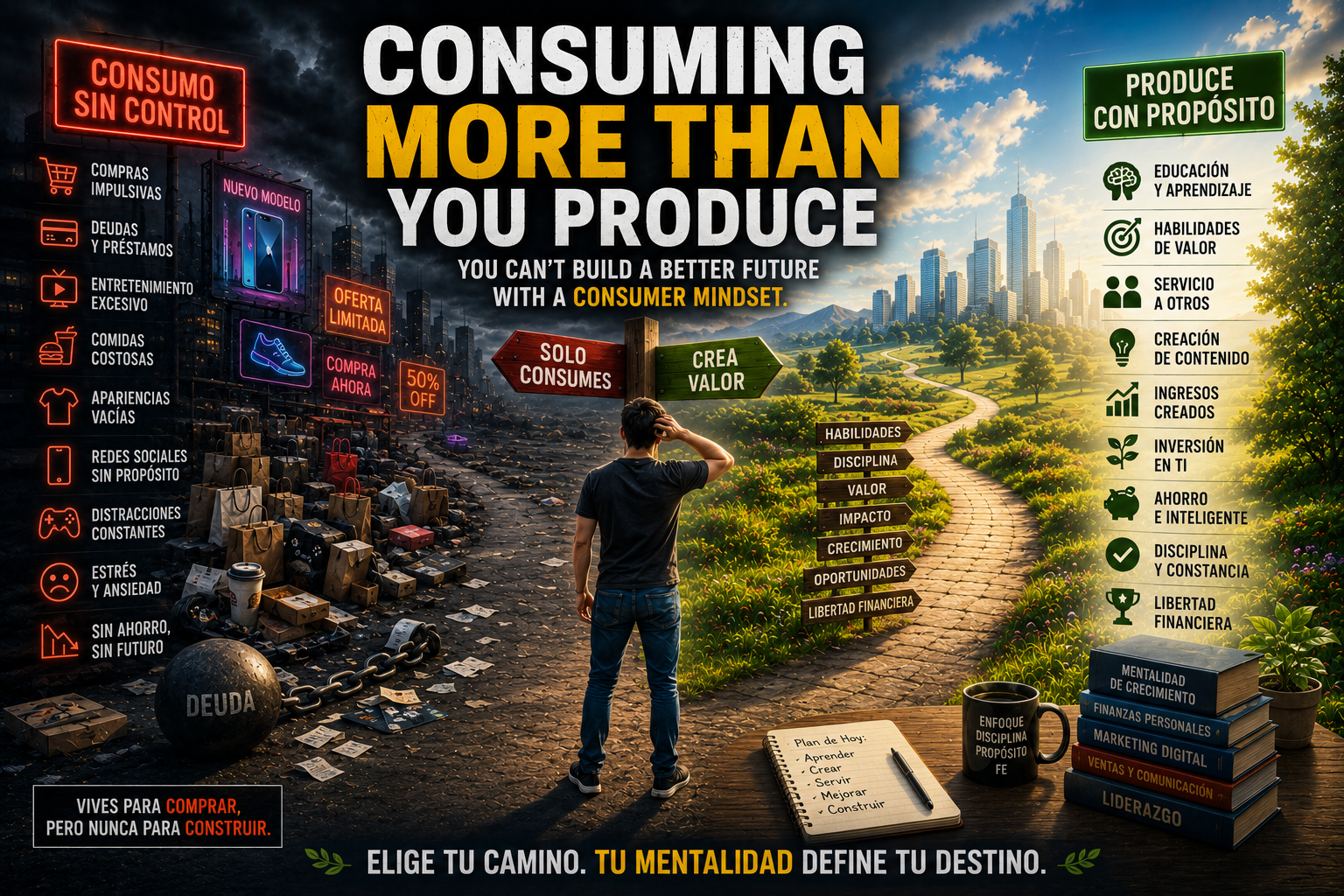
The problem is not consumption itself. We all need to consume food, services, tools, education, transportation, technology, and resources to live. The problem begins when a person consumes more than they produce, spends more value than they create, and lives trapped in a mindset of dependency.

In this fourth part of the series The Reverse Question,” we will reflect on one of the most silent traps of modern life: living as a permanent consumer, but not as a creator of value.

  • Because the person who only consumes depends.
  • But the person who produces value begins to build options.

The culture of constant consumption

Modern society teaches us to desire constantly.

  • A new phone.
  • New clothes.
  • More entertainment.
  • More comfort.
  • More appearances.
  • More subscriptions.
  • More eating out.
  • More impulsive purchases.
  • More things to make us feel like we are moving forward.

But many times, we are not moving forward. We are only buying.

Consumption can provide temporary pleasure, but it does not always produce growth. It may distract, entertain, impress, or calm an emotion for a while, but without value production, the result can become dependency, debt, frustration, and lack of real progress.

The question is not whether you consume. We all consume.

The question is:

Are you also producing value?


Consuming is not the same as growing

A person can consume a lot of information and still not grow.

  • They can watch motivational videos every day.
  • They can listen to success podcasts.
  • They can save inspiring quotes.
  • They can buy courses.
  • They can read posts about wealth.
  • They can follow successful people on social media.

But if they do not apply, practice, create, serve, organize, and take action, that consumption becomes entertainment disguised as learning.

Learning is important. But learning without application can become another form of stagnation.

  • Information alone does not transform.
  • Application transforms.
  • Practice transforms.
  • Discipline transforms.
  • Creation transforms.

The consumer waits; the producer creates

A consumer mindset waits for someone else to solve, entertain, motivate, educate, organize, provide, or open opportunities.

A productive mindset asks:

  • What can I create?
  • What problem can I solve?
  • What skill can I develop?
  • What service can I offer?
  • What knowledge can I share?
  • What value can I bring?
  • What can I improve today?

The consumer asks:
“What can I receive?”

The producer asks:
“What can I build?”

That difference changes the direction of a life.


Dependency begins when value is not produced

When a person does not produce value, they depend too much on what others decide to give them.

  • They depend on one income.
  • They depend on one opportunity.
  • They depend on other people’s opinions.
  • They depend on the economy.
  • They depend on the boss.
  • They depend on the system.
  • They depend on luck.

But when a person develops skills and learns to produce value, they begin to create more options.

  • They can serve better.
  • They can sell better.
  • They can communicate better.
  • They can solve problems.
  • They can start a business.
  • They can teach.
  • They can create content.
  • They can build an audience.
  • They can open new doors.

Producing value does not guarantee instant results, but it strengthens the ability to move forward.


The trap of appearing productive

Not all activity is production.

A person can be busy all day and still not create real value.

  • They can check social media.
  • They can share posts without a strategy.
  • They can open many tabs on the computer.
  • They can talk about ideas without executing them.
  • They can study without applying.
  • They can plan without acting.
  • They can move a lot without progressing.

True productivity is not measured only by exhaustion. It is measured by results, learning, creation, improvement, and value delivered.

The important question is:

Did what I do today produce something useful, improve something, or move my life closer to a real goal?


Producing value does not always mean owning a business

When we talk about producing, many people think only about owning a company or selling something. But producing value can take many forms.

  • An employee produces value when they improve their work, solve problems, and become more useful.
  • An entrepreneur produces value when they offer real solutions.
  • A creator produces value when they educate, inspire, or help others.
  • A parent produces value when they guide, form, and support their family.
  • A student produces value when they develop skills to serve better in the future.
  • A leader produces value when they help others grow.

Producing value does not always begin with money. Many times, it begins with service, responsibility, and excellence.


Skills that help you produce more value

A person who wants to stop depending only on consumption needs to develop skills that increase their ability to contribute.

Some important skills include:

  • Communication.
  • Sales.
  • Writing.
  • Financial education.
  • Digital marketing.
  • Responsible use of artificial intelligence.
  • Personal organization.
  • Leadership.
  • Problem solving.
  • Customer service.
  • Content creation.
  • Time management.
  • Strategic thinking.

Each new skill can increase your ability to produce value. And when you produce more value, you also increase your chances of creating better opportunities.


Create value before asking for results

Many people want results before delivering value.

  • They want sales without trust.
  • They want income without service.
  • They want followers without useful content.
  • They want success without consistency.
  • They want recognition without contribution.
  • They want wealth without solving problems.

But life often rewards sustained value.

  • If you want more opportunities, increase your ability to serve.
  • If you want a better income, increase your ability to solve problems.
  • If you want more trust, deliver more consistency.
  • If you want to grow, improve what you offer.

The question is not only:

“How can I earn more?”

The question should also be:

“How can I become more useful?”


Intelligent consumption can also help you

Not all consumption is bad. Some consumption feeds growth.

  • Consuming quality education.
  • Buying useful tools.
  • Investing in training.
  • Reading good books.
  • Learning from mentors.
  • Using technology to improve.
  • Searching for information that supports better decisions.

The difference is purpose.

  • Impulsive consumption distracts you.
  • Intelligent consumption prepares you.
  • Disorganized consumption weakens you.
  • Purposeful consumption equips you.

The key is not to stop consuming completely. The key is to consume better and produce more.


How to move from consumer to value creator

Change does not happen overnight, but it can begin with small steps.

Ask yourself every morning:
“What can I create today?”

Before buying something, ask:
“Does this help me grow or only distract me?”

Before consuming content, ask:
“Will I apply something from this?”

Before complaining about lack of opportunities, ask:
“What skill can I develop to create an opportunity?”

Every day, you can decide to produce something:

  • An organized idea.
  • A useful message.
  • Educational content.
  • An improvement in your work.
  • A valuable conversation.
  • A solution for someone.
  • A step in your project.
  • A written page.
  • A practiced skill.
  • An action that builds the future.

Wealth is built by creating value

True wealth does not come only from having money. It comes from learning to consistently create value.

  • Value for your family.
  • Value for your clients.
  • Value for your community.
  • Value for your work.
  • Value for your readers.
  • Value for your projects.
  • Value for people who need a solution.

When a person becomes someone who contributes value, they stop seeing life only through need and begin seeing it through contribution.

And when contributions grow, opportunities can grow as well.


Conclusion

Consuming more than you produce can keep you dependent, distracted, and stuck. Modern culture invites people to buy, watch, desire, and appear successful, but a life with purpose requires something deeper: creating, serving, learning, applying, and contributing value.

My dear reader or friend, this is not about refusing to enjoy life. It is about refusing to live only as a consumer. You have talents, experiences, ideas, skills, and possibilities that can become valuable for others.

Start small. Learn something. Apply something. Create something. Serve someone. Improve a process. Share a lesson. Finish a task. Build a skill.

  • Because the person who only consumes waits.
  • But the person who produces value begins to build the future.

Disclaimer

This article is for educational, reflective, and informational purposes only. It should not be interpreted as financial, legal, accounting, professional, or investment advice. The purpose of this content is to encourage awareness about consumption habits, the importance of creating value, skill development, personal discipline, and financial responsibility.

Consuming more than you produce can affect financial, emotional, and personal stability; however, every person’s circumstances are different. Income, expenses, family responsibilities, opportunities, debt, employment conditions, and personal situations can vary widely.

This content is not intended to judge, blame, or shame anyone facing financial difficulties. Many people navigate complex situations shaped by personal, family, social, economic, employment-related, and structural factors.

Before making important decisions related to money, debt, investments, business, budgeting, financial education, or professional changes, it is recommended to consult a qualified professional.

The information shared is intended to inspire reflection, learning, and responsible action, but results depend on each person’s situation, decisions, consistency, and reality.

Publicado en Digital Security, Mindset, Personal Development, Personal Growth, Productivity, Technology

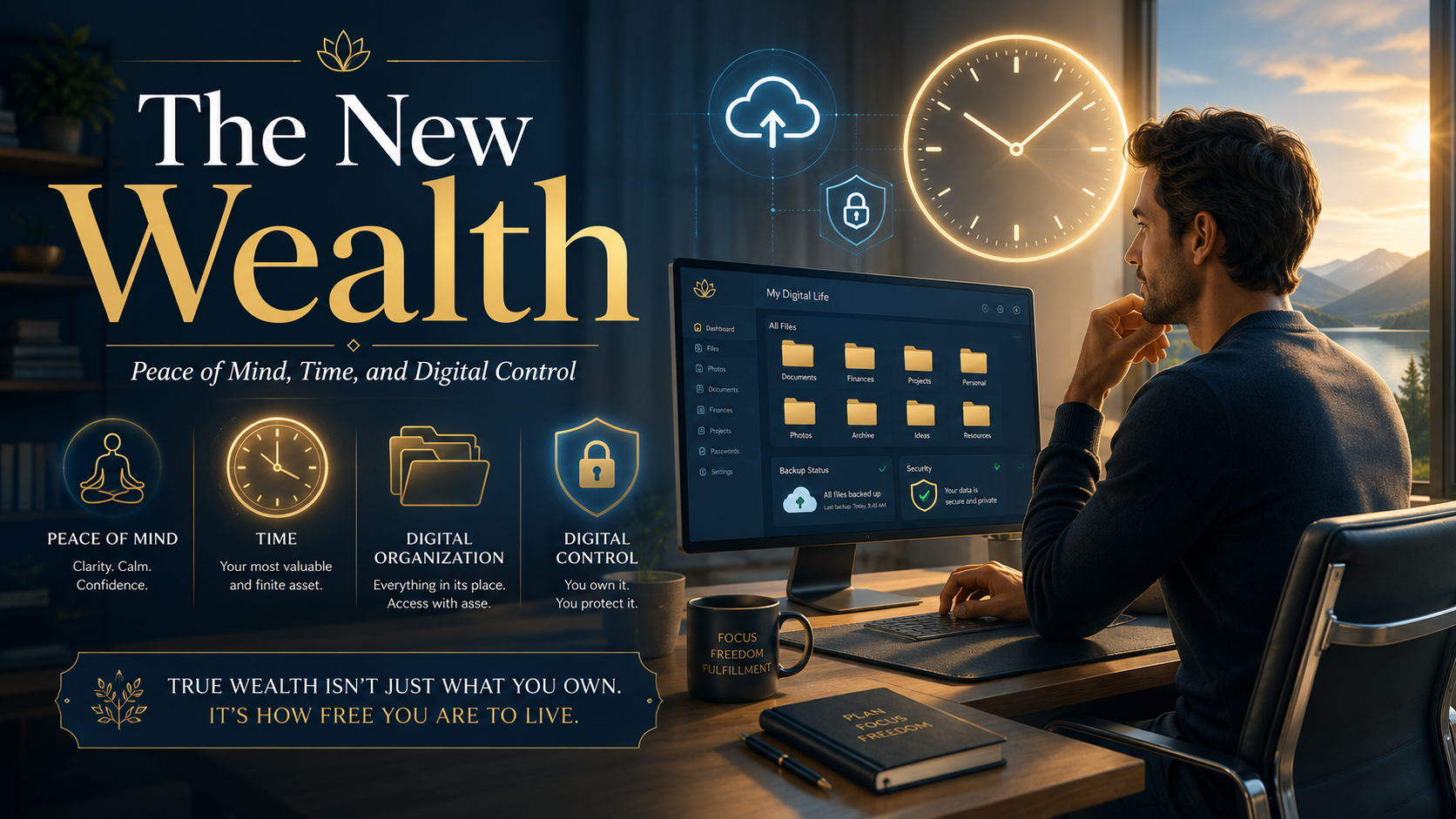
The New Wealth: Peace of Mind, Time, and Digital Control

By Marvin Gandis

Wealth Is No Longer Measured Only by Money

For a long time, many people associated wealth only with money, property, cars, luxury, or high income.

And while money is important, it is not the only form of wealth.

  • You can have money and still live exhausted.
  • You can have income and still have no peace.
  • You can have possessions and still live in disorder.
  • You can have technology and still have no control.
  • You can have opportunities and no time to enjoy them.

In the modern world, a new kind of wealth is becoming more valuable:

peace of mind, time, clarity, digital security, and control over your own life.

Because there is little value in earning more if every day you feel more overwhelmed, distracted, worried, and disconnected from what truly matters.

The new wealth is not only about accumulating more.

It is about living with less chaos and more direction.


Peace of Mind: A Wealth Many People Neglect

Peace of mind does not mean you have no problems.

It means your problems do not completely govern your inner life.

A person can have responsibilities, bills, challenges, projects, and concerns, but still learn to live with more order, faith, and self-control.

Peace of mind grows when you:

  • Organize your priorities.
  • Reduce unnecessary noise.
  • Stop constantly comparing yourself.
  • Respond with wisdom instead of reacting.
  • Learn to rest without guilt.
  • Protect your mind from toxic information.
  • Live aligned with your values.

Peace of mind is not bought like a product. It is cultivated like a discipline.

And in a tired, anxious, distracted society, inner peace is a deep form of wealth.


Time: The Resource You Cannot Recover

Lost money can be recovered.

But lost time does not return the same way.

That is why a truly wise person does not only ask:

“How much does this cost?”

They also ask:

  • “How much time does this consume?”
  • “How much energy does this take from me?”
  • “Does this move me closer to or farther from my purpose?”
  • “Am I using my time or only reacting to what feels urgent?”

Many people are not poor in money, but poor in time.

  • They live rushing.
  • They live answering messages.
  • They live putting out fires.
  • They live busy, but not necessarily progressing.

The new wealth includes learning to protect your schedule, your focus, and your most valuable hours.

Because your life is built on what you give your time to.


Digital Control: A Modern Necessity

We live in an age where much of our life exists in the digital world.

  • Family photos.
  • Personal documents.
  • Work files.
  • Passwords.
  • Emails.
  • Contacts.
  • Ideas.
  • Projects.
  • Memories.
  • Financial information.
  • Content created over the years.

But many people live as if that information could never be lost.

  • Until a phone breaks.
  • A computer fails.
  • An account gets locked.
  • A file disappears.
  • A hard drive stops working.
  • An important document cannot be found.
  • An irreplaceable photo is lost.

Digital control is part of the new wealth because it protects what cannot always be replaced.

It is not about living in fear. It is about living responsibly.


Digital Disorganization Creates Real Stress

Sometimes we think digital clutter does not matter because it is not visible like physical clutter.

But it does affect us.

  • A full inbox can exhaust you.
  • Lost files can delay projects.
  • Disorganized passwords can create anxiety.
  • Photos without backup can become a risk.
  • Important documents without order can cause problems.
  • Constant notifications can destroy focus.

Digital disorder occupies mental space.

And when your mind is filled with invisible pending tasks, your peace decreases.

Organizing your digital world is not a luxury. It is a way of caring for your peace.


Security Is Also Freedom

Many people think of security as something boring.

But security, properly understood, produces freedom.

  • When you know your important files are protected, you breathe easier.
  • When your documents are organized, you work with more clarity.
  • When your photos are backed up, you reduce worry.
  • When your digital tools are organized, you waste less time.
  • When your information is protected, you make better decisions.

Freedom is not living without responsibility.

Freedom is having systems that reduce chaos and increase confidence.

In modern life, a digitally disorganized person can lose time, money, opportunities, and peace.

That is why protecting your digital life is also protecting your future.


More Things Do Not Always Mean More Life

We live surrounded by invitations to have more.

  • More purchases.
  • More apps.
  • More subscriptions.
  • More content.
  • More notifications.
  • More commitments.
  • More goals.
  • More pressure.

But more does not always mean better.

Sometimes, more means more weight.

The new wealth also includes simplifying.

  • Simplify your priorities.
  • Simplify your tools.
  • Simplify your message.
  • Simplify your routines.
  • Simplify your digital space.
  • Simplify the way you work.

It is not about living with less out of obligation. It is about living with intention.

When you reduce what distracts, what matters increases.


True Productivity Is Not Doing More, But Moving Better

Many people confuse productivity with being busy.

But being busy does not always mean progressing.

  • You can answer messages all day and build nothing important.
  • You can consume content for hours and apply nothing.
  • You can have many tasks and no priority.
  • You can work a lot and still have no direction.

True productivity asks:

  • What action has the most value?
  • What should I do first?
  • What can I eliminate?
  • What can I automate?
  • What should I protect?
  • What moves me closer to my purpose?

The new wealth includes working intelligently, not only working tired.


Peace, Time, and Control Are Built With Systems

Life does not improve only through desire.

It improves through decisions and systems.

  • A system to organize your files.
  • A system to protect your data.
  • A system to manage your time.
  • A system to follow up.
  • A system to learn.
  • A system to rest.
  • A system to review your priorities.

Systems do not remove your humanity. They protect it.

When everything depends on your memory, emotion, or energy of the day, you become exhausted more quickly.

But when you have structure, you can move forward with less chaos.


The New Wealth Is Also Spiritual

For a person of faith, wealth cannot be separated from the soul.

  • You can have resources and still feel empty.
  • You can have achievements and still lose peace.
  • You can have opportunities and still forget your purpose.

The new wealth includes asking yourself:

  • Am I living with gratitude?
  • Am I caring for my relationship with God?
  • Am I using my resources wisely?
  • Am I working from purpose or only from pressure?
  • Am I protecting my peace or giving it away to every distraction?

Spiritual peace brings order to what the world often disorders.

It is not about rejecting progress. It is about not losing your soul in the process.


How to Start Building This New Wealth

First, review your peace.

What is stealing your calm? Comparison, disorder, debt, too much information, lack of rest?

Second, protect your time.

Define priorities. Reduce distractions. Learn to say no.

Third, organize your digital world.

Classify documents, clean unnecessary files, back up important information, and protect your access.

Fourth, simplify your commitments.

Not everything deserves your energy.

Fifth, create simple systems.

You do not need to make it perfect. You need to make it sustainable.

Sixth, return to your purpose.

True wealth should help you live better, serve better, and move forward with more clarity.


Being Wealthy Also Means Living With Less Chaos

My dear reader and friend, modern wealth is not only about how much money you have in an account.

  • It is also about how much peace you keep.
  • How much time do you protect?
  • How much control do you have over your digital world?
  • How much clarity guides your decisions?
  • How much freedom do you have to live with purpose?

Do not confuse accumulation with well-being.

  • True wealth does not always shout.
  • Sometimes it looks like a calm mind.
  • An organized calendar.
  • Protected files.
  • Healthy habits.
  • A life with direction.
  • Firm faith.
  • A peaceful heart.

In a world full of noise, disorder, and distractions, living with peace, time, and digital control can be one of the wisest forms of prosperity.

The new wealth is living with less chaos, more security, more clarity, and more purpose.


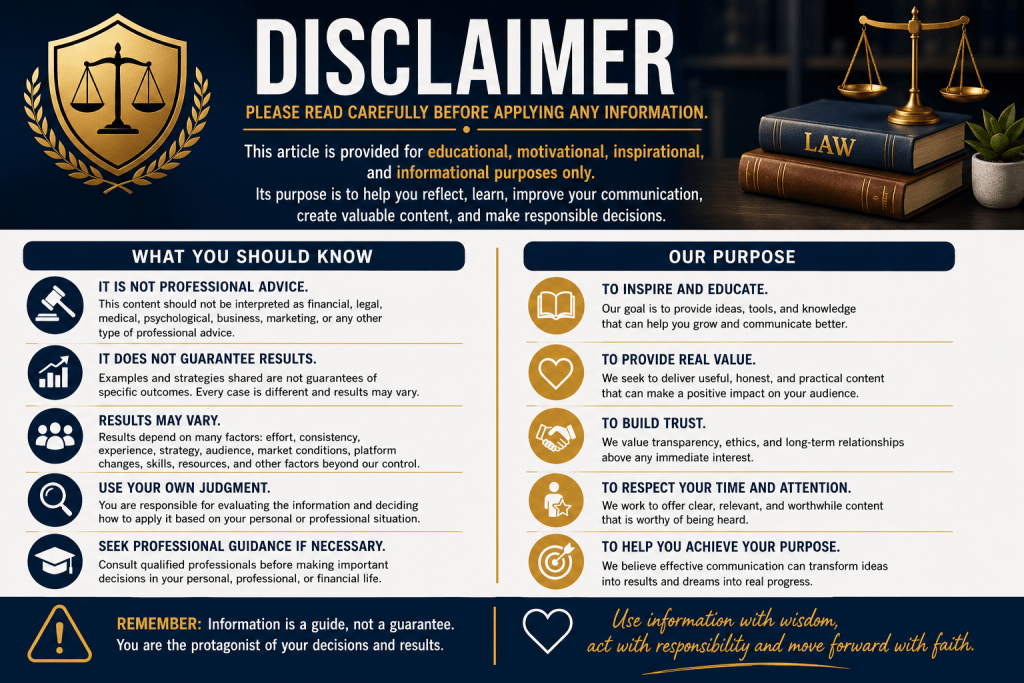
Disclaimer:


This article is provided for educational, motivational, inspirational, and informational purposes only. It is intended to encourage reflection, personal growth, digital awareness, better organization, responsible decision-making, and a healthier relationship with time, technology, and personal priorities.

The content should not be interpreted as financial, legal, medical, psychological, technological, cybersecurity, spiritual counseling, business, or professional advice. Any examples related to peace of mind, digital organization, digital security, productivity, time management, personal development, faith, business, or life improvement are not guarantees of specific results.

Individual outcomes may vary depending on personal circumstances, effort, consistency, available resources, discipline, technology used, market conditions, emotional readiness, and other factors beyond our control.

Readers are encouraged to use their own judgment, conduct their own research, and seek qualified professional guidance when necessary. The purpose of this content is to inspire and educate, not to promise instant results or replace professional advice.