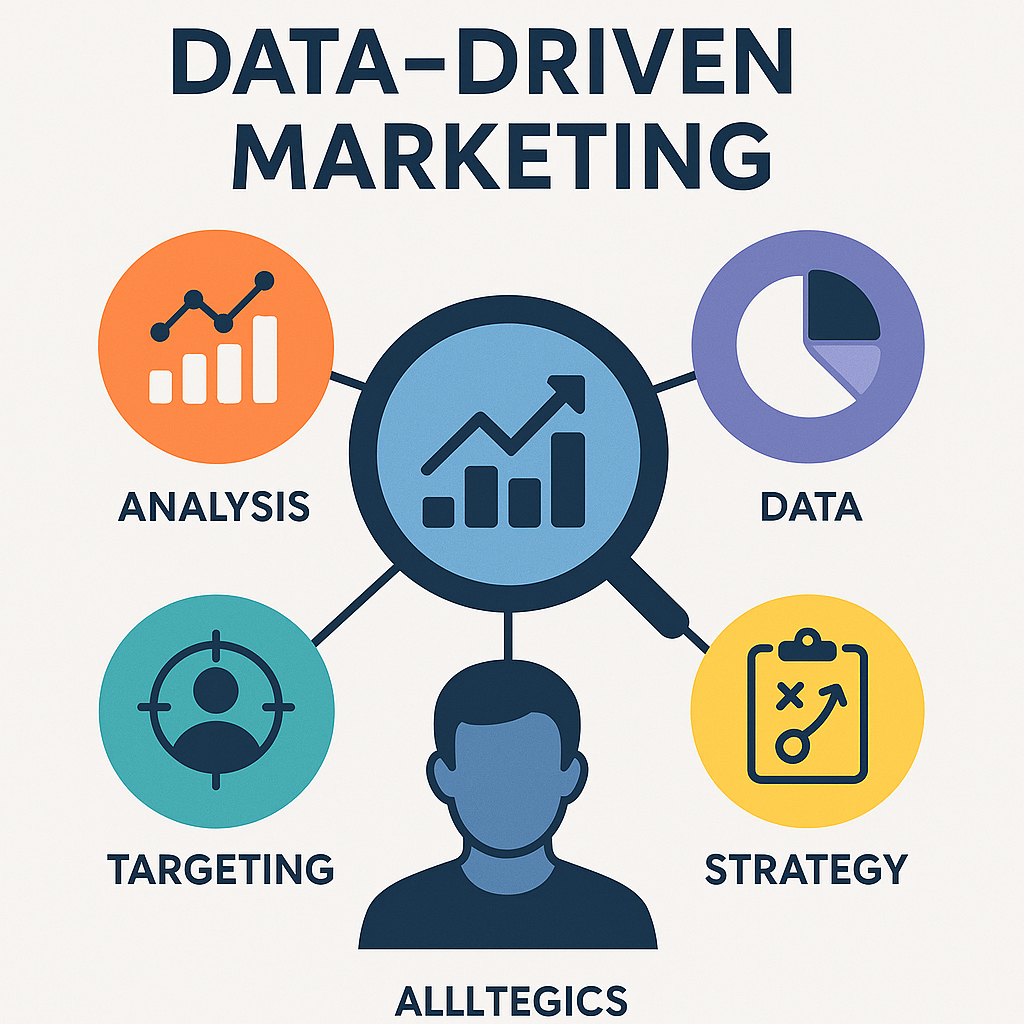
📊 Week 5: Data-Driven Marketing
Discover how data-driven marketing helps you make smarter business decisions. Learn how to collect, analyze, and apply data to boost your campaigns and maximize ROI.
🌟 Introduction
In the world of digital marketing, data is power. Every click, view, and purchase tells a story — and those stories reveal exactly what your audience wants. Marketers who understand and use this data make decisions not based on guesses or trends but on facts.
Data-driven marketing transforms insights into action. It’s about using analytics to understand your audience, measure performance, and improve every marketing decision. Let’s explore how to harness the power of data to grow your business intelligently and efficiently.
📈 1. What Is Data-Driven Marketing?
Data-driven marketing is the practice of using information from customer interactions and behaviors to optimize your campaigns.
Instead of relying on assumptions, you analyze real data to understand:
- Who your audience is
- What content engages them most
- When they’re most likely to act
- Which channels drive conversions
This approach turns your marketing into a science — where every decision has measurable results.
Example:
If your analytics show that 70% of your visitors come from mobile devices, you’ll prioritize mobile-friendly designs and ads.
🧠 2. The Benefits of Data-Driven Marketing
When you base your strategy on accurate data, your marketing becomes more precise, efficient, and profitable.
Key Benefits Include:
- 🎯 Better Targeting: Reach the right people at the right time.
- 💡 Improved Decision-Making: Use performance metrics to guide your next move.
- 💰 Higher ROI: Focus resources on what truly works.
- 🧩 Personalization: Tailor your message to each segment of your audience.
- 🔄 Continuous Improvement: Monitor, analyze, and refine for better results every time.
Data gives you clarity — and clarity gives you control.
📊 3. The Core Types of Marketing Data
Understanding what data to track is key. Here are the main types marketers rely on:
- Demographic Data: Age, gender, income, location.
- Behavioral Data: Pages visited, time spent, clicks, downloads.
- Engagement Data: Likes, comments, shares, and email open rates.
- Transactional Data: Purchases, cart value, and repeat orders.
- Psychographic Data: Interests, attitudes, and motivations.
By combining these insights, you create a full 360° view of your audience.
📉 4. Essential Analytics Tools for Marketers
Data-driven marketing depends on having the right tools. Here are some of the most effective ones:
- Google Analytics: Track traffic, conversions, and visitor behavior.
- Google Data Studio: Visualize and report your marketing data.
- Meta Insights (Facebook / Instagram): Measure ad performance and audience demographics.
- GetResponse Analytics: Understand email open rates, clicks, and conversions.
- Hotjar or Crazy Egg: See heatmaps of where users click and scroll on your website.
Each of these tools helps you understand not just what happens but why it happens.
🔍 5. Turning Data Into Action
Collecting data is only half the battle — what matters is how you use it.
Here’s how to apply your insights effectively:
- Identify trends: What’s working and what isn’t.
- Optimize campaigns: Adjust your copy, visuals, or targeting based on performance.
- A/B test ideas: Compare different versions of a page or ad.
- Predict behavior: Use historical data to forecast future results.
- Refine your message: Personalize communication for better engagement.
Data without action is just numbers — action turns numbers into results.
💬 6. Real-World Example
Imagine you launch two email subject lines:
- A: “Get 50% Off This Weekend!”
- B: “Your Exclusive Weekend Deal Inside 🎁”
After analyzing the results, you find Subject B had a 30% higher open rate. That simple data insight tells you how your audience prefers to be spoken to — and helps you optimize all future campaigns.
🚀 Conclusion & Call to Action
In the digital age, intuition is valuable — but data is irrefutable.
When you make decisions based on analytics, your marketing evolves from guessing to knowing.
👉 This week, log in to your analytics dashboard and identify one key metric you’ll track consistently — whether it’s traffic, conversions, or engagement.
Small insights, when applied consistently, lead to massive growth.
Next week: Week 6 — Website & Search Optimization: How to Rank Higher and Attract More Visitors.
Debe estar conectado para enviar un comentario.