Publicado en ✍️ Content & Engagement Marketing, Content Strategy, engagement tips, online growth, Social Media Marketing, storytelling

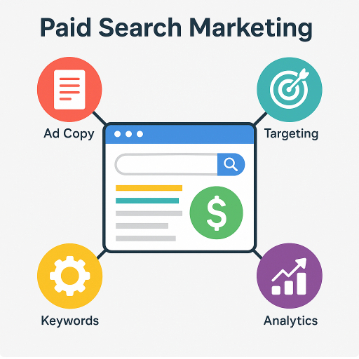
Paid Search Marketing: How to Reach Buyers Ready to Take Action

💰 Week 8: Paid Search Marketing


Learn how paid search marketing (PPC) helps you target people ready to buy. Discover how to create effective ads, manage budgets, and measure results for higher ROI.


🌟 Introduction

Imagine having your business appear at the exact moment someone searches for what you offer. That’s the power of Paid Search Marketing (PPC) — a fast, measurable way to reach people who are already looking for your products or services.

Unlike organic marketing, which takes time to grow, paid search ads deliver instant visibility and results. The key is learning how to craft campaigns that convert — not just clicks, but customers.

Let’s explore how to make paid search your most profitable marketing channel.


🔎 1. What Is Paid Search Marketing?

Paid Search Marketing (also called Pay-Per-Click Advertising, or PPC) is a model where advertisers pay each time someone clicks on their ad.

These ads appear on search engines like Google, Bing, or Yahoo, typically above or beside organic search results.

Example:

If you sell eco-friendly shoes, and someone searches “best eco-friendly sneakers,” your ad can appear at the top — ready to attract a motivated buyer.


💡 2. How Paid Search Works

Here’s how PPC functions behind the scenes:

  1. Keywords: You choose search terms related to your offer.
  2. Ad Auction: Search engines hold an instant auction every time someone searches.
  3. Bidding: You set how much you’re willing to pay per click.
  4. Ad Rank: Your ad’s position depends on your bid and quality score (relevance, landing page quality, CTR).
  5. Click: When someone clicks, they’re taken to your landing page — and you pay for that click.

It’s a precise, performance-based way to attract ready-to-buy customers.


📈 3. Benefits of Paid Search Marketing

Why use paid search when SEO exists? Because it offers speed, control, and measurable results.

Top Benefits:

  • Instant Visibility: Your brand appears on page one immediately.
  • 🎯 Highly Targeted: Reach people based on keywords, location, or even device.
  • 💰 Pay Only for Results: You only pay when someone clicks your ad.
  • 📊 Data-Driven: Every impression, click, and conversion is tracked.
  • 🔁 Scalable: You can start small and increase your budget as you see results.

PPC is like a light switch — turn it on and your traffic flows instantly.


🧠 4. Crafting an Effective PPC Campaign

To succeed with paid search, you need a smart, structured approach.

Step 1: Research the Right Keywords

Use tools like Google Keyword Planner or Semrush to find terms your target audience actually searches for.

👉 Focus on long-tail keywords (e.g., “affordable SEO consultant in Las Vegas”) — they’re cheaper and more targeted.

Step 2: Write Compelling Ad Copy

Your ad must grab attention and promise value.
Example:

“Secure Your Files in the Cloud – 7-Day Free Trial. Protect What Matters Most!”

Always include a CTA (Call to Action) like Get Started, Learn More, or Try Free.

Step 3: Optimize Your Landing Page

When users click, they should land on a page that matches your ad promise.

  • Use a clear headline
  • Highlight benefits
  • Include testimonials
  • Add one strong CTA

Step 4: Set Your Budget & Bids

Start small, analyze, then scale what works. Google Ads allows you to set daily limits, so you’ll never overspend.

Step 5: Track, Test, and Improve

Use Google Ads Dashboard and Google Analytics to monitor conversions, cost per click (CPC), and ROI.


💬 5. The Power of Remarketing

One of PPC’s most effective strategies is remarketing — showing ads to people who visited your site but didn’t convert.

It’s like a gentle reminder saying:

“Hey, remember us? Here’s that offer you viewed earlier.”

This keeps your brand top of mind and increases your chances of turning visitors into buyers.


⚙️ 6. Tools to Boost Your PPC Performance

Here are some powerful tools to improve your paid search campaigns:

  • Google Ads Editor: Manage campaigns offline.
  • Semrush / Ahrefs: Keyword research and competition tracking.
  • SpyFu: See what ads competitors are running.
  • Optmyzr: Automate PPC optimization.
  • Hotjar: Analyze user behavior after they click your ad.

🚀 Conclusion & Call to Action

Paid search marketing is one of the most effective ways to drive instant traffic and sales. When done right, it connects you with people who already have buying intent — no convincing required.

👉 This week, try setting up a simple Google Ads campaign targeting one of your best keywords. Test, measure, and refine. You’ll be surprised how fast you can get results!

Next week: Week 9 — Social Media Marketing: Building Connections That Convert.

Publicado en ✍️ Content & Engagement Marketing, Content Strategy, engagement tips, online growth, Social Media Marketing, storytelling

Content Marketing: Turning Words Into Profit

✍️ Week 7: Content Marketing


Learn how to use content marketing to attract, educate, and convert your audience. Discover proven strategies to create content that builds trust, boosts traffic, and drives sales.


🌟 Introduction

In the digital world, content is more than information — it’s influence. Every article, video, or post you publish has the power to connect, educate, and persuade.

Content marketing is the art of using valuable and relevant content to attract and retain customers. Instead of selling directly, you provide information that helps your audience solve problems, earn their trust, and ultimately choose your brand.

Let’s explore how to turn your words into results — and your content into consistent profit.


🧩 1. What Is Content Marketing?

Content marketing is a long-term strategy focused on building strong relationships with your target audience through meaningful, consistent content.

The goal is simple: educate, engage, and convert.

Instead of shouting “Buy now!”, content marketing whispers, “Here’s how we can help you.”

Examples of Content Marketing:

  • Blog posts that educate your readers
  • Social media updates that entertain and inform
  • Videos that demonstrate your product
  • Email newsletters that nurture relationships
  • eBooks or guides that position you as an expert

💡 2. Why Content Marketing Matters

Without content, your business is invisible. Every website visit, email open, or search query begins with content.

Here’s why it’s essential:

  • 🧭 Builds Trust: People buy from brands they trust.
  • 📈 Boosts SEO: Search engines reward websites that regularly publish valuable content.
  • 💬 Drives Engagement: Great content sparks conversations and shares.
  • 💰 Increases Conversions: Educated customers are more likely to buy.
  • 🔁 Creates Long-Term Value: Quality content keeps working for you months or years after it’s published.

As the saying goes, “Content is king, but consistency is the kingdom.”


🧠 3. The Core Types of Content

To keep your strategy effective and diverse, focus on these content formats:

1. Educational Content

Blog posts, tutorials, and guides that teach your audience something useful.

Example: “How to Start a Home Business with Zero Experience.”

2. Inspirational Content

Stories, quotes, and success journeys that motivate your readers.

Example: A case study of how one customer achieved success using your service.

3. Entertaining Content

Lighthearted, relatable, or humorous material that captures attention.

Example: Memes, reels, or quizzes that align with your brand’s tone.

4. Promotional Content

Content that showcases your offers — but still adds value.

Example: “5 Ways Our Tool Saves You Time and Boosts Your Productivity.”


⚙️ 4. How to Build a Content Marketing Strategy

A successful content plan doesn’t happen by chance — it’s built with purpose.

Step 1: Know Your Audience

Understand their challenges, goals, and motivations.

Step 2: Define Your Goals

Decide whether you want to build awareness, generate leads, or increase sales.

Step 3: Choose Your Platforms

Post where your audience spends time — blog, YouTube, LinkedIn, or Instagram.

Step 4: Plan Consistently

Use a content calendar to stay organized and consistent.

Step 5: Measure and Optimize

Track engagement, conversions, and traffic to refine your approach.

Remember: success comes from providing value first, then guiding readers toward your solution.


📊 5. Tools to Elevate Your Content

Enhance your content creation and performance with these must-have tools:

  • Canva / Adobe Express: Design visuals and infographics.
  • Grammarly / Hemingway: Improve writing clarity.
  • Google Analytics: Track content performance.
  • BuzzSumo: Discover trending topics.
  • GetResponse / Mailchimp: Share your content through email automation.

These tools turn creativity into measurable impact.


🚀 Conclusion & Call to Action

Content marketing is the foundation of digital success. It transforms casual readers into loyal customers — and loyal customers into brand advocates.

👉 This week, focus on creating one high-value piece of content — something that solves a real problem for your audience. Publish it, share it, and track how people respond.

Next week: Week 8 — Paid Search Marketing: How to Reach Buyers Ready to Take Action.

Publicado en ✍️ Content & Engagement Marketing, Content Strategy, engagement tips, online growth, Social Media Marketing, storytelling

Social Media Platforms: Choosing Where Your Brand Belongs

🌐 Week 11: Social Media Platforms


Learn how to choose the best social media platforms for your brand. Discover each platform’s strengths, audience, and strategies to grow your visibility and engagement online.


🌟 Introduction

Not all social media platforms are created equal — and not every brand belongs everywhere. In today’s fast-paced digital world, success depends on being strategic about where you show up online.

Choosing the right platform is about understanding your audience, your content style, and your business goals. When you focus on the right spaces, your brand’s message reaches the right people — efficiently and effectively.

Let’s explore the most popular social media platforms and how to choose the perfect ones for your brand.


📱 1. The Role of Social Media Platforms in Marketing

Social media platforms are digital ecosystems where brands connect, communicate, and build communities. Each platform attracts different audiences, content formats, and levels of engagement.

Your goal isn’t to be everywhere — it’s to be impactful where it matters most.

The right platform helps you:

  • 🎯 Target the right audience
  • 🧠 Build brand awareness
  • 💬 Engage in real-time conversations
  • 💰 Drive leads and conversions
  • 🌍 Strengthen your online reputation

💡 2. Understanding Major Social Media Platforms

Let’s take a closer look at the top platforms and how they fit different marketing goals:

1. Facebook – The Community Builder

  • 👥 Best For: Businesses building long-term relationships and communities.
  • 💼 Ideal Use: Sharing updates, articles, live videos, and running targeted ads.
  • 🌍 Strength: Massive global audience and advanced ad targeting.

2. Instagram – The Visual Storyteller

  • 📸 Best For: Lifestyle, fashion, travel, fitness, and product-based brands.
  • 💼 Ideal Use: Visual storytelling with Reels, Stories, and aesthetic feeds.
  • 🌟 Strength: High engagement through photos, videos, and influencer collaborations.

3. TikTok – The Creative Connector

  • 🎥 Best For: Brands targeting Gen Z and millennials.
  • 💼 Ideal Use: Short, engaging videos with humor, trends, or quick tips.
  • 🚀 Strength: Organic reach and virality potential.

4. LinkedIn – The Professional Network

  • 💼 Best For: B2B businesses, coaches, and consultants.
  • 💬 Ideal Use: Sharing thought leadership, company news, and networking.
  • 📊 Strength: High credibility and lead generation in professional industries.

5. X (formerly Twitter) – The Conversation Starter

  • 🗣️ Best For: News updates, brand announcements, and real-time discussions.
  • 💼 Ideal Use: Engaging in trending topics and direct audience interaction.
  • ⏱️ Strength: Speed, simplicity, and viral potential for concise messaging.

6. YouTube – The Educator and Entertainer

  • 🎬 Best For: Tutorials, reviews, storytelling, and long-form content.
  • 💼 Ideal Use: Building authority through valuable video content.
  • 📈 Strength: High search visibility and passive traffic growth.

7. Pinterest – The Inspiration Hub

  • 📌 Best For: Lifestyle, DIY, home decor, and fashion niches.
  • 💼 Ideal Use: Sharing visual guides, infographics, and inspiration boards.
  • 🌺 Strength: Evergreen traffic from visual search.

📊 3. How to Choose the Right Platforms for Your Brand

To determine where your business belongs, consider these key factors:

Know Your Audience:

Where do your customers spend time? Research demographics and behaviors.

Understand Your Content Type:

Do you create videos, blogs, or visuals? Match content to platform style.

Define Your Goals:

Do you want engagement, brand awareness, or direct sales?

Evaluate Resources:

Each platform requires time and consistency. Focus on one or two at first.

Analyze Competitors:

Study what’s working for others in your niche and adapt your strategy.


🧰 4. Tools to Manage Multiple Platforms

If you’re active on several platforms, use tools to simplify posting and analytics:

  • Hootsuite / Buffer: Schedule posts across different channels.
  • Canva / Adobe Express: Design unified visuals.
  • Meta Business Suite: Manage Facebook and Instagram together.
  • Later / Planoly: Plan your visual content calendar.

Automation saves time — but authenticity drives connection. Always keep your human touch.


🌟 5. Pro Tip: Quality Over Quantity

It’s better to master one platform than to struggle on five. Focus your energy on the channels that align with your audience and message. Once you build momentum and community there, expand gradually.


🚀 Conclusion & Call to Action

Every platform has its own rhythm, audience, and language. Your job as a digital marketer is to speak that language fluently — and authentically.

👉 This week, choose two platforms that best fit your brand and commit to creating consistent, high-value content for each.

Next week: Week 12 — Social Media Campaigns: How to Create Posts That Drive Action.