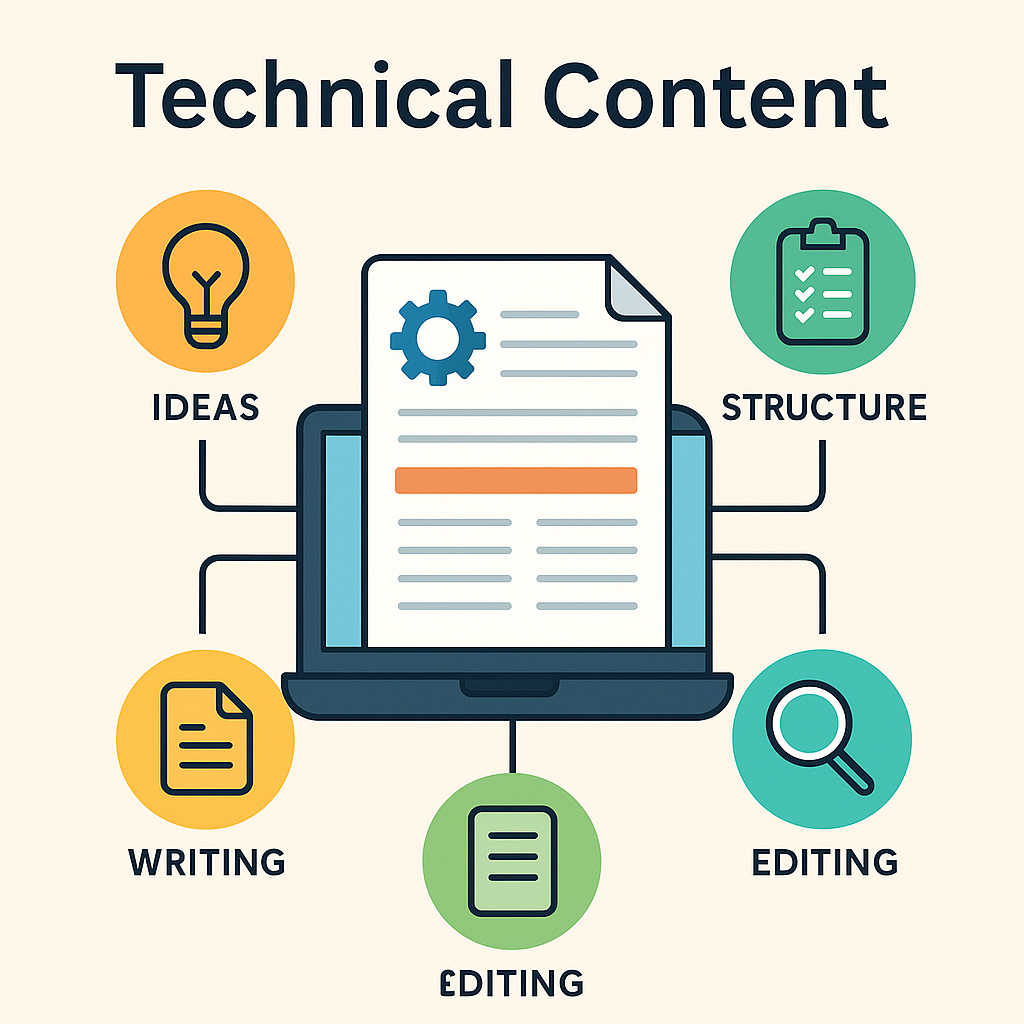
🧩 Week 16: Technical Content
Learn how to create technical content that educates, builds trust, and positions your brand as an authority. Discover strategies to explain complex ideas clearly and effectively.
🌟 Introduction
In a digital world overflowing with opinions and sales messages, technical content stands out because it educates rather than sells. It’s the type of content that builds authority, trust, and loyalty by providing detailed, factual, and valuable information that helps your audience solve real problems.
Whether it’s a tutorial, case study, product manual, or white paper, technical content bridges the gap between expertise and understanding.
Let’s explore how to master this essential skill in your marketing toolkit.
🧠 1. What Is Technical Content?
Technical content refers to educational materials that explain complex ideas, products, or processes in a clear and structured way.
It’s used by brands, marketers, and educators to inform their audience — not just persuade them.
Examples include:
- How-to guides or tutorials
- Product documentation or FAQs
- Technical blogs or whitepapers
- Case studies and research articles
- Data-driven analysis reports
In short, it’s content with depth — backed by accuracy, clarity, and authority.
🎯 2. Why Technical Content Matters
People trust brands that teach, not just sell. Technical content builds that trust by showing your expertise and transparency.
Here’s why it’s important:
- 🧭 Positions You as an Expert: Demonstrates authority and credibility in your field.
- 📈 Drives Organic Traffic: In-depth content performs well in search engines.
- 💬 Educates Your Audience: Helps users make informed decisions.
- 🔁 Builds Retention: Customers stay longer when you provide ongoing value.
- 🤝 Supports Sales Teams: Serves as reference material during the buying process.
Great technical writing doesn’t complicate — it simplifies.
💡 3. Elements of Effective Technical Content
To create content that informs and converts, include these five key elements:
- Clarity: Avoid jargon or overly complex language.
- Structure: Use headings, bullet points, and visuals for easier reading.
- Accuracy: Base your information on credible data or experience.
- Engagement: Balance facts with storytelling or examples.
- Optimization: Include SEO keywords and readability formatting.
Remember: your goal is to make readers feel smarter after reading your content.
🧩 4. How to Write Technical Content Like a Pro
Follow this simple process:
Step 1: Research Deeply
Understand your topic better than anyone else. Use reliable sources, data, and firsthand experience.
Step 2: Know Your Audience
Write for their level of understanding. Beginners need simplicity; experts value detail.
Step 3: Organize Your Structure
Plan your article flow — introduction, key points, visuals, and summary.
Step 4: Explain Visually
Use infographics, charts, and diagrams to clarify complex ideas.
Step 5: Edit for Simplicity
Cut unnecessary words and replace complexity with clarity.
🧰 5. Examples of High-Performing Technical Content
✅ Tutorials & How-To Articles — “How to Set Up Email Automation in GetResponse”
✅ Case Studies — “How GotBackUp Doubled Its Retention in 3 Months”
✅ White Papers — In-depth research on industry trends or technology.
✅ Product Documentation — Clear user manuals or setup guides.
✅ FAQs & Troubleshooting Guides — Quick answers to common user issues.
Each format serves a purpose: to educate, inform, and position your brand as a go-to resource.
📊 6. Tools for Creating Technical Content
Use these tools to streamline your writing and formatting:
- Grammarly / ProWritingAid: Improve clarity and grammar.
- Notion / Google Docs: Plan and collaborate on technical documents.
- Canva / Venngage: Create visuals and infographics.
- Ahrefs / SEMrush: Research SEO keywords.
- ChatGPT (your creative ally 😉): Simplify explanations or structure outlines.
⚙️ 7. Common Mistakes to Avoid
❌ Writing for yourself, not your audience.
❌ Using too much technical jargon.
❌ Forgetting visuals or examples.
❌ Overloading content without structure.
❌ Neglecting SEO and readability.
Technical content should feel like a teacher explaining, not a textbook lecturing.
🚀 Conclusion & Call to Action
Technical content is the foundation of trust and credibility in digital marketing.
When your audience learns from you, they begin to rely on you — and that’s when authority turns into loyalty.
👉 This week, choose one technical topic in your field and create a simple, step-by-step guide. Focus on clarity and value first, and polish it later.
Next week: Week 17 — Mobile Marketing Strategies: Reaching Your Audience Anywhere, Anytime.

So, what makes technical content stand out in a crowded digital space – is it just about explaining complex ideas clearly? 🧩
Great question, Marcus. 🧩
Clear explanation is essential — but it’s not enough.
In a crowded digital space, technical content stands out when it does four things simultaneously:
1️⃣ Clarity
Yes — complex ideas must be simplified.
If people can’t understand it, they won’t use it.
But clarity is the baseline, not the differentiator.
2️⃣ Context
Technical content becomes powerful when it answers:
Why does this matter right now?
Tie the concept to a real problem, real outcome, or real decision.
People don’t search for information — they search for relief, leverage, or results.
3️⃣ Structure
The way information is organized matters as much as the information itself.
Frameworks, models, steps, comparisons — these reduce cognitive load and increase trust.
Well-structured content feels authoritative.
4️⃣ Application
The real separator?
Show readers how to apply it.
Not:
“Here’s how the algorithm works.”
But:
“Here’s how you use this insight to improve your conversion rate this week.”
In short:
Technical content stands out when it turns knowledge into usable leverage.
Clarity earns attention.
Structure builds authority.
Application creates loyalty.
Curious — are you writing technical content yourself, or refining your approach?
Thank you so much, my dear friend Marvin, for this beautifully accurate and thoughtful contribution. Your commitment to clarity and content truly shines through. Grateful for your constant support and the kindness you bring — it means more than words can say.
My dear friend Rohitash,
Thank you — truly. Your words are received with deep gratitude.
It means a great deal to know that the clarity and care behind the writing are felt and valued. That kind of recognition isn’t casual; it comes from someone who reads with presence and intention.
I’m grateful for the mutual support we share — the kind that’s steady, sincere, and rooted in respect rather than noise. Your kindness, thoughtfulness, and openness always elevate the exchange.
Always here, my friend. 🙏✨