By Marvin Gandis
There is a special kind of satisfaction that comes from building something with your own hands.
A table is no longer just a table. A shelf is no longer just a shelf. A chair, a bench, a cabinet, or a small decorative wood project becomes a personal achievement. It becomes proof that with patience, guidance, and creativity, ordinary materials can become something useful and beautiful.
That is why woodworking continues to attract so many people. Some people start because they want to save money. Others begin because they want a peaceful hobby. Some want to decorate their homes with handmade pieces. Others dream of turning woodworking into a small side business.
But for many beginners, the biggest question is simple:
- Where do I start?
The answer often begins with clear, practical, beginner-friendly woodworking plans.
Why Woodworking Is So Popular Today
In a world filled with digital distractions, woodworking feels different. It is physical. It is creative. It requires focus. It allows you to slow down, measure carefully, shape materials, and see real progress in front of you.
Woodworking is popular because it gives people something valuable:
- The ability to create.
Instead of depending only on stores, expensive furniture, or generic designs, a person can learn how to make something that fits their home, style, and needs.
A simple woodworking project can become:
- A shelf for the living room.
- A plant stand for the patio.
- A storage box for the garage.
- A coffee table for the family room.
- A bench for the garden.
- A handmade gift for someone special.
Each project becomes a new lesson. Each finished piece builds confidence.
The Beginner’s Biggest Challenge
Most beginners do not fail because they lack creativity. They struggle because they start without direction.
They may watch random videos, collect photos online, or save project ideas, but when it is time to build, confusion begins.
- What kind of wood should I use?
- What tools do I need?
- What are the correct measurements?
- How do I avoid wasting materials?
- What step comes first?
- How do I know if this project is too advanced?
Without a clear plan, a beginner can quickly feel overwhelmed.
This is where woodworking plans become so valuable.
What Are DIY Woodworking Plans?
DIY woodworking plans are guides that help you understand how to build a project from start to finish. Instead of guessing, you follow instructions, measurements, diagrams, and steps.
A helpful woodworking plan may include:
- Project overview
- Material list
- Tool list
- Cutting measurements
- Step-by-step instructions
- Assembly guidance
- Diagrams or visual references
- Finishing suggestions
For beginners, this can make the difference between frustration and progress.
A good plan does not remove the need for patience or practice, but it gives structure. It helps you move with more confidence.
Why Clear Plans Matter
Imagine trying to build a cabinet without measurements. You may have the idea in your mind, but once you start cutting wood, small mistakes can become expensive.
- One wrong cut can waste material.
- One wrong measurement can affect the whole project.
- One missing tool can delay progress.
- One unclear step can lead to frustration.
Clear plans help reduce confusion.
They help beginners understand the project before starting. They also help avoid the common mistake of jumping into a project too quickly.
The old saying is true:
- Measure twice, cut once.
But before measuring, you need to know what you are building.
How Woodworking Plans Can Save Money
Furniture can be expensive. Even simple pieces may cost more than expected, especially when buying from stores.
Learning how to build simple furniture at home can help people save money over time. A person may begin with basic projects, then slowly build more useful pieces as their skills improve.
For example, instead of buying a shelf, someone may learn to build one. Instead of replacing an old piece of furniture, they may repair or improve it. Instead of paying for custom furniture, they may create something that fits their space.
Of course, woodworking requires tools, materials, time, and practice. But the skill itself can become valuable for years.
The more you learn, the more capable you become.
Beginner-Friendly Projects to Start With
A common mistake is starting with a project that is too complicated.
Beginners should start simple. The goal is not perfection. The goal is completion and learning.
Good beginner-friendly woodworking projects may include:
- Small shelves
- Storage boxes
- Plant stands
- Simple benches
- Wooden signs
- Nightstands
- Shoe racks
- Basic coffee tables
- Wall decorations
- Garden boxes
- Simple outdoor chairs
These projects are useful, practical, and easier to manage than advanced furniture builds.
Every completed project gives you more confidence for the next one.
Woodworking as a Creative Hobby
Woodworking is not only practical. It can also be deeply relaxing.
Many people enjoy woodworking because it gives them time away from stress, screens, and daily noise. It allows them to focus on something creative and productive.
- There is peace in sanding wood.
- There is a focus on measuring and cutting.
- There is satisfaction in assembling each piece.
- There is pride in seeing the final result.
That moment when you look at a finished project and say, “I made this,” is powerful.
It reminds you that you are capable of learning, improving, and creating.
Can Woodworking Become a Side Hustle?
For some people, woodworking can become more than a hobby.
Handmade items often attract buyers because they feel personal, unique, and authentic. People may be interested in custom shelves, rustic décor, small tables, wooden signs, garden pieces, or personalized gifts.
However, it is important to be realistic. A woodworking side hustle requires time, quality, pricing knowledge, tools, safety, and marketing. It is not instant income.
But as a skill, woodworking has potential.
A beginner can start by learning simple projects, then gradually improve. Over time, quality improves, confidence grows, and opportunities may appear.
Common Mistakes Beginners Should Avoid
If you are new to woodworking, avoid these common mistakes:
- Starting without a clear plan.
- Choosing a project that is too advanced.
- Skipping measurements.
- Buying materials before understanding the project.
- Ignoring safety equipment.
- Rushing the cutting process.
- Forgetting to sand and finish properly.
- Expecting perfection on the first try.
The best approach is to start simple, follow clear plans, and improve one project at a time.
Safety Comes First
Woodworking is rewarding, but safety should always be a priority.
Before using tools, beginners should learn how each tool works. Protective glasses, gloves when appropriate, dust masks, hearing protection, and an organized workspace can help reduce risk.
Power tools, sharp blades, dust, heavy materials, and chemicals used in finishes require caution.
A beautiful project is never worth an injury.
Build patiently. Build safely. Build responsibly.
Why Furniture Craft Plans Can Be Helpful
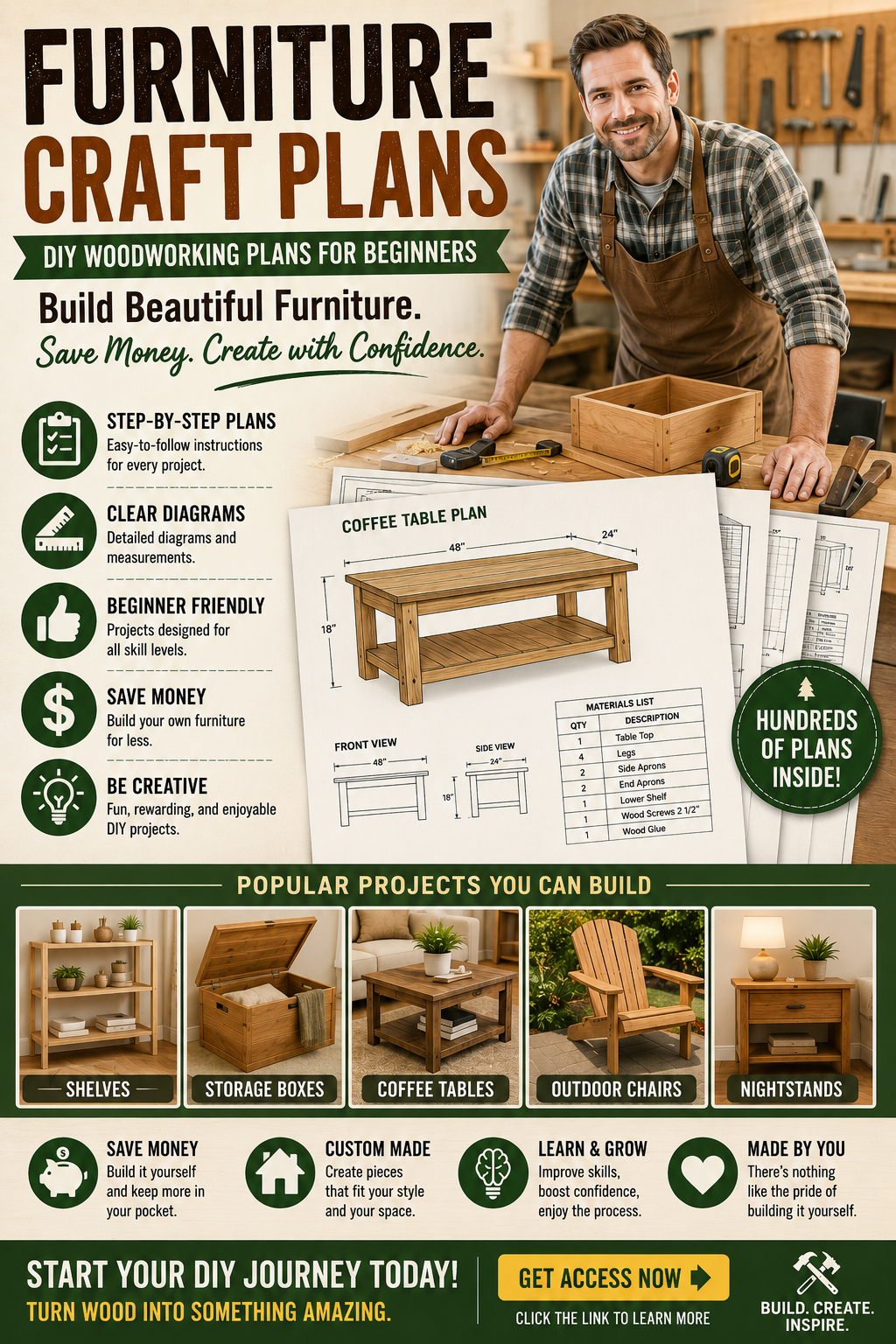
Furniture Craft Plans can be a helpful resource for people who want access to woodworking project ideas and furniture plans in one place.
For beginners, the benefit is not only having many ideas. The real benefit is having a starting point.
Instead of spending hours searching for scattered information, a person can explore project possibilities, choose something realistic, and begin learning step by step.
This can be especially useful for:
- DIY beginners
- Woodworking hobbyists
- Homeowners
- Retirees
- Crafters
- People who enjoy handmade projects
- People interested in practical home improvement
- People exploring a possible woodworking side hustle
The right plan can turn confusion into action.
The Smart Way to Begin
The best way to start is simple:
- Choose one beginner-friendly project.
- Read the plan carefully.
- Gather materials and tools.
- Review safety steps.
- Measure carefully.
- Take your time.
- Finish the project.
- Learn from the result.
Do not compare your first project to an expert’s work. Every skilled woodworker started as a beginner.
Progress comes from practice.
Woodworking is a beautiful combination of creativity, patience, discipline, and practical skill
It teaches you to think before acting. It teaches you to measure carefully. It teaches you to solve problems. It teaches you that mistakes can become lessons.
For beginners, clear woodworking plans can make the journey easier, more organized, and more enjoyable.
Whether you want to save money, decorate your home, start a meaningful hobby, or explore handmade projects, DIY woodworking can be a rewarding path.
You do not need to know everything to begin.
You only need a clear plan, a willing attitude, and the patience to build one step at a time.
Ready to explore beginner-friendly woodworking and furniture project ideas?
Start building smarter today with Furniture Craft Plans and discover practical project ideas that can help you create beautiful furniture and home pieces with more confidence.
Affiliate Disclosure
This article may contain affiliate links. If you purchase through my link, I may earn a commission at no extra cost to you.
Disclaimer
This content is for educational and informational purposes only. Results may vary depending on your tools, materials, skill level, effort, project choice, and safety practices. Woodworking involves tools and materials that may present risks. Always follow proper safety guidelines and consult qualified professionals when necessary.
Debe estar conectado para enviar un comentario.