Lesson 3
You can master every tool…
You can follow every strategy…
You can promote the best opportunity in the world…
But if you don’t understand how your prospect thinks, feels, and decides, your marketing will never reach its full power.
Magnetic marketers don’t study algorithms.
They study people.
They understand what drives humans emotionally…
because every marketing decision is an emotional decision first.
This lesson will teach you the psychological foundation behind all attraction marketing.
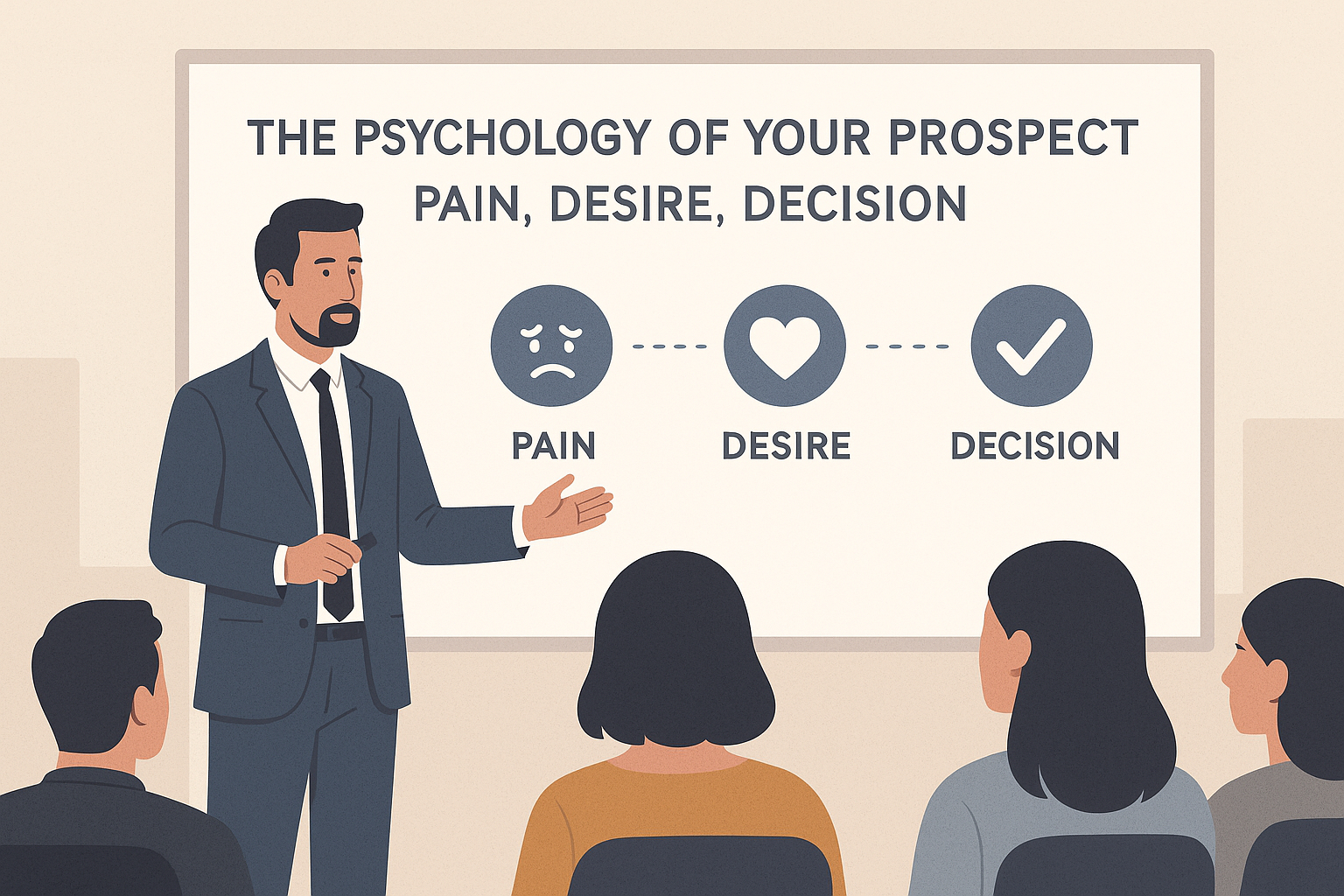
🎯 The 3 Psychological Forces Behind Every Decision
Every decision your prospect makes—buying, joining, following, trusting—is driven by three internal forces:
1️⃣ Pain
Pain is the strongest psychological motivator.
People act faster to avoid pain than to gain pleasure.
Your prospect’s pain may look like:
- feeling stuck
- fear of failing again
- confusion about where to start
- frustration from trying many things without results
- lack of direction
- self-doubt
- overwhelm
- loneliness in their journey
When you speak directly to their pain, the prospect feels:
“They understand me.”
This is the beginning of magnetic influence.
2️⃣ Desire
Desire is the emotional future your prospect wants to experience.
Not just financial desire—emotional desire:
- confidence
- clarity
- freedom
- progress
- recognition
- stability
- safety
- transformation
- hope
A Magnetic Message does not just identify their pain…
It paints the desire clearly.
When prospects see their desire reflected in your message, they feel drawn to you.
3️⃣ Decision
People decide emotionally, then justify logically.
Every buying decision follows this emotional path:
Pain → Hope → Vision → Action
If your content does not move them through these steps, they won’t take action.
Your marketing must create:
- emotional tension
- emotional relief
- emotional vision
And then the decision becomes natural.
🧩 How to Use Pain, Desire & Decision in Your Marketing
Here is the proven emotional formula used by high-level attraction marketers:
✔ Step 1: Name the pain
“If you feel lost, stuck, or tired of trying…”
✔ Step 2: Validate the experience
“You’re not alone. Many people feel the same way.”
✔ Step 3: Present the desire
“But deep inside, you simply want clarity, results, and a real path that works.”
✔ Step 4: Create hope
“You can achieve this even if you have failed before.”
✔ Step 5: Introduce the vision
“There is a simpler way—and it starts with the right guidance.”
✔ Step 6: Invite gently
“If you’re ready, I can show you the next step.”
🔥 Why This Works
Because you’re not selling a product.
You’re not selling an opportunity.
You’re selling:
✔ Relief
✔ Possibility
✔ Hope
✔ Direction
✔ Identity
✔ Transformation
When you speak to the inner world of your prospect…
You attract them effortlessly.
🧲 Magnetic Psychology Template (Copy-Ready)
“If you feel ______ and deeply desire ______, but you don’t know where to begin, I want you to know something: you’re not alone.
The problem isn’t you. You simply haven’t been given a simple, clear path that works.
And that’s exactly what I’m here to help you discover.”
This template creates an instant emotional connection.
🧠 The Secret of Magnetic Marketers
Regular marketers talk.
Weak marketers’ pressure.
Magnetic marketers understand.
They understand:
- emotions
- fears
- dreams
- psychology
- patterns
- motivations
And because they understand people…
people trust them.
🧲 Conclusion
When you understand your prospect’s pain, desire, and decision path…
Your marketing becomes:
✔ natural
✔ powerful
✔ emotional
✔ persuasive
✔ magnetic
This is where attraction begins.
⚠️ Disclaimer
This content is for educational and informational purposes only. It does not guarantee financial results. Success in marketing depends on personal effort, skills, consistency, and individual circumstances.
Debe estar conectado para enviar un comentario.