Publicado en Debt, Family Budgeting, Financial Education, Personal Finance, Resilience

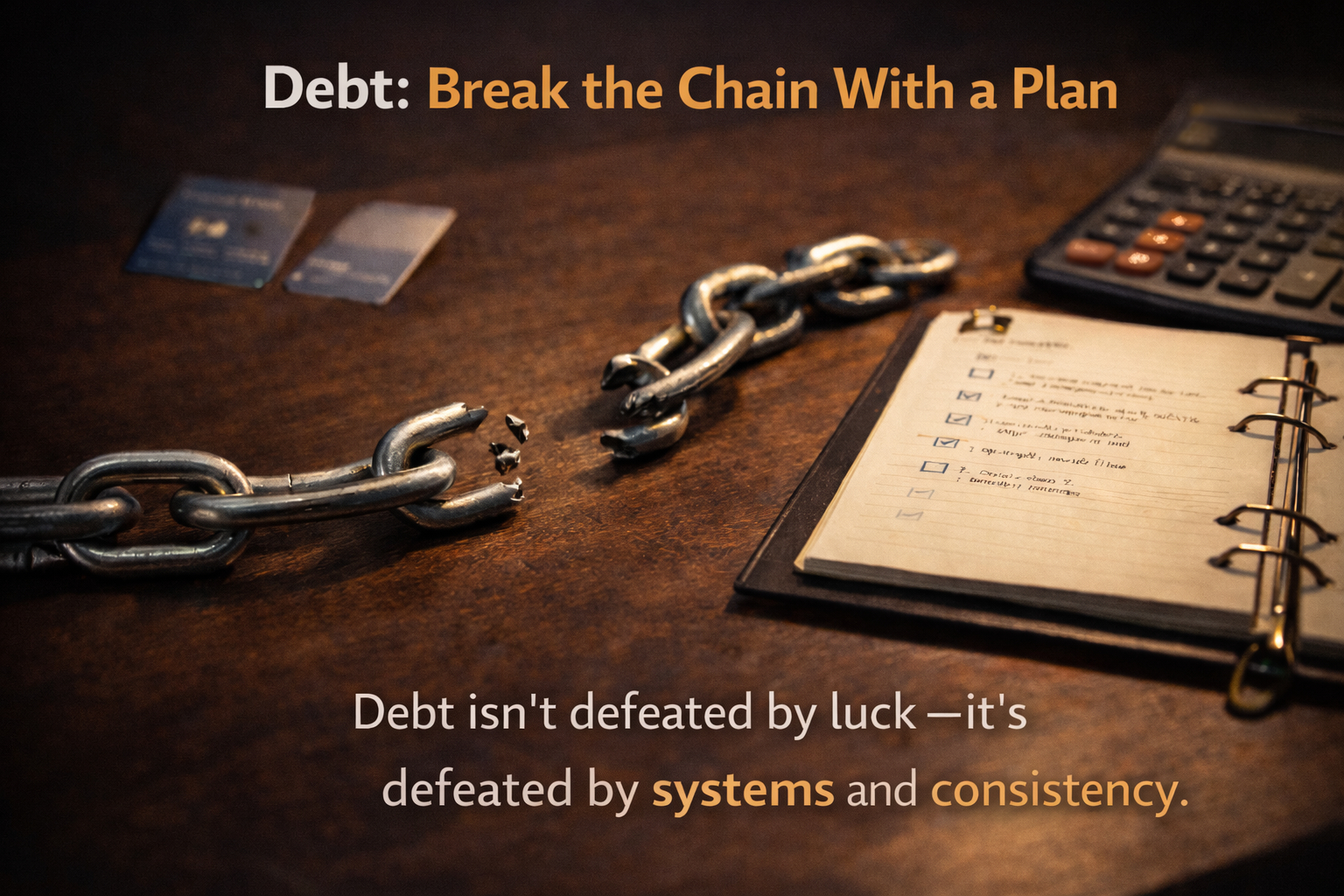
Debt in Hard Times: How to Get Out Without Suffocating (2026)

By Marvin Gandis

✅ ARTICLE 4

Introduction

Debt doesn’t always start with irresponsibility. Often it starts with necessity: an emergency, a tight month, an unexpected hit.

But in uncertain times, debt—especially high-interest debt—becomes dangerous because it does two things at once:

  1. It steals your margin today (monthly payments)
  2. It steals your future (compounding interest)

This article isn’t here to judge you.


It’s here to give you a realistic, clear, executable plan to get out—without suffocating.


1) In Crisis, the Real Problem Isn’t the Balance—It’s the Interest

High interest behaves like a silent tax on your life:

  • it grows even when you stand still,
  • It keeps you trapped month to month.

Your goal isn’t “pay everything today.”
Your goal is to stop the bleeding.


2) Identify “Toxic Debt”

Not all debt is equal. But in a crisis, these are the most dangerous:

🔥 Common toxic debt:

  • high-interest credit cards
  • loans with heavy monthly payments
  • impulse-financed purchases
  • living on minimum payments

Clear sign: if the debt steals your sleep, it’s toxic.


3) The 5-Step Anti-Suffocation Plan

A simple system that works for most people:

Step 1: Freeze the damage (today)

  • Stop using cards for spending, you can reduce
  • Eliminate impulse buys
  • Cancel invisible subscriptions

Step 2: Build a mini-buffer (even small)

Before aggressive payoff, build a small buffer ($200–$500 if possible).
It prevents a small emergency from throwing you back into debt.

Step 3: Choose your method (Avalanche or Snowball)

Avalanche: attack the highest interest first (most efficient).
Snowball: attack the smallest balance first (most motivating).

Guidance:

  • disciplined → avalanche
  • need momentum → snowball

Step 4: Negotiate and lower the cost

Ask for:

  • lower interest
  • payment plans
  • consolidation options (only if it truly reduces cost)

Step 5: Automate the win

  • autopay minimums
  • fixed extra payments weekly/biweekly
  • monthly review (15 min)

4) The 5 Rules to Avoid Falling Back

  1. If it’s not in the budget, don’t buy it.
  2. If you don’t have a mini fund, don’t treat debt like an emergency plan.
  3. Don’t live on minimum payments.
  4. Don’t finance “wants.”
  5. Keep one money review day monthly.

Checklist — Start Today

Freeze impulse spending for 24 hours
List all debts (balance + interest + minimum)
Build a mini buffer ($200–$500 if possible)
Choose avalanche or snowball
Automate minimum payments
Set a fixed weekly extra payment


Closing

Getting out of debt isn’t punishment.
It’s getting your air back.

Financial freedom begins when debt stops making decisions for you.


Disclaimer

This content is for educational purposes only and is not financial, legal, or investment advice. Consult a qualified professional before making decisions.

Publicado en Debt Management, Financial Freedom, Personal Finance

Debt Relief: A Comprehensive Guide to Financial Freedom

This article is aimed at individuals who find themselves struggling with overwhelming debt and are seeking effective solutions to regain control of their finances. It caters to a diverse audience, including recent graduates burdened with student loans, families facing unexpected medical bills, individuals experiencing job loss or reduced income, and anyone else feeling the weight of debt on their shoulders.


Introduction

Debt can be a heavy burden to bear, affecting every aspect of our lives from our mental health to our relationships and overall well-being. However, there is hope. Debt relief offers a pathway to financial freedom without the need for additional loans. In this comprehensive guide, we’ll explore the various methods of debt relief, strategies for managing debt effectively, and steps towards achieving long-term financial stability.


Understanding Debt Relief

Debt relief encompasses a range of strategies and programs designed to help individuals overcome financial hardships and reduce or eliminate their debts. Unlike taking out new loans to pay off existing debts, debt relief focuses on negotiating with creditors, restructuring payment plans, and finding alternative solutions to alleviate the burden of debt.


Types of Debt Relief

  1. Debt Consolidation: Consolidating multiple debts into a single loan with a lower interest rate can make repayment more manageable. This method simplifies finances by combining various debts, such as credit card balances, personal loans, and medical bills, into one monthly payment.
  2. Credit Counseling: Credit counseling services provide individuals with personalized financial advice and guidance. Certified counselors work with clients to create budgets, develop debt management plans, and negotiate with creditors to lower interest rates and fees.
  3. Debt Settlement: Debt settlement involves negotiating with creditors to settle debts for less than the total amount owed. While this option can lead to significant savings, it may also have a negative impact on credit scores and require lump-sum payments.
  4. Bankruptcy: As a last resort, bankruptcy offers legal protection from creditors and allows individuals to discharge or restructure their debts under court supervision. While bankruptcy can provide relief from overwhelming debt, it has long-term consequences and should be considered carefully.

Benefits of Debt Relief

  • Reduced Stress: By resolving debts and regaining control of finances, debt relief can alleviate stress and anxiety associated with financial hardship.
  • Lower Interest Rates: Debt relief programs may negotiate lower interest rates and fees, saving individuals money over time.
  • Improved Credit Score: Responsible debt management and repayment can improve credit scores over time, providing access to better financial opportunities.
  • Financial Freedom: By eliminating debts and adopting healthy financial habits, individuals can achieve long-term financial stability and freedom.

Steps Towards Financial Freedom

  1. Assess Your Financial Situation: Begin by evaluating your income, expenses, debts, and assets to gain a clear understanding of your financial standing.
  2. Create a Budget: Develop a realistic budget that prioritizes essential expenses while allocating funds towards debt repayment.
  3. Explore Debt Relief Options: Research and compare different debt relief options to determine the best strategy for your unique situation.
  4. Seek Professional Guidance: Consider consulting with a financial advisor or credit counselor for personalized advice and assistance.
  5. Commit to Debt Repayment: Stay disciplined and committed to your debt repayment plan, making timely payments and avoiding additional debt.
  6. Monitor Your Progress: Regularly review your finances and track your progress towards debt reduction and financial goals.
  7. Celebrate Milestones: Celebrate small victories along the way and stay motivated to continue on your journey towards financial freedom.

Conclusion

Debt relief offers hope and opportunity for individuals struggling with overwhelming debt. By understanding the various methods of debt relief, committing to responsible financial management, and seeking professional guidance when needed, anyone can achieve the goal of financial freedom. Remember, the path to financial stability may be challenging, but with determination and perseverance, a brighter future awaits.

Ready to take control of your finances and embark on the journey towards financial freedom?

Contact a trusted debt relief provider today to explore personalized solutions and get the help you need to overcome debt challenges.

Don’t wait any longer – take the first step towards a brighter financial future now.

Your journey to financial freedom starts here!


Publicado en Personal Finance, Success Strategies, Wealth Building

10 Wealth-Building Habits Rich People Embrace That Baffle the Poor 💰

💡 It’s no secret that wealthy individuals tend to have different habits and mindsets when it comes to managing their finances. To some, these practices might seem counterintuitive, frivolous, or just plain crazy. But to those who’ve found success in their financial lives, these habits are integral to building and maintaining their wealth.

In this article, we’ll explore ten things that rich people do, which may leave some with less financial prowess scratching their heads.

1- Embracing Financial Literacy 📚

Rich people understand the importance of financial education. They’re constantly seeking opportunities to expand their knowledge about money, investments, and economic trends. While some may scoff at their bookshelves filled with finance books, the wealthy know that learning about money is a valuable investment in itself.

2- Prioritizing Investments Over Expenses 💹

While some might see rich individuals as tightfisted, they prioritize investing their money over extravagant spending. They understand that their money should be working for them, and that delayed gratification often leads to greater wealth in the long run.

3- Entrepreneurial Spirit 💼

Many rich people have an entrepreneurial mindset. They start businesses, invest in startups, and take calculated risks. Some may view this as reckless, but successful entrepreneurs understand that without risk, there’s no reward.

4- Frugality in Daily Life 🛒

Rich individuals often lead a frugal lifestyle, avoiding unnecessary extravagance. This doesn’t mean they skimp on quality, but they’re cautious about overspending on items that don’t contribute to their long-term financial goals.

5- Strategic Budgeting 💰

Budgeting may seem tedious to some, but wealthy individuals understand the importance of keeping a close eye on their expenses. They use budgets as tools for wealth creation, tracking every dollar that flows in and out.

6- Delayed Gratification ⌛

Rich people are masters of delayed gratification. They are willing to postpone rewards in favor of long-term financial success. This might mean sacrificing immediate pleasures to reap the benefits later on.

7- Diversifying Investments 🌐

While some people may see diversification as overcomplicating their financial portfolio, the wealthy understand that spreading their investments across various assets minimizes risks and maximizes returns.

8- Leveraging Debt Wisely 💳

Rich individuals often use debt strategically to invest in assets that appreciate over time, such as real estate or businesses. They see borrowing as a financial tool rather than a burden.

9- Networking and Building Relationships 🤝

Some may find the rich spending time at high-profile events or engaging in networking activities to be a mere social pursuit. However, these connections can lead to valuable opportunities and collaborations that further their wealth-building efforts.

10- Long-Term Financial Planning 📈

Rich people are known for their meticulous long-term financial planning. They set specific goals and develop comprehensive strategies to achieve them. This forward-thinking approach is what sets them apart from those who live paycheck to paycheck.

💪 The best time to plant a tree was 20 years ago.

The second-best time is now.

Chinese Proverb

🌟 While the habits of wealthy individuals might seem baffling to those struggling with their finances, they’re not just coincidental. These habits have played a crucial role in helping them achieve financial prosperity. It’s essential to understand that these practices are not exclusively for the rich; anyone can adopt them to improve their financial situation and work towards their own wealth-building goals. By embracing financial literacy, delayed gratification, and strategic planning, anyone can take steps toward a brighter financial future.

🚀 Don’t wait! Start implementing these habits today and take charge of your financial destiny.

Your journey to financial success begins now! 💪💰