Publicado en Branding, 💼 Digital Marketing, Emotional Communication, Persuasion & Influence, storytelling

📖 Strategic Storytelling — Your Stories Sell for You

🔵 Lesson 4

In a world full of noise, competition, and distractions, there is one element that cuts through everything:

A powerful story.

Stories activate emotion.


Stories build trust.


Stories create connection.


Stories inspire action.

People may ignore information…


But they feel stories.

Magnetic marketers don’t only teach, sell, or explain.


They tell stories that move people.

This lesson teaches you how to use Strategic Storytelling to make your message unforgettable — without sounding salesy, forced, or artificial.


🌟 What Is Strategic Storytelling?

Strategic Storytelling is the ability to transform real experiences, emotions, struggles, and lessons into stories that:

✔ connect
✔ inspire
✔ educate
✔ influence
✔ attract

It’s not fiction.


It’s not an exaggeration.


It’s authentic truth, delivered with intention.

The goal is simple:

Make your prospect feel something they cannot ignore.


🎯 Why Stories Sell Better Than Logic

The brain processes stories up to 22 times more effectively than facts.

Why?

Because stories…

  • bypass logical resistance
  • lower emotional walls
  • activate empathy
  • create identification
  • stimulate the subconscious
  • make information memorable

People forget information.


People remember how they felt reading your story.

And emotion drives action.


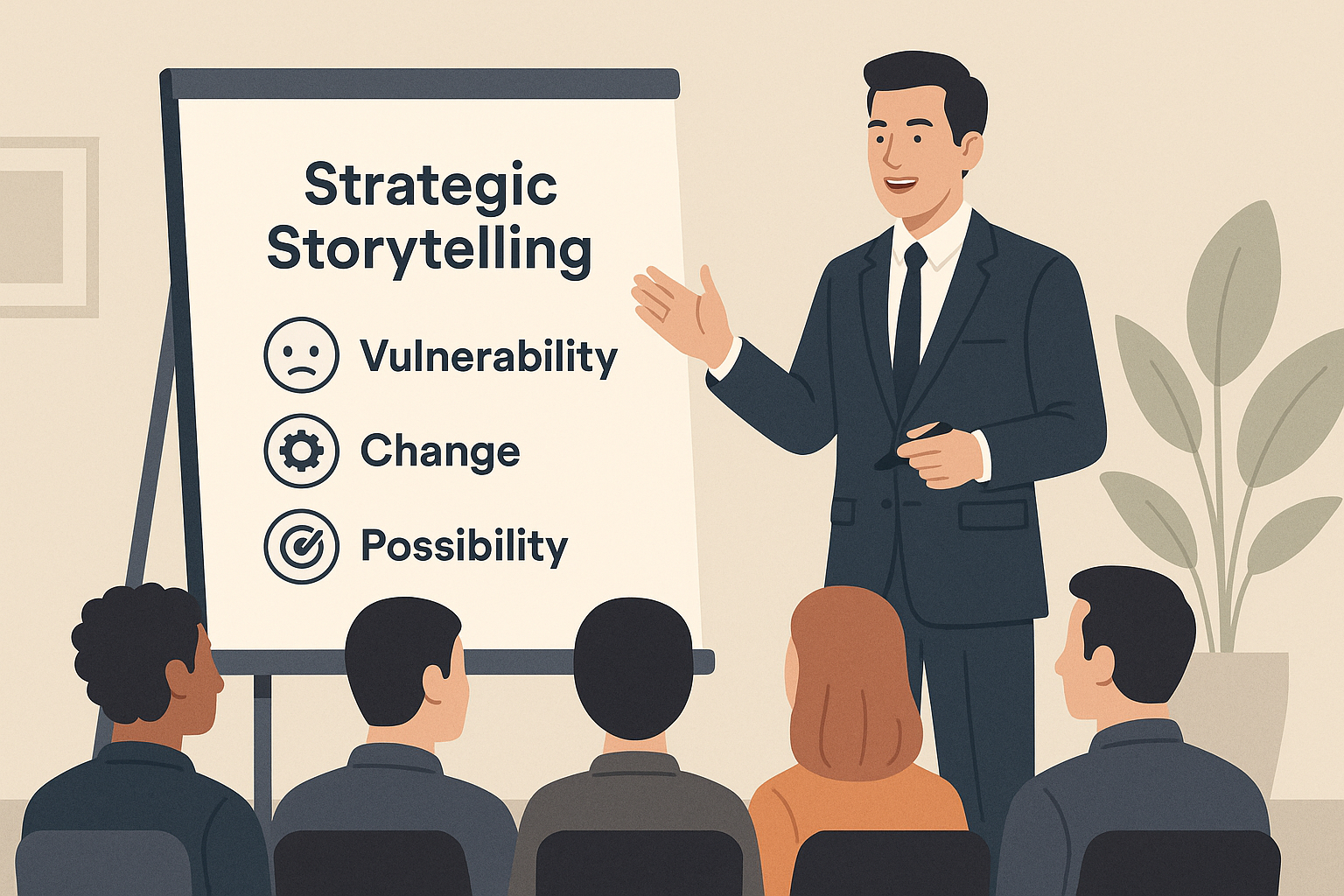
🔱 The 3 Stories That Sell the Most (The V.C.P. Framework)

Strategic Storytelling is built on three emotional stages:


1️⃣ Vulnerability Story (Your “Before”)

This story shows:

  • your doubts
  • your struggles
  • your mistakes
  • your failures
  • your fears
  • your frustrations

It makes people say:

“He was like me.”

This creates instant relatability.

Example:

“There was a time I felt stuck, lost, and unsure of what to do next.”


2️⃣ Change Story (Your Turning Point)

This is the moment something shifted:

  • a realization
  • a lesson
  • a conversation
  • a painful moment
  • a powerful insight
  • a small win

This story makes people think:

“Maybe I can change, too.”

Example:

“One day, I realized the problem wasn’t me — it was the path I was following.”


3️⃣ Possibility Story (Your “After”)

This is not bragging — it’s inspiring.

Show:

  • progress
  • clarity
  • transformation
  • confidence
  • direction
  • growth

This makes people think:

“If he can do it… I can do it too.”

Example:

“Now I help others find the clarity they never had.”


🧠 The VCP Storytelling Formula

This is the complete storytelling sequence used by top marketers to create emotional impact and a deep connection:

1️⃣ Vulnerability — Show your human side

Share your struggles, fears, mistakes, doubts, or moments of weakness.


This builds relatability and trust.

2️⃣ Change — Reveal the breakthrough moment

Describe the realization, event, or lesson that shifted your perspective.


This creates hope and momentum.

3️⃣ Possibility — Inspire with what’s possible for them

Show the transformation, clarity, or progress that followed.


This helps the prospect see their own future through your story.


When you use this structure, your stories stop being simple text and become powerful emotional journeys that connect, influence, and inspire action.


🧩 Strategic Storytelling Template (Copy-Ready)

“There was a time when I felt ________. I tried ________, but it didn’t work. I began doubting myself.

Then something changed: ________.

That moment helped me realize ________.

Today, I want to help you find the same clarity, because I know you can transform your life too.”

Use this template in posts, emails, videos, or presentations.


It works everywhere.


🔥 What Stories Should You Tell?

Tell stories about:

✔ mistakes
✔ lessons learned
✔ fears
✔ doubts
✔ frustrations
✔ turning points
✔ breakthroughs
✔ wins (small or big)
✔ people who inspired you
✔ the challenges you overcame

Authenticity >>> perfection.

People follow humans, not robots.


🧲 Why Strategic Storytelling Creates Attraction

Because stories do what marketing alone cannot:

  • They humanize you
  • They build trust
  • They reduce resistance
  • They make you memorable
  • They create emotional leadership

When people connect with your story, they follow your lead.


🧲 Conclusion

Your life is your greatest marketing asset.

Your stories are your bridge to your audience.


Your vulnerability is your superpower.


Your authenticity is your attraction.

Tell stories that move people — and your marketing becomes magnetic.


⚠️ Disclaimer (English)

This content is for educational and informational purposes only. It does not guarantee financial results. Success in marketing depends on personal effort, skills, consistency, and individual circumstances.
Publicado en Branding Personal, Comunicación Persuasiva, Marketing Digital, Psicología del Consumidor, storytelling

📖 Storytelling Estratégico — Tus Historias Venden por Ti

El marketing moderno no se trata de gritar más fuerte, sino de conectar más profundo.

La herramienta más poderosa para lograrlo no es un anuncio, una plantilla o una oferta…

Es una historia.

La historia correcta puede:


✔ Romper defensas
✔ Crear confianza
✔ Inspirar acción
✔ Generar identificación inmediata
✔ Diferenciarte del 99% de la competencia

El Storytelling Estratégico es la habilidad de contar historias que no solo entretienen…

venden sin vender.


🌟 ¿Qué es el Storytelling Estratégico?

Es la capacidad de usar tus experiencias, emociones, aprendizajes y vivencias como herramientas de conexión y persuasión.

No es inventar.

No es actuar.

No es exagerar.

Es convertir tu vida real en mensajes que tu audiencia siente como suyos.


🎯 ¿Por qué las historias venden mejor que cualquier argumento?

Porque la mente humana está programada para conectarse emocionalmente con las narrativas:

  • Las historias generan empatía.
  • Las historias bajan las defensas.
  • Las historias activan espejos emocionales.
  • Las historias permiten que el prospecto se vea reflejado.
  • Las historias hacen que el mensaje se quede en la memoria.

Los hechos informan.

Las historias transforman.


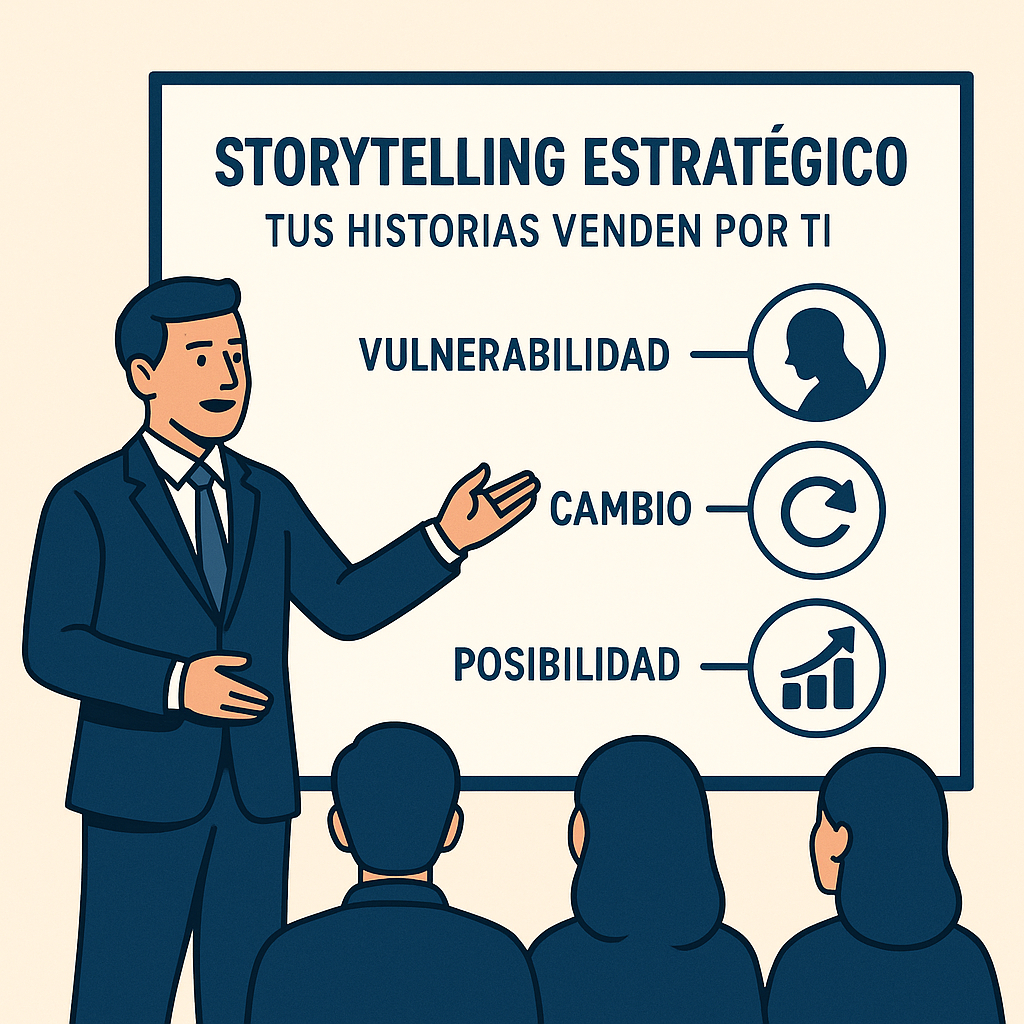
🔱 Los 3 Tipos de Historias que Más Convierten

1️⃣ Historia de Vulnerabilidad (Tu “antes”)

Aquí compartes:

  • miedos
  • fracasos
  • errores
  • momentos difíciles
  • incertidumbres
  • bloqueos

El prospecto piensa:

“Él/ella era como yo.”

Ejemplo:

“Yo también sentí que no era suficiente. Yo también intenté cosas que no funcionaron. Yo también estuve perdido.”


2️⃣ Historia de Cambio (Tu “despertar”)

Este es el momento donde algo hizo clic:

  • una decisión
  • una experiencia
  • una conversación
  • un mentor
  • una caída fuerte
  • una revelación

Aquí el prospecto piensa:

“Quizás yo también pueda cambiar.”

Ejemplo:

“Un día entendí que el problema no era yo… sino el camino que estaba usando.”


3️⃣ Historia de Posibilidad (Tu “después”)

No es presumir.

Es inspirar.

Aquí muestras:

  • claridad
  • crecimiento
  • dirección
  • aprendizaje
  • transformación
  • convicciones nuevas

El prospecto piensa:

“Si él pudo… yo también puedo.”


🧠 La Fórmula “VCP”: Vulnerabilidad → Cambio → Posibilidad

Toda historia magnética sigue esta secuencia:

  1. Vulnerabilidad: “Yo también sufrí.”
  2. Cambio: “Aquí está lo que descubrí.”
  3. Posibilidad: “Esto puede ayudarte a ti también.”

Esta estructura elimina presión, crea conexión emocional y despierta acción natural.


🧲 Storytelling Estratégico: Plantilla Lista para Usar

“Hubo un tiempo en el que me sentía ______. Probé ______, pero no funcionó. Empecé a dudar de mí mismo.

Un día, algo cambió: ______.

Eso me hizo ver que ______.

Hoy quiero ayudarte a encontrar ese mismo camino, porque sé que tú también puedes lograrlo.”

Esta plantilla sola puede multiplicar tus resultados.


💬 ¿Qué historias deberías contar?

Las que conectan con:

✔ tus errores
✔ tus aprendizajes
✔ tus fracasos
✔ tus comienzos
✔ tus miedos
✔ tus momentos de claridad
✔ tus pequeños logros
✔ tus revelaciones
✔ tus decisiones valientes

Las historias reales tienen más poder que cualquier argumento lógico.


🔥 Tu Vida es tu Mejor Marketing

La gente no sigue a los perfectos.

La gente sigue a los auténticos.

A quienes muestran su humanidad.

A quienes cuentan sus cicatrices.

A quienes enseñan desde el corazón y la experiencia.

Cuando cuentas tus historias, no solo vendes…

inspiras.

lideras.

conectas.


⚠️ Aviso Legal

Este contenido se proporciona únicamente con fines educativos e informativos. No garantiza resultados financieros ni asegura resultados específicos. El éxito en marketing depende del esfuerzo personal, las habilidades aplicadas, la constancia y las circunstancias individuales de cada persona.

Publicado en ✍️ Content & Engagement Marketing, Content Strategy, engagement tips, online growth, Social Media Marketing, storytelling

Paid Search Marketing: How to Reach Buyers Ready to Take Action

💰 Week 8: Paid Search Marketing


Learn how paid search marketing (PPC) helps you target people ready to buy. Discover how to create effective ads, manage budgets, and measure results for higher ROI.


🌟 Introduction

Imagine having your business appear at the exact moment someone searches for what you offer. That’s the power of Paid Search Marketing (PPC) — a fast, measurable way to reach people who are already looking for your products or services.

Unlike organic marketing, which takes time to grow, paid search ads deliver instant visibility and results. The key is learning how to craft campaigns that convert — not just clicks, but customers.

Let’s explore how to make paid search your most profitable marketing channel.


🔎 1. What Is Paid Search Marketing?

Paid Search Marketing (also called Pay-Per-Click Advertising, or PPC) is a model where advertisers pay each time someone clicks on their ad.

These ads appear on search engines like Google, Bing, or Yahoo, typically above or beside organic search results.

Example:

If you sell eco-friendly shoes, and someone searches “best eco-friendly sneakers,” your ad can appear at the top — ready to attract a motivated buyer.


💡 2. How Paid Search Works

Here’s how PPC functions behind the scenes:

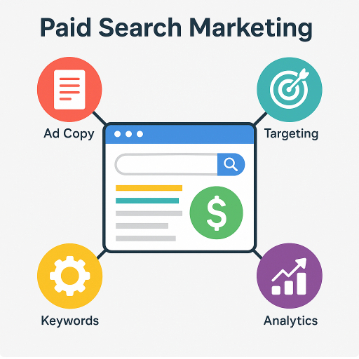
  1. Keywords: You choose search terms related to your offer.
  2. Ad Auction: Search engines hold an instant auction every time someone searches.
  3. Bidding: You set how much you’re willing to pay per click.
  4. Ad Rank: Your ad’s position depends on your bid and quality score (relevance, landing page quality, CTR).
  5. Click: When someone clicks, they’re taken to your landing page — and you pay for that click.

It’s a precise, performance-based way to attract ready-to-buy customers.


📈 3. Benefits of Paid Search Marketing

Why use paid search when SEO exists? Because it offers speed, control, and measurable results.

Top Benefits:

  • Instant Visibility: Your brand appears on page one immediately.
  • 🎯 Highly Targeted: Reach people based on keywords, location, or even device.
  • 💰 Pay Only for Results: You only pay when someone clicks your ad.
  • 📊 Data-Driven: Every impression, click, and conversion is tracked.
  • 🔁 Scalable: You can start small and increase your budget as you see results.

PPC is like a light switch — turn it on and your traffic flows instantly.


🧠 4. Crafting an Effective PPC Campaign

To succeed with paid search, you need a smart, structured approach.

Step 1: Research the Right Keywords

Use tools like Google Keyword Planner or Semrush to find terms your target audience actually searches for.

👉 Focus on long-tail keywords (e.g., “affordable SEO consultant in Las Vegas”) — they’re cheaper and more targeted.

Step 2: Write Compelling Ad Copy

Your ad must grab attention and promise value.
Example:

“Secure Your Files in the Cloud – 7-Day Free Trial. Protect What Matters Most!”

Always include a CTA (Call to Action) like Get Started, Learn More, or Try Free.

Step 3: Optimize Your Landing Page

When users click, they should land on a page that matches your ad promise.

  • Use a clear headline
  • Highlight benefits
  • Include testimonials
  • Add one strong CTA

Step 4: Set Your Budget & Bids

Start small, analyze, then scale what works. Google Ads allows you to set daily limits, so you’ll never overspend.

Step 5: Track, Test, and Improve

Use Google Ads Dashboard and Google Analytics to monitor conversions, cost per click (CPC), and ROI.


💬 5. The Power of Remarketing

One of PPC’s most effective strategies is remarketing — showing ads to people who visited your site but didn’t convert.

It’s like a gentle reminder saying:

“Hey, remember us? Here’s that offer you viewed earlier.”

This keeps your brand top of mind and increases your chances of turning visitors into buyers.


⚙️ 6. Tools to Boost Your PPC Performance

Here are some powerful tools to improve your paid search campaigns:

  • Google Ads Editor: Manage campaigns offline.
  • Semrush / Ahrefs: Keyword research and competition tracking.
  • SpyFu: See what ads competitors are running.
  • Optmyzr: Automate PPC optimization.
  • Hotjar: Analyze user behavior after they click your ad.

🚀 Conclusion & Call to Action

Paid search marketing is one of the most effective ways to drive instant traffic and sales. When done right, it connects you with people who already have buying intent — no convincing required.

👉 This week, try setting up a simple Google Ads campaign targeting one of your best keywords. Test, measure, and refine. You’ll be surprised how fast you can get results!

Next week: Week 9 — Social Media Marketing: Building Connections That Convert.