Publicado en Salud

Does disinfecting surfaces really prevent the spread of coronavirus?

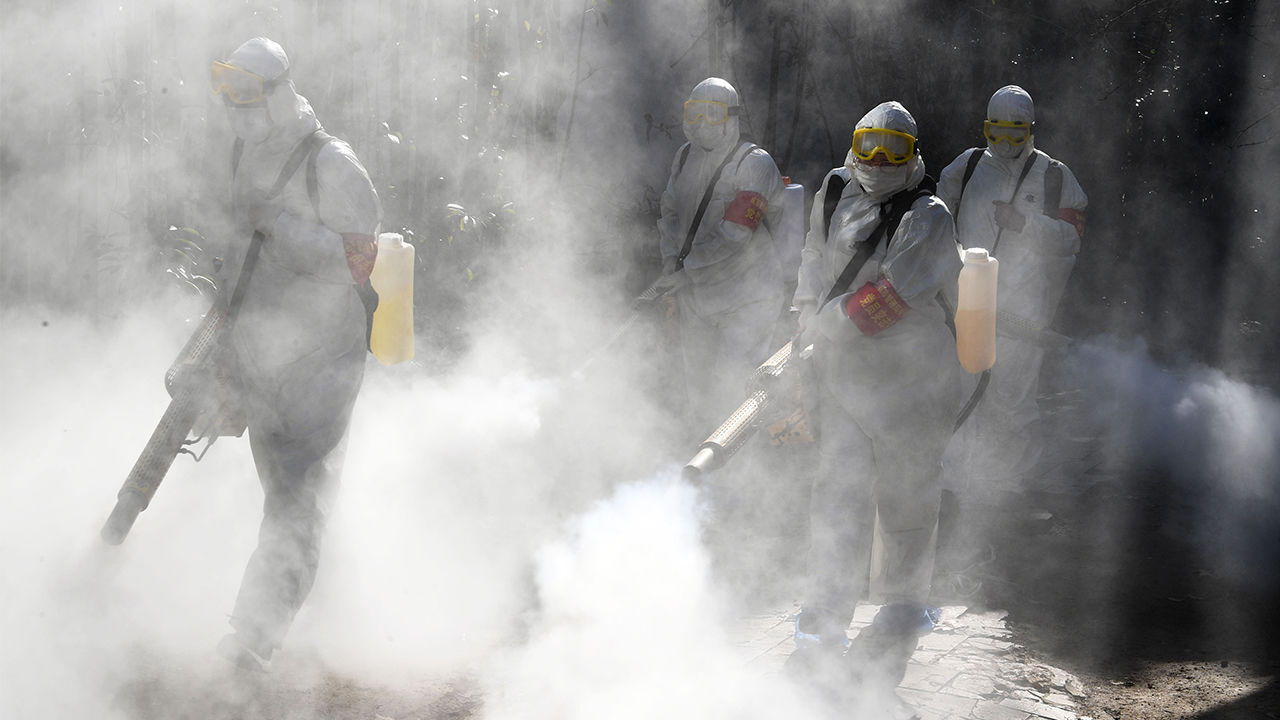
Photos from the areas hardest hit by the novel coronavirus SARS-CoV-2 tell a story of disinfection: Trucks spraying streets and a phalanx of sanitation workers wearing backpack tanks fogging sidewalks, parks, and plazas in China, South Korea, Italy, and elsewhere. Countless recommendations admonish us to wash our hands and disinfect often-touched surfaces in our homes. But what is the most effective way to prevent exposure to the virus?

Like other coronaviruses, severe acute respiratory syndrome coronavirus 2, which causes COVID-19, is thought to spread most commonly through invisible respiratory droplets sent into the air when an infected person coughs or sneezes. Those droplets can then be inhaled by nearby people or land on surfaces that others then touch, who can then get infected when they touch their eyes, nose, or mouth.

The good news from investigations of the coronavirus spread, says Juan Leon, an environmental health scientist at Emory University, is that past studies show common household disinfectants, including soap or a diluted bleach solution, can deactivate coronaviruses on indoor surfaces. “Coronaviruses are enveloped viruses with a protective fat layer,” Leon says. Disinfectants tear apart that fat layer, Leon says, which makes coronaviruses “fairly wimpy” compared to noroviruses and other common viruses that have a more robust protein shell. The Environmental Protection Agency has a list of disinfectants that have shown to be effective in fighting coronaviruses.

So, how long does SARS-CoV-2 stick around in the air or on surfaces? That depends. According to a preprint posted Tuesday on medRxiv, the virus persists in the air for up to 3 hours and for 2 to 3 days on stainless steel and plastic surfaces. In research published in the Journal of Hospital Infection, researchers found that a related coronavirus that causes SARS can persist up to 9 days on nonporous surfaces such as stainless steel or plastic. And according to reports including one published yesterday in JAMA, SARS-CoV-2 has been detected in feces, suggesting the virus could be spread by people who don’t properly wash their hands after using the bathroom. But thus far, the U.S. Centers for Disease Control and Prevention says there is no indicationthat it spreads through drinking water, swimming pools, or hot tubs.

So, what about outdoors? According to a variety of local news reports from cities including Shanghai and Gwangju, South Korea, the disinfectant most commonly used outdoors is a diluted solution of sodium hypochlorite, or household bleach. But it’s unclear whether bleach destroys coronaviruses outside, and if it does kill them on surfaces it’s unclear whether it would kill viruses in the air. Bleach itself breaks down under ultraviolet (UV) light. Then again, Leon says, UV light seems to destroy coronaviruses as well. And coronavirus exposure from outdoor surfaces may be limited already: “Nobody goes around licking sidewalks or trees,” Leon says.

There may even be downsides to widespread overzealous disinfection with bleach, notes Julia Silva Sobolik, a graduate student in Leon’s lab. “Bleach is highly irritating to mucous membranes,” Sobolik says. That means people exposed to sprayed disinfectants—especially the workers who spray them—are at risk of respiratory troubles, among other ailments. Sobolik notes that an October 2019 study in JAMA Network Open found that nurses who regularly used disinfectants to clean surfaces were at higher risk of chronic obstructive pulmonary disease. A 2017 study linked exposure to disinfectants to asthma to adults in Germany. Both of those studies dealt with yearslong exposure to disinfectants. Still, the message seems to be taking hold. In a recent television broadcast by state CCTV in China, Zhang Liubo, a researcher with China’s Center for Disease Control and Prevention, warned the public that, “Outdoor surfaces, such as roads, squares, lawns, should not be sprayed with disinfectants repeatedly. … Spraying disinfectants over a large area and repeatedly may cause environmental pollution and should be avoided.”

So, what’s the best path forward? Given that person-to-person contact appears the most likely route of transmission for COVID-19, “I would focus on how to minimize that contact,” Leon says. That means the usual hygiene advice, he says: Stay home if you are sick, reduce close contact with others, make sure to cover your mouth if you sneeze or cough, and wash your hands regularly for at least 20 seconds. Says Sobolik: “As simple as it sounds, it works.”


Origen: Does disinfecting surfaces really prevent the spread of coronavirus?
Publicado en Salud

Publican lista de desinfectantes aprobados para combatir el coronavirus

Publican lista de desinfectantes aprobados para combatir el coronavirus
EPA dio a conocer una serie de productos desinfectantes que ayudan a prevenir el contagio por coronavirus.

La Agencia de Protección Ambiental de los Estados Unidos (EPA) dio a conocer recientemente una serie de productos desinfectantes aprobados para prevenir el contagio por coronavirus.

A pesar de que autoridades de salud pública han dado a conocer que el riesgo de contraer coronavirus es aún bajo, es importante mantener e implementar medidas de prevención, especialmente en la higiene y la limpieza diaria.

Esta es la lista de productos aprobados por EPA:

  1. COSA OXONIA ACTIVE
  2. VIRASEPT
  3. BLEACH DISINFECTANT CLEANER
  4. OXYCIDE DAILY DESINFECTANT CLEANER
  5. PEROXIDE MULTI SURFACE CLEANER AND DISINFECTANT
  6. KLERICIDE 70/30 IPA
  7. PEROXIDE DISINFECTANT AND GLASS CLEANER RTU
  8. SC-RTU DISINFECTANT CLEANER
  9. Stepan Spray Disinfectant Concentrate
  10. DETERGENT DISINFECTANT PUMP SPRAY
  11. CONDOR 2
  12. RAPTOR 5
  13. FIREBIRD F130
  14. FORMATION HWS-256
  15. FORMULATION HWS-128
  16. HWS-64
  17. FORMULATION HWS-32
  18. Clorox Healthcare Bleach Germicidal Cleaner Spray
  19. Clorox Multi Surface Cleaner + Bleach
  20. Clorox Pet Solutions Advanced Formula Disinfecting Stain & Odor Remover
  21. Clorox Disinfecting Bleach2
  22. Clorox Performance Bleach1
  23. Clorox Germicidal Bleach3
  24. Clorox Clean Up Cleaner + Bleach
  25. Clorox Disinfecting Bathroom Cleaner
  26. Clorox Disinfecting Wipes
  27. Clorox Toilet Bowl Cleaner with Bleach
  28. STERILEX ULTRA STEP
  29. STERLEX ULTRA DISINFECTANT
  30. CLEANER SOLUTION 1
  31. LYSOL BRAND HEAVY DUTY CLEANER DESINFECTANT CONCENTRATE
  32. Clorox Healthcare Bleach Germicidal Wipes
  33. Clorox Commercial Solutions Toilet Bowl Cleaner with Bleach1
  34. Clorox Commercial Solutions Clorox Clean-Up Disinfectant Cleaner with Bleach1
  35. Clorox Commercial Solutions Clorox Disinfecting Spray
  36. Clorox Commercial Solutions Hydrogen Peroxide Cleaner Disinfectant
  37. Saginaw
  38. GNR
  39. Clorox Commercial Solutions Clorox Disinfecting Wipes
  40. CloroxPro Clorox Germicidal Bleach
  41. Clorox Commercial Solutions Clorox Disinfecting Biostain & Odor Remover
  42. Clorox Healthcare VersaSure Wipes
  43. CloroxPro Clorox Total 360 Disinfecting Cleaner1
  44. LONZA FORMULATION S-21F
  45. LONZA FORMULATION DC-103
  46. BARDAC 205M-10
  47. BARDAC 205M-14.08
  48. BARDAC 205M RTU
  49. BARDAC 205M-2.6
  50. BARDAC 205M-23
  51. LONZA DISINFECTANT WIPES
  52. LONZA DISINFECTANT WIPES PLUS 2
  53. LONZAGARD RCS-256 PLUS
  54. NUGEN MB5A-256
  55. NUGEN MB5N-256
  56. NUGEN MB5N-128
  57. BARDAC 205M-7.5
  58. LONZA FORMULATION S-21
  59. LONZA FORMULATION S-18
  60. LONZA FORMULATION R-82
  61. VIREX II / 256
  62. OXIVIR Tb
  63. OXY-TEAM DISINFECTANT CLEANER
  64. OXIVIR WIPES
  65. Avert Sporicidal Disinfectant Cleaner
  66. OXIVIR 1
  67. Oxivir 1 Wipes
  68. KLORSEPT
  69. KLORKLEEN 2
  70. LYSOL DISINFECTANT MAX COVER MIST
  71. LYSOL BRAND POWER PLUS TOILET BOWL CLEANER
  72. LYSOL BRAND CLING & RUST TOILET BOWL CLEANER
  73. LYSOL BRAND BLEACH MOLD AND MILDEW REMOVER
  74. LYSOL BRAND CLEAN & FRESH MULTI-SURFACE CLEANER
  75. PROFESSIONAL LYSOL DISINFECTANT SPRAY
  76. URTHPRO
  77. PURELL Professional Surface Disinfectant Wipes
  78. PEAK DISINFECTANT
  79. PEAK DISINFECTANT WIPES
  80. Sani-Prime Germicidal Spray
  81. Sani-Cloth Prime Germicidal Disposable Wipe
  82. Sani-HyPerCide Germicidal Spray

Para más información, puedes hacer clic aquí.

Origen: Publican lista de desinfectantes aprobados para combatir el coronavirus

Publicado en Salud

It’s Time To Make A Change

I wanted to share 6 areas that I think are key to focus on to make you feel healthier.

Hydrate, hydrate, hydrate. Shockingly, it’s estimated that 3 out of 4 Americans are walking around chronically dehydrated. This is bad, bad news considering that water makes up 60 – 70% of your body and affects every corner of health and well-being—including metabolism, detoxification, digestion, inflammation, appearance, and cognitive function to name a few. The solution? Drink at least 8 – 12 eight-ounce glasses of water per day.

Fill nutritional gaps with a multivitamin. Like we’ve talked about before, a high-quality multivitamin is like a nutrition insurance policy to make sure that you’re getting all the valuable micronutrients you need on a daily basis. After all, experts agree that there is a nutritional gap between today’s diet and what’s required for optimal health, and researchers concur that everyone should be taking a daily multivitamin because it offers safe, simple micronutrient insurance.

Stock your kitchen with all the best tools. This isn’t as sexy as other fat-burning and metabolism-boosting tips, but if you truly want to eat healthy consistently, you need to make sure you have all the tools you’ll need to prepare meals at home. For cutting boards, choose wood over plastic. For pots, pans, and other storage containers, using glass, ceramic, and stainless steel are the best options with the least toxicants. Other essentials include a pressure cooker and/or slow cooker, blender, and good knives—although we could make a case for about a dozen other kitchen gadgets.

Choose a workout routine and find an accountability partner. Surely you’ve heard the saying if you fail to plan, you plan to fail. Well, that holds true for your fitness regimen as well. Make sure you have a progressive exercise program that’s appropriate for your fitness level and experience and conducive to your goals. Also, find an accountability partner—a trainer, friend, spouse, or fellow gym goer—to help keep you on track and to help push yourself.

Know your temptations and alternatives to satisfy them. Despite the best-laid plans and good intentions, temptations will strike. Identify any triggers that you can—time of day, emotions, stress, people, places, etc.—and prepare contingency plans. One of the biggest keys to overcoming temptation is mindfulness. Don’t rely on will power alone. Come up with solutions. Have healthy snacks handy. Practice meditation and deep breathing. Work on distraction techniques (call a friend, write a thank you note, read a book, take a walk).

Commit to a consistent self-care routine. No matter what you do, make time and space for yourself and a self-care routine. It’s not selfish. Investing in yourself means you can serve others more effectively and genuinely. There’s no one-size-fits-all self-care routine. Consider a gratitude journal, meditation, yoga, booking a message, taking a walk, sitting in the sauna, or sunbathing. Whatever floats your boat and fills up your tank is what’s best!

Earlier above we touched on «nutritional gaps».  If you need help with this, then you gotta check out this «Super-Food»… 

It contains…

  • 10 TIMES the Vitamin A of Carrots
  • 12 TIMES the Vitamin C of Oranges
  • 17 TIMES the Calcium of Milk
  • 15 TIMES the Potassium of Bananas
  • 25 TIMES the Iron of Spinach
  • 9 TIMES the Protein of Yogurt

CLICK HERE… The newest superfood on the block


Origen: It’s Time To Make A Change