By Marvin Gandis
Las Vegas is known around the world for its shows, hotels, restaurants, lights, and casinos. For many visitors, entering a casino and trying a slot machine, card table, or roulette wheel is part of the tourist experience.
However, enjoying gambling requires understanding one essential truth: casino gambling should be treated as entertainment—not as a way to earn income, pay debts, or solve financial problems.
A visitor may win during an individual session. That same person may also lose money quickly. No system, ritual, schedule, favorite number, or betting pattern can guarantee consistent results in games primarily governed by chance.
The safest way to approach the experience is with accurate information, firm limits, and a responsible attitude.
What Is Gambling?
Gambling is an activity in which someone risks money or something of value in the hope of receiving a prize.
The outcome may depend:
- Entirely on chance.
- On a combination of chance and player decisions.
- On mathematical rules that favor the operator over time.
Common Las Vegas games include:
- Slot machines.
- Video poker.
- Roulette.
- Blackjack.
- Baccarat.
- Craps.
- Poker.
- Keno.
- Sports betting.
- Electronic table games.
Some games allow meaningful decisions, but no casino game eliminates the possibility of losing.
How Do Slot Machines Work?
Modern slot machines use electronic systems to generate outcomes within the programmed rules of each game.
Every spin represents a new event. Previous results do not force the machine to award a prize on the next spin.
A machine is not required to pay because:
- It has gone a long time without awarding a bonus.
- Another player lost a large amount.
- It recently paid a jackpot.
- It appears to be “hot.”
- Its meters or graphics look nearly complete.
- The player changed the bet.
- Someone just left the machine.
Lights, sounds, animations, and celebrations make the experience exciting. However, a visual celebration does not always represent a profitable result.
For example, if a player wagers two dollars and receives eighty cents, the machine awarded a prize, but the player still lost one dollar and twenty cents on that spin.
Players should therefore watch their total balance rather than responding only to the machine’s sights and sounds.
The House Advantage
Casinos operate as businesses. Their games are designed so that, after a very large number of wagers, the casino retains a mathematical advantage.
This does not mean that every player loses during every visit. Some visitors win during individual sessions, and a small number may receive substantial prizes.
It means that the game’s long-term mathematical structure favors the casino.
Playing longer does not guarantee that a player will recover previous losses. In fact, additional play creates more exposure to the house advantage.
Understanding Return to Player
Some casino games have a theoretical percentage known as return to player, or RTP.
RTP represents a statistical average calculated over an extremely large number of wagers. It is not a promise to an individual player or a prediction for one particular session.
A theoretical return of 90 percent does not mean that a visitor who wagers $100 will receive exactly $90.
During a short session, that player could:
- Lose the entire budget.
- Recover part of it.
- Finish close to even.
- Win more than was wagered.
- Receive an unusually large prize.
RTP describes long-term mathematical behavior—not what will happen that evening.
Entertainment Versus Income Expectations
Responsible gambling begins by accepting that the money being used may be lost.
A show ticket, special dinner, or attraction has a cost. In the same way, a casino budget should be viewed as the cost of an entertainment experience.
A visitor should not enter the casino thinking:
- “I need to recover what I lost.”
- “I will pay my bills with a jackpot.”
- “This will solve my debt.”
- “Today has to be my lucky day.”
- “I will continue until I win.”
- “I can turn gambling into dependable income.”
When gambling changes from recreation into an economic or emotional necessity, the risk of harm increases.
A Responsible Gambling Plan for Visitors
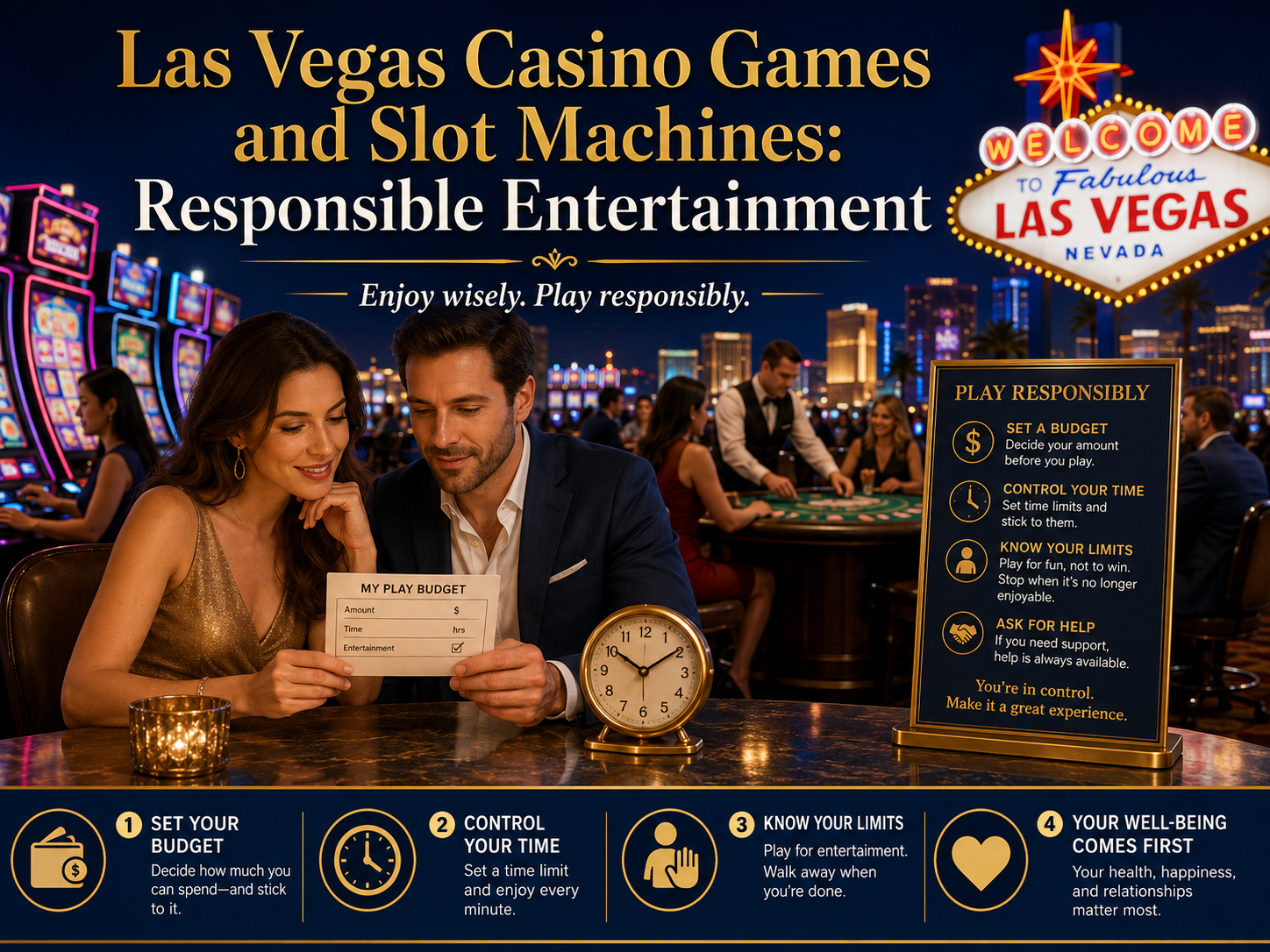
Before entering a casino, prepare a simple plan.
1. Set a Budget
The gambling budget should be an amount that can be lost without affecting:
- Rent or mortgage payments.
- Food.
- Utilities.
- Medication.
- Travel expenses.
- Car payments.
- Credit cards.
- Emergency savings.
- Family responsibilities.
Entertainment money must remain completely separate from essential money.
2. Carry a Limited Amount
Bringing only the planned cash can reduce impulsive decisions.
A visitor may also choose to limit access to:
- ATMs.
- Credit cards.
- Cash advances.
- Banking applications.
- Additional money stored in the hotel room.
3. Establish a Loss Limit
A visitor does not have to lose the entire budget before ending the session.
Someone who brings $100 might decide to stop when the balance reaches $50.
The limit should be established before play begins—not during a losing streak.
4. Establish a Time Limit
Casino environments may make it difficult to notice how long someone has been playing.
Setting an alarm can help. A session might be limited to:
- Twenty minutes.
- Thirty minutes.
- Forty-five minutes.
- One hour.
Taking breaks provides an opportunity to review the balance and regain perspective.
5. Decide What to Do After Winning
A player should decide in advance what will happen if the balance increases.
For example:
- Recover the original money.
- Save part of the profit.
- Leave after reaching a specific amount.
- Continue only with a small portion of the winnings.
A profit can disappear quickly when someone keeps playing without a limit.
Choosing a Reasonable Bet
A responsible wager should provide enough rounds of play without consuming the budget too quickly.
With $100:
- A 50-cent wager allows up to 200 theoretical spins.
- A $1 wager allows up to 100.
- A $2.50 wager allows only 40.
- A $5 wager allows only 20.
These figures do not account for prizes received during play, but they show how bet size affects the lifespan of the budget.
A larger wager may create larger potential prizes, but it can also end the session within minutes.
Common Visitor Mistakes
Betting Too Much Immediately
The excitement of arriving in Las Vegas may lead a visitor to start with wagers that are too large.
Beginning slowly makes it easier to understand the game and its true cost.
Chasing Losses
Chasing losses means continuing or increasing bets in an attempt to recover lost money.
This behavior can turn a manageable loss into a much larger one.
Believing a Machine Is Ready to Pay
Statements such as “it is almost ready,” “it is due,” or “it has to pay soon” express emotional expectations, not mathematical guarantees.
Constantly Changing the Bet
Raising and lowering the wager because of superstition does not provide control over the outcome. It only changes how quickly the budget may disappear.
Gambling While Intoxicated
Alcohol can impair judgment, increase impulsivity, and make limits harder to follow.
Ignoring the True Cost
Some machines display credits rather than dollars. Before playing, check:
- The denomination.
- The number of lines.
- The total wager.
- The cost per spin.
- Any bonus or jackpot requirements.
Giving Back Every Winning Dollar
Winning and continuing until everything is lost is a common experience.
Knowing when to leave is part of responsible gambling.
When Does Gambling Stop Being Entertainment?
Gambling may become a problem when it begins producing financial, personal, emotional, family, or employment difficulties.
The American Psychiatric Association describes gambling disorder as repeated, problematic gambling behavior that a person has difficulty controlling, even when it causes significant consequences.
Possible warning signs include:
- Thinking about gambling constantly.
- Spending more than planned.
- Gambling longer than intended.
- Needing larger wagers to experience the same excitement.
- Feeling restless or irritable when trying to stop.
- Repeatedly attempting to reduce gambling without success.
- Gambling to escape sadness, worry, or stress.
- Returning to recover losses.
- Lying about gambling time or spending.
- Hiding statements, withdrawals, or debts.
- Neglecting work, family, or responsibilities.
- Borrowing money to continue gambling.
- Using funds needed for basic expenses.
- Experiencing guilt, shame, or desperation afterward.
One isolated behavior does not establish a diagnosis, but several repeated signs are a reason to stop and seek qualified support.
The Dangerous Desire to Win It Back
One of the most harmful gambling thoughts is the belief that the next wager will repair the previous loss.
A person may think:
“I lost $100, but if I continue a little longer, I can recover it.”
After losing another $100, the person may conclude:
“Now I need an even larger prize.”
This creates a cycle in which every loss becomes another reason to continue.
The healthiest response after reaching a limit is not to recover the money. It is to stop the loss.
Gambling as an Escape
Some people begin gambling not primarily for entertainment but as temporary relief from:
- Stress.
- Loneliness.
- Depression.
- Anxiety.
- Family conflict.
- Financial pressure.
- Grief.
- Boredom.
- Feelings of failure.
Gambling may provide temporary distraction, but it does not resolve the source of the distress. When it becomes an emotional escape, controlling the behavior can become increasingly difficult.
Speaking with someone trustworthy and obtaining professional support are healthier responses.
Practical Protective Measures
Visitors who want to reduce risk can:
- Gamble only with cash.
- Avoid credit.
- Refuse to gamble while emotionally distressed.
- Limit alcohol consumption.
- Use time alarms.
- Track money entering and leaving the machine.
- Take breaks away from the gaming floor.
- Avoid gambling alone when concerned about control.
- Share the budget with a travel companion.
- Include shows, meals, walking, sightseeing, and other activities in the trip.
- Avoid spending more merely to earn casino rewards.
- Ask about self-exclusion programs when necessary.
- Seek support as soon as control begins to weaken.
A Simple Pre-Gambling Checklist
Before making the first wager, ask:
- Can I afford to lose all of this money?
- Have I established a loss limit?
- Do I know the cost of every wager?
- Have I chosen a time to leave?
- Am I gambling for entertainment?
- Am I sober and thinking clearly?
- Can I leave without recovering a loss?
- Can I leave after winning?
- Am I hiding this activity from anyone?
- Am I using money that I need?
When an answer creates concern, the safest decision may be not to gamble.
What to Do When Control Is Slipping
Recognizing a problem is not a sign of weakness. It is an act of responsibility.
Problem gambling is treatable, and resources are available for both gamblers and their families. The Nevada Council on Problem Gambling provides education, referrals, and access to Nevada support services; it also notes that many services may be available at no cost to affected individuals and family members.
The National Problem Gambling Helpline connects people with support, information, and local services. It can currently be reached by calling or texting 1-800-MY-RESET.
Visitors and Nevada residents may also consult the Nevada Council on Problem Gambling for current treatment and support resources.
Anyone experiencing an immediate emotional crisis or thoughts of self-harm in the United States should call or text 988.
Advice for Families and Travel Companions
When someone displays concerning behavior, respectful conversation is usually more helpful than accusation.
A person might say:
“I have noticed that you are spending more time and money gambling, and I am concerned about how it is affecting you. I want to help you find support.”
Family members should avoid:
- Lending money for additional gambling.
- Repeatedly paying losses without protective conditions.
- Lying to shield the person.
- Arguing while the person is actively gambling.
- Treating the problem as a simple failure of willpower.
- Waiting for an extreme crisis before seeking help.
Families and loved ones may also benefit from professional guidance.
Las Vegas Offers More Than Gambling
A balanced Las Vegas trip does not have to revolve entirely around casinos.
The city and surrounding region also offer:
- Live entertainment.
- Museums.
- Restaurants.
- Shopping.
- Pools.
- Art.
- Music.
- Tours.
- Family attractions.
- Themed architecture.
- Cultural experiences.
- Parks and nearby natural scenery.
Planning activities outside the casino reduces exposure to gambling and helps preserve the true purpose of the visit: enjoyment.
Conclusion
Casino games and slot machines may be part of an enjoyable Las Vegas visit when approached with information, limits, and self-control.
A responsible visitor understands that:
- Gambling is not an investment.
- No prize is guaranteed.
- Losses do not have to be recovered.
- Betting more does not change the chance in the player’s favor.
- Essential money must remain protected.
- Leaving at the right time matters more than pursuing another prize.
- Asking for help early can prevent more serious consequences.
A successful visit should not be measured by how much money was wagered. It should be measured by whether the visitor enjoyed the experience without sacrificing peace of mind, relationships, emotional health, or financial security.
Gambling should remain entertainment. When it stops being fun, it is time to stop and seek support.
Enjoy Las Vegas responsibly. Set your limits before you play, and remember that knowing when to stop is part of a positive experience.
Educational and Responsible Gambling Disclaimer
This article is provided for educational and informational purposes only. It does not promote gambling, guarantee prizes, or provide financial, medical, psychological, or legal advice.
Gambling involves a real risk of financial loss. It should be limited to adults who meet the applicable legal age and should involve only money specifically reserved for entertainment.
When gambling causes financial, emotional, family, or employment problems, stop and seek professional help. In the United States, call or text the National Problem Gambling Helpline at 1-800-MY-RESET. During an immediate emotional crisis, call or text 988.
