⚙️ Week 4: Digital Marketing Tools
Explore the most powerful digital marketing tools to optimize campaigns, improve communication, analyze performance, and grow your business faster. Discover how to choose and combine tools for maximum results.
🌟 Introduction
In today’s competitive digital landscape, using the right tools can mean the difference between success and stagnation. Whether you’re managing social media, creating content, tracking results, or running ads, digital marketing tools help automate processes, analyze data, and make smarter decisions.
Think of them as your digital allies — saving you time, improving accuracy, and turning raw information into actionable insights. Let’s explore the essential categories and tools every marketer should know to work efficiently and scale effectively.
🧰 1. What Are Digital Marketing Tools?
Digital marketing tools are software or platforms designed to help marketers plan, execute, and analyze campaigns more effectively. They cover everything from automation to analytics — helping you understand your audience, manage your brand, and measure success.
In short, these tools empower you to market smarter, not harder.
📣 2. Categories of Digital Marketing Tools
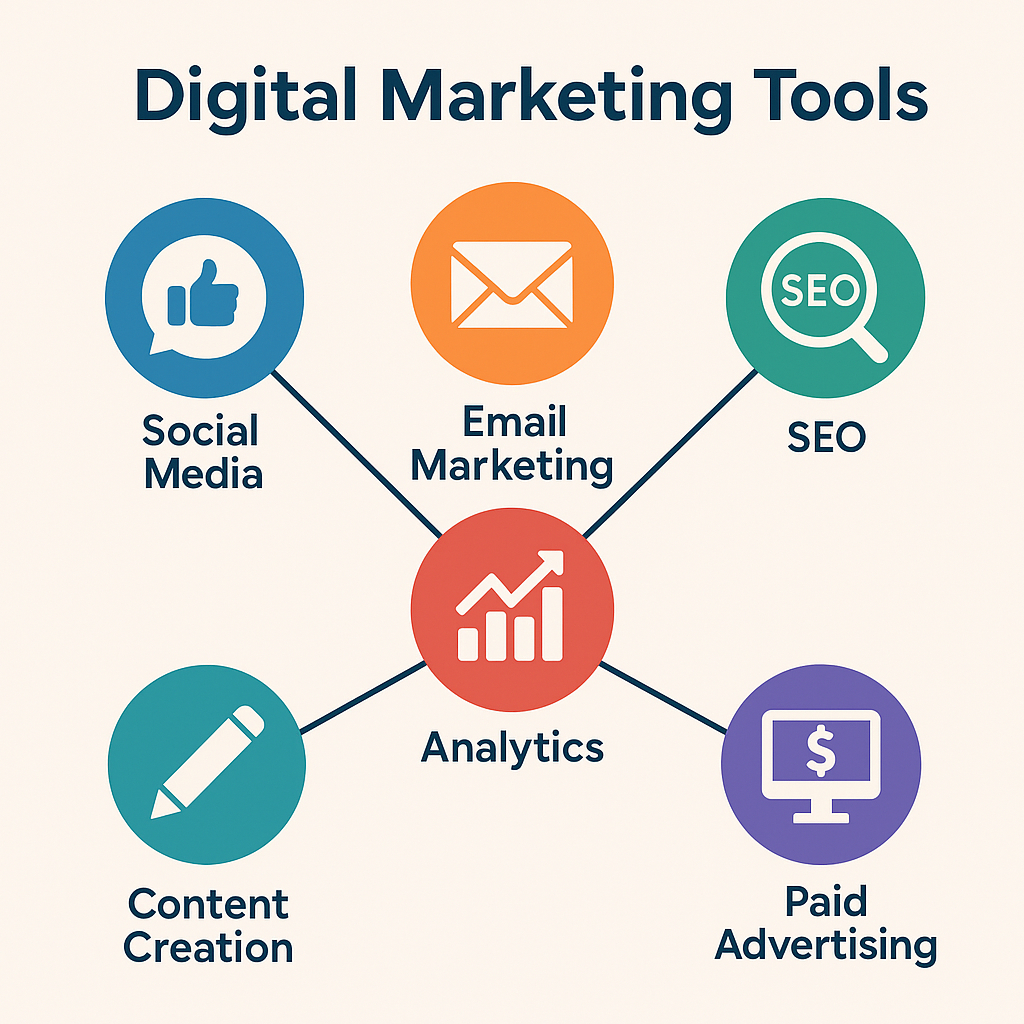
Here are the major categories every marketer should be familiar with:
1. Social Media Management
Manage posts, schedule content, and monitor engagement.
✅ Examples: Buffer, Hootsuite, Later, Sprout Social
2. Email Marketing & Automation
Build and maintain relationships through personalized emails.
✅ Examples: GetResponse, AWeber, ActiveCampaign, Mailchimp
3. SEO & Keyword Research
Improve your website’s visibility and traffic through search engines.
✅ Examples: Semrush, Ahrefs, Moz, Google Keyword Planner
4. Analytics & Reporting
Measure performance and optimize marketing decisions with data.
✅ Examples: Google Analytics, Hotjar, Data Studio, Matomo
5. Content Creation & Design
Create stunning graphics, blog visuals, and social posts.
✅ Examples: Canva, Adobe Express, InVideo, Grammarly
6. Paid Advertising Tools
Run and optimize PPC and social ad campaigns.
✅ Examples: Google Ads, Facebook Ads Manager, AdEspresso
7. Project Management & Collaboration
Keep your marketing team organized and efficient.
✅ Examples: Trello, Asana, Notion, ClickUp
📈 3. Why Using the Right Tools Matters
Digital marketing tools are not just convenient — they’re transformative. They help you:
- Automate repetitive tasks (like posting, reporting, or sending emails).
- Understand audience behavior with detailed analytics.
- Improve accuracy in targeting and measurement.
- Save time and increase productivity.
- Stay competitive in an ever-changing market.
By integrating tools that fit your business size and goals, you create a seamless workflow that drives growth and consistency.
💡 4. How to Choose the Best Tools for Your Business
Not all tools are created equal. When selecting your digital marketing toolkit, keep these in mind:
- Define your goals — Are you trying to grow traffic, increase leads, or boost engagement?
- Start simple — Pick user-friendly platforms that integrate easily.
- Check pricing and scalability — Choose tools that grow with your business.
- Focus on analytics — Insights matter more than features.
- Test before you invest — Use free trials to evaluate performance.
The right combination of tools gives your team agility and your campaigns precision.
🧠 5. Marvin’s Pro Tip
To streamline your marketing system, connect your tools:
👉 For example, use GetResponse to automate emails, link it with Google Analytics for performance tracking, and use Canva to design branded visuals.
Integration turns separate tools into one powerful ecosystem — saving time while amplifying results.
🚀 Conclusion & Call to Action
Digital marketing success depends on creativity and efficiency — and that’s where the right tools shine. They allow you to focus on what truly matters: connecting with your audience and growing your business.
👉 This week, choose three tools from this list to master. Test them, integrate them, and watch how much easier — and more powerful — your marketing becomes.
Next week, we’ll dive into Week 5: Data-Driven Marketing — How to Make Smarter Decisions Using Analytics.
