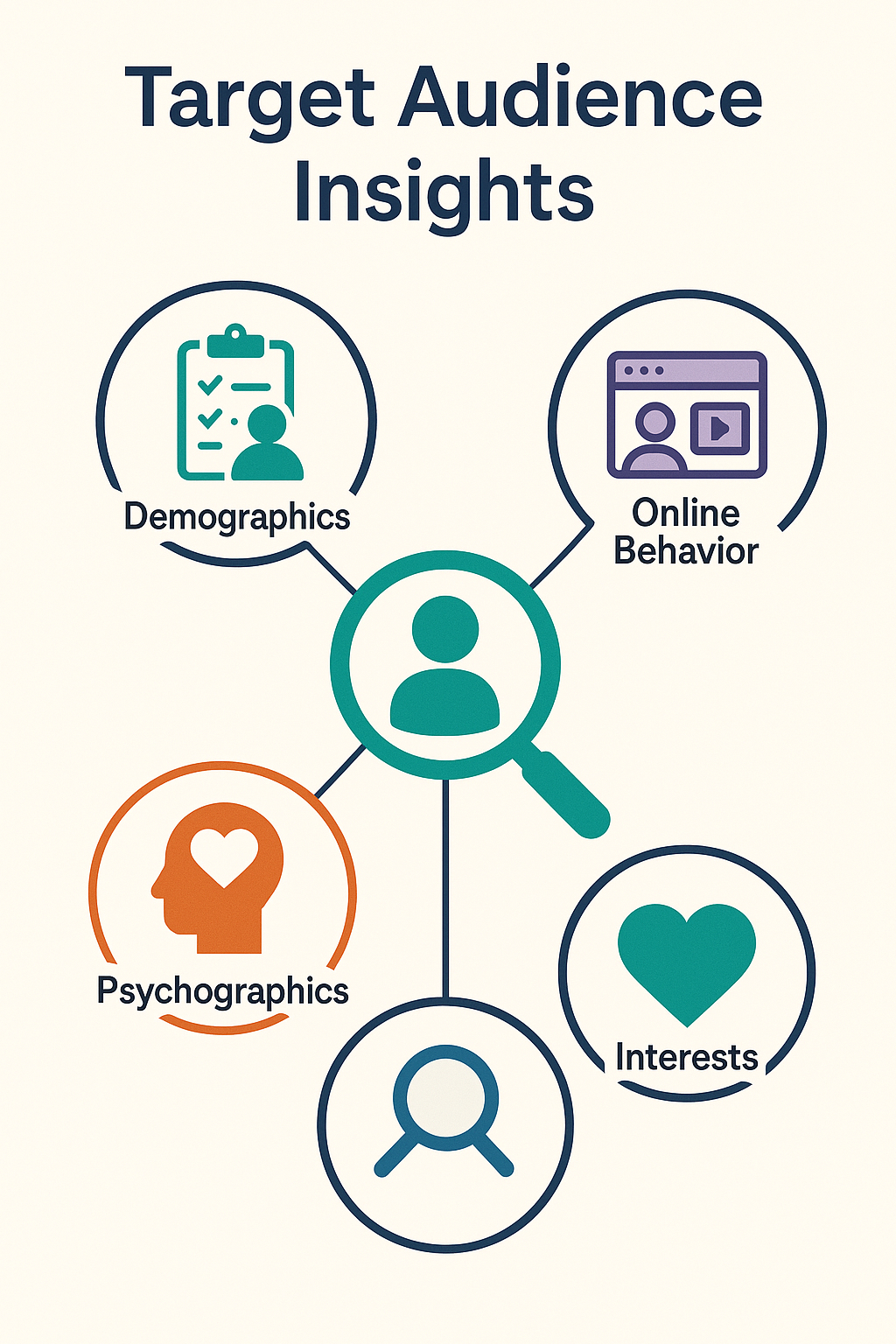
🧠 Week 2: Target Audience Insights
Learn how to identify, understand, and connect with your target audience using data-driven insights and empathy. Discover techniques to attract loyal customers who truly resonate with your brand.
🌍 Introduction
Digital marketing isn’t just about spreading your message — it’s about speaking to the right people. Many businesses waste time and money trying to reach everyone, but the truth is: if you market to everyone, you market to no one.
Understanding your target audience allows you to tailor your content, tone, and offers to the exact people most likely to buy from you. Let’s dive into how to uncover their needs, behaviors, and motivations to create marketing that truly connects.
🎯 1. What Is a Target Audience?
A target audience is the specific group of people most likely to be interested in your product or service. They share common traits — such as demographics, interests, problems, or goals — that make your message relevant to them.
Example:
- A fitness coach may target women aged 25–40 who want to lose weight after pregnancy.
- A tech company might target small business owners who need affordable digital tools.
Once you identify your target audience, your marketing efforts become more focused, efficient, and profitable.
📊 2. The Power of Audience Insights
Audience insights reveal why people buy — not just who they are. By understanding their desires, pain points, and decision-making habits, you can:
- Craft more persuasive messages.
- Choose the right marketing channels.
- Create offers that match their needs.
- Build emotional connections that inspire loyalty.
When you know your customers deeply, marketing feels less like selling and more like helping.
🔍 3. How to Identify Your Ideal Customer
Here’s a simple 4-step process to define your perfect audience:
Step 1: Gather Demographics
Understand the basic traits — age, gender, income, education, and location.
Example: 60% of your customers might be women aged 30–50 living in urban areas.
Step 2: Discover Psychographics
Learn what drives them — their values, interests, lifestyles, and beliefs.
Example: They value health, balance, and time-saving solutions.
Step 3: Observe Online Behavior
Use analytics tools (like Google Analytics or Meta Audience Insights) to track what content they engage with, which social platforms they use, and what products they browse.
Step 4: Listen and Learn
Join Facebook groups, read product reviews, or conduct surveys to hear your audience’s own words. Customer feedback reveals emotional triggers that data alone can’t capture.
🧩 4. Creating Buyer Personas
A buyer persona is a fictional but realistic profile that represents your ideal customer.
It helps humanize your marketing so every ad, post, or email speaks directly to them.
Example Persona:
Name: Sarah Martinez
Age: 35
Occupation: Marketing Consultant
Goals: Build her brand online, attract clients
Challenges: Time management, tech overwhelm
Values: Simplicity, trust, and results
When you write an ad or email, imagine speaking directly to “Sarah.” This clarity transforms your communication.
🧠 5. Tools to Gain Audience Insights
Use data-driven tools to better understand your target market:
- Facebook Audience Insights: Identify demographics and interests.
- Google Analytics: Learn where visitors come from and what they do on your site.
- SurveyMonkey / Typeform: Conduct polls to gather preferences.
- Social Listening Tools (Hootsuite, Brandwatch): Track conversations around your niche.
These tools reveal what your audience truly cares about — and how you can serve them better.
💬 6. Turning Insights into Action
Knowing your audience is just the first step — acting on that knowledge is what creates results.
✅ Adjust your tone: Use the language your audience speaks.
✅ Refine your offers: Highlight the benefits that matter most to them.
✅ Choose the right channels: Focus on where your audience spends time.
✅ Test and learn: Run A/B tests to see what resonates best.
With consistent analysis and empathy, your campaigns will feel more personalized and effective.
🌟 Conclusion & Call to Action
Understanding your target audience is the foundation of authentic marketing. When you know who they are and what they value, you stop guessing and start connecting.
👉 Begin today by defining your audience persona. Write down their biggest challenges and how your product can help them overcome those struggles.
Stay tuned for Week 3: Communication and Collaboration — Building Stronger Connections in Digital Marketing.
