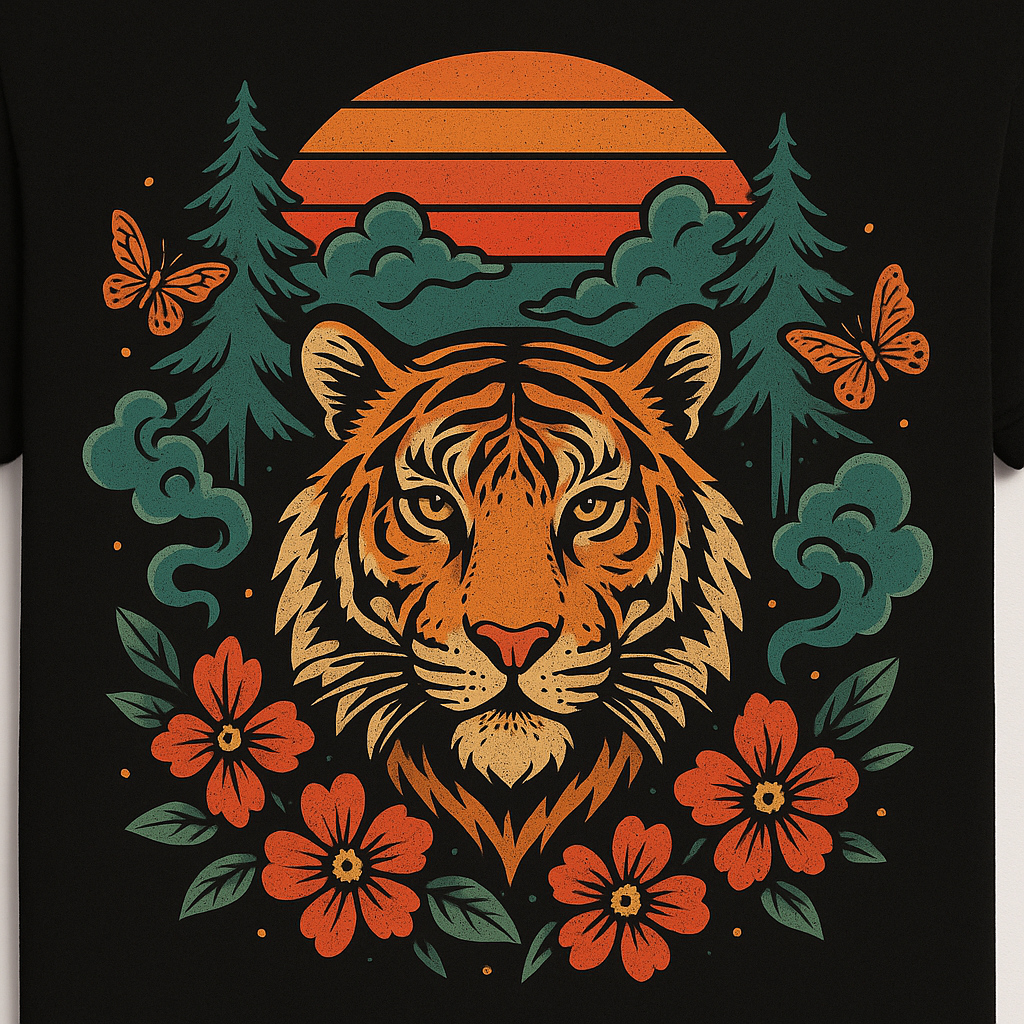
Whether you’re launching your first drop or upgrading an existing shop, this is a practical, soup-to-nuts playbook—from idea to repeatable profit.
1) Pick a Profitable Niche & Positioning
Goal: Sell to a specific tribe with a clear point of view.
- Audience slices: professions (nurses, coders), hobbies (camping, chess), beliefs/causes, local pride, humor/inside jokes, micro-subcultures.
- Positioning statement: “We make [style] tees for [audience] who love [hook].”
- Profit filter (choose ideas that hit ≥2): passion, identity signaling, giftable, repeatable humor, evergreen, not just trend-of-the-week.
2) Validate Demand Fast (Before Designing 50 Tees)
Goal: Evidence that people will buy.
- Signal checks: marketplace search bars (Etsy/Amazon), hashtag volumes, subreddit mentions, and competitive review mining (what buyers praise/complain about).
- 10-post test: share 10 design sketches or phrases as polls/Reels/Stories; advance only the top 2–3 by engagement rate (>6%) or waitlist sign-ups.
- Micro-preorder: collect emails + $1 reservation (refundable). A 5–10% conversion from waitlist to paid is strong.
3) Design That Prints (And Sells)
Goal: Art that looks amazing on fabric and is production-ready.
- Concept system: pick a limited palette (2–4 colors), a type pair (headline + accent), and a motif set you can repeat across designs.
- File specs (DTG/DTF/POD): 300 DPI, 12–14 inches wide, PNG with transparent background, sRGB. Avoid hairline strokes (<1 pt).
- For screen printing: vector art (SVG/AI), spot colors, plan separations; keep color count low to protect margins.
- Color reality: garments dull colors; increase contrast and midtones. Do a wash test sample.
- Mockups: export 3–5 consistent lifestyle and flat-lay mockups per design.
4) Choose a Production Model
Goal: Balance risk, cash flow, and quality.
Print-on-Demand (POD) (e.g., Printful/Printify/Gelato)
- Pros: no inventory, automatic fulfillment, easy to start.
- Cons: higher base cost, longer ship times, less control.
- Use when: validating, testing many SKUs, and low upfront cash.
Bulk/Screen Print
- Pros: lowest unit cost, premium feel, fast ship.
- Cons: inventory risk, cash tied up, and storage.
- Use when: proven winners, wholesale, events.
Hybrid approach: validate on POD → scale winners with bulk.
5) Build Your Storefront
Goal: Make discovering and purchasing effortless.
- Platform:
- Speed-to-market: Etsy, Amazon Merch/On-Demand, Redbubble (marketplace traffic).
- Brand control: Shopify/WooCommerce (own domain + email list).
- Collection architecture: “New,” “Best Sellers,” “Gifts under $30,” “Profession/Theme,” “Limited Drops.”
- Product page recipe:
- Benefit headline (“Soft, durable tees for night-shift nurses”).
- 5 images (front/back/lifestyle/size chart/close-up).
- Bullets: fabric (e.g., 100% combed ringspun cotton or 60/40 blend), print method, fit, care.
- Size & fit guidance (measurements + model height).
- Trust: reviews, returns policy, delivery estimates, secure badges.
- Urgency/Scarcity: “Limited print run” or drop timer (only if true).
6) Price for Profit (Know Your Numbers)
Goal: Healthy contribution margin so marketing scales.
Example (POD, free shipping):
- Sale price: $27.00
- Base cost: $12.00
- Shipping you pay: $4.00
- Platform/processing fees (~8% + $0.30): $2.46
- Gross profit before ads = $27 − $12 − $4 − $2.46 = $8.54
- Contribution margin = $8.54 / $27 = 31.6%
Break-Even ROAS (for paid ads): BE ROAS=1Contribution Margin=10.316≈3.16\text{BE ROAS} = \frac{1}{\text{Contribution Margin}} = \frac{1}{0.316} \approx 3.16BE ROAS=Contribution Margin1=0.3161≈3.16
So you must return $3.16 revenue per $1 ad spend to break even.
Tip: Offer paid shipping (buyer covers $5). New math: revenue ≈ $32, margin ≈ 42% → BE ROAS ≈ 2.36. Much easier to scale.
7) Create Irresistible Listings (SEO + Conversion)
- Title formula (Etsy/Amazon):
[Main keyword] T-Shirt – [Audience/Occasion], [Style/Theme], [Fit/Fabric], [Gift Cue]
Example: “Nurse Night Shift T-Shirt – Cute Minimal Line Art, Unisex Soft Cotton, RN Gift” - Tags/keywords: include audience, theme, style, material, occasion, and gift terms (“for mom/dad/friend”).
- Description framework (PAS+Specs):
Problem → Agitate → Solution (your tee) → Proof (materials/reviews) → Specs/size care → CTA. - Images: 1 hero lifestyle, 1 clean flat lay, 1 close-up print texture, 1 size chart, 1 color options.
8) Launch Plan: From Zero to First 100 Sales
Pre-Launch (Days 1–7)
- Build a simple landing page with a waitlist and 10% off the first drop.
- Post your design polls and behind-the-scenes daily; invite DMs for early access.
- Seed 10–20 micro-influencers (1–10k followers) with free samples + unique codes.
Launch Week (Days 8–14)
- Drop 5–8 SKUs max. Too many choices kill conversion.
- Email sequence:
- Welcome/Origin story
- Drop announcement + lookbook
- Social proof (UGC/reviews)
- Last-call (timer, low stock)
- Paid test: 3–5 ad creatives (short hooks, punchy overlays). Kill anything <1.5 ROAS in 48–72h.
Post-Launch (Days 15–30)
- Retarget viewers/engagers; A/B free shipping vs. $5 flat rate.
- Add bundles (tee + hoodie/tee + sticker) to increase AOV.
- Ask for reviews with a photo incentive (e.g., 15% off next order).
9) Traffic That Compounds
- Organic: short-form video (design timelapses, “which design wins?”, niche humor skits), Pinterest boards, Reddit participation (no spam), blog posts targeting “[niche] gift ideas.”
- Influencers/UGC: send 20 DMs/week; offer rev share (10–20%) + unique design collaboration.
- Email: weekly broadcast + monthly drop; segment buyers vs. non-buyers; win-back at 45/90 days.
- Partnerships: sponsor niche newsletters/podcasts with a custom discount.
10) Customer Experience & Retention
- Delivery transparency: ETA shown on product and checkout.
- Packaging: branded sticker + thank-you card with QR to VIP club.
- Easy exchanges: pre-paid label for size swaps; it pays back in reviews.
- Post-purchase automation:
- Day 3: “Your tee is printing.”
- Day 10: “How did it fit?” + review link
- Day 21: “Care tips & 15% VIP on your next pick”
11) Legal & Compliance (Don’t Get Banned)
- IP checklist: no logos, characters, lyrics, or trademark phrases. Search the USPTO/TESS for phrases; use licensed fonts/illustrations. Keep proof of commercial rights.
- Policies: clear returns, privacy, and terms; CAN-SPAM/GDPR compliance for email.
- Model releases: if you use people in photos, ensure you have rights.
12) Metrics That Matter
- Shop: Conversion rate (target 2–4%), AOV, refund rate (<5%), review score (≥4.6).
- Marketing: CTR, CPC, ROAS, email open/click, repeat purchase rate (aim 25–35% by month 6).
- Product: % of sales from top 5 SKUs (80/20 rule). Rotate new designs monthly; retire underperformers.
13) Scale Levers After Product-Market Fit
- Go bulk on top sellers to cut unit cost by 30–50%.
- Limited drops/numbered editions to raise perceived value.
- Wholesale/B2B: local boutiques, team/event shirts, corporate gifts.
- International POD routing to cut ship times.
- Licensing: collaborate with artists/creators on revenue share.
30-Day Execution Sprint (Cheat Sheet)
Week 1: Niche validation, brand kit, 10 concept polls, waitlist page.
Week 2: Produce 6 print-ready designs + mockups, set up store, write listings.
Week 3: Seed influencers, order samples, activate email sequence, QA checkout.
Week 4: Launch drop, test ads, collect UGC, push reviews, bundle offers.
Copy-Paste Templates
Product Title:
“[Theme/Hook] T-Shirt – [Audience/Occasion], [Style], Unisex Soft Cotton, [Gift Cue]”
Short Description (3 bullets):
- Soft, durable print you can wear all day.
- True-to-size unisex fit (see size chart).
- Printed on demand to reduce waste—made just for you.
Email 5-Part Launch: Welcome → Drop → Proof → Behind-the-Scenes → Last-Call.
Ad Hook Ideas:
- “Pick one: A or B?”
- “If you know, you know (IYKYK).”
- “POV: You’re part of the [niche] club.”
Starter Toolkit (use any equivalents you prefer)
- Design: Procreate/Illustrator/Affinity Designer, remove.bg, Mockup generators.
- Store: Shopify or Etsy (to start); Klaviyo/Mailchimp for email.
- Ops: Airtable/Sheets for SKU & cost tracking; Order tracking app; Judge.me/Loox for reviews.
1. T-Shirt Business Checklist (Step-by-Step Quick Reference)
✅ Research & Niche Validation
- Choose a target audience (nurses, gamers, fitness lovers, etc.)
- Test demand with polls, hashtags, and micro-preorders
- Collect early emails with a simple landing page
✅ Design & Branding
- 6–8 print-ready designs (300 DPI PNG, transparent background)
- Consistent color palette & typography
- Lifestyle + flat-lay mockups
✅ Production
- Choose POD (Printful, Printify) or Bulk (screen printing)
- Order samples to check print quality
- Set prices with at least a 30–40% profit margin
✅ Store Setup
- Open an Etsy or Shopify store
- Upload listings with SEO-optimized titles, tags, and descriptions
- Organize into collections (New, Best Sellers, Gifts, etc.)
✅ Marketing & Launch
- Build email list (pre-launch incentive)
- Seed micro-influencers with samples
- Post social media teasers and polls daily
✅ Post-Launch Growth
- Retarget website visitors with ads
- Bundle products to raise order value
- Collect reviews with photos
- Add 1–2 new designs each month
2. Profit Calculator (Example)
| Item | Value |
|---|---|
| Selling Price | $27.00 |
| POD Base Cost | $12.00 |
| Shipping (your cost) | $4.00 |
| Fees (platform/payment) | $2.46 |
| Profit per sale | $8.54 |
| Contribution Margin | 31.6% |
| Break-even ROAS | 3.16 |
(Tip: charge $5 shipping instead of free → Profit = $13.54, Margin = 42%, ROAS = 2.36)
Final Thoughts: Take Action Today 🚀
Creating a profitable online T-shirt business is not about luck — it’s about following the right steps: finding a niche, validating demand, producing designs that sell, pricing correctly, and scaling with smart marketing.
The truth is, most people stop at “just an idea” and never build the system that turns designs into dollars. But you don’t have to figure it all out alone.
👉 If you’re ready to shortcut the learning curve and start your online business with proven strategies, I highly recommend you check out this exclusive training that shows you exactly how to launch and scale your T-shirt (or any online) business step by step.
➡️ Click here to discover the proven blueprint for turning designs into a profitable business
It’s the same framework thousands of entrepreneurs are using to turn creativity into consistent income — and you can too. Don’t just dream about selling T-shirts; make it your business today.
⚠️ Disclaimer: This article includes affiliate links. If you purchase through them, I may earn a commission at no extra cost to you. I only recommend resources I believe will genuinely help you succeed.
