By Marvin Gandis
For many people, investing sounds like something that belongs to another world.
They imagine complicated charts, Wall Street professionals, thousands of dollars in starting capital, and financial terminology that seems impossible to understand.
That perception keeps millions of people on the sidelines.
But investing does not necessarily have to begin with thousands of dollars.
Sometimes it begins with a decision.
A small amount.
And the willingness to learn.
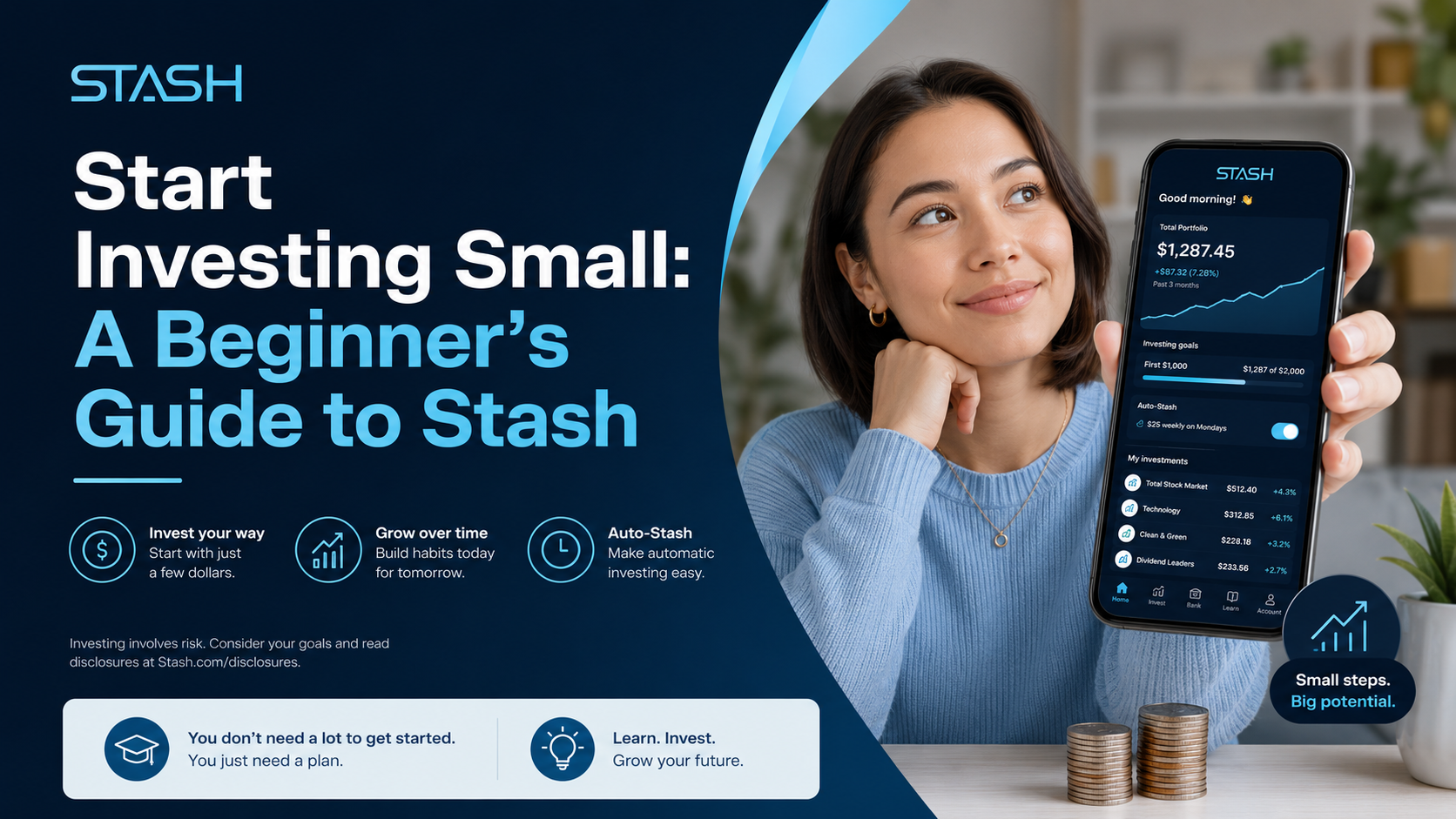
Today, technology has made financial education and investing tools more accessible to ordinary people. Platforms such as Stash are part of that transformation, giving individuals an opportunity to learn about investing, develop financial habits, and begin building toward long-term financial goals.
And for eligible new customers, there is currently an additional incentive to begin: a $30 investment bonus after joining through a qualifying referral invitation and depositing at least $5 within 30 days.
You Do Not Have to Be Wealthy to Begin Investing
One of the biggest misconceptions about investing is that you need a large amount of money before you can start.
That idea can lead people to wait for years.
They tell themselves:
“I’ll start when I make more money.”
“I’ll invest after I pay everything off.”
“I’ll begin when I understand the stock market.”
“I need thousands of dollars first.”
But waiting for the “perfect” financial situation can become a permanent excuse.
The more important first step is often education.
Understanding basic concepts such as saving, investing, diversification, risk, compound growth, budgeting, and long-term planning can gradually transform the way a person manages money.
Stash itself says users can begin investing with small amounts and provides access to stocks, exchange-traded funds, automated portfolios, and financial guidance.
What Is Stash?
Stash is a personal finance and investing platform designed to make investing more accessible to everyday consumers.
Rather than assuming that every user is already an experienced investor, the platform combines investing tools with guidance intended to help people make financial decisions based on their goals, experience, timeline, and comfort with risk.
Among the tools promoted by Stash are:
- Individual stocks and ETFs
- Personalized investment guidance
- Automated investing through Smart Portfolio
- Recurring investing tools
- Retirement investing
- Investing accounts for children
- Financial education
- Banking-related features and financial tools
Stash describes itself as a registered investment adviser and says it provides recommendations based on an individual’s goals and risk tolerance.
This does not mean investments are guaranteed to increase in value.
No legitimate investment platform can promise that.
Investing always involves risk.
The important distinction is that technology can make the process of learning, starting, and managing investments more approachable.
Why Starting Small Can Be Powerful
A person who invests $5 today is obviously not going to become wealthy tomorrow because of that $5.
That is not the point.
The real value of beginning small is the habit it can create.
Consider the difference between these two mindsets:
Mindset #1:
“I don’t have enough money, so investing isn’t for me.”
Mindset #2:
“I may not have much today, but I can start learning how investing works.”
The second mindset creates movement.
A small beginning can lead to:
Financial education.
Better budgeting.
Regular contributions.
Understanding investments.
Greater awareness of spending habits.
Long-term financial planning.
And eventually, larger financial goals.
This is why starting can matter more than starting big.
Investing Is Different From Saving
It is also important to understand that saving and investing are not the same thing.
Saving generally means keeping money somewhere relatively accessible for future expenses or emergencies.
Investing means putting money into assets with the expectation that they may increase in value over time.
Those assets can also decline.
That distinction matters.
Money needed for rent next month, groceries, emergency expenses, medical bills, or essential living expenses generally should not be treated the same way as money designated for long-term investing.
Before investing, it is wise to evaluate your overall financial situation.
The Power of Consistency
Many people look for the perfect stock.
Experienced long-term investors often focus instead on something much less exciting:
Consistency.
Investing a manageable amount regularly can create a discipline that one large, occasional investment may not.
For example, someone might decide to contribute:
$5 per week.
$10 per week.
$25 per month.
$50 per month.
Or another amount appropriate for his or her financial circumstances.
The amount should be determined by the investor’s budget and financial priorities.
The goal is not to invest money you cannot afford to risk.
The goal is to create sustainable financial habits.
Automation Can Help Build the Habit
One useful feature of modern investing platforms is automation.
Stash provides an Auto-Stash feature that can be used for recurring investments. The company also offers managed Smart Portfolios for users who prefer an automated approach based on their financial profile.
Automation can help remove a common obstacle:
Forgetting.
Instead of depending entirely on motivation every month, an investor can establish a systematic approach.
The principle extends beyond investing.
Strong financial habits are often built through systems rather than occasional bursts of enthusiasm.
But Never Confuse Investing With Guaranteed Income
This point is critical.
Stocks go up.
Stocks go down.
ETFs fluctuate.
Markets experience corrections.
Economic conditions change.
No investment strategy eliminates risk.
An investment account should therefore never be presented as a guaranteed way to make money.
The objective is not to predict every market movement.
For many long-term investors, the objective is to build a diversified financial strategy aligned with personal goals, risk tolerance, and time horizon.
Understand the Cost Before Joining
A promotional bonus should never be the only reason to open a financial account.
You should understand the product itself.
As of August 27, 2026, the referral landing page states that The Stash Plan costs $12 per month, with pricing subject to change. The plan includes Stash’s investing and other financial features.
That means a prospective customer should ask:
Will I actually use the service?
Do the available tools fit my financial goals?
Do I understand the monthly cost?
Am I comfortable with investment risk?
Have I read the current terms?
These questions are more important than any promotional bonus.
The Current $30 Stash Referral Opportunity
For eligible new customers, Stash is currently offering a referral promotion connected to my invitation.
The process shown on the Stash referral page is straightforward:
Step 1: Join Stash through my referral invitation.
Step 2: Deposit at least $5 within 30 days.
Step 3: Once the qualifying deposit is completed and the applicable requirements are satisfied, the $30 bonus is added to the account.
Stash’s current general bonus terms also state that qualifying bonus funds must remain in the Stash account for 90 days and that the offer is available to U.S. residents, subject to eligibility and additional terms.
A $30 Bonus Is Not the Real Opportunity
The promotional bonus may attract attention.
But the more important opportunity is learning.
If opening an account motivates someone to begin understanding:
How stocks work.
What ETFs are.
Why diversification matters.
How compound growth works.
Why consistency matters.
How risk and reward are connected.
How to establish long-term financial goals.
Then the education may ultimately be worth far more than the original promotional incentive.
That is the perspective I encourage.
Don’t simply chase bonuses.
Use opportunities like this to increase your financial knowledge.
Begin With Education, Not Emotion
Never invest because someone tells you:
“You can’t lose.”
“This stock is guaranteed.”
“You’ll double your money.”
“You need to act immediately.”
Those are warning signs.
Responsible investing begins with understanding what you are buying and why you are buying it.
Ask questions.
Read the disclosures.
Understand the fees.
Understand the risks.
Investigate the investment.
Determine whether it fits your objectives.
Financial confidence comes from knowledge—not hype.
Your Financial Future Is Built One Decision at a Time
You may not be able to change your entire financial situation today.
But you can make one better financial decision.
Then another.
And another.
Maybe your first step is creating a budget.
Maybe it is eliminating expensive debt.
Maybe it is establishing an emergency fund.
Maybe it is learning how investing works.
Or perhaps you are financially ready to make your first small investment.
The important thing is to move from financial avoidance toward financial education.
You do not need to know everything before you begin learning.
You simply need to begin.
Ready to Explore Stash?
If you’ve been thinking about learning how investing works and believe Stash may fit your financial goals, you can explore the current offer through my personal referral invitation.
🎁 Current Referral Offer
Eligible new users can currently receive $30 to invest after joining through my invitation and depositing at least $5 within 30 days, subject to Stash’s eligibility requirements and promotion terms.
👉 Use my Stash referral invitation and explore the $30 offer
Before enrolling, review the current pricing, promotion requirements, investment disclosures, and account terms directly with Stash.
Don’t begin because of a bonus alone. Begin because you’re ready to learn more about your financial future.
Referral Disclosure
This article contains my personal Stash referral link. I may receive compensation or a referral reward if you use my link, open a qualifying account, link a funding source, deposit funds, and/or satisfy other applicable Stash requirements. Using my referral link does not increase the fees Stash charges you. Referral eligibility, amounts, deadlines, account requirements, pricing, and promotional terms may change or expire. Please verify the current terms directly with Stash before participating.
Financial Disclaimer
This article is provided for educational and informational purposes only and does not constitute personalized financial, investment, tax, accounting, or legal advice. Investing involves risk, including the possible loss of principal. Past performance does not guarantee future results. No investment, stock, ETF, portfolio, or financial strategy is guaranteed to generate profits. Consider your financial circumstances, objectives, time horizon, and risk tolerance before investing, and consult an appropriately qualified financial, tax, or legal professional when necessary. Stash is a third-party company, and the author of this article is not acting as a financial adviser or representative of Stash.
Debe estar conectado para enviar un comentario.